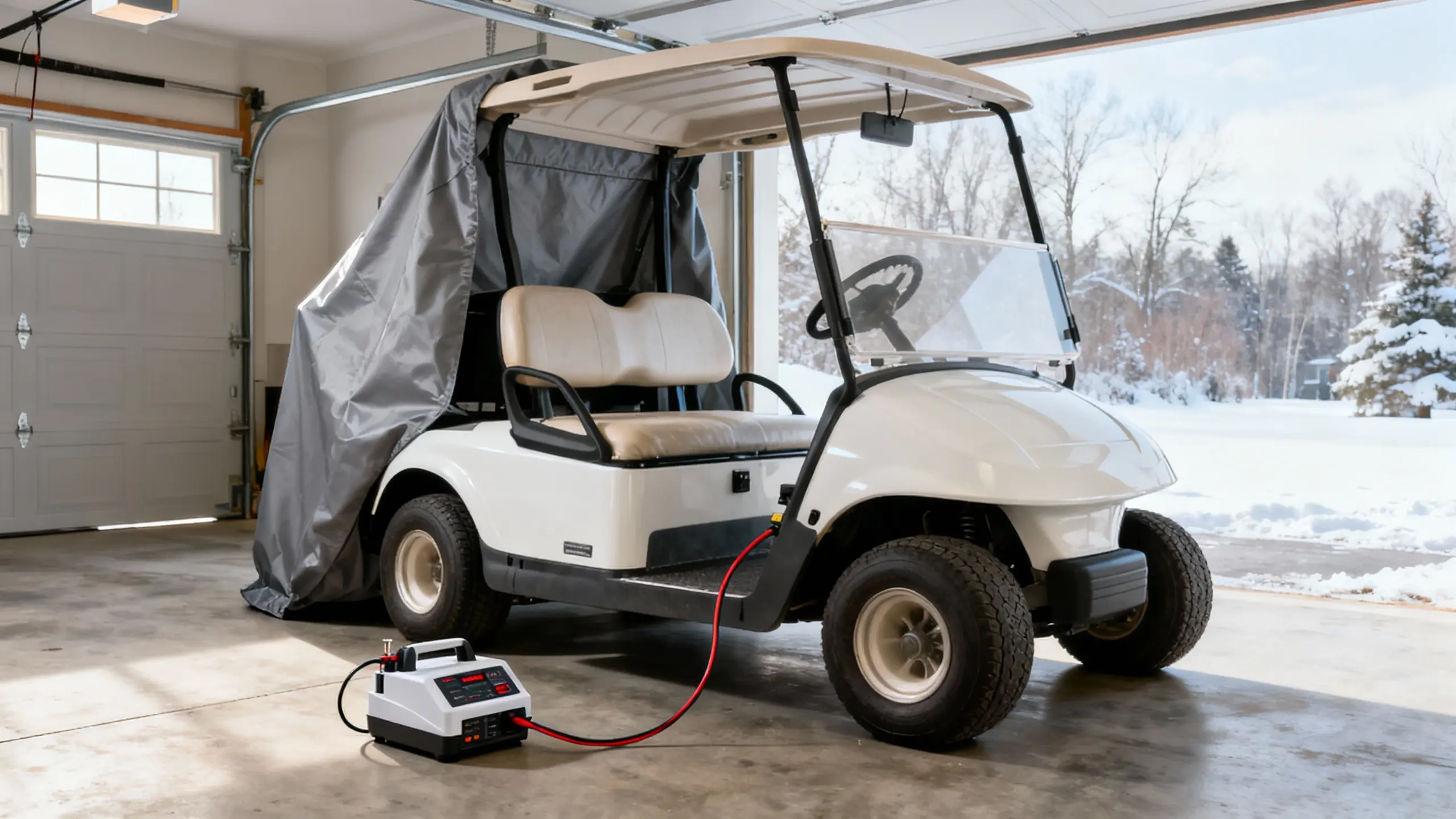
How to Winterize a Golf Cart: Winter Storage Tips
Affiliate Disclosure: This article contains affiliate links. If you purchase through these links, we may earn a small commission at no extra cost to you. This helps support our site and allows us to continue providing free golf cart guides.
Ever pulled your golf cart out in spring only to find dead batteries, an engine that won't start, or mice living under the seat? Yeah, it's not fun. And it's expensive.
Winterizing your golf cart simply means getting it ready for cold storage. You're protecting it from frozen batteries, fuel problems, and critter damage. Skip this step, and you could be looking at $800-$1,500 just to replace frozen batteries. Plus the headache of a cart that won't run when the weather finally warms up.
The good news? You can do this yourself in about 1-2 hours. Total cost: $30-$80 in supplies. That's a lot cheaper than the repair bill. If you are also setting up or improving your storage space, our golf cart garage setup guide covers dimensions, ventilation, charging stations, and organization.
Quick Answer: Golf Cart Winter Storage Tips
If you searched "how to winterize a golf cart," start with this checklist. The exact steps depend on whether you need to winterize electric golf cart batteries, a gas engine, or both.
| Winter Storage Job | Electric Golf Cart | Gas Golf Cart |
|---|---|---|
| Battery prep | Lead-acid: fully charge and maintain; lithium: store around 50-70% charge | Fully charge the starter battery and disconnect parasitic loads |
| Cart mode | Flip Run/Tow to Tow or Storage | Set parking brake only if needed; avoid storing with brakes stuck on |
| Fuel system | Not applicable | Fill and stabilize fuel, then run 5-10 minutes, or drain for long storage |
| Tires and body | Inflate tires, clean/dry body, protect seats, use a breathable cover | Same steps as electric |
| Storage location | Indoor is best; outside requires a secured waterproof cover and more checks | Indoor is best; outside requires a secured waterproof cover and more checks |
Can you store a golf cart outside in the winter? Yes, but indoor storage is safer for batteries, seats, electronics, and tires. If outside is your only option, use a fitted cover or enclosure, keep batteries maintained, elevate or move the tires periodically, and check for moisture or rodents at least monthly.
Do You Need to Winterize Your Golf Cart?
Here's the honest answer: it depends on where you live.
If you're in Florida or Arizona, you probably don't need to worry much. But if you're in Ohio, Michigan, or anywhere it gets below freezing? Yes, you absolutely need to winterize. I've seen too many people skip this step and regret it in spring.
Winterization Requirements by Climate Zone
Note: Even in mild climates, if storing your cart for 30+ days, follow basic battery maintenance. Not sure what zone you're in? Check the USDA Zone Map.
For state-specific golf cart regulations and requirements, see our state-by-state golf cart laws guide.
When to Start Winterizing
Don't wait until the first snow. Start 2-4 weeks before your area's first freeze. This gives you time to grab supplies and fix any problems before it gets too cold to work in the garage.
Here's a rough timeline based on where you live:
Complete Golf Cart Winterization Checklist
Alright, let's get into it. Follow these steps in order. The whole process takes about 1-2 hours.
Step 1: Give Your Cart a Good Cleaning
I know, I know. Cleaning isn't the fun part. But dirt and mud trap moisture, and moisture causes rust. Trust me, 15 minutes of cleaning now saves headaches later.
- Exterior: Wash the body, wheels, and undercarriage with mild soap and water
- Interior: Remove floor mats, vacuum debris, wipe down seats and dashboard
- Battery compartment: Remove leaves and debris (careful around terminals)
- Dry completely: Allow cart to air dry or wipe down to prevent moisture damage
Step 2: Battery Prep (This Is the Big One)
Here's where most people mess up. Get the battery storage wrong, and you could be buying a whole new set in spring. That's $800 to $1,500 down the drain.
The tricky part? Lead-acid and lithium batteries need opposite care. Do the wrong thing, and you'll damage them.
Electric Golf Cart Battery Storage
Before you do anything, figure out what type of batteries you have. Check the label on top. It'll say "flooded lead-acid," "AGM," "gel," or "lithium/LiFePO4."
Got it? Good. Now follow the right steps for your type.
Lead-Acid Battery Winter Storage
The #1 rule: Store them fully charged.
Why? A full battery won't freeze until -70°F. But a half-charged battery? It can freeze at just -8°F. That's a normal winter night in most of the country. According to Battery University, discharged lead-acid batteries are extremely vulnerable to freeze damage.
Check Water Levels (Flooded Only)
Pop off the caps and look inside. The water should cover the metal plates by about 1/4 inch. If it's low, add distilled water (not tap water, since the minerals in tap water damage batteries). Do this after charging, not before.
Fully Charge Batteries
Plug in your charger and let it run until it shuts off automatically. A full charge keeps the battery acid strong enough to resist freezing, even at -70°F.
Clean Battery Terminals
See that white crusty stuff on the terminals? That's corrosion, and it causes problems. Mix a tablespoon of baking soda in a cup of water, scrub it with an old toothbrush or wire brush, rinse, and dry. Then spray on some terminal protector to keep it clean.
Keep Them Charged All Winter
You have two choices here. Option A (easier): Hook up a smart battery maintainer. It'll keep the charge right automatically. Option B: Disconnect the batteries and mark your calendar to charge them every 30 days. Miss a month, and you might have dead batteries by spring.
Flip the Tow/Storage Switch
Find the Run/Tow switch (usually under the seat) and flip it to "TOW" or "STORAGE." This stops the cart's electronics from slowly draining your batteries while it sits.
Lead-Acid Battery Freeze Temperature Chart
Still not convinced that charge level matters? Look at these numbers from U.S. Battery Manufacturing:
Lead-Acid Battery Freeze Points by State of Charge
Key Insight: A fully charged battery survives any North American winter. A 50% discharged battery can freeze in a typical Minnesota winter night.
Recommended Battery Maintenance Products
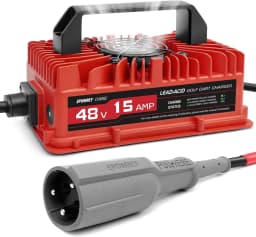
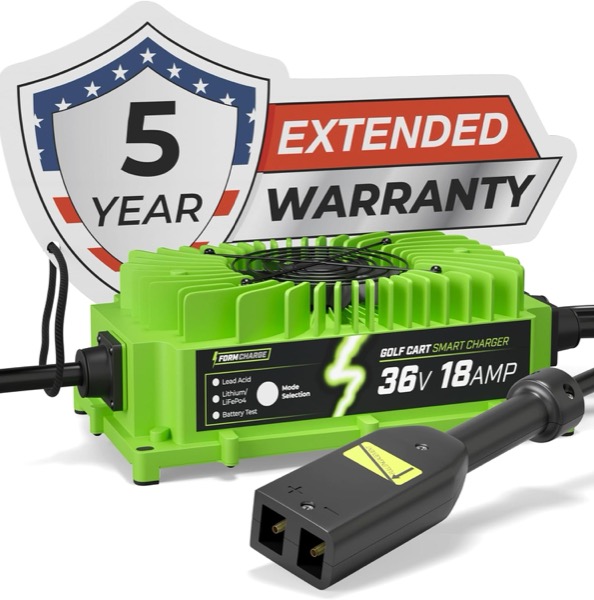
For more on battery types, maintenance, and costs, see our complete golf cart battery guide.
Lithium Battery Winter Storage (Different Rules!)
Stop! If you have lithium batteries, forget everything I just said about lead-acid.
Lithium batteries play by completely different rules. Do what works for lead-acid, and you'll actually damage your lithium batteries. RELiON Battery and other lithium manufacturers are very clear about this.
Lithium Battery Rules (Read This!)
- Store at 50-70% charge - NOT fully charged like lead-acid. Full charge actually hurts lithium in storage.
- Never charge when it's below freezing - This damages the battery permanently. No fixing it.
- Don't leave the charger plugged in - Lithium doesn't need babysitting like lead-acid does.
- Check every 2-3 months - Lithium batteries barely lose charge (2-3% per month), so you don't need to check as often.
Lithium Storage Steps:
- Discharge or charge battery to 50-70% state of charge
- Clean terminals and check connections
- Ensure BMS (Battery Management System) is functioning (check indicator lights)
- Store in location that stays above 32°F if possible
- Set cart to TOW/STORAGE mode
- Check charge level every 2-3 months; recharge to 50-70% if below 30%
Gas Golf Cart Winterization
Got a gas cart? You've got a few extra steps. The engine needs attention too, not just the battery.
Fuel System Prep
Here's what happens if you skip this: gas goes bad after a few months. It turns into a sticky varnish that clogs up your carburetor. Come spring, your cart won't start, and you're looking at $100-$300 to clean or rebuild the carb.
If that already happened, our golf cart carburetor cleaning and rebuild guide walks through symptoms, first checks, and repair costs.
Two ways to avoid this:
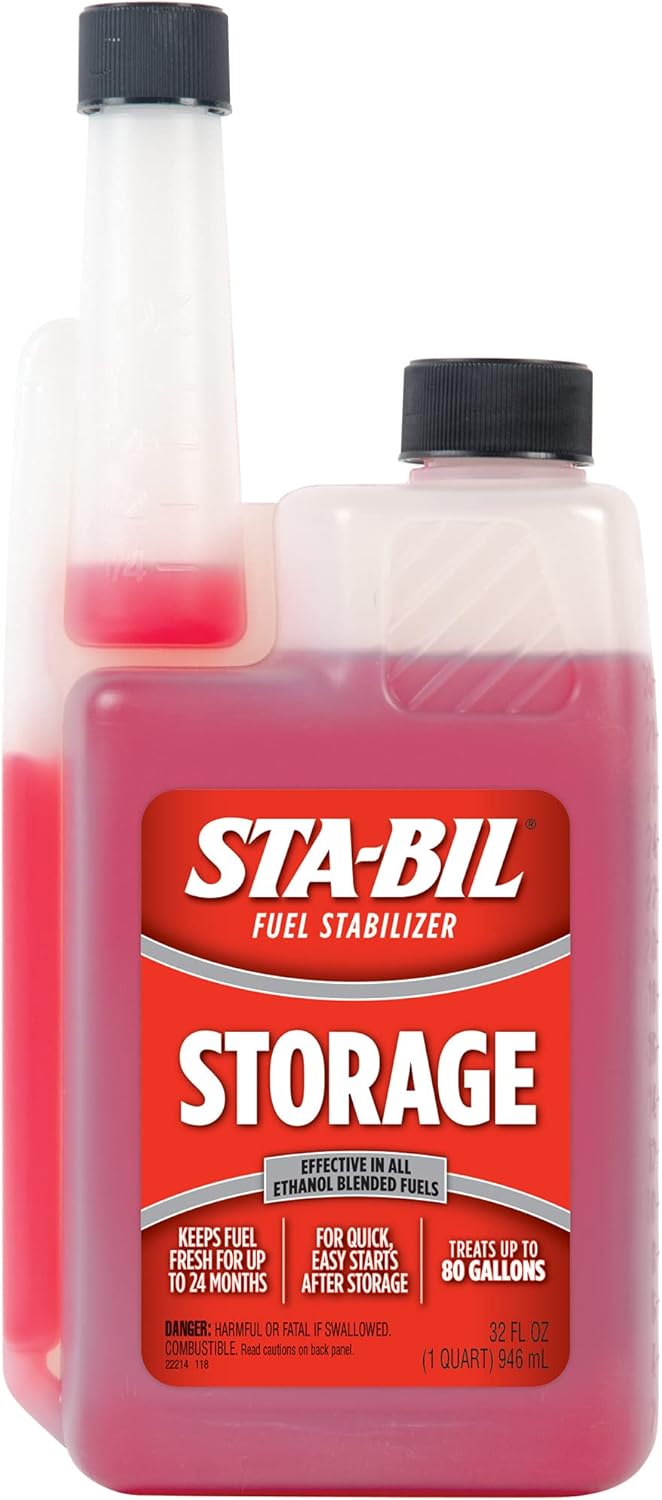
A Few More Gas Cart Steps
While you're at it:
- Change the oil - Old oil has acids that can damage the engine over winter. Fresh oil is cheap insurance.
- Check the air filter - If it's dirty, replace it. A clogged filter causes problems.
- Look at the spark plug - Worn or fouled? Swap it out. They're like $5.
- Check the belts - Look for cracks or fraying. Replace if they look sketchy.
- Fog the engine (optional but smart) - Spray fogging oil into the carburetor while running, then shut it off. This coats the inside and prevents rust.
Tire Care for Winter Storage
Ever notice how a basketball goes flat if you leave it sitting? Same thing happens to golf cart tires. They develop "flat spots" where they touch the ground. Cold weather makes it worse because rubber gets stiff.
How to prevent flat spots:
- Pump them up - Inflate to the max PSI listed on the tire sidewall. More air = less squish = fewer flat spots.
- Move it once in a while - If you can, roll the cart a few inches every couple weeks to change where the tire sits.
- Use tire cradles or foam blocks - These spread out the weight so the tire doesn't flatten in one spot.
- Or go all out - Put the cart on jack stands to take all the weight off the tires.
For more on golf cart tires and maintenance, see our troubleshooting guide.
Where to Store Your Golf Cart
Where you park it for winter matters more than you might think.
Indoor Storage (Best Choice)
If you have a garage, shed, or even a carport, use it. Indoor storage:
- Keeps temperatures more stable (better for batteries)
- Protects from rain, snow, and sun damage
- Makes it harder for mice to move in
- Makes monthly check-ups easier
Outdoor Storage (If You Have No Other Option)
No garage? You can still make it work, but you'll need to take extra steps:
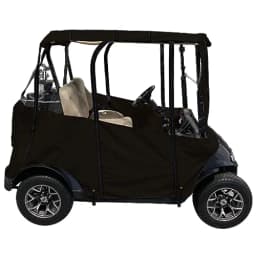
Outdoor storage tips:
- Use a quality waterproof cover secured against wind (find the right one in our golf cart covers buyer's guide)
- Elevate the cart on blocks if possible to keep tires off frozen ground
- Position away from trees (falling branches, sap, bird droppings)
- Check cover and cart more frequently for moisture intrusion
Rodent Prevention (Don't Skip This)
Let me paint a picture: It's April. You pull off the cover, ready for that first spring ride. And there's a mouse nest under the seat. Worse, they've chewed through half your wiring.
This happens way more often than you'd think. Mice love golf carts: warm seats, lots of hiding spots, wires to chew on. A single mouse can cause $500+ in damage. Here's how to keep them out:
Remove the Good Stuff
Take out any food wrappers, crumbs, blankets, or towels. Mice use soft stuff for nests. No nesting material = less appealing home.
Peppermint Oil Trick
Mice hate peppermint. Soak cotton balls in peppermint oil and tuck them under seats and in compartments. Replace monthly.
Block the Doors
Stuff steel wool into any openings near the motor or engine. Mice can squeeze through tiny gaps, but they can't chew through steel wool.
Set Traps Around It
Put mouse traps around the cart (not inside, you don't want dead mice in there). Check them when you do your monthly battery check.
Cold Weather Driving (For Year-Round Users)
Not storing your cart for winter? Maybe you live in a golf cart community where it's your main way to get around. Here are some tips for driving in cold weather:
Keep your batteries happy:
- Battery power drops 10-20% in freezing temps, so expect less range
- Keep them fully charged. Cold batteries that aren't full can freeze
- If possible, store the cart somewhere that doesn't freeze overnight
Drive smart:
- Allow extra stopping distance on wet or icy paths
- Check tire pressure more often (cold air = lower pressure)
- Consider a golf cart enclosure to block wind and rain while driving
Optional comfort upgrade: A portable propane heater like the Mr. Heater Golf Cart Edition fits in your cup holder and puts out 4,000 BTU. Not essential, but nice to have when it's 30°F out. If you plan to ride regularly through cold months, our complete golf cart heater buyer's guide covers propane and electric options with recommendations by voltage and use case.
For enclosures, covers, and other winter accessories, check out our best golf cart accessories guide.
What Does Winterization Cost?
Let's talk money. You can do this yourself or pay someone. Here's what each option runs:
Winterization Cost Breakdown
Cost of NOT Winterizing: Frozen battery replacement ($800-$1,500), carburetor rebuild ($100-$300), flat-spotted tires ($200-$400), rodent damage ($200-$1,000+). Total potential damage: $1,300-$3,200+
Spring De-Winterization Checklist
First warm day hits and you're ready to ride? Hold on. Take 15 minutes to make sure everything's good first. For the full step-by-step walkthrough with costs and troubleshooting tips, see our spring golf cart maintenance checklist. Here's the quick version:
Spring Prep Checklist
If your cart has issues after storage, see our troubleshooting guide for diagnosis help.
Common Mistakes (Learn From Others' Expensive Lessons)
Storing lead-acid batteries half-charged
This is the #1 mistake. A half-charged battery freezes at -8°F. Full charge = no freeze.
Storing lithium batteries at full charge
Opposite problem! Full charge wears out lithium faster during storage. Keep them at 50-70%.
Charging lithium when it's below freezing
This kills lithium batteries permanently. If it's below 32°F, wait until it warms up before charging.
Forgetting to flip the Tow switch
Leave it in "Run" and your batteries slowly drain all winter. Always flip to "Tow" or "Storage."
Leaving old gas in the tank
Gas goes bad and turns to varnish. Either add stabilizer to a full tank, or drain it completely.
Setting the parking brake for storage
Brake pads can stick to the drums if left pressed for months. Use wheel chocks instead.
Ignoring the cart all winter
Lead-acid batteries lose 5-15% charge every month just sitting there. Check every 30 days, or use a maintainer.
Frequently Asked Questions
What is golf cart winterization?
Golf cart winterization is the process of preparing your golf cart for extended storage during cold winter months. It involves protecting the batteries from freezing and discharge damage, stabilizing fuel (for gas carts), preventing tire flat spots, protecting against rodents, and covering the cart to prevent weather damage. Proper winterization prevents costly repairs and extends the life of your golf cart.
When should I winterize my golf cart?
Winterize your golf cart 2-4 weeks before the first expected freeze in your area. In northern states (zones 3-5), this typically means late September to mid-October. In central states (zones 6-7), aim for late October to mid-November. The key is to complete winterization before temperatures consistently drop below 32°F (0°C), as battery damage can occur during freezing weather.
Will golf cart batteries freeze in winter?
Yes, golf cart batteries can freeze in winter, especially if not fully charged. A fully charged lead-acid battery won't freeze until -70°F to -96°F, but a 50% discharged battery freezes at just -8°F to -20°F, and a fully discharged battery freezes at 11°F to 15°F. Frozen batteries can crack, leak acid, and suffer permanent internal damage requiring complete replacement ($800-$1,500).
How do I store lithium golf cart batteries in winter?
Store lithium golf cart batteries at 50-70% state of charge (NOT fully charged like lead-acid). Keep them in a location above 32°F if possible. Never charge lithium batteries when temperatures are below 32°F (0°C), as this causes permanent lithium plating damage. Lithium batteries self-discharge very slowly (2-3% per month), so check charge level every 2-3 months during storage.
Should I leave my golf cart charger plugged in all winter?
For lead-acid batteries with a SMART charger or battery maintainer, yes - leaving it connected is the best approach. Smart chargers monitor charge level and only activate when needed, preventing both discharge and overcharging. For standard chargers without maintenance mode, do NOT leave plugged in all winter; instead, disconnect and manually charge every 30 days. For lithium batteries, do NOT leave charger connected - store at 50-70% charge and check every 2-3 months.
How much does golf cart winterization cost?
DIY golf cart winterization costs $30-$80 for supplies (battery cleaner, terminal protector, distilled water, fuel stabilizer for gas carts, tire pressure gauge). Professional winterization services cost $150-$250. Full winter storage packages (including pickup, storage, and spring prep) run $200-$350 for 4-6 months. The cost of NOT winterizing can be $800-$1,500+ for frozen battery replacement, plus potential damage to fuel systems and tires.
How often should I check my golf cart during winter storage?
For lead-acid batteries, check every 2-4 weeks: verify battery charge (recharge if needed), check water levels, and inspect for any issues. For lithium batteries, check every 2-3 months due to their slower self-discharge rate. Regardless of battery type, do a monthly visual inspection of the cart for rodent activity, moisture intrusion, or cover damage.
Can I store my golf cart outside in winter?
You can store a golf cart outside in winter, but it's not ideal. If outdoor storage is necessary: use a high-quality waterproof cover or enclosure, elevate tires off frozen ground if possible, ensure batteries are properly maintained, place rodent deterrents around the cart, and check more frequently for moisture and pest issues. Indoor storage in a garage or shed is strongly preferred for protecting your investment.
How do I prevent mice and rodents from nesting in my golf cart?
To prevent rodent damage during winter storage: remove all food, wrappers, and nesting materials from the cart; place peppermint oil-soaked cotton balls in the seat compartment and under the seat; use steel wool to block any openings to the engine/motor compartment; set mouse traps or deterrent devices around (not in) the cart; and check regularly for signs of rodent activity. Rodent damage to wiring can cost hundreds to repair.
What happens if I don't winterize my golf cart?
Failing to winterize can cause: frozen and cracked batteries requiring full replacement ($800-$1,500), corroded battery terminals and connections, gummed-up carburetor in gas carts ($100-$300 to clean/rebuild), flat-spotted tires needing replacement ($200-$400), rodent damage to wiring and upholstery ($200-$1,000+), cracked or faded seats from moisture exposure, and rust/corrosion on metal components. Total damage can easily exceed $2,000.
Should I drain the gas or use fuel stabilizer for winter storage?
For storage under 3 months, fill the tank completely and add fuel stabilizer, then run the engine 5-10 minutes to circulate. For storage over 3 months, either: (1) add stabilizer to a full tank and run the engine, or (2) drain the tank and run the engine until it stops to empty the carburetor. Option 1 is easier and prevents tank corrosion from moisture. Never store with a partially full tank without stabilizer.
How do I de-winterize my golf cart in spring?
Spring de-winterization steps: reconnect batteries and fully charge, check water levels in lead-acid batteries, inspect all cables and connections for corrosion, check tire pressure and inflate to proper PSI, inspect brakes and test operation, remove fuel stabilizer note and check fuel (gas carts), clean the entire cart inside and out, test all lights and accessories, take a short test drive to verify everything works properly.
Do I need to remove golf cart batteries for winter storage?
You don't need to remove batteries if: the cart is stored above freezing temperatures, you use a battery maintainer, or you can access batteries for monthly maintenance. Remove batteries if: the storage area gets below freezing and you can't maintain them, you want to store batteries in a warmer location, or the cart will be inaccessible for months. If removed, store in a cool (not freezing), dry location on wood or cardboard (not concrete).
The Bottom Line
Look, winterizing your golf cart isn't complicated. An hour or two of work and $30-$80 in supplies protects you from $1,000+ in repairs. That's a pretty good trade.
Here's what really matters:
For Electric Carts:
- Lead-acid batteries: Store at 100% charge, use a smart maintainer or charge every 30 days
- Lithium batteries: Store at 50-70% charge, never charge below 32°F, check every 2-3 months
For Gas Carts:
- Use fuel stabilizer in a full tank, or drain completely
- Change oil before storage
- Run engine to circulate stabilizer through carburetor
For All Carts:
- Clean thoroughly before storage
- Inflate tires to maximum PSI
- Use a quality cover (especially for outdoor storage)
- Protect against rodents
- Set Run/Tow switch to "Tow" or "Storage"
Do all that, and your cart will fire right up in spring. No dead batteries, no mouse nests, no surprises. Just hop in and go.
Questions about whether your area needs winterization? Check the USDA Plant Hardiness Zone Map to see what climate zone you're in. Zones 7 and below should definitely winterize.
Related Guides
Want to learn more? These guides go deeper on specific topics:
- Golf Cart Battery Guide - Everything about battery types, costs, and when to replace
- Golf Cart Troubleshooting - Cart won't start after storage? Start here
- Best Golf Cart Accessories - Covers, enclosures, heaters, and more
- Golf Cart Laws by State - What's legal in your state
- Find Golf Cart Dealers - Need professional help? Find a dealer near you
Golf Cart Search
Find the Best Golf Carts of 2026
Compare top-rated models, read expert reviews, and find the perfect cart for your needs.