Low Speed Vehicle
A low speed vehicle, usually shortened to LSV, is the road-use class buyers run into when a cart-style vehicle needs the right speed, safety equipment, VIN or title paperwork, registration, insurance, and local road permission.
Use this page to decide whether you need a standard golf cart, a factory LSV or low-speed electric vehicle, or a conversion plan that can actually clear your state and city rules.
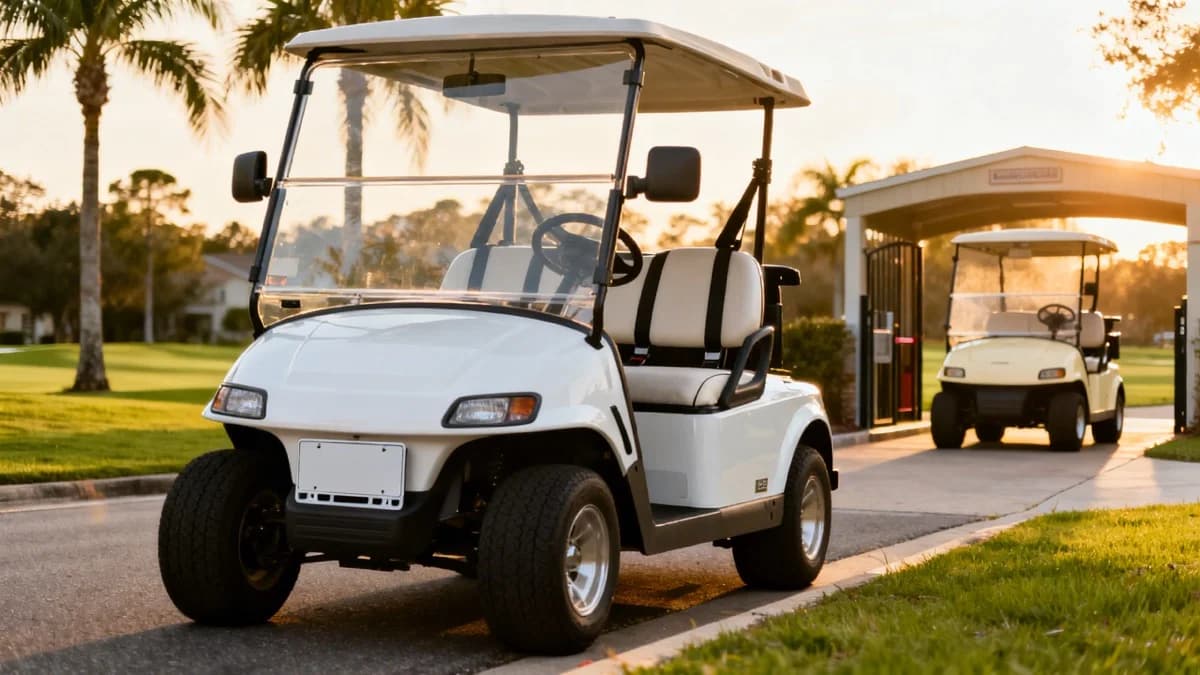
20 to 25 mph territory
The LSV conversation starts when a cart-style vehicle moves beyond ordinary golf cart speed and into the road-use class many states regulate separately.
Built for road visibility
Expect lights, signals, reflectors, mirrors, windshield, parking brake, seat belts, and other equipment before a vehicle can be treated as road-ready.
VIN, title, registration
A true LSV path usually depends on clean VIN or manufacturer paperwork, a title or registration process, a plate, and proof of insurance.
Local permission still matters
Even with an LSV, state and city rules decide where you can drive, what roads are allowed, and whether crossings or route maps apply.
What Is a Low Speed Vehicle?
In buyer language, a low speed vehicle is the cart-like vehicle class that sits between casual golf carts and full passenger cars. The federal definition starts with a four-wheeled motor vehicle that can go more than 20 mph but not more than 25 mph and has a gross vehicle weight rating under 3,000 pounds.
That definition is only the starting point. Federal rules define the safety equipment baseline, but your state and local government decide the title process, registration rules, insurance minimums, age or license requirements, route limits, and whether a converted golf cart is accepted.
Low-Speed Vehicle Definition: Speed, Weight, and Equipment
Use the federal definition as the first filter, then use your state law to decide what the vehicle needs before it can be titled, registered, insured, and driven on public roads.
| Factor | LSV baseline |
|---|---|
| Wheel count | Four-wheeled motor vehicle |
| Speed capability | More than 20 mph but not more than 25 mph over a 1-mile test on a paved, level surface |
| Weight class | Gross vehicle weight rating under 3,000 pounds |
| Safety standard | FMVSS 500 equipment applies before state title, registration, insurance, and route rules |
Low-Speed Electric Vehicle, NEV, and LSV
Search results, dealer listings, and state agencies do not always use the same wording. For buying decisions, the labels matter less than whether the vehicle has the speed, equipment, paperwork, and insurance path your roads require.
Low speed vehicle
The legal vehicle class most buyers need to understand when a cart-style vehicle is built for public-road use around the 20 to 25 mph range.
Low-speed electric vehicle
The electric shopping phrase for many neighborhood vehicles. It still needs the right speed, equipment, VIN, title, registration, and insurance path.
Neighborhood electric vehicle
Often shortened to NEV. In many listings, NEV and LSV describe the same road-use buying problem, even when state wording differs.
Low Speed Vehicle vs Golf Cart
A normal golf cart and an LSV can look similar in photos. The difference that matters is how the vehicle is classified, insured, registered, and allowed on public roads.
| Vehicle | Typical speed | Paperwork | Best fit |
|---|---|---|---|
| Standard golf cart | Usually under 20 mph | Often serial number, bill of sale, and local permit rules | Golf courses, private property, campgrounds, and local cart routes |
| Low speed vehicle / NEV | Usually 20 to 25 mph | VIN or MCO, title, registration, plate, and insurance | Neighborhood errands, beach towns, retirement communities, and public-road use where allowed |
| Converted golf cart | Depends on upgrades | Equipment plus inspection, VIN assignment, title eligibility, and state approval | Owners who already know the local conversion path and have a cart worth upgrading |
LSV Equipment and Paperwork Checklist
Do not treat this as a universal legal checklist. Treat it as the buyer screen that tells you which questions must be answered before you buy, convert, insure, or drive a cart-style vehicle on public roads.
Headlamps, taillamps, brake lights, and front and rear turn signals
Reflectors, mirrors, windshield, parking brake, and seat belts
VIN, manufacturer certificate, title path, registration, and plate where required
Insurance that matches state minimums and the way the vehicle will be used
A licensed driver and road routes that state or local law actually permits
A realistic service plan for brakes, tires, batteries, controller, and lights
Low Speed Vehicle Insurance
LSV insurance is where many golf-cart shoppers discover they are not buying a casual private-property cart anymore. Once the vehicle is titled, registered, and used on public roads, the insurance question usually moves toward auto-style liability.
Florida LSV insurance is the easiest example to understand because the state clearly separates standard golf carts from low-speed vehicles. Florida requires LSV title, registration, and insurance before public-road use. For state-by-state details, use the golf cart insurance hub.
| Question | Practical answer |
|---|---|
| Do LSVs need insurance? | Usually yes once the vehicle is titled, registered, and used on public roads. Treat LSV insurance more like auto liability than homeowners coverage. |
| What changes the quote? | State minimums, vehicle value, driver history, garaging location, passengers, road use, collision coverage, comprehensive coverage, and accessories can all change the price. |
| What about LSV insurance in Florida? | Florida is the clean example: FLHSMV says LSVs must be titled, registered, and insured, with minimum PIP and property damage liability coverage. |
Golf Cart and LSV Insurance by State
Compare coverage requirements, cost ranges, and LSV insurance triggers before you buy or register a cart.
Compare insurance rulesLSV Insurance in Florida
Check Florida minimums, title and registration triggers, and why converted golf carts need a clean insurance path.
Check Florida coverageFederal Standard vs State Rules
The federal LSV standard explains the basic vehicle and equipment framework. State and local rules decide the parts that buyers feel most: whether the vehicle can be titled, whether it needs insurance, what roads are allowed, and who can drive it.
Florida is a useful example because the state separates ordinary golf carts from low-speed vehicles. Florida LSV owners must go through a title and registration path and show proof of Florida insurance, while converted carts add inspection and VIN assignment steps.
Other states can be easier, harder, or more local. That is why this page should sit beside the golf cart laws hub, not replace it.
Should You Buy an LSV, Golf Cart, or Conversion Kit?
The best choice depends less on the label and more on the trip you need to make. Buying a cart for private use is a different decision than buying a vehicle that has to satisfy an insurer, local police, and the DMV.
Buy a standard golf cart when simplicity wins
If your use is private property, a course, a campground, or a community with cart-specific rules, a regular cart can be cheaper, easier to insure, and easier to service.
Compare golf cartsBuy a factory LSV when road use is the point
If you need a cleaner title, registration, insurance, and public-road path, start with factory street-legal models instead of hoping a basic cart can be converted.
Compare street-legal cartsConvert only after the paperwork check
Conversion can work, but the expensive failure mode is buying lights, belts, mirrors, and a windshield before discovering the state will not title the cart.
Read conversion guideThe Expensive Mistake
The most expensive mistake is assuming a seller's "street legal" label means the vehicle can be titled, registered, insured, and driven where you live. Before payment, ask for the VIN or manufacturer paperwork, confirm the state title path, get an insurance quote, and check the roads you actually plan to use.
Next Steps
Low-speed vehicle research usually turns into one of these follow-up questions. Open the page that matches the decision you are making next.
Low Speed Vehicle Questions
Quick answers for LSV definitions, golf cart differences, insurance, roads, and conversion questions.
What is a low speed vehicle?
A low speed vehicle, or LSV, is a four-wheeled road-use vehicle class for vehicles with speed capability above 20 mph but not above 25 mph and a gross vehicle weight rating under 3,000 pounds. For buyers, the practical difference is that an LSV usually needs required safety equipment, VIN-backed paperwork, title, registration, insurance, and a licensed driver for public-road use.
What is a low-speed electric vehicle?
A low-speed electric vehicle is usually the electric version of the same shopping category buyers call an LSV, NEV, or neighborhood electric vehicle. The legal answer still depends on speed capability, required safety equipment, VIN paperwork, title and registration eligibility, insurance, and state or local road-use rules.
Is a low speed vehicle the same as a golf cart?
No. A standard golf cart is often built for golf courses, private property, or limited local routes. A low speed vehicle is treated more like a road-use vehicle and usually has stricter equipment, paperwork, insurance, and driver requirements.
What is the difference between an LSV and an NEV?
In shopping language, NEV usually means neighborhood electric vehicle and is often used for the same kind of 20 to 25 mph road-use vehicle buyers call an LSV. LSV is the legal classification that matters most for equipment, registration, insurance, and road access.
Do low speed vehicles need insurance?
Usually yes when the vehicle is titled, registered, and used on public roads. Minimum coverage and policy type vary by state, so compare insurance requirements before buying or converting a cart.
How much does LSV insurance cost?
LSV insurance cost depends on the state, vehicle value, driver profile, coverage limits, storage location, and whether the vehicle is titled and registered for public roads. Get a quote before purchase, because homeowners insurance usually does not replace public-road LSV coverage.
What equipment does a low speed vehicle need?
The federal LSV equipment baseline includes headlamps, turn signals, taillamps, stop lamps, reflectors, mirrors, parking brake, compliant windshield, VIN, seat belts, rear visibility compliance, and required alert sound. States can add paperwork, inspection, insurance, license, and route rules on top.
What roads can a low speed vehicle use?
Many states limit LSV operation to roads with posted speed limits of 35 mph or less, but local rules, crossings, city ordinances, and state-specific restrictions can change the answer.
Can you convert a golf cart into a low speed vehicle?
Sometimes, but it is not just an equipment project. The cart needs the right speed capability, required safety equipment, VIN or inspection path, title and registration eligibility, and insurance. In many cases, a factory LSV is cleaner than converting an older cart.