Parts and Fitment
Golf Cart Parts Guide
Find the right golf cart parts by brand, model family, year, voltage, and use case. The expensive mistakes usually happen when a part is close, but not actually compatible with your cart.
Start here before buying E-Z-GO, Club Car, Yamaha, Evolution, or universal golf cart accessories. Use the fitment checks below to confirm batteries, chargers, seats, windshields, solenoids, controllers, lights, tires, and repair parts.

Golf Cart Parts Fitment Checklist
Before ordering any part, collect these details. They prevent the most common returns: wrong generation, wrong voltage, wrong plug, wrong body shape, or a part that fits a similar cart but not yours.
Identify the cart first
Find the serial plate or VIN, then confirm brand, model family, year range, voltage, and gas or electric drivetrain.
Match the part break
Check whether the part changes by generation, roof strut style, battery chemistry, charger plug, body shape, or controller system.
Verify electrical compatibility
For batteries, chargers, solenoids, lights, and controllers, confirm voltage and lithium or lead-acid compatibility before ordering.
Keep receipts and part numbers
Save part numbers, seller pages, warranty terms, and install notes. They help with returns, resale, and future troubleshooting.
Brand Fitment Starting Points
Brand pages are the right starting point when you need a part for a specific model family. Use them with the serial number or VIN decoder before buying model-specific parts.
E-Z-GO golf cart parts
E-Z-GO parts often depend on TXT vs RXV platform, model year, voltage, and whether the cart uses lead-acid or ELiTE lithium equipment.
Club Car golf cart parts
Club Car fitment changes around DS, Precedent, Tempo, and Onward generations. Confirm serial number, suspension style, and body style before ordering.
Yamaha golf cart parts
Yamaha parts can split by G-series generation, Drive/G29, Drive2, gas vs electric, and QuieTech or EFI drivetrain details.
Evolution golf cart parts
Newer lithium carts can use model-specific electronics, lighting, body trim, and dealer-sourced parts. Verify model family and warranty status first.
Shop by Part Category
Use the part category to narrow the fitment variables. Electrical parts are usually voltage-sensitive; body and accessory parts are usually model, year, and mounting-point sensitive.
Batteries and Chargers
Voltage, plug style, lithium vs lead-acid chemistry, onboard charger settings, and BMS compatibility.
Solenoids, Controllers, and Wiring
Gas or electric drivetrain, voltage, amperage rating, connector style, controller type, and brand-specific wiring layout.
Lights, Mirrors, and Street-Legal Kits
Body style, roof strut spacing, voltage reducer needs, turn signal wiring, horn, mirrors, reflectors, and local road-use rules.
Seats, Windshields, Tops, and Body Parts
Passenger count, strut width, roof style, body generation, seat base, rear-seat kit style, and enclosure height.
Tires, Wheels, Lift Kits, and Suspension
Wheel diameter, bolt pattern, tire height, lift-kit type, brake clearance, suspension style, and whether the cart will drive on turf, pavement, or trails.
Storage, Coolers, Audio, and Comfort Accessories
Mounting points, roof supports, seat kit grab bars, dash shape, cup holder size, waterproof rating, and safe weight limits.
OEM vs Aftermarket Golf Cart Parts
OEM parts are usually the safer option for critical systems, warranty work, body panels, electronics, and anything where exact fitment matters. Aftermarket parts can be a good value for common accessories, replacement seats, windshields, lights, mirrors, floor mats, storage, and comfort upgrades.
The decision is not just price. Check return policy, install instructions, voltage, dimensions, included hardware, customer photos, and whether the seller clearly names your exact cart model and year range.
Use OEM or dealer-supplied parts for warranty, high-voltage, controller, brake, steering, or model-specific body work.
Use carefully checked aftermarket parts for accessories, storage, covers, mirrors, lights, seats, and cosmetic upgrades.
Avoid listings that only say universal if the part depends on voltage, plug style, body generation, or roof strut spacing.
Before replacing parts, diagnose the actual failure so you do not buy batteries, solenoids, controllers, or chargers unnecessarily.
Useful Tools Before You Buy Parts
These tools and guides help confirm the cart, diagnose the symptom, and decide whether a part purchase or repair shop is the better next step.
VIN and Serial Number Decoder
Use this before buying model-specific parts or closing a used-cart deal.
Golf Cart Troubleshooter
Diagnose symptoms before replacing expensive electrical or drivetrain parts.
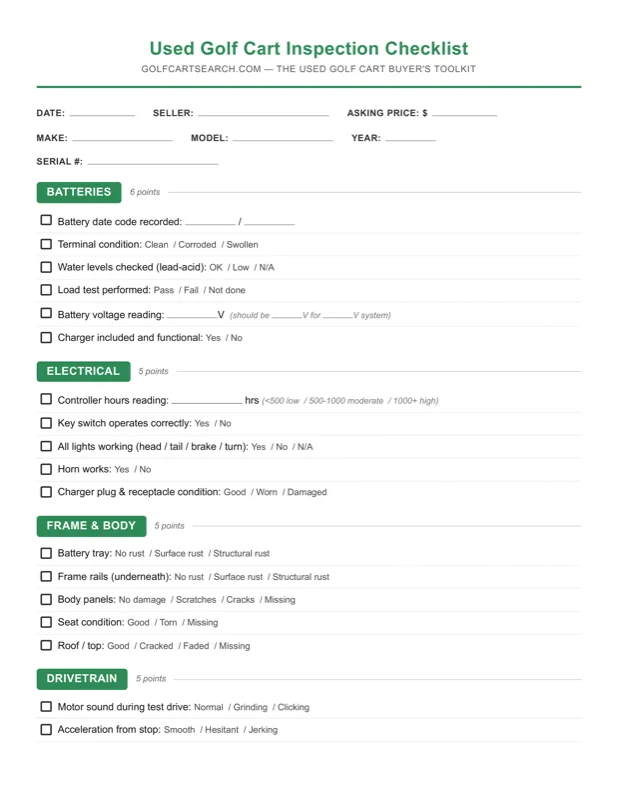
Used Cart Inspection Checklist
Check batteries, charger, brakes, cables, serial number, tires, and parts availability.
Find Golf Cart Repair
Compare local repair shops when the fix needs diagnostics, mobile service, or brand-specific parts.
Golf Cart Parts Near Me
Find local parts counters, battery help, tire mounting, accessories, and installation support.
Golf Cart Parts Questions
Quick answers for fitment, compatibility, OEM versus aftermarket parts, and what to check before buying.
How do I know which golf cart parts fit my cart?
Start with the brand, model family, model year, serial number, voltage, and gas or electric drivetrain. Club Car, E-Z-GO, and Yamaha often have part breaks by generation, so confirm the serial plate before ordering model-specific parts.
Are Club Car, E-Z-GO, and Yamaha golf cart parts interchangeable?
Usually no. Some universal accessories fit several carts, but chargers, windshields, seats, solenoids, controllers, body parts, and suspension parts are commonly brand, model, year, or voltage specific.
What golf cart parts should I check before buying used?
Check batteries, charger, cables, tires, brakes, steering, suspension, solenoid, controller, motor or engine, lights, windshield, seats, and serial number paperwork before making an offer.
Should I buy OEM or aftermarket golf cart parts?
OEM parts are the safer choice for exact fitment, warranty work, and critical systems. Aftermarket parts can be fine for accessories and common replacements, but verify reviews, dimensions, voltage, plug style, and return policy before buying.
Which golf cart parts are voltage specific?
Chargers, batteries, voltage reducers, controllers, solenoids, motors, lights, and many electrical accessories can be voltage specific. Confirm whether your cart is 36V, 48V, 72V, lithium, or lead-acid before buying electrical parts.