
LSV vs Golf Cart: Laws, Costs, and Best Uses

LSV vs golf cart: compare speed, laws, insurance, and costs. Standard carts often start near $7,000, while true LSVs usually run $10,000+.

Michael
Michael
Apr 14th, 202610 min read
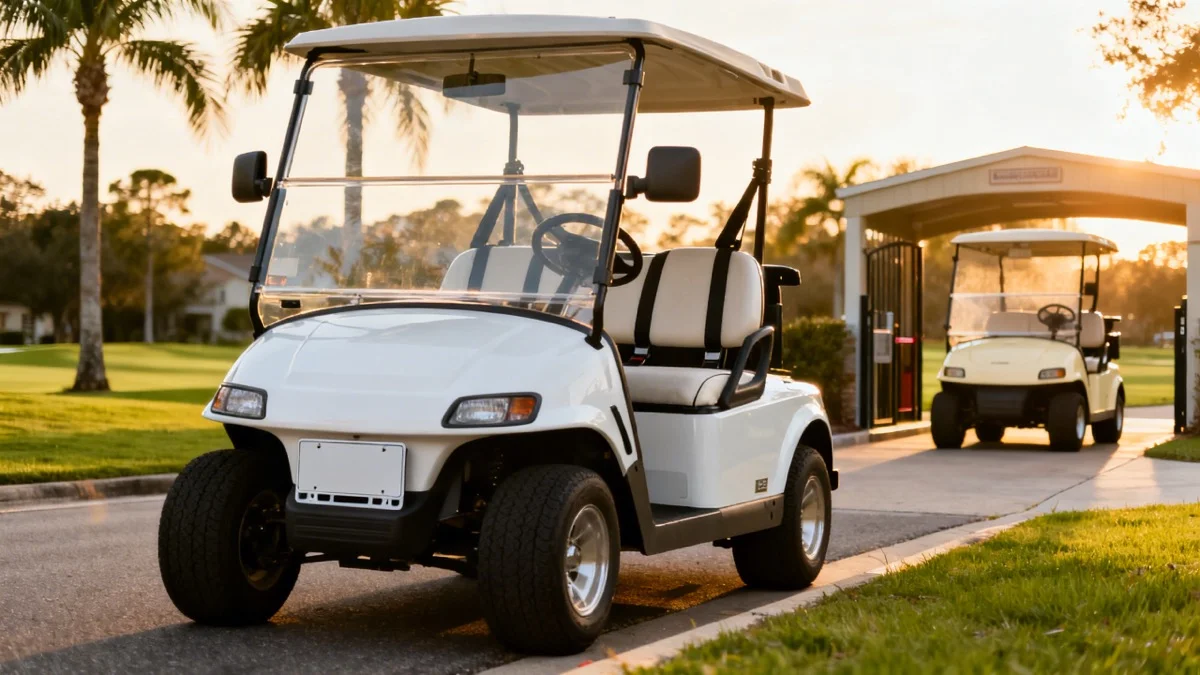
LSV and standard golf cart parked side by side on a neighborhood street at golden hour showing windshield, mirrors, and road-ready equipment differences

As an Amazon Associate, we earn from qualifying purchases. This helps support our site at no extra cost to you.

If you are comparing LSV vs golf cart, the easiest way to think about it is this: a standard golf cart is usually a private-property tool, while an LSV is a road-going neighborhood vehicle with a much stricter legal and paperwork burden.

That sounds simple, but it creates real buyer mistakes. People overpay for an LSV when a regular cart would have handled their actual use just fine. Other buyers do the opposite. They buy a normal golf cart, add a few accessories, and assume that makes it a clean substitute for a titled, insured, road-ready vehicle. Then the DMV or insurer says no.

This guide is built to solve that exact decision. We will compare speed, laws, paperwork, insurance, costs, and real-world ownership tradeoffs, then finish with a practical answer to the only question that matters: which one should you actually buy?

If you already know you want the road-legal path, pair this with our best street legal golf carts guide, how to make a golf cart street legal guide, golf cart registration by state guide, and the full state golf cart laws hub.

12 to 19 mph
Typical standard golf cart speed
20 to 25 mph
Typical LSV speed window
$4,000 to $8,000
Common used golf cart range
$14,000+
Typical new factory LSV starting point

Quick Answer: Should You Buy an LSV or a Golf Cart?

Buy a standard golf cart if your riding is mostly:

  • golf courses
  • private property
  • campgrounds
  • gated communities with cart-specific local rules
  • short neighborhood trips where a true title-and-plate path is not the priority

Buy an LSV if you need:

  • the cleanest legal path for public-road use
  • regular operation on roads posted 35 mph or less, where allowed
  • title, registration, and VIN-backed paperwork from the start
  • auto-style insurance and a vehicle that insurers and DMVs already understand
  • more confidence for errands, school pickups, beach-town driving, or retirement-community transportation

The cheap summary is this: if your problem is convenience, buy the golf cart. If your problem is legal road use, buy the LSV.

The biggest split between an LSV and a golf cart is not cosmetic. It is legal classification.

Under FMVSS 500, low-speed vehicles must meet a specific road-use equipment standard. In practical buyer language, that usually means:

  • 20 to 25 mph operating window
  • headlights, taillights, brake lights, turn signals, reflectors
  • mirrors
  • seat belts
  • a compliant windshield
  • VIN and certification paperwork

Florida's Low Speed Vehicles page is one of the clearest practical summaries in the country: LSVs are four-wheeled vehicles with a top speed greater than 20 mph but not greater than 25 mph, they must be titled, registered, and insured, and they may only operate on streets where the posted speed limit is 35 mph or less.

A standard golf cart is different. In many places it can still be used on certain local streets, crossings, or community roads, but that permission is usually narrower, more local, and easier to misunderstand. That is why our license guide, insurance guide, and titles and registration guide all treat golf carts and LSVs separately.

Here is the clean side-by-side view:

CategoryStandard Golf CartLSV / NEV
Typical speed12 to 19 mph20 to 25 mph
Main useGolf course, private property, limited local cart routesPublic-road neighborhood use where permitted
VIN / titleOften no clean title pathUsually yes
RegistrationOften not requiredUsually required
InsuranceOften optional or limited-useUsually auto-style and mandatory
Driver licenseOften depends on local ruleUsually yes
RoadsNarrow local permissionsCommonly 35 mph roads or less
Equipment burdenLightMuch higher
Best fitSimplicity and priceLegal road use and paperwork clarity

Where a Standard Golf Cart Wins

A standard golf cart wins when your real use case is smaller than the legal drama people imagine.

If you live in a golf-cart-friendly neighborhood, ride to the clubhouse, cruise inside a resort, or use a cart on acreage and private roads, a regular cart is usually the smarter buy. It is cheaper, simpler, easier to service, and easier to justify. You also avoid paying for equipment and paperwork you may never truly need.

This is where a lot of buyers should pause before chasing an LSV badge. A normal personal cart from Club Car, E-Z-GO, or Yamaha already covers most casual ownership needs. If you want a broad model shortlist first, our best golf carts guide, best golf cart brands page, and best golf carts for neighborhoods guide are the right next stops.

You can also see this in the online market. A cart like the Kandi GOAT 2P is interesting because it gives price-first buyers a full-size electric cart around $7,999 without pretending it is automatically the right answer for DMV-style road use. If your use is private property, campground roads, or short internal neighborhood loops, that kind of buy can make sense.

Where standard carts make the most sense:

  • you want to stay under LSV pricing
  • you do not need the title and plate path
  • you care more about parts, resale, and dealer service than road legality
  • you would rather spend the money on a better battery, seats, enclosure, or tires

If you are shopping used, standard carts also give you a much deeper market. That is why the used golf cart buying guide and value guide matter more here than they do for buyers chasing a factory LSV.

Where an LSV Earns Its Price

An LSV earns the extra money when you want the vehicle to behave like a real neighborhood transportation tool, not just a cart that occasionally sneaks onto public streets.

That usually means:

  • frequent trips on local roads where carts are actually allowed
  • more regular road crossings
  • errands around town
  • school or activity pickups where permitted
  • beach-town, resort-town, or retirement-community use where road legality is part of the ownership case

This is where factory LSVs justify themselves. They are built around the legal standard from day one. The equipment package, paperwork, VIN path, and insurance conversation are all cleaner.

Recent pricing makes the difference very concrete. Club Car's official Onward 4 Forward LSV page lists a starting MSRP of $14,999. The latest E-Z-GO OMNIA price sheet lists the Liberty LSV at $15,599. Those numbers are well above a basic personal cart, but they buy something specific: a much cleaner road-use ownership path.

This is also why the best LSVs tend to show up in a different buyer conversation than normal carts. You are no longer only comparing comfort, range, and style. You are comparing:

  • paperwork quality
  • insurance friction
  • dealer support
  • how road-ready the vehicle really is
  • whether the extra money prevents future hassle

If that is your use case, start with best street legal golf carts, compare it against golf cart insurance rules, and then use our dealer directory to see which brands you can actually service locally.

Real-World Cost Difference

Price is where people often talk themselves into the wrong vehicle.

Here is the practical cost picture:

Cost AreaStandard Golf CartLSV / NEV
Used buy-inOften $4,000 to $8,000Often $7,000 to $14,000
New buy-inOften $9,000 to $15,000Often $14,000 to $20,000+
InsuranceOften optional or low-use coverageUsually mandatory and auto-style
Registration and title feesOften noneUsually yes
Paperwork riskLower, simpler ownershipHigher, but cleaner if factory-built
Resale if road-ready mattersMixedStrong if title and compliance are clean

That does not mean every LSV is more expensive long term. In a place where you truly need the legal road-use path, the extra upfront money can save you from wasting cash on the wrong vehicle first.

The opposite is also true. If you do not need road legality, LSV money can be wasted money. Spending an extra $5,000 to $8,000 just to end up using the vehicle like a private-property golf cart is usually a bad allocation of budget.

This is also where the golf cart cost calculator and pricing guide help. They force you to separate purchase price from total ownership cost. Add insurance and title fees to an LSV, or add likely battery and tire work to a cheaper used cart, and the picture gets clearer fast.

Convert Your Cart or Buy a Factory LSV?

This is where buyers burn the most money.

If you already own a good cart, conversion can work. But it only works cleanly when three things line up:

  1. your cart can realistically reach the needed speed
  2. your state has a workable title and registration path for converted carts
  3. the total budget still makes sense after equipment, labor, and paperwork

In the real world, conversions go wrong because owners think the parts list is the whole job. It is not. Lights, mirrors, belts, and a windshield are the visible part. The harder questions are the legal ones:

  • does the cart have the right VIN path?
  • will your DMV accept the paperwork?
  • does your insurer understand what the vehicle is?
  • are you still below the cost of buying the right vehicle in the first place?

If your cart already needs batteries, charger work, speed upgrades, or suspension cleanup, a conversion budget can climb fast. A simple light conversion on a solid existing cart might stay close to the ranges in our street-legal conversion guide. A more complete build, especially if you are fixing old-cart problems at the same time, can run well past $2,000 to $4,000 before you even talk about title friction.

That is why factory LSVs are often the smarter road-use buy. They cost more upfront, but the VIN, title, certification, and insurance story is much cleaner.

If you already own an EZGO TXT and want better comfort and visibility while deciding whether to stay private-property-only or pursue a full conversion, the ENEKERP EZGO TXT windshield is a practical upgrade. Just do not confuse a comfort upgrade with an actual LSV paperwork solution.

Online Listings Blur the Line

Online-first carts make this topic more confusing because the listings often land in the gray area between "golf cart" and "LSV-style golf cart."

That does not automatically make them bad buys. It just means buyers have to verify more.

Questions you should ask before ordering any online cart:

  • Is it advertised as a true FMVSS 500-compliant LSV, or just shown with road-style equipment?
  • Does it have a 17-digit VIN?
  • What title or MCO paperwork comes with it?
  • Who services it locally?
  • Does the seller clearly explain the registration path?

This is where a road-use-looking cart can still be the wrong road-use buy.

The Check Price on Amazon button above is a good example of an online value play that deserves a serious look if you are price-sensitive. But the right follow-up is not "looks road-ready, good enough." The right follow-up is "show me the paperwork, the service path, and the exact legal status."

If you want another online example, the SDLANCH 45-Mile cart is another listing that makes sense for buyers comparing features and budget. I still would not buy either one blind without also reading our Amazon golf cart buying risks guide and best golf carts under $10,000 guide.

Buying Mistakes to Avoid

The highest-cost mistakes in this category are boring, not glamorous.

Mistake 1: Buying road-use features when you only need private-property use

If you are never going to title, plate, insure, and legally use the vehicle on public roads, buying an LSV can be like paying for a full pickup truck to move houseplants.

Mistake 2: Assuming a 25 mph listing means automatic road legality

It does not. Speed is only one part of the legal picture. Equipment, certification, VIN, title path, and registration rules matter just as much.

Mistake 3: Ignoring insurance until after purchase

This is where buyers get surprised. A normal golf cart and an LSV can fall into two very different insurance conversations. Start with our golf cart insurance guide and the main insurance hub before you buy.

Mistake 4: Forgetting dealer support

A cheaper vehicle with weak service access can easily become the more expensive one. This is one reason Club Car, EZGO, and Yamaha still hold their position so well.

Mistake 5: Underestimating resale

The wrong cart for your use case loses money twice. You overpay to buy it, then take a hit when you realize you chose wrong. That is exactly why the golf cart value guide and used buying guide matter so much in this category.

Bottom Line: Which One Should You Buy?

Buy a standard golf cart if your riding is mainly private, local, recreational, or golf-course-focused. You will save money, simplify ownership, and get a deeper used market.

Buy an LSV if legal road use is the point of the purchase. That is when the title, VIN, registration, insurance, and equipment package justify the higher price.

If you are stuck between the two, use this rule:

  • Private-property problem: buy the golf cart
  • Public-road problem: buy the LSV
  • Already own a solid cart and state rules are friendly: consider conversion
  • Need the cleanest paperwork path: buy the factory LSV

And if you still are not sure, start local. Browse golf carts for sale near you, compare support depth first, then price second. The best cart on paper is not the best cart if nobody within 50 miles can service it.

Frequently Asked Questions

What is the difference between an LSV and a golf cart?

A standard golf cart is usually a private-property or golf-course vehicle that runs under 20 mph. An LSV is a four-wheeled road-use vehicle in the 20 to 25 mph range with the required safety equipment, VIN, registration path, and insurance requirements for public-road use where permitted.

Is an LSV better than a golf cart for neighborhood use?

Only if your neighborhood use really includes legal public-road driving. If you mainly stay inside a private community or on cart-friendly internal routes, a standard golf cart is often the better value. If you need a cleaner path for local streets and errands, the LSV earns its extra cost.

How much does a golf cart cost compared with an LSV?

Used standard carts often run $4,000 to $8,000. New dealer-backed personal carts are commonly $9,000 to $15,000. True factory LSVs usually start around $14,000 to $16,000, with premium models pushing beyond $20,000.

Do LSVs need insurance?

Usually yes. Once the vehicle is registered as an LSV, it normally needs auto-style insurance. A standard golf cart used on private property often has more flexible coverage rules.

Do you need a license to drive an LSV?

Usually yes. A licensed driver is the normal rule once the vehicle is being used as an LSV on public roads. Local law can tighten that even further.

Can a golf cart become an LSV?

Sometimes, but it is not automatic. The vehicle needs the right speed, equipment, paperwork, and a workable registration path in your state. That is why factory LSVs are often easier than conversions.

Can you drive an LSV on a 45 mph road?

Usually no. In most states, LSVs are limited to roads posted 35 mph or less, though some places allow certain crossings. Always verify your state and local rules.

Is a NEV the same as an LSV?

Usually close enough for shopping purposes. NEV means neighborhood electric vehicle. LSV is the legal classification buyers care about most when title, registration, insurance, and road use are involved.

Does every 25 mph golf cart count as an LSV?

No. Speed alone does not make it a legal LSV. The equipment package, certification, VIN, and paperwork still have to line up.

Should I convert my existing golf cart or buy a factory LSV?

Convert when you already own a strong cart, your state is conversion-friendly, and the total budget still makes sense. Buy the factory LSV when you want the cleanest legal path and the least paperwork friction.

Share this post

Golf Cart Search

Find the Best Golf Carts of 2026

Compare top-rated models, read expert reviews, and find the perfect cart for your needs.
Related posts

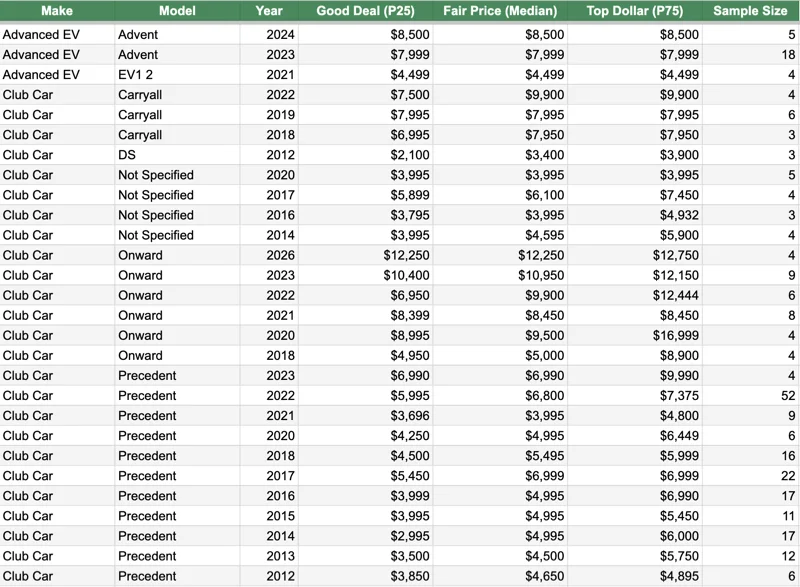
Don't Overpay for a Used Golf Cart

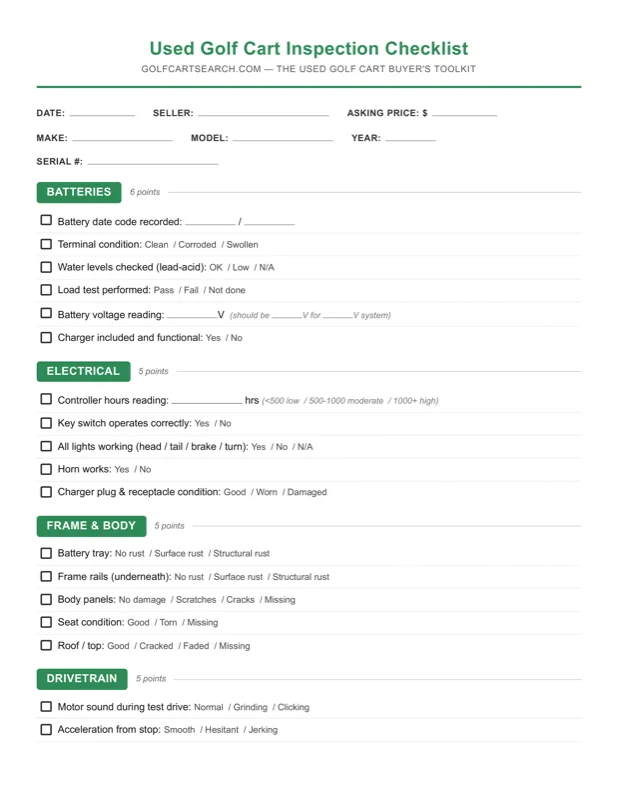
Get pricing data, a printable inspection checklist, and negotiation scripts to help you buy with confidence.

Get the Buyer's Toolkit
Pricing dataInspection checklistNegotiation scripts

Instant download. 30-day guarantee.