Yamaha Golf Cart Models by Year
Identify Yamaha model families from the 1975 YG-292 through G-series, Drive, and Drive2 carts using documented production years, physical clues, and gas or electric variants.
Reviewed using Yamaha’s official PID bulletin and model timeline.
Quick Yamaha Model Timeline
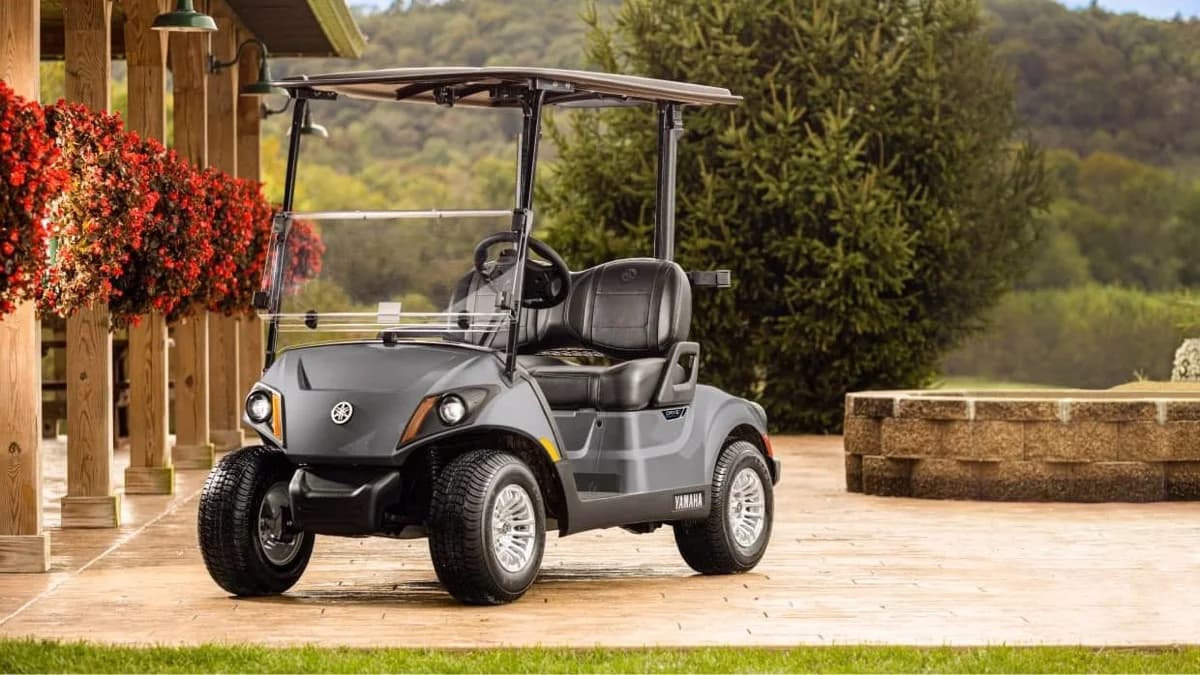
The main Yamaha golf cart models by year are G1 from 1979, G2 from 1985, the G14/G16/G19 Ultima families from 1995, G22 G-Max from 2003, Drive/G29 from the 2007 model year, and Drive2 from the 2017 model year. G3, G5, G8, G9, and utility models overlap those main generations.
1979-1991
G1 and G2
Early G-series with separate gas and electric versions.
1990-2002
G5 through Ultima
Overlapping fleet, personal, gas, 36V, and 48V models.
2003-2007
G22 G-Max
Last major G-series fleet family before The Drive.
2007-present
Drive and Drive2
Drive/G29 through 2016, then Drive2 from 2017.
Yamaha’s official timeline begins with the YG-292 in 1975. The detailed PID bulletin begins with G1 production in 1979.
Yamaha Golf Cart Model Years
| Model family | Gas model years | Electric model years | Identification clues |
|---|---|---|---|
| YG-292 | Introduced 1975 | Not listed | Yamaha's first golf car. Treat surviving examples as a separate pre-G-series platform. |
| G1 | 1979-1986, 1989 | 1980-1986 | The early G1 family. The gas version is the first Yamaha golf car documented with a 2-stroke engine, oil injection, and solid-state ignition. |
| G2 | 1985-1991 | 1985-1991 | The first Yamaha golf car with injection-molded plastic front and rear body panels. The gas version introduced a 4-stroke overhead-valve engine. |
| G3 Sun Classic | 1986 | 1987 | Neighborhood-oriented factory equipment included bucket seats, lights, turn signals, a glass windshield, locking glove box, and front storage. |
| G5 Sun Classic | 1990-1995 | 1990-1992 | Metton resin body panels, rack-and-pinion steering, a rearview mirror, and a sun top with integrated air vents distinguish this Sun Classic generation. |
| G8 Fleet Classic | 1990-1994 | 1990-1994 | Fleet-focused G-series model. Yamaha identifies its semi-independent rear suspension with coil-over shocks as the major generation change. |
| G9 Fleet Master | 1991-1995 | 1991-1995 | A value-focused fleet alternative to the G8. Because the production years overlap, use the G8 or G9 model code rather than appearance alone. |
| G14 Ultima | 1995-1996 | 1995-1996, 36V | Longer and wider than earlier models, with front and rear impact-resistant bumpers forming 360-degree body protection. |
| G16 Ultima | 1996-2002 | 1996-2002, 36V | Next-generation Ultima. The official timeline calls out its larger 301cc gas engine, redesigned clutch, and four factory color options. |
| G19 Ultima | Not listed | 1996-2002, 48V | Electric-only model in the PID chart and Yamaha's first 48-volt electric golf car, with regenerative braking and roll-away protection. |
| G20 Concierge | 2000-2002 | Not listed | A people-moving Concierge model. Confirm the passenger layout because it is not the standard two-seat fleet configuration. |
| G22 G-Max | 2003-2007 | 2003-2007, 48V | G-Max generation with redesigned brake pedals, parking brake, Ergo-shade top, and rack-and-pinion steering. Gas models use a 357cc engine. |
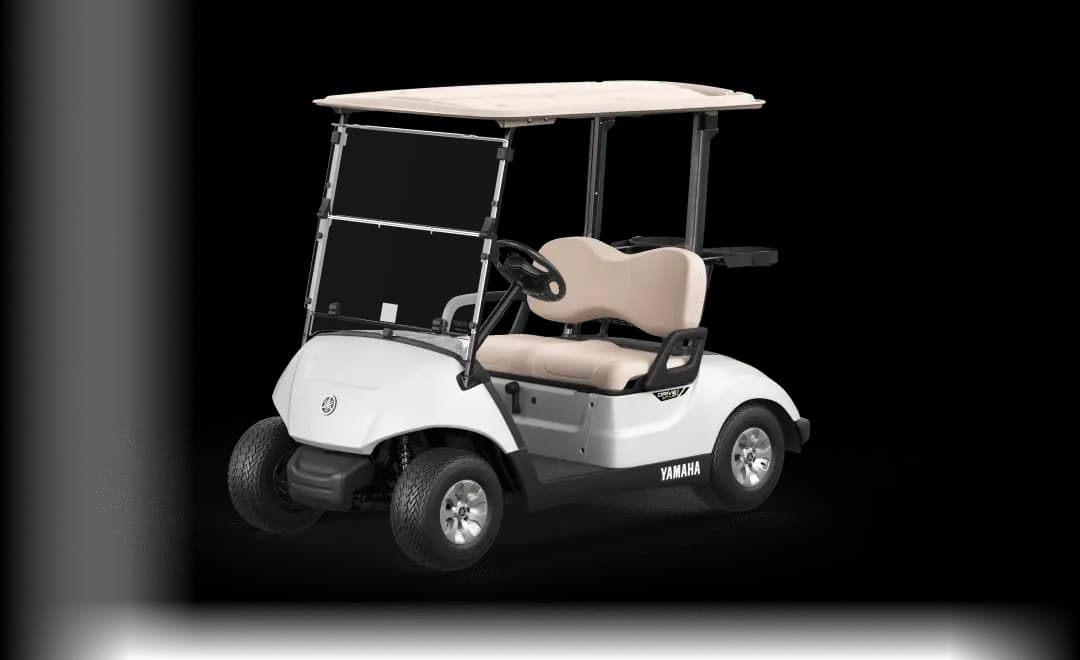
| Drive / G29 | 2007-2016 | 2007-2016 | Officially the YDR or The Drive. “G29” is the common parts-market name. Look for an automotive-style dashboard and YDRA or YDRE model code. |
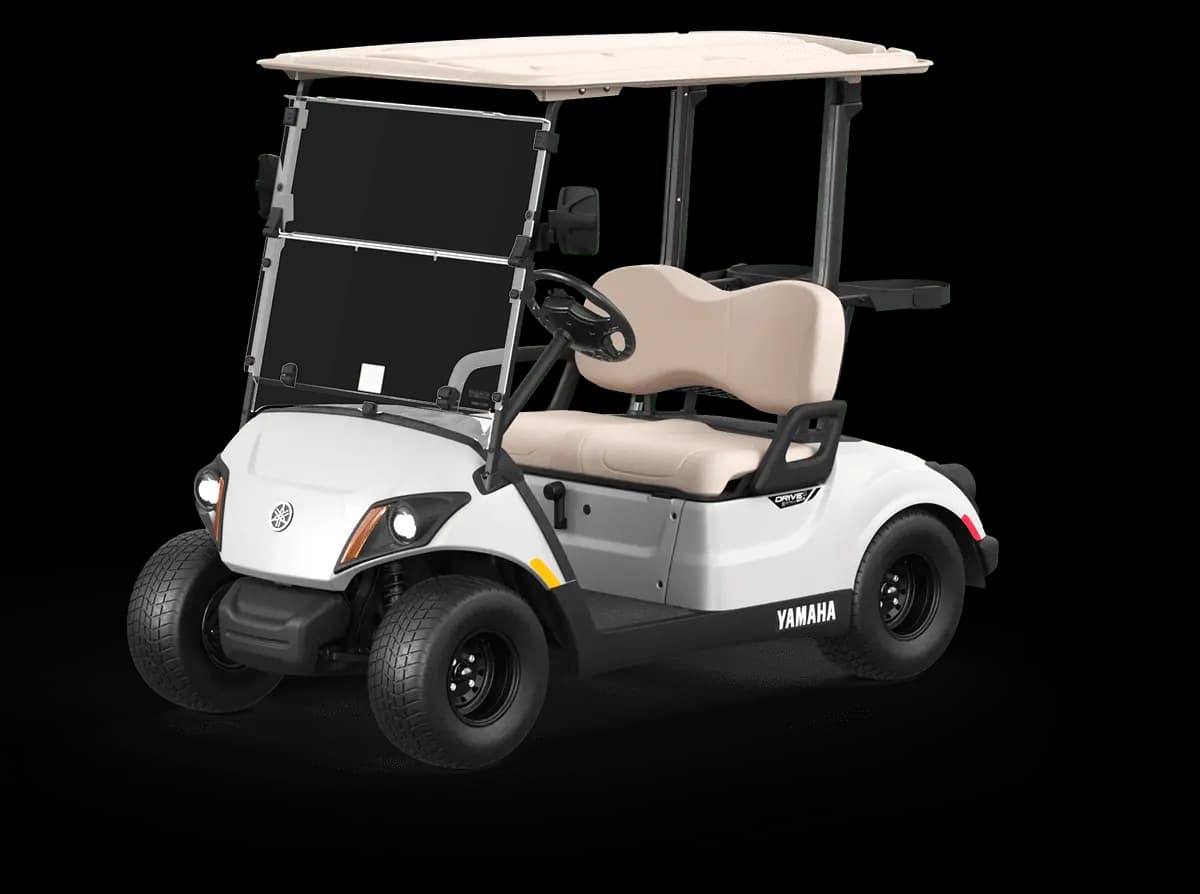
| Drive2 | 2017-present | 2017-present | The successor to The Drive, with a later cowl and dashboard design. Fleet carts can have a plain front cowl, while PTV trims may have integrated lights. |
The year ranges reproduce model-year entries in Yamaha’s official PID bulletin through 2018, supplemented by launch dates in Yamaha’s official timeline. “Present” reflects Drive2’s continued placement in that timeline through its latest milestones.
Visual Differences Between Yamaha Generations
1979-1986
G1: first G-series shape
Start with the compact early platform, then inspect the powertrain. Yamaha built both gas and electric G1 versions, so the body alone does not determine fuel type.
1985-1995
G2 through G9: overlapping bodies
The G2 introduced molded plastic front and rear panels. G3 and G5 Sun Classic carts add obvious factory equipment, while G8 and G9 fleet years overlap and need a model-code check.
1995-2002
Ultima: G14, G16, and G19
Look for the longer, wider Ultima stance and protective bumpers introduced with G14. G16 can be gas or 36V electric; G19 is the 48V electric member of this era.
2003-2007
G22 G-Max
The G-Max generation brought a revised control area, brake pedal design, parking brake, and sun top. Its 2007 model year overlaps with the first Drive.
2007-2016
Drive, commonly called G29
The first-generation Drive is identified by YDRA gas or YDRE electric codes. Do not use a seller's “G29” label to assume an exact year.
2017-present
Drive2
Drive2 has the later, more sculpted front body. Fleet and personal trims can look different because lights, seats, and trim equipment vary.
Yamaha Gas vs Electric Model Identification
Gas model pattern
Yamaha’s documented G-series gas models normally use an A suffix, including G16A and G22A. The Drive uses YDRA and Drive2 uses DR2A. Confirm with the engine, fuel system, and complete PID because the letter is a family clue, not a substitute for inspection.
Electric model pattern
Electric counterparts normally use an E suffix, including G16E, G19E, G22E, YDRE, and DR2E. Yamaha identifies G16E as 36V, G19E and G22E as 48V, and later Drive families as DC, AC, or lithium variants depending on year.
Use the family first, then the PID
- Identify the body generation and model family.
- Check for an engine or battery pack under the seat.
- Read the complete model code and primary ID.
- Use the serial lookup for the exact year breakpoint.
Yamaha Utility and People-Mover Milestones
| Launch year | Model family | What separates it |
|---|---|---|
| 1996 | G11 Yamahauler | Utility model with a larger 301cc engine and impact-resistant front bumper. |
| 2001 | G21 | Utility vehicle with four-wheel brakes and a larger engine than its predecessor. |
| 2005 | G23, G27, and G28 | Utility range with roto-molded dump beds; G27 and G28 have lifted suspension. |
| 2009 | YTF1 and YTF2 | Adventurer One and Two utility models built from The Drive platform. |
| 2018 | UMAX and UMAX Rally | New utility family, followed by the four-seat Rally2+2 in 2019. |
| 2025 | UMAX Li | Lithium battery option added to Yamaha's UMAX utility lineup. |
Official Yamaha Sources
These are archived copies of documents published by Yamaha Golf-Car Company. The PID bulletin lists starting primary ID numbers and model years through 2018. The timeline records major product introductions through 2025.
Related Yamaha Resources
Yamaha Model Year Questions
What years were Yamaha G1 golf carts made?
Yamaha's PID chart lists G1 gas model years from 1979 through 1986, plus a 1989 entry. It lists G1 electric model years from 1980 through 1986. Use the primary ID to confirm an individual cart.
What years were Yamaha G22 G-Max golf carts made?
The official PID chart lists both gas and electric G22 G-Max models from 2003 through 2007. The first Yamaha Drive also appears for 2007, so that model year is a platform crossover.
Is a Yamaha Drive the same as a G29?
Yes. G29 is the common parts-market name for the first-generation Yamaha Drive, officially identified as YDR. Yamaha's PID chart lists Drive gas and electric models from 2007 through 2016.
What year did Yamaha Drive2 start?
Yamaha's timeline marks the Drive2 launch in calendar year 2016. The PID chart starts DR2A gas and DR2E electric production with the 2017 model year.
How can I tell if a Yamaha golf cart is gas or electric?
Inspect under the seat for a gasoline engine and fuel system or an electric battery pack. In Yamaha's documented model codes, A commonly identifies gas families and E identifies electric families, such as G22A versus G22E and YDRA versus YDRE.
Can the body style identify the exact Yamaha model year?
No. Body styles and model families span several years, and some generations overlap. Use the body and powertrain to identify the family, then use the full primary ID for the exact model-year breakpoint.