Golf Cart Finder: Which Golf Cart Should I Buy?
Use this free golf cart finder to match your budget, passengers, terrain, range, power preference, and road use with the right cart type and three models worth comparing.
The result is free and ungated. If you already know the category you want, compare the full best golf carts ranking or browse golf carts for sale.
Find Your Best Golf Cart Type
Answer eight questions to get a cart type, three matching models, and the buying checks that matter for your situation.
Which Golf Cart Should I Buy?
For most neighborhood buyers, the best golf cart is a four-seat electric or lithium model with enough real-world range for daily driving and a local dealer that can service it. Golfers usually need a compact two-seat cart, while farms and hunting properties need cargo capacity, traction, ground clearance, and stronger suspension.
Start with use case and road legality before comparing touchscreens, wheels, or colors. A factory LSV can be the cleanest option for public-road use, but a normal neighborhood cart may be a better value on private property. The finder follows that order so it does not recommend expensive features before resolving the decisions that can rule a cart in or out.
Best Golf Cart Type by Use Case
| Use | Best starting type | What matters most |
|---|---|---|
| Neighborhoods | 4-seat electric or lithium cart | Quiet operation, comfort, range, local support |
| Golf courses | Compact 2-seat fleet or personal cart | Bag storage, smooth ride, course-proven service |
| Beach and coastal towns | Corrosion-resistant electric cart | Frame material, weather protection, easy cleaning |
| Campgrounds | 4-seat passenger cart | Lighting, range, storage, charging or refueling access |
| Farm and ranch work | Utility cart with cargo capacity | Payload, traction, durability, serviceability |
| Hunting and trails | Lifted off-road cart | Ground clearance, brakes, tires, suspension, stability |
How the Golf Cart Finder Works
- 1Define the job. Your main use and passenger count establish the right vehicle category and size.
- 2Resolve the constraints. Budget, road use, terrain, and daily distance remove carts that are a poor practical fit.
- 3Match the ownership preference. Power type and your main priority shift the ranking toward value, support, maintenance, or comfort.
- 4Compare real models. The result links to three models in the existing GolfCartSearch catalog plus the right follow-up guides.
Methodology: Updated August 10, 2026. This version scores 31 current models from the GolfCartSearch catalog. It weighs vehicle fit first, then passenger capacity, road use, terrain, budget, range, power preference, and ownership priorities. Prices and configurations can change, so confirm the final specifications with the seller.
Electric vs Gas Golf Carts
Electric carts are quieter and usually easier to maintain, which makes them the default for many neighborhoods and golf courses. Gas remains useful for quick refueling, remote properties, and long workdays. Compare charging access and real daily distance in the electric vs gas guide.
2 Seats vs 4 Seats vs 6 Seats
Two seats keep a cart compact, four seats give most households useful flexibility, and six seats work when group transport is a regular need. Larger carts require more storage and turning room. See the complete seating-capacity comparison.
What to Check Before Buying
Local service
Confirm who will perform warranty work and source model-specific parts.
Battery and range
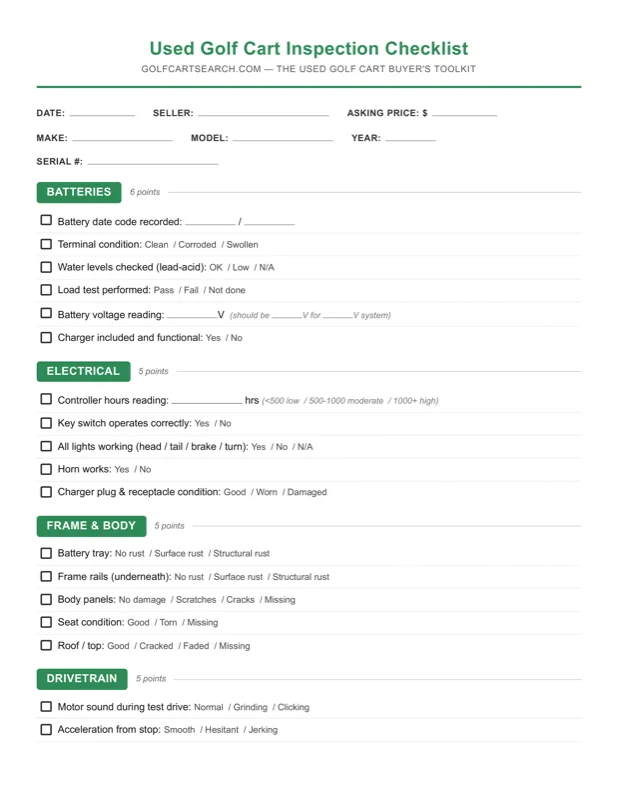
Verify battery type, warranty, charger, replacement cost, and loaded range.
Road legality
Check vehicle class, title, registration, insurance, equipment, and local routes.
Total cost
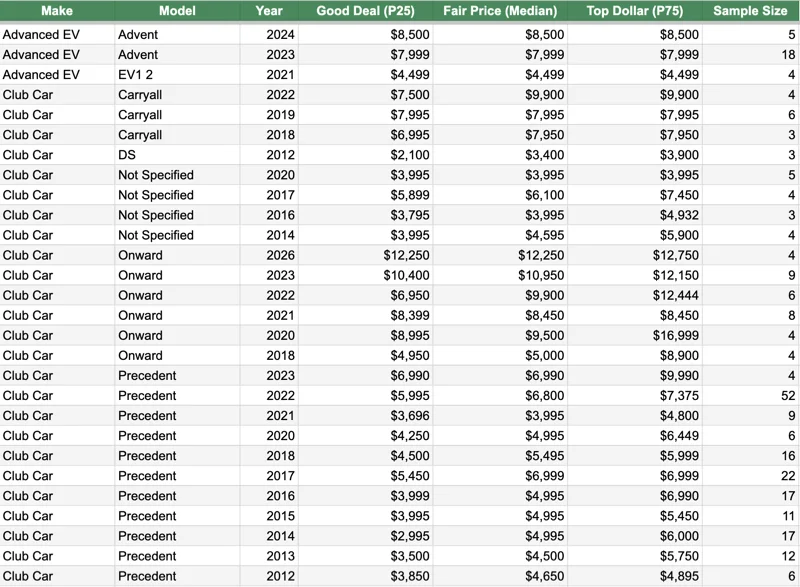
Add delivery, dealer fees, financing, maintenance, accessories, and resale value.
Compare the Next Decision
Golf Cart Finder FAQ
Get answers to common questions about golf cart services and find the best golf cart services near you