
Electric vs Gas Golf Cart: Complete Comparison Guide 2026

Electric or gas golf cart? Compare costs, maintenance, performance, range, and environmental impact to find the best choice for your needs in 2026.

Michael
Michael
Jan 12th, 202613 min read
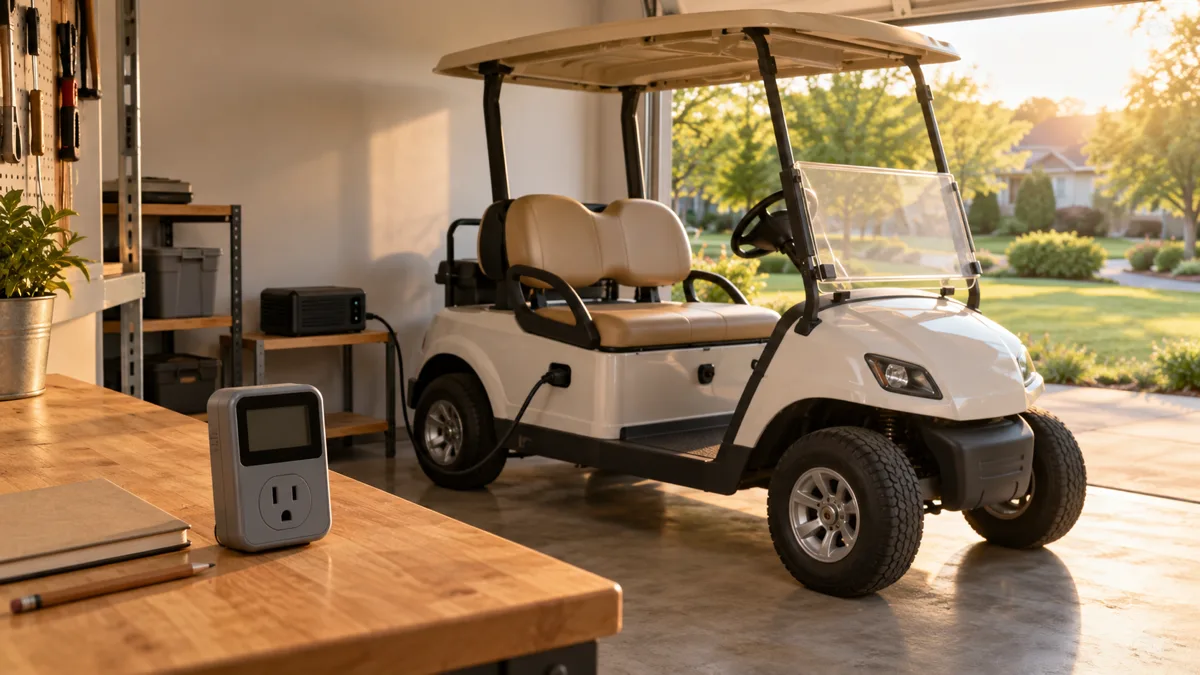
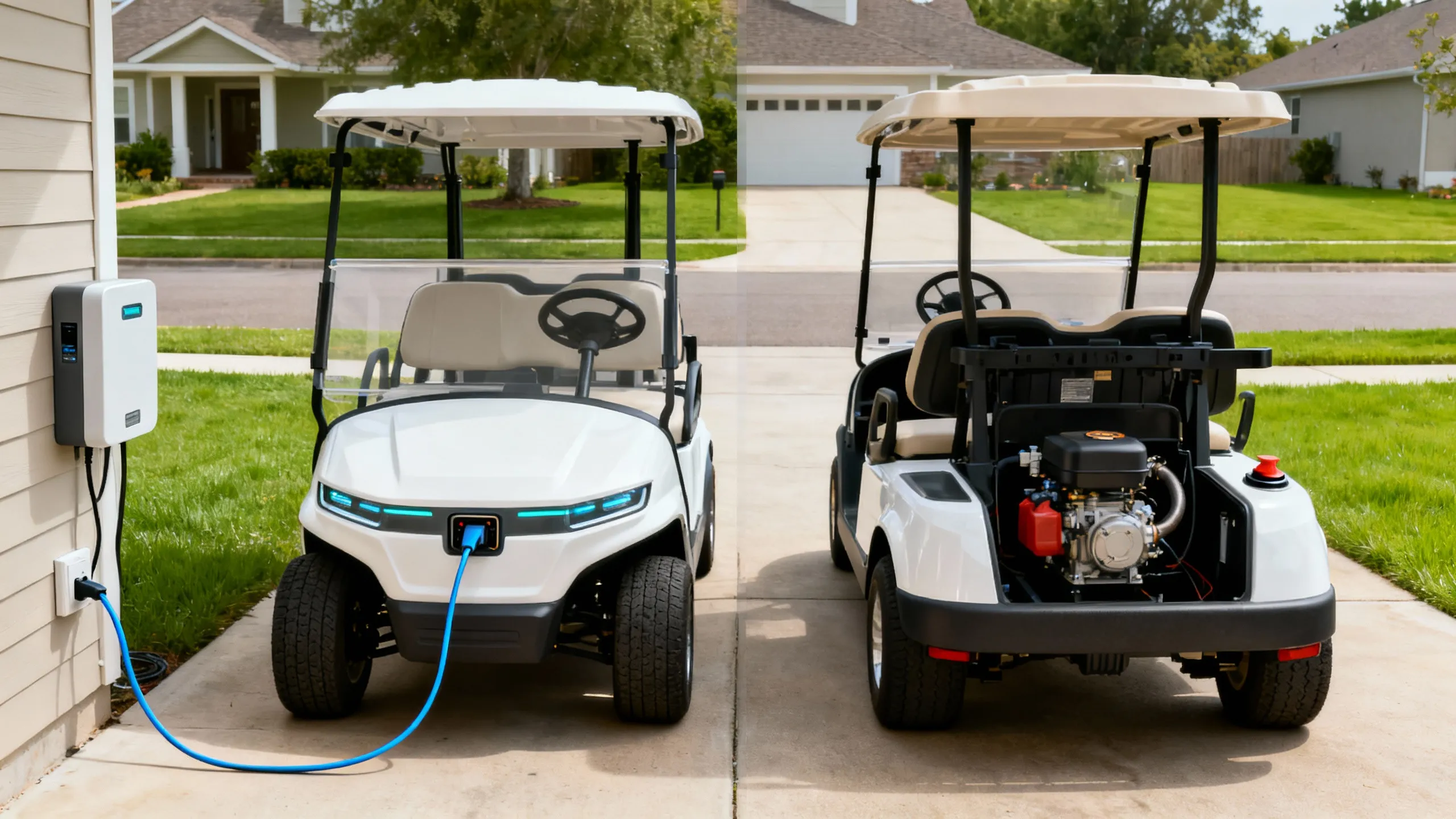
Side-by-side comparison of an electric golf cart and gas golf cart in a residential setting

Electric vs Gas Golf Cart: Which Should You Choose?

Electric or gas? It's one of the biggest choices when buying a golf cart. Each has its own strengths. The right pick depends on how you'll use your cart.

Quick Answer: Electric golf carts are best for most residential, golf course, and neighborhood use due to lower operating costs and quiet operation. Gas golf carts are better for hilly terrain, long-distance travel, commercial applications, and areas where quick refueling matters more than plugging in overnight.

$0.02-$0.04
Electric Cost/Mile
$0.10-$0.20
Gas Cost/Mile
25-40 mi
Electric Range
100-180 mi
Gas Range

Electric Golf Carts: Complete Overview

Electric golf carts have become the dominant choice for personal and golf course use, representing approximately 80% of new golf cart sales according to the Golf Cart Manufacturers Association. They run on rechargeable battery packs that power one or more electric motors.

How Electric Golf Carts Work

Electric golf carts use a battery pack (typically 36V or 48V) that powers an electric motor connected to the rear axle. When you press the accelerator, a controller regulates the power flow from the batteries to the motor, propelling the cart forward. Regenerative braking in some models can help recharge batteries during deceleration.

Key Components:

  • Battery pack (4-8 batteries, lead-acid or lithium)
  • Electric motor (DC or AC)
  • Controller/speed regulator
  • Charger (typically 110V household outlet)
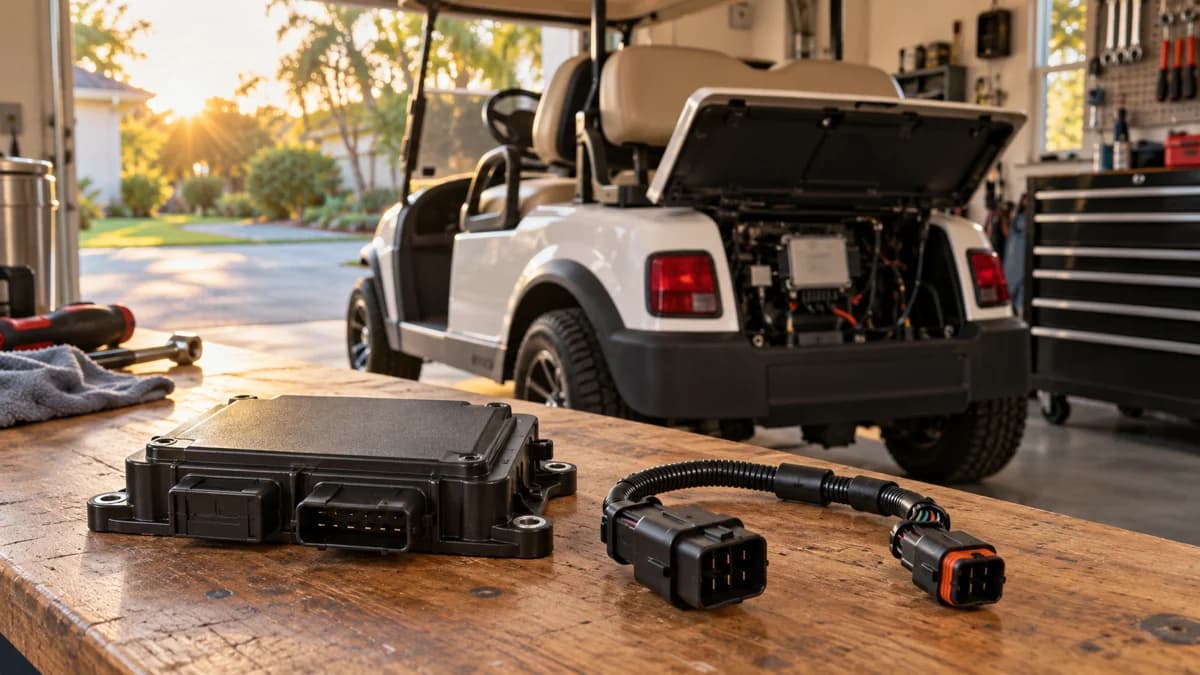
  • Solenoid and wiring system

For a deep dive into electric golf cart batteries, including lithium vs. lead-acid comparisons, see our comprehensive golf cart batteries guide.

Electric Golf Cart Advantages

Advantages

  • Lower Operating Costs: $50-$150/year in electricity vs $250-$500+ in fuel
  • Quiet Operation: 50-60 dB, ideal for neighborhoods and golf courses
  • Zero Direct Emissions: No exhaust, safe for indoor use
  • Less Maintenance: No oil changes, filters, or tune-ups
  • Instant Torque: Quick acceleration from a stop
  • Smooth, Consistent Power: No engine vibration
  • Lower Long-Term Costs: Cheaper to own over 10+ years

Disadvantages

  • Limited Range: 25-40 miles per charge (lead-acid)
  • Long Recharge Time: 6-8 hours for full charge
  • Battery Replacement Cost: $800-$3,000+ every 4-8 years
  • Heavier Weight: Batteries add 250-500 lbs
  • Cold Weather Performance: Reduced range in winter
  • Higher Upfront Cost: $500-$1,000 more than gas
  • Reduced Hill Performance: Struggles on steep terrain

Best Uses for Electric Golf Carts

Electric golf carts excel in these scenarios:

  • Golf courses: Quiet operation doesn't disturb players
  • Gated communities and neighborhoods: Low noise for residential areas
  • Indoor facilities: Zero emissions safe for warehouses, airports
  • Flat terrain: Optimal battery efficiency on level ground
  • Short daily trips: Under 25 miles per day
  • Environmentally conscious owners: Lower carbon footprint

Gas Golf Carts: Complete Overview

Gas-powered golf carts use small internal combustion engines, typically 300-400cc, similar to lawn mower or motorcycle engines. They represent about 20% of new golf cart sales but remain popular for specific applications.

How Gas Golf Carts Work

Gas golf carts use a small 4-stroke gasoline engine that powers a transmission connected to the rear axle. Most use a CVT (continuously variable transmission) for smooth acceleration. The engine runs on regular unleaded gasoline and requires similar maintenance to small engine equipment.

Key Components:

  • 4-stroke gasoline engine (10-14 HP typical)
  • Fuel tank (5-6 gallon capacity)
  • CVT or manual transmission
  • Exhaust system
  • Carburetor or fuel injection

Gas Golf Cart Advantages

Advantages

  • Extended Range: 100-180 miles per tank
  • Quick Refueling: Full tank in minutes, not hours
  • Better Hill Climbing: More consistent power on inclines
  • Higher Top Speed: Stock 15-19 MPH vs 12-15 MPH electric
  • Lighter Weight: 200-300 lbs lighter without batteries
  • Cold Weather Reliability: No battery degradation
  • Lower Purchase Price: $500-$1,000 less upfront

Disadvantages

  • Higher Fuel Costs: $250-$500+ per year in gas
  • More Maintenance: Oil changes, filters, tune-ups
  • Noise Pollution: 70-85 dB during operation
  • Exhaust Emissions: Not suitable for indoor use
  • Vibration: Engine vibration affects ride comfort
  • Smell: Exhaust and fuel odors
  • Prohibited Areas: Banned from many golf courses

Best Uses for Gas Golf Carts

Gas golf carts are ideal for:

  • Hilly terrain: Hunting properties, mountainous areas
  • Long-distance travel: Ranch or farm use over 25+ miles daily
  • Commercial applications: Resorts, large properties needing all-day use
  • Remote areas: Where electricity access is limited
  • Cold climates: Northern regions with harsh winters
  • Heavy hauling: Towing or carrying heavy loads

Head-to-Head Comparison

CategoryElectric Golf CartGas Golf CartWinner
Purchase Price$5,500-$12,000$5,000-$11,000Gas
Fuel/Charging Cost$50-$150/year$250-$500/yearElectric
Annual Maintenance$100-$300$300-$500Electric
Battery/Engine Life4-8 years (batteries)10-15 years (engine)Gas
Top Speed (Stock)12-15 MPH15-19 MPHGas
AccelerationInstant torqueGradual buildupElectric
Range25-40 miles100-180 milesGas
Refuel/Recharge Time6-8 hours5 minutesGas
Weight900-1,100 lbs650-950 lbsGas
Noise Level50-60 dB70-85 dBElectric
EmissionsZero directExhaustElectric
Hill ClimbingModerateStrongGas
Cold WeatherReduced rangeConsistentGas
Maintenance EaseVery easyModerateElectric
Indoor UseYesNoElectric
Resale ValueGoodGoodTie

For detailed weight specifications, see our golf cart weight guide. For speed and performance details, check our golf cart speed guide.

Total Cost of Ownership Analysis

The true cost difference between electric and gas golf carts becomes clear when you analyze total ownership costs over time.

5-Year Cost Comparison

Electric Golf Cart

Purchase Price$7,000
Electricity (5 years)$500
Maintenance (5 years)$1,000
Battery Replacement$0*
5-Year Total$8,500

*Batteries typically last 4-8 years

Gas Golf Cart

Purchase Price$6,500
Fuel (5 years)$1,875
Maintenance (5 years)$2,000
Engine Repairs$0*
5-Year Total$10,375

*Major repairs typically not needed in first 5 years

10-Year Cost Comparison

Electric Golf Cart

Purchase Price$7,000
Electricity (10 years)$1,000
Maintenance (10 years)$2,000
Battery Replacement (x1)$1,200
10-Year Total$11,200

Gas Golf Cart

Purchase Price$6,500
Fuel (10 years)$3,750
Maintenance (10 years)$4,000
Engine Rebuild$600
10-Year Total$14,850

Key Insight: Over 10 years, electric golf carts typically cost $3,000-$4,000 less to own than gas carts, despite higher upfront costs. The savings come from lower fuel and maintenance expenses.

For complete pricing information, see our golf cart pricing guide.

Which Should You Choose? Decision Framework

Choose an Electric Golf Cart If:

  • Primary use is a golf course — Most courses require or prefer electric
  • You live in a neighborhood/community — Quiet operation won't disturb neighbors
  • Daily travel is under 25 miles — Well within standard range
  • You have overnight charging access — Can plug in at home
  • Terrain is mostly flat — Electric excels on level ground
  • You want lower operating costs — Significant savings over time
  • Environmental impact matters — Zero direct emissions
  • You need indoor capability — Safe for enclosed spaces

Choose a Gas Golf Cart If:

  • You need extended range — Traveling 25+ miles daily
  • Quick refueling is essential — Can't wait 6-8 hours to recharge
  • Terrain is hilly or rough — Better power for inclines
  • You're in a remote area — Limited electrical access
  • Cold weather is common — Batteries lose capacity in freezing temps
  • Commercial/heavy use — All-day operation without downtime
  • Lower upfront cost matters — Budget-conscious purchase
  • You prefer higher top speed — Gas carts are faster stock

Use-Case Recommendations

Golf Course Play

Electric Recommended

Quiet operation, zero emissions, and most courses require or prefer electric carts.

🏘️

Neighborhood Use

Electric Recommended

Low noise for residential areas, easy home charging, and lower operating costs.

🦌

Hunting/Off-Road

Gas Recommended

Extended range, quick refueling, and better performance on rough terrain.

🌾

Farm/Ranch Use

Gas Recommended

Long distances, variable terrain, and easy refueling in remote areas.

🏨

Resort/Commercial

Either Works

Electric for guest-facing areas, gas for maintenance crews covering large properties.

🏭

Warehouse/Indoor

Electric Required

Zero emissions mandatory for enclosed spaces. Gas carts prohibited indoors.

Range and Performance Comparison

Understanding the real-world range capabilities helps determine which power source fits your needs.

Electric Golf Cart Range

Standard electric golf carts with lead-acid batteries provide:

  • Flat terrain: 25-40 miles per charge
  • Hilly terrain: 15-25 miles per charge
  • Cold weather: 15-30 miles (20-50% reduction)

Lithium battery upgrades can increase range to 50-80+ miles per charge while reducing weight by 150-200 lbs.

For complete range information, see our golf cart range guide.

Gas Golf Cart Range

Gas golf carts with 5-6 gallon tanks provide:

  • Flat terrain: 100-180 miles per tank
  • Hilly terrain: 80-120 miles per tank
  • Heavy loads: 70-100 miles per tank

Gas carts maintain consistent performance regardless of weather conditions.

Environmental Considerations

The environmental impact of your golf cart choice extends beyond simple "electric = clean" assumptions.

Direct Emissions

  • Electric: Zero direct emissions during operation
  • Gas: Produces CO2, CO, and hydrocarbons

Lifetime Environmental Impact

According to environmental studies, electric golf carts produce approximately 50-70% fewer total lifecycle emissions than gas carts, even when accounting for:

  • Battery manufacturing and disposal
  • Electricity generation (varies by region)
  • Material production

Regional Consideration: If your electricity comes primarily from renewable sources (hydro, solar, wind), your electric cart's environmental advantage is even greater. In coal-heavy grid areas, the advantage is smaller but still present.

Noise Pollution

Electric carts operate at 50-60 decibels (normal conversation level), while gas carts produce 70-85 decibels (vacuum cleaner to lawn mower level). This makes electric carts significantly better for:

  • Golf courses
  • Residential neighborhoods
  • Wildlife-sensitive areas
  • Early morning/late evening use

Maintenance Comparison

Understanding maintenance requirements helps you budget for ongoing ownership.

Electric Golf Cart Maintenance

Annual Tasks ($100-$300/year):

  • Battery water levels (monthly for lead-acid)
  • Terminal cleaning and corrosion prevention
  • Brake inspection and adjustment
  • Tire rotation and pressure check
  • Controller and wiring inspection

Periodic Costs:

  • Battery replacement: $800-$3,000+ every 4-8 years
  • Motor brushes (DC motors): $100-$200 every 5-7 years
  • Controller replacement: $200-$600 (rare)

Gas Golf Cart Maintenance

Annual Tasks ($300-$500/year):

  • Oil changes (every 100-200 hours)
  • Air filter replacement
  • Spark plug replacement
  • Fuel filter replacement
  • Belt inspection and replacement
  • Brake inspection and adjustment
  • Tire rotation and pressure check

Periodic Costs:

  • Carburetor rebuild: $100-$300 every 3-5 years
  • Engine rebuild: $500-$700 every 1,000-2,500 hours
  • Clutch replacement: $200-$400 every 5-7 years

Insurance Considerations

Both electric and gas golf carts have similar insurance requirements and costs. Typical annual premiums range from $100-$300 depending on coverage level and usage.

For comprehensive insurance information, see our golf cart insurance guide.

Resale Value and Depreciation

Both electric and gas golf carts hold their value reasonably well:

  • First year depreciation: 15-25%
  • Annual depreciation thereafter: 5-10%
  • Premium brands: Hold value better (Club Car, E-Z-GO, Yamaha)

Electric-specific considerations:

  • Battery age significantly affects resale value
  • Lithium-upgraded carts command premium prices
  • Newer 48V systems more desirable than older 36V

Gas-specific considerations:

  • Engine hours more important than age
  • Well-maintained engines hold value
  • Yamaha engines particularly valued for reliability

The golf cart industry continues shifting toward electric:

  • Battery technology: Lithium becoming more affordable, offering longer range and faster charging
  • Charging infrastructure: More public charging options emerging
  • Regulations: More communities restricting gas-powered vehicles
  • Manufacturer focus: Most R&D investment in electric technology
  • Resale market: Growing preference for electric among buyers

According to industry analysts, electric golf carts are projected to represent 90%+ of new sales by 2030.

Converting Gas to Electric (or Vice Versa)

Gas-to-Electric Conversion

Converting a gas cart to electric typically costs:

  • Basic conversion kit: $2,000-$3,500 (lead-acid)
  • Premium lithium conversion: $5,000-$10,000+
  • Professional installation: $500-$1,500 additional

The process involves removing the engine, fuel system, and exhaust, then installing an electric motor, controller, and battery pack.

Is conversion worth it? For most owners, selling the gas cart and purchasing an electric cart is more cost-effective than conversion. Conversion makes sense when you have a sentimental or specialty cart worth preserving.

Electric-to-Gas Conversion

This conversion is less common and more complex. Most experts advise against it due to:

  • Higher conversion costs
  • Structural modifications needed
  • Potential warranty/insurance issues
  • Decreasing gas cart demand

Frequently Asked Questions

Q

Is an electric or gas golf cart better?

A

Neither is universally better—it depends on your needs. Electric golf carts are better for quiet neighborhoods, golf courses, indoor use, and cost-conscious owners who want lower operating costs. Gas golf carts are better for hilly terrain, long-range needs, commercial use, and situations where quick refueling is important.

Q

How much does it cost to charge an electric golf cart vs filling up a gas cart?

A

Charging an electric golf cart costs approximately $0.50-$1.50 per full charge, providing 25-40 miles of range. Filling a gas golf cart costs approximately $15-$25 for a full tank, providing 100-180 miles of range. Per mile, electric carts cost about $0.02-$0.04, while gas carts cost $0.10-$0.20 per mile.

Q

Do electric golf carts last longer than gas?

A

Electric golf cart motors can last 20-30+ years with minimal maintenance. Gas engines typically need rebuilding after 10-15 years of average use. However, electric carts require battery replacement every 4-8 years. Both types can last 20+ years with proper maintenance.

Q

Are electric golf carts cheaper to maintain than gas?

A

Yes, electric golf carts cost significantly less to maintain annually ($100-$300 vs $300-$500 for gas). However, electric carts require battery replacement every 4-8 years ($800-$3,000+), which is their largest ongoing expense.

Q

Which is faster: electric or gas golf cart?

A

Stock gas golf carts are typically faster (15-19 MPH) compared to stock electric carts (12-15 MPH). However, electric carts offer quicker acceleration due to instant torque. Modified electric carts with higher voltage systems can match or exceed gas cart speeds.

Q

Are electric golf carts quieter than gas?

A

Yes, electric golf carts are significantly quieter, operating at 50-60 decibels (conversation level). Gas carts produce 70-85 decibels (vacuum cleaner level). This makes electric carts ideal for quiet neighborhoods and golf courses.

Q

Do electric golf carts work in cold weather?

A

Electric golf carts work in cold weather but with reduced performance. Lead-acid batteries can lose 20-50% capacity in freezing temperatures. Lithium batteries perform better, losing only 10-20%. Gas carts maintain more consistent cold-weather performance.

Q

Can gas golf carts be converted to electric?

A

Yes, gas-to-electric conversions cost $2,000-$5,000+ for a basic conversion or $5,000-$10,000+ for premium lithium. Many owners find it more cost-effective to sell their gas cart and purchase an electric one instead.

Q

What are the environmental benefits of electric golf carts?

A

Electric golf carts produce zero direct emissions, making them ideal for enclosed spaces and sensitive areas. Over their lifetime, electric carts typically produce 50-70% fewer total emissions than gas carts, even accounting for battery production and electricity generation.

Q

How do I decide between electric and gas?

A

Consider your primary use: Choose electric for golf courses, neighborhoods, or daily trips under 25 miles with home charging access. Choose gas for hilly terrain, long distances, remote areas, or commercial use requiring all-day operation without charging downtime.

Conclusion: Making the Right Choice

The electric vs gas golf cart decision ultimately comes down to your specific needs:

Choose electric if you prioritize lower operating costs, quiet operation, environmental friendliness, and use your cart primarily in residential areas, golf courses, or for daily trips under 25 miles.

Choose gas if you need extended range, quick refueling, better hill-climbing performance, or operate in remote areas without reliable electricity access.

For most personal and golf course use, electric golf carts offer the best combination of convenience, cost savings, and environmental benefits. However, gas carts remain the practical choice for specific applications like hunting, farming, and commercial operations requiring maximum range and quick refueling.

Whichever you choose, both electric and gas golf carts can provide years of reliable service with proper maintenance. The key is matching your power source to your actual usage patterns.

Ready to find your perfect golf cart? Browse golf cart dealers near you to compare electric and gas models in person.

Share this post

Find the Best Golf Cart Deal Near You

Compare top-rated golf cart dealers in your area and protect your vehicle with professional repair.

Related posts

Stay in the loop

Stay Updated with Golf Cart News

Get the latest updates on golf cart services, tips, and exclusive offers delivered to your inbox.