Best Golf Cart Mods: 30+ Customization Ideas, Costs & Upgrades
Last Updated: February 2026
As an Amazon Associate, we earn from qualifying purchases. This helps support our site at no extra cost to you.
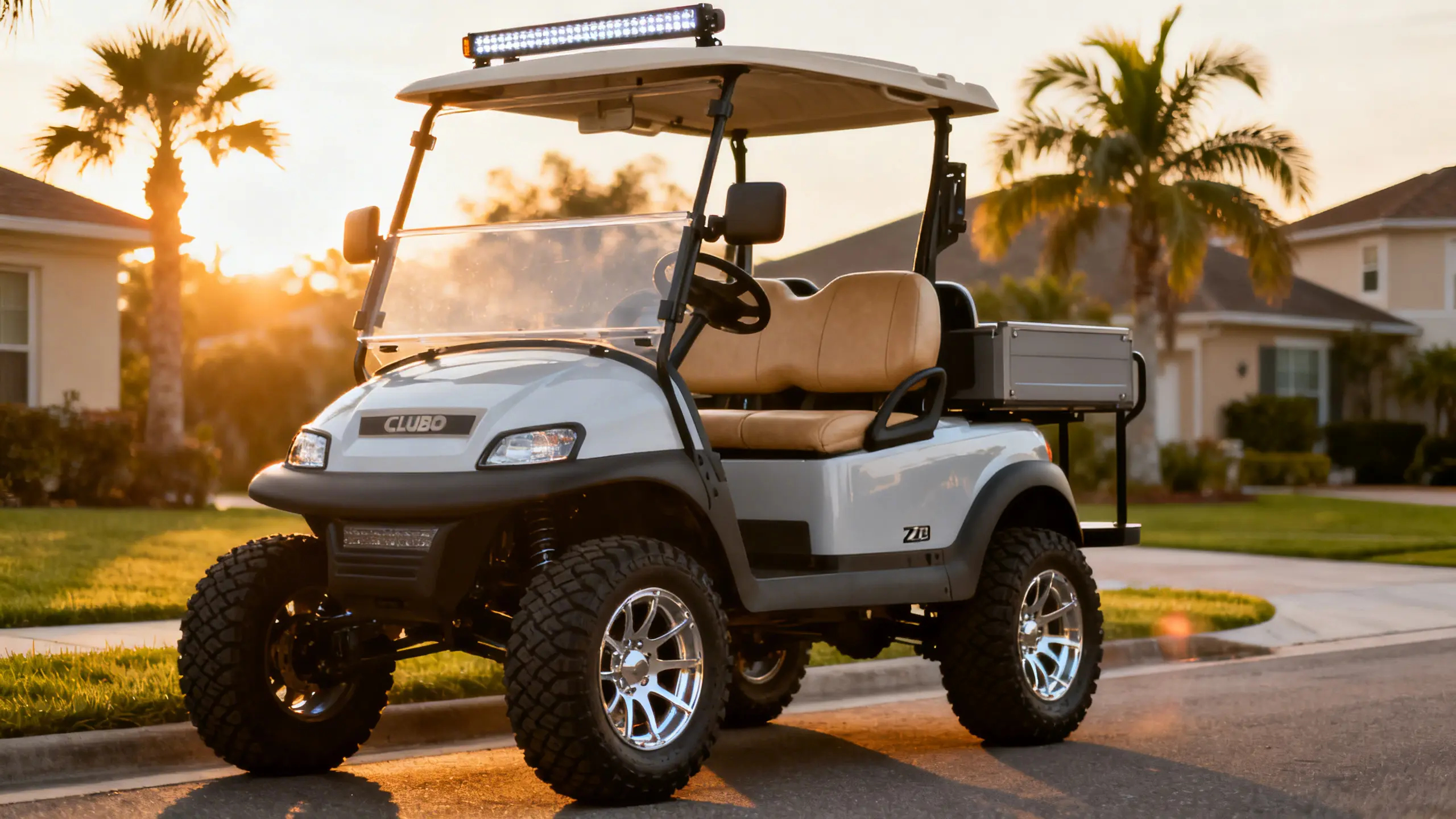
The right golf cart mods transform a basic cart into something that fits exactly how you use it, whether you're cruising your neighborhood, hitting off-road trails, protecting it from theft, or building a head-turning ride.
Most customization guides online skip the details that actually matter: pricing, difficulty ratings, security, and what order to do things in. We pulled specs from 26 golf cart brands and over 100 models to put together a guide that covers all of it. Every mod below includes real costs, a difficulty rating, estimated install time, and brand-specific compatibility notes.
Best Golf Cart Mods by Goal
What's in This Guide
The GCS Mod Difficulty Scale
Every modification in this guide is rated on our 1-5 difficulty scale so you know exactly what you're getting into before you start. This scale accounts for tools required, technical knowledge, and risk of damaging your cart.
What to Upgrade First: The Customization Priority Matrix
The single most common question on golf cart forums is "what should I mod first?" Based on thousands of forum posts and our analysis of 100+ golf cart models, here is the recommended upgrade order.
The key principle: safety and usability before performance and aesthetics. Mods in earlier tiers make your cart safer and more enjoyable to drive daily, which means you'll actually use it enough to justify the later performance and cosmetic upgrades.
Safety First
Required for safe daily driving- Side mirrors + rearview mirror ($25-80)
- Seat belts ($30-80 per seat)
- LED headlights + taillights ($50-200)
Daily Comfort
Makes every ride better- Phone mount ($15-40)
- Windshield ($100-400)
- Seat covers or upgrade ($30-500)
Weather Protection
Ride year-round in any conditions- Enclosure ($100-500)
- Heater, if cold climate ($80-200)
- All-weather floor mats ($30-60)
Performance
More range, power, and capability- Lithium battery conversion ($1,500-4,000)
- Compatible charger ($150-400)
- Controller upgrade ($150-800)
Aesthetics & Style
Look as good as you ride- Lift kit + wheels/tires ($600-1,800)
- LED underglow and accent lights ($30-100)
- Custom paint or wrap ($500-1,500)
Why this order matters: Upgrading your battery before your motor wastes potential. Installing a lift kit before safety mirrors creates blind spots. And converting to lithium before adding an enclosure means you're still only driving in fair weather. Follow the priority matrix and each upgrade builds on the last.
Performance Mods
Performance modifications improve your golf cart's speed, range, acceleration, and hill-climbing ability. These are the upgrades that change how your cart drives, not just how it looks.
Lithium Battery Conversion ($1,500-$4,000)
The single highest-ROI modification you can make. Lithium (LiFePO4) batteries last 5-10 years versus 3-5 for lead-acid, weigh 150-300 pounds less, charge 3x faster, and require zero maintenance. The weight savings alone improves speed, range, and braking performance.
10-year cost comparison: A set of 6 lead-acid batteries costs $600-$900 and lasts 3-5 years, meaning you'll buy 2-3 sets over 10 years ($1,200-$2,700 total). A single lithium battery at $1,500-$4,000 lasts the full 10 years. Factor in zero maintenance, 40% more range per charge, and 10-15% higher resale value, and lithium pays for itself.
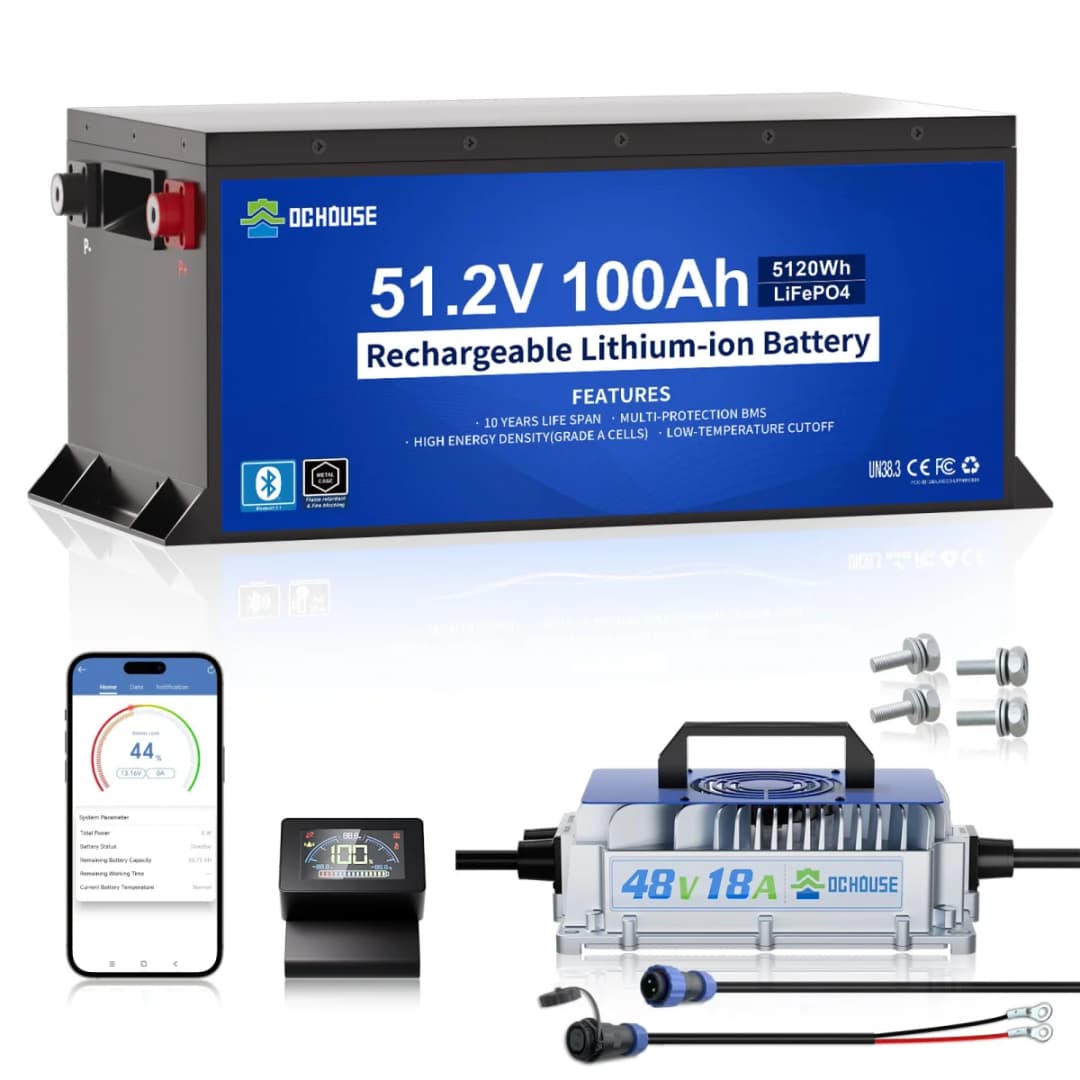
DC HOUSE 48V 100Ah LiFePO4 Golf Cart Battery
- Includes a 200A BMS and 18A charger
- Bluetooth app and LCD state-of-charge monitor
- Metal-case 100Ah pack with a listed 670A peak current
- Confirm dimensions, cables, controller limits, and mounting before purchase
For a deep dive on battery types, lifespan, and maintenance, see our complete golf cart battery guide.
Charger Upgrade ($150-$400)
If you upgrade your batteries, you need a compatible charger. Using the wrong charger on lithium batteries can damage cells and void the battery warranty. A matched charger also charges faster and extends battery life with proper charge curves.
Chargers are brand-specific due to different plug types. Make sure to match your cart's voltage and connector:
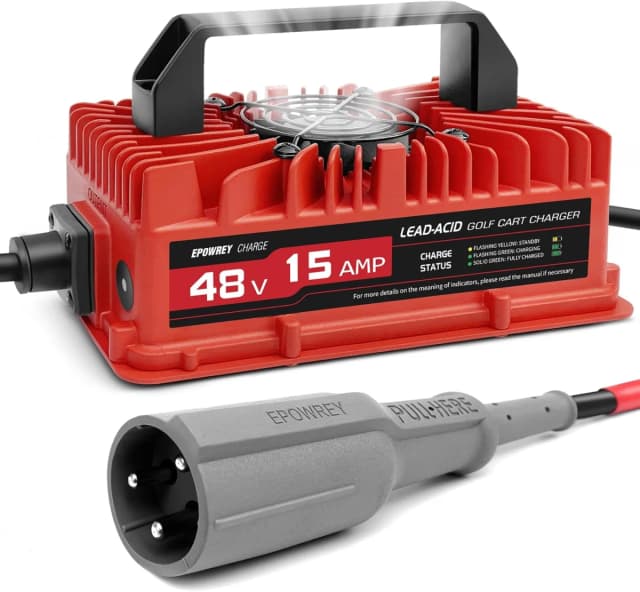
EPOWREY 48V Charger for Club Car
- Fast charge for 48V Club Car systems
- Works with both lithium and lead-acid batteries
- Automatic shutoff prevents overcharging
- 3-pin round plug fits 2001+ Club Car models
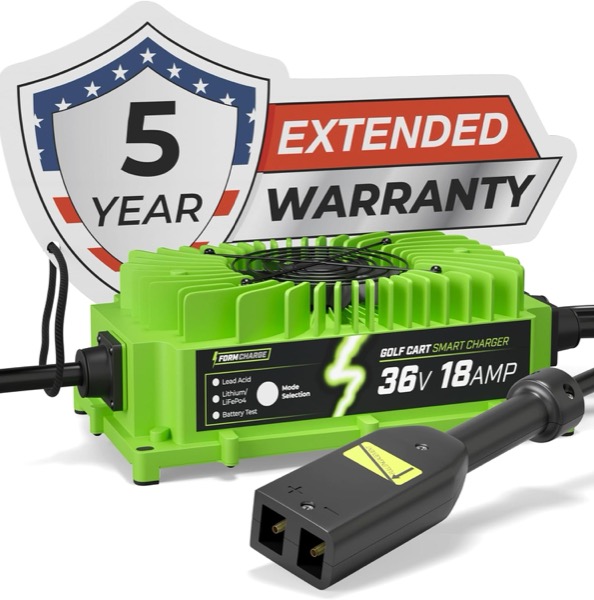
FORM 36V Charger for EZGO TXT
- Smart charging for 36V EZGO systems
- Compatible with lithium and lead-acid
- Smart charging with automatic shutoff
- D-style plug for EZGO TXT 1996+
Motor and Controller Upgrade ($300-$2,000)
Upgrading your controller and motor together is the most effective way to increase speed and torque. A controller upgrade alone can add 5-12 mph. Adding a matched high-speed motor gets you the full speed gain.
Warranty Warning: Speed modifications void your warranty in virtually all cases. Manufacturers explicitly exclude coverage for carts with modified controllers, motors, or speed governors. Consider this carefully, especially on newer carts still under warranty.
For detailed speed upgrade options ranked by cost-per-mph, see our complete speed upgrade guide.
Lift Kit + Tires ($600-$1,800)
The most dramatic visual transformation you can make. A lift kit raises the body 3-6 inches and allows larger tires (20-24") that add ground clearance, a more aggressive look, and 2-4 mph in top speed. Lift kits are the defining mod for off-road and hunting builds.
Spindle vs A-arm lift kits:
| Feature | Spindle Lift | A-arm Lift |
|---|---|---|
| Cost | $150-$400 | $500-$1,000 |
| Height | 3-5 inches | 4-6+ inches |
| Install time | 1-2 hours | 3-5 hours |
| Ride quality | No change from stock | Improved (longer travel) |
| Best for | Street and light off-road | Serious off-road and heavy loads |
For more on tire sizing and how larger tires affect speed and torque, see our golf cart tires and wheels finder.
Weather Protection Mods
Weather protection upgrades let you ride year-round regardless of rain, wind, or cold. In northern climates, an enclosure alone extends your riding season by 3-4 months. When combined with a windshield and heater, you can ride comfortably down to freezing temperatures.
Golf Cart Enclosure ($100-$500)
An enclosure wraps around your cart's roof and frame with clear vinyl windows and zippered doors. It blocks wind, rain, and cold air while maintaining visibility. This is the single most practical upgrade for daily-use golf carts. If your roof is cracked or you need an extended top for a rear seat, start with a roof replacement or upgrade before adding the enclosure.
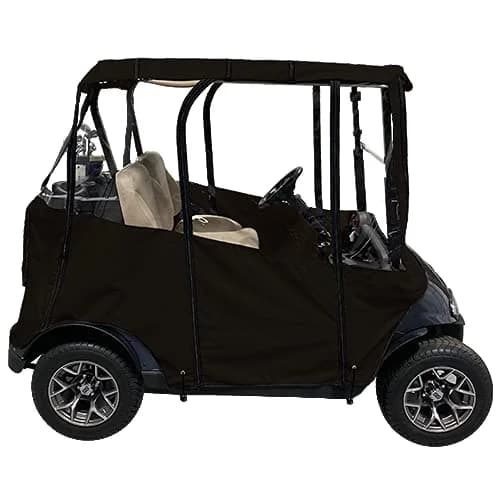
Doorworks Two-Passenger Club Car/E-Z-GO Enclosure
- Listed for two-passenger Club Car and E-Z-GO carts
- Clear PVC windows with zippered doors
- Roll-up panels for airflow on warm days
- Maximum listed roof size: 60 by 44 inches
For a detailed comparison of all 5 enclosure types, materials, and sizing by brand, see our complete enclosure guide.
Windshield ($100-$400)
A windshield is the foundation of weather protection and is legally required for street use in most states. Folding windshields ($150-$350) are the most popular choice because they fold down for airflow on warm days and flip up for protection in bad weather.
Windshields are model-specific. You need to match your exact cart brand and model for proper fitment.
ZivPlay Fold-Down Windshield for EZGO TXT →Golf Cart Heater ($80-$200)
If you ride in cold weather, a heater changes everything. An enclosure alone blocks wind and rain, but temperatures below 50°F still make long rides uncomfortable. Electric heaters for 48V systems draw power directly from your cart's battery pack and provide consistent, safe heat without propane fumes.
Enclosure + Windshield + Heater = Year-Round System. These three mods work together. An enclosure alone blocks wind. Adding a windshield eliminates the wind chill factor. Adding a heater makes the enclosed space genuinely warm. Total cost for all three: $280-$1,100 depending on quality. That's a fraction of buying a second vehicle for winter.
Tech & Convenience Mods
Modern golf carts can be equipped with the same tech conveniences you expect in a car. These are typically the cheapest mods with the highest daily-use impact.
Phone Mount ($15-$40)
The most-used accessory per dollar spent. A phone mount keeps your phone accessible for GPS, music, scorekeeping, or checking notifications without holding it in your hand. Two types are available: universal clamp mounts work with any phone, and magnetic mounts offer one-hand convenience for MagSafe-compatible phones.
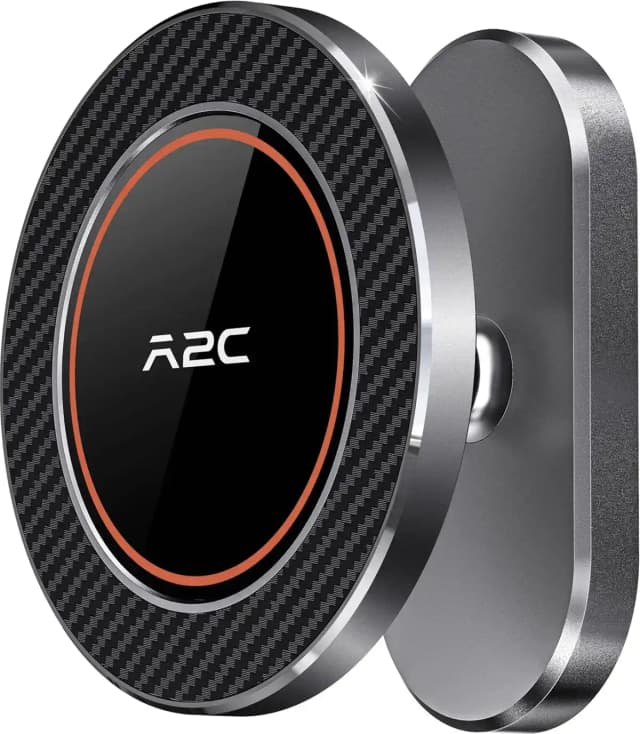
A2C Magnetic Alloy Phone Holder
- 360° swiveling head for any viewing angle
- MagSafe compatible, works with magnetic cases
- Strong rare-earth magnets keep phone secure over bumps
- Premium alloy construction, tool-free installation
- Requires a magnetic square iron roof strut
MagSafe alternative: If you have an iPhone 12 or newer (or a MagSafe-compatible case), the A2C Magnetic Alloy Phone Mount → offers instant one-hand attachment when the cart has a square iron roof strut that passes a magnet test. It will not attach to aluminum, plastic, or round supports. Our phone mount buying guide reviews other mounting styles.
Bluetooth Speaker ($30-$400)
Options range from a portable clip-on speaker ($30-$80) to a full mounted sound bar ($100-$500) with built-in amplifiers, RGB lighting, and IP66 waterproofing. For most owners, a portable waterproof speaker like a JBL Clip 4 is the sweet spot. It clips to the roof supports, sounds great, and can be taken off when you park. If you want louder, permanent audio, a 25-inch sound bar from Ehaho or KEMIMOTO mounts to the roof struts in under 30 minutes and delivers 200-400 watts of peak power.
USB Charging Port ($15-$40)
A hardwired USB port connects to your cart's electrical system and provides phone charging without draining a portable battery. Dual-port models with voltage displays are the most popular, and they work with 9V-48V systems across all brands.
GPS Tracker ($50-$200 + subscription)
Golf cart theft is a growing problem, especially in retirement communities and resort areas. A GPS tracker provides real-time location monitoring and geofence alerts if your cart leaves a designated area. Most require a monthly subscription ($5-$15) for cellular service. For detailed product comparisons and a complete anti-theft strategy, see our GPS tracker and security guide.
Golf Cart Security Mods ($50-$400)
If your main concern is golf cart security, do not rely on one device. Use one visible deterrent and one hidden recovery tool: a steering wheel lock or wheel boot to slow down a thief, plus a GPS tracker hidden under the seat, dash, or battery area. For carts parked outside, add a battery compartment lock, a cable lock through the frame, and a weather cover that keeps valuables out of sight.
For high-risk storage, ask a dealer or cart shop about a hidden kill switch. It is a small electrical mod, but poor wiring can create no-start problems, so this is one security upgrade worth having installed cleanly.
Comfort & Utility Mods
Seat Upgrade ($200-$600)
Stock golf cart seats are functional but basic. Aftermarket seats with contoured cushions, armrests, and premium vinyl or marine-grade fabric make long rides much more comfortable. Most seat upgrades are bolt-on replacements that match your specific cart model. If your seats are structurally fine but just look worn, seat covers ($30-$100) are a faster and cheaper alternative to full replacement. If rear passengers need elbow support and drink storage, check the universal golf cart armrest guide before buying a cup-holder armrest. If the foam, board, or rear seat frame is damaged, compare the repair paths in our golf cart seat replacement cost guide. For 1994–2013 E-Z-GO TXT carts, the NOKINS 3-in-1 heated, ventilated, and vibrating front seat (about $399) is a model-specific bolt-on replacement with all-season climate control. While you're upgrading the interior, a custom-fit floor mat ($25-$135) protects your floor from mud, battery acid, and UV damage.
Steering Wheel Upgrade ($15-$60)
The factory steering wheel is thin, hard plastic with no cushioning. An aftermarket wheel with a thicker grip, better materials, and a larger diameter reduces hand fatigue and improves control. For a full breakdown of types, our top product picks, adapter compatibility, and installation steps, see our complete steering wheel buyer's guide.
Rear Flip Seat ($200-$600)
A rear flip seat converts a 2-passenger cart into a 4-passenger vehicle. When folded down, it functions as a flat cargo bed for hauling. This dual-purpose design makes it one of the most versatile mods, especially for families. For a full comparison of kits by brand, installation tips, and our top picks, see our complete rear seat kits buyer's guide.
Cargo Solutions ($30-$150)
Rear baskets, cargo boxes, under-seat storage trays, and roof racks expand your golf cart's carrying capacity. Essential for utility use on farms, large properties, and campgrounds.
Aesthetic Mods
Aesthetic upgrades are where golf cart customization gets personal. These mods are about self-expression and turning heads, and they have the widest range of prices and options.
LED Lighting and Underglow ($50-$300)
LED headlights, taillights, and accent lighting are the most popular first modification because they provide both visual impact and functional safety benefits. A basic LED headlight/taillight upgrade costs $50-$120, while a full kit with turn signals, brake lights, and underglow can run $150-$300. For product recommendations, installation steps, and brand-specific compatibility, see our complete LED lights buyer's guide.
Custom Wheels and Tires ($400-$1,200)
Wheels and tires have the second-biggest visual impact after a lift kit. Aluminum alloy wheels replace the stock steel wheels with styles ranging from sporty to off-road aggressive. Pair with larger tires for the complete look.
Wrap or Paint ($500-$1,500)
Custom wraps ($500-$800) offer the most design flexibility with the least commitment. They can be removed without damaging the original finish. Custom paint ($800-$1,500) is more permanent but provides a deeper, more polished look. For a full walkthrough of both methods including DIY steps and costs, see our guide to painting or wrapping your golf cart.
Resale Warning: Custom paint and wild color schemes often HURT resale value because they appeal to a narrow audience. If you plan to sell your cart eventually, choose neutral or popular colors (white, black, green), or use a removable wrap instead.
Fender Flares ($50-$150)
Essential for lifted carts with larger tires. Without fender flares, tires throw mud, rocks, and water onto passengers. They also give lifted carts a more finished, intentional look.
Safety Mods
Safety modifications should be the first mods on any golf cart. They're inexpensive, often legally required, and directly reduce accident risk. Golf cart accidents cause over 15,000 injuries per year in the US, and the accident rate has jumped 130% since the 1990s according to the Consumer Product Safety Commission (CPSC).
Side Mirrors + Rearview Mirror ($25-$80)
Universal clamp-on mirrors fit all brands and take 5 minutes to install. Side mirrors are legally required in most states for street use. Check our golf cart mirrors buyer's guide for detailed product comparisons and top picks.
Seat Belts ($30-$80 per seat)
Retractable 3-point seat belts mount to the seat frame and floor. Highly recommended for any cart that drives on roads or travels above 15 mph. Required for street-legal operation.
If you are still deciding between basic lap belts, full bracket kits, and 3-point upgrades, see our best golf cart seat belts guide before you order.
Turn Signals, Horn, and Brake Lights ($40-$150)
A complete street-legal signal kit bundles turn signals, brake lights, a horn, and sometimes hazard flashers. These are required by law in most states for driving on public roads.
For the full list of street-legal equipment requirements and state-by-state rules, see our street-legal conversion guide and golf cart laws by state. Before adding any 12V accessories, set up your electrical system properly with a voltage reducer and fuse block — our wiring guide walks through the full process.
Brush Guard ($100-$300)
A front brush guard protects the cart body from impacts with branches, posts, and other obstacles. Popular for off-road use, hunting, and large property management. Our brush guards and bumpers guide covers every option by brand, material, and price. For a full hunting build breakdown, see our hunting and off-road golf cart guide.
Brand-Specific Mod Guides
Not all golf carts are created equal for customization. After reviewing 26 brands and 100+ models, here's what you need to know about modifying each major brand.
Club Car
Best for Heavy ModificationsWhy it's great for mods: Club Car is the only major brand with an all-aluminum frame (AlumiCore™), which means zero rust and a lifetime frame warranty. This makes it the best platform for heavy modifications like lift kits and motor upgrades because the frame won't deteriorate under added stress.
Stock features to know: 48V electric systems (standard), 13-15 hp AC Drive motors, Monsoon Canopy™ drainage system.
Mod notes:
- IQ system carts can be reprogrammed for free speed gains
- Speed sensor magnets work on 48V Precedent/DS with ADC motors
- Broad aftermarket parts ecosystem alongside E-Z-GO
- 48V charger connector: 3-pin round plug (2001+)
Warranty: 2-year vehicle + lifetime frame + 6-year lithium battery
E-Z-GO (EZGO)
Broad Parts AvailabilityWhy it's great for mods: E-Z-GO has one of the broadest selections of aftermarket parts available, partly because the E-Z-GO TXT has been supported for decades. Parts are easy to find, well-documented, and competitively priced.
Stock features to know: 48V ELiTE Lithium (Samsung SDI cells) available, IntelliBrake™ automatic parking brake, steel frame with powder coat.
Mod notes:
- Speed chips generally DON'T work, need controller upgrade
- Navitas TSX 3.0 controller is a popular E-Z-GO speed upgrade
- TXT and RXV have different part fitments, always specify model
- 36V charger connector: Crowfoot/D-style plug (TXT 1996+)
Warranty: 2-year vehicle + 8-year lithium battery (industry-best battery warranty)
Yamaha
Most Reliable Base PlatformWhy it's great for mods: Yamaha builds the most reliable golf carts on the market, making them an excellent platform for modifications. Their QuieTech EFI gas engine is the quietest in the industry (60.5 dB), and their independent suspension provides a stable base for heavy accessories.
Stock features to know: Tru-Trak II independent suspension, 45 MPG gas efficiency, automotive-style dash.
Mod notes:
- Limited speed chip options, magnets may work on some models
- Slightly smaller aftermarket ecosystem than E-Z-GO/Club Car
- Drive2 and G29 have different part fitments
- Strong suspension handles heavy mods well
Warranty: 2-year vehicle + 5-year lithium battery
ICON, Star EV, Evolution, Advanced EV
Best Stock Features for the PriceWhy they're interesting for mods: These newer brands come with far more stock features than the Big 3 at lower prices ($8,000-$13,000). ICON carts include 10.1" touchscreens, four-wheel disc brakes, and up to 10-year battery warranties. Evolution offers the most features per dollar starting at $6,695 (see our full Evolution review). This means you spend less on base features and have more budget for the mods you actually want.
Mod notes:
- Aftermarket parts availability is growing but still limited versus Big 3
- Some E-Z-GO/Club Car parts fit with minor modifications
- Universal accessories (mirrors, phone mounts, covers) fit all brands
- Model-specific items (enclosures, windshields, light kits) are harder to source
- Always verify fitment before purchasing brand-specific parts
Best value strategy: Buy a feature-rich ICON or Advanced EV, then spend your mod budget on performance upgrades (lithium battery, controller) rather than accessories that already come stock. For Star EV, check Sirius, J Model, and Capella fitment in our Star EV accessories guide before buying mats, enclosures, covers, wheels, or electrical accessories.
For detailed brand comparisons, see our best golf cart brands ranking and head-to-head matchups like Club Car vs E-Z-GO and ICON vs Evolution.
Electric vs Gas: How the Mod Path Differs
About 75% of golf carts sold today are electric, and the aftermarket reflects this with far more electric-focused parts and upgrades. The customization path for each power type is fundamentally different.
| Mod Category | Electric Cart | Gas Cart |
|---|---|---|
| Speed upgrades | Controller → Motor → Battery (predictable gains) | Governor → Clutch → Exhaust → Carburetor |
| Cost to gain +10 mph | $500-$1,500 | $300-$1,000 |
| Ease of DIY | Easier (electrical connections) | Harder (mechanical knowledge) |
| Range upgrades | Lithium battery (+40% range) | Larger fuel tank or better efficiency |
| Tech accessories | Easy (built-in electrical system) | Need auxiliary battery for electronics |
| Noise | Silent stock, silent modified | Louder with performance mods |
| Maintenance after mods | Less (fewer moving parts) | More (engine wear from higher output) |
Bottom line: If you're buying a cart with customization in mind, electric carts are easier, cheaper, and more predictable to modify. Gas carts are better for sustained high-speed use and heavy-duty applications where range anxiety is a concern.
For a full comparison, see our electric vs gas golf cart guide.
Golf Cart Customization Cost Details and Budget Tiers
Golf cart customization cost depends on whether you are adding bolt-on daily-use mods or changing the cart's drivetrain, suspension, and body. Most owners get the best value by stopping in the $200-$600 tier first, then deciding whether a bigger performance or appearance build still makes sense after a few weeks of driving.
Under $200
Essential StarterSafety and basic convenience. These mods make your cart ready for daily use.
- Side mirrors ($30)
- Rearview mirror ($20)
- Phone mount ($20)
- Seat belts x2 ($60)
- Cup holders ($15)
Total: ~$145
$200-$600
Most PopularAdds weather protection and lighting. The sweet spot for most owners.
- Everything in Starter ($145)
- LED light kit ($120)
- Windshield ($200)
- Enclosure ($120)
Total: ~$585
$600-$2,500
Serious UpgradePerformance and aesthetics. Transforms both how your cart drives and looks.
- Everything in Popular ($585)
- Seat upgrade ($300)
- Custom wheels/tires ($600)
- Bluetooth speaker ($60)
- Spindle lift kit ($300)
Total: ~$1,845
$2,500+
Full BuildComplete transformation. New battery technology, maximum performance, show-quality finish.
- Lithium battery conversion ($2,500)
- Compatible charger ($200)
- Controller upgrade ($400)
- A-arm lift kit + tires ($1,200)
- Full light package + underglow ($250)
- Wrap or paint ($700)
Total: ~$5,250+
Customization by Use Case
Different uses demand different mod priorities. Here are curated builds for the most common golf cart lifestyles.
Neighborhood Cruiser
- Street-legal light kit
- Mirrors + seat belts
- Windshield
- Phone mount + speaker
- Seat covers
Off-Road / Hunting
- Lift kit + all-terrain tires
- Fender flares + brush guard
- LED light bar
- Camo seat covers
- Cargo rack
All-Weather Daily Driver
- Enclosure + windshield
- Heater (cold climates)
- All-weather floor mats
- Lithium battery (cold performance)
- LED lights for visibility
Show Cart / Full Custom
- Custom wrap or paint
- Lift kit + premium wheels
- LED underglow
- Sound system
- Custom seats + steering wheel
Golf Course
- Phone mount + rangefinder mount
- Cooler
- Umbrella holder
- Bluetooth speaker
- Sand bottle holder
Farm / Property Utility
- Rear cargo bed or rack
- Tow hitch
- Work lights
- Heavy-duty floor mats
- Brush guard
Warranty, Insurance & Legal Considerations
Before you start modifying, know the rules. Certain mods have consequences beyond the price tag.
What Voids Your Warranty
| Modification Type | Warranty Impact |
|---|---|
| Speed chips, controller, motor upgrades | Voids warranty (almost always) |
| Governor adjustment or removal | Voids warranty |
| Voltage system conversion (36V→48V) | Voids warranty |
| Lift kits | May void suspension/frame warranty |
| Aftermarket batteries | Voids battery warranty (but new battery has its own) |
| Bolt-on accessories (mirrors, mounts, covers) | No warranty impact |
| Enclosures, windshields, seat covers | No warranty impact |
| LED lights (plug-in) | No warranty impact |
| Wired accessories (USB ports, wired lights) | May void electrical warranty if done improperly |
The 20 MPH Legal Threshold
Once your golf cart exceeds 20 mph, most states reclassify it as a Low-Speed Vehicle (LSV). This triggers significant legal requirements:
- Registration with your state DMV
- A Vehicle Identification Number (VIN)
- Liability insurance ($100-$300/year)
- DOT-approved safety equipment (lights, mirrors, seat belts, windshield)
- Restriction to roads with posted speed limits of 35 mph or less
Check your state's specific rules in our golf cart laws by state guide.
Insurance for Modified Carts
Even below 20 mph, insurance is recommended for any cart driven on public roads. Modified carts with higher value may need updated coverage. Golf cart-specific policies start at approximately $75 per year.
For a complete breakdown of coverage options and costs, see our golf cart insurance guide.
Ready to find a dealer who can help with modifications?
Find Golf Cart Dealers Near YouComplete Mod Reference Table
Every modification in this guide, at a glance:
| Mod | Cost | Difficulty | Time | ROI Impact |
|---|---|---|---|---|
| Phone mount | $15-$40 | 🟢 Level 1 | 2 min | High daily use |
| Side mirrors | $15-$50 | 🟢 Level 1 | 5 min | Legally required |
| Rearview mirror | $10-$30 | 🟢 Level 1 | 5 min | Safety essential |
| Cup holders | $10-$30 | 🟢 Level 1 | 5 min | Convenience |
| Seat covers | $30-$100 | 🟢 Level 1 | 15 min | Protects seats |
| Seat belts | $30-$80/seat | 🟢 Level 2 | 30 min | Legally required |
| Fender flares | $50-$150 | 🟢 Level 2 | 20 min | Needed with lift |
| Enclosure | $100-$500 | 🟢 Level 2 | 30 min | +3-4 months season |
| Bluetooth speaker | $30-$80 | 🟢 Level 1 | 2 min | Entertainment |
| LED light kit | $50-$200 | 🟡 Level 3 | 1-2 hr | Safety + legal |
| Windshield | $100-$400 | 🟡 Level 3 | 45 min | Weather + legal |
| Heater | $80-$200 | 🟡 Level 3 | 1 hr | Cold weather |
| USB charger | $15-$40 | 🟡 Level 3 | 45 min | Convenience |
| Rear flip seat | $200-$600 | 🟡 Level 3 | 1-2 hr | +2 passengers |
| Seat upgrade | $200-$600 | 🟢 Level 2 | 30 min | Comfort |
| Wheels/tires | $400-$1,200 | 🟢 Level 2 | 30 min | Style + speed |
| Spindle lift kit | $150-$400 | 🟡 Level 3 | 1-2 hr | Look + clearance |
| A-arm lift kit | $500-$1,000 | 🟠 Level 4 | 3-5 hr | Off-road capable |
| Charger upgrade | $150-$400 | 🟢 Level 2 | 15 min | Protects battery |
| Lithium battery | $1,500-$4,000 | 🟡 Level 3 | 2-4 hr | Best long-term ROI |
| LED underglow | $30-$100 | 🟢 Level 2 | 30 min | Style |
| Brush guard | $100-$300 | 🟢 Level 2 | 30 min | Protection |
| Turn signals/horn | $40-$150 | 🟡 Level 3 | 1-2 hr | Legally required |
| GPS tracker | $50-$200 | 🟢 Level 1 | 5 min | Theft protection |
| Cargo solutions | $30-$150 | 🟢 Level 2 | 15 min | Utility |
| Controller upgrade | $150-$800 | 🔴 Level 5 | 2-4 hr | +5-12 mph |
| Motor upgrade | $300-$1,200 | 🔴 Level 5 | 3-5 hr | +5-10 mph |
| Wrap | $500-$800 | 🔴 Level 5 | Pro | Style |
| Custom paint | $800-$1,500 | 🔴 Level 5 | Pro | Style (may hurt resale) |
Frequently Asked Questions
What are the best golf cart mods?
The best golf cart mods for most owners are LED lights, mirrors, seat belts, a phone mount, windshield, enclosure, seat covers, lithium battery conversion, lift kit with wheels and tires, and a GPS tracker. Start with safety and daily-use upgrades before spending money on speed or cosmetic modifications.
How much does it cost to customize a golf cart?
Most owners spend $500-$2,000 in their first year of customization. Basic safety and convenience mods (mirrors, lights, phone mount) cost around $270. A full mid-range build with enclosure, windshield, LED lights, and seat upgrades runs $500-$1,500. Premium builds with lithium batteries, lift kits, and custom wheels can exceed $5,000-$10,000.
What should I upgrade first on my golf cart?
Follow the priority matrix: (1) Safety first: mirrors, seat belts, lights. (2) Daily comfort: phone mount, windshield, seat covers. (3) Weather protection: enclosure, heater. (4) Performance: batteries, controller. (5) Aesthetics: lift kit, wheels, paint. Each tier builds on the previous one so you get the most value from every dollar spent.
What modifications void a golf cart warranty?
Speed modifications (speed chips, controllers, motors, governor adjustments) void your warranty in virtually all cases. Lift kits may void suspension warranty. Battery swaps void the battery warranty but the new battery comes with its own. Bolt-on accessories like mirrors, enclosures, seat covers, windshields, and phone mounts do NOT void warranties.
Are modified golf carts street legal?
Adding safety mods (lights, mirrors, seat belts, windshield) makes your cart MORE street legal. But speed mods that push your cart past 20 mph reclassify it as an LSV, requiring registration, insurance, a VIN, and DOT equipment. Requirements vary by state. Check our state-by-state golf cart laws guide for specifics.
What are the best golf cart security mods?
The best golf cart security mods are a hidden GPS tracker, steering wheel lock, wheel boot or cable lock, battery compartment lock, and a hidden kill switch installed by a shop. A tracker helps recovery, while a visible lock discourages quick theft. For carts stored outside or in high-traffic communities, combine at least one visible lock with one hidden tracker.
What is the best golf cart brand for customization?
Club Car is strong for heavy mods (aluminum frame, lifetime warranty). E-Z-GO has especially broad aftermarket parts availability. Yamaha is a reliable base platform. For budget builds, ICON and Advanced EV offer many stock features at lower prices, leaving more budget for performance upgrades.
Do golf cart modifications affect resale value?
Quality mods increase resale value by 5-15%. Lithium batteries add the most (+10-15%). LED lights, lift kits, and premium seats add 5-10%. However, extreme customizations like wild paint colors or racing mods can hurt resale. Well-maintained, tastefully modified carts retain value significantly better than neglected stock carts.
Can I install golf cart mods myself?
About 60% of common mods are DIY-friendly with basic or no tools. Phone mounts, mirrors, seat covers, and speakers need no tools. Enclosures, windshields, and fender flares need basic hand tools. Only controller upgrades, motor swaps, A-arm lift kits, and custom wiring typically need professional installation. Use our difficulty scale (Level 1-5) to gauge each mod.
Is converting to lithium batteries worth it?
Yes, for most owners. Lithium costs $1,500-$4,000 upfront but lasts 5-10 years (vs 3-5 for lead-acid), weighs 150-300 lbs less, charges 3x faster, and needs zero maintenance. Break-even is 2-3 years. It also adds 10-15% to resale value. The only case against lithium is if you plan to sell the cart within 1-2 years.
Conclusion
Golf cart customization isn't about spending the most money. It's about making targeted upgrades that match how you actually use your cart. A $145 starter package of safety mods can be more impactful for a new owner than a $3,000 aesthetic overhaul.
Key Takeaways:
- Follow the priority matrix: Safety → Comfort → Weather → Performance → Aesthetics
- Use the difficulty scale: 60% of mods are Level 1-2, meaning anyone can do them with basic or no tools
- Match mods to your use case: A neighborhood cruiser needs different upgrades than an off-road hunter
- Budget wisely: Most owners spend $500-$2,000 in year one. The sweet spot for value is the $200-$600 range
- Consider ROI: Lithium batteries, LED lights, and quality enclosures add both usability and resale value
- Know the rules: Speed mods over 20 mph trigger LSV classification, registration, and insurance requirements
- Check brand compatibility: E-Z-GO TXT parts don't fit E-Z-GO RXV. Club Car DS parts don't fit Precedent. Always verify fitment
Ready to start customizing? Find golf cart dealers near you who can help with installation, or explore our brand comparison guides to find the best platform for your build.
Related Guides
Golf Cart Search
Find the Best Golf Carts of 2026
Compare top-rated models, read expert reviews, and find the perfect cart for your needs.