Free Tire Size and Fitment Tool
Golf Cart Tire Size Calculator and Fitment Chart
Calculate tire height, width, wheel size, lift fitment, ground-clearance change, and theoretical speed before you buy.
Check Tire Size, Lift Fitment, and Speed Change
Enter a size from the tire sidewall. The calculator supports flotation sizes such as 18x8.50-8 and metric sizes such as 205/50-10.
Reads both common size formats
Enter flotation sizes such as 18x8.50-8 or metric sizes such as 205/50-10. Both are converted into comparable dimensions.
Checks lift and model fitment
Select the cart, lift height, suspension, and load details for sourced fitment guidance with clear confidence limits.
Shows what the size change does
Compare ground clearance, wheel requirements, revolutions per mile, and theoretical speed at the same wheel RPM.
Compare the numbers
Golf Cart Tire Size Chart by Height and Wheel
18x8.50-8 is the common stock golf cart tire size. Low-profile 205/50-10 and 215/40-12 tires stay near stock height, while 22x11-10 and 23x10-14 tires often need a model-specific lift and clearance check.
18x8.50-8
The common stock turf size for many E-Z-GO, Club Car, and Yamaha fleet carts. Usually no lift is needed.
205/50-10
A common low-profile street size for 10-inch wheels. Often stays close to stock height for paved use.
Open path215/40-12
A street-look size for 12-inch wheels. Useful when you want larger wheels without jumping to a tall lifted tire.
20x10-10
A mild size increase that may fit some carts without a lift, but brand and offset matter.
22x11-10
A common lifted all-terrain size. Plan on checking lift height, braking, steering, and rear clearance.
Open path23x10-14
A taller lifted setup often used for aggressive street or all-terrain builds. It usually needs real clearance.
How to Pick a Golf Cart Tire Size
Do this before comparing brands or prices. It keeps you from buying a tire that fits the wheel but rubs the body.
1. Read the current sidewall
Find the existing size on the tire sidewall. The last number is wheel diameter. The first number or first pair usually tells you overall height.
2. Decide whether height can change
If the cart is stock height, stay close to the current overall height unless you have measured clearance carefully.
3. Check tire width and offset together
A wider tire can rub the inner wheel well even if the height seems acceptable. Wheel offset can push the tire inward or outward.
4. Match PSI to tire and load
Most golf carts start around 18-20 PSI cold, but load, tire construction, terrain, and speed can change the right setting.
Open path5. Account for passengers and rear seats
Rear seat kits, cargo boxes, coolers, and passengers can lower the back of the cart and cause rubbing that was not present unloaded.
6. Use a shop when wear is uneven
Uneven wear points to alignment, suspension, brake, or bearing issues. Solve those before spending money on new tire size.
Open pathUnderstand the result
How Golf Cart Tire Size Math Works
The calculator uses the numbers molded into the tire sidewall. These calculations are useful for comparison, but the manufacturer’s mounted diameter and width remain the final dimensions.
Flotation sizes state the height
In 22x11-10, 22 is nominal tire height, 11 is nominal width, and 10 is wheel diameter. The last number must match the wheel.
Metric height is calculated
For 205/50-10, overall diameter = wheel diameter + 2 × (width × aspect ratio ÷ 100 ÷ 25.4). The result is about 18.1 inches.
Clearance changes by half the diameter
Ground-clearance change = (new diameter − current diameter) ÷ 2. Moving from 18 to 22 inches adds about 2 inches before suspension compression.
Speed changes with circumference
New theoretical speed = current speed × new diameter ÷ current diameter. It assumes the same wheel RPM and excludes real-world load losses.
Wider tires need offset checks
Width alone does not determine fit. Wheel offset and backspacing control whether the tire moves toward suspension parts or the body.
Actual dimensions can differ
Nominal sizes vary by brand, tread, rim width, load, and pressure. Use published dimensions and measure the mounted tire before ordering.
Golf Cart Tire Size Quick Comparison
Tire size
18x8.50-8Wheel diameter
8 inApprox height
18 inTypical use
Stock turf and fleet replacementLift need
NoTire size
205/50-10Wheel diameter
10 inApprox height
18.1 inTypical use
Street tire on stock-height cartsLift need
Usually noTire size
215/40-12Wheel diameter
12 inApprox height
18.8 inTypical use
Low-profile street packageLift need
Usually noTire size
20x10-10Wheel diameter
10 inApprox height
20 inTypical use
Mild all-terrain or taller stanceLift need
Cart-specificTire size
22x11-10Wheel diameter
10 inApprox height
22 inTypical use
Lifted all-terrain setupLift need
Often 4 inTire size
23x10-14Wheel diameter
14 inApprox height
23 inTypical use
Lifted street or trail styleLift need
Often 5-6 inSources and method
How We Check Golf Cart Tire Fitment
Tire dimensions use standard sidewall-size formulas. Lift and model guidance comes from the fitment tables and kit instructions below. These references cannot account for every model year, lift design, wheel offset, or worn suspension, so measure the mounted setup before ordering.
Shopping Starting Points
Use these product searches to compare common fitment paths. Confirm exact size, lug hardware, offset, and return policy before ordering.
As an Amazon Associate, we earn from qualifying purchases. Product links are shopping starting points, not a substitute for checking your cart model, tire height, wheel offset, lug hardware, and local road-use rules.
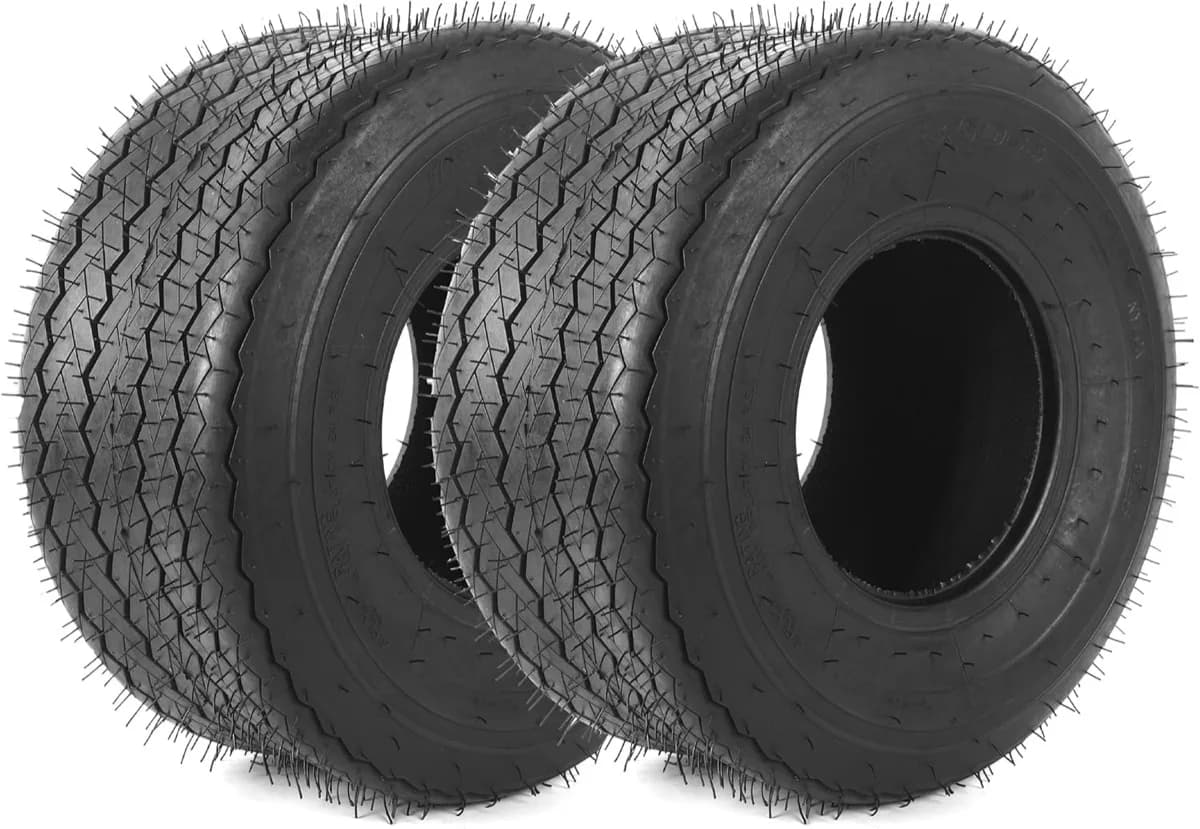
Stock size
18x8.50-8 golf cart tires
Replacing standard turf tires without changing cart height or wheel size
Confirm 8-inch wheel diameter, 18-inch overall height, load rating, valve stem condition, and mounting plan.
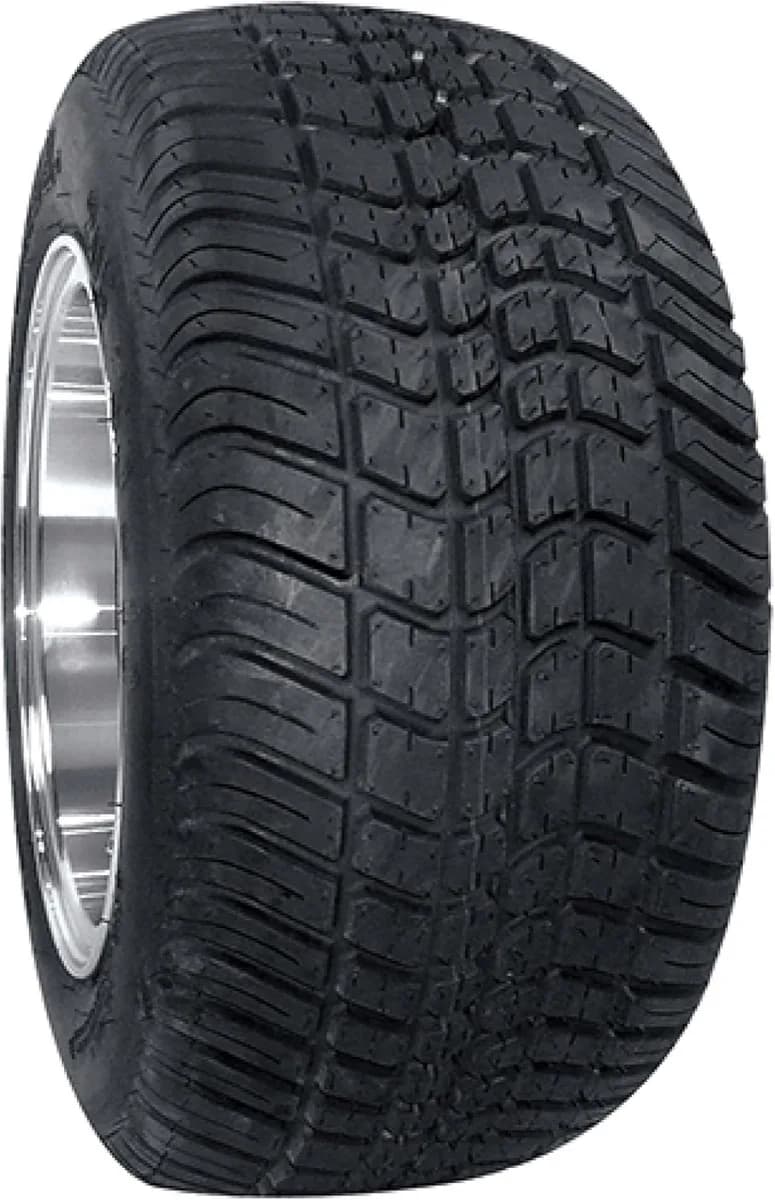
Street size
205/50-10 golf cart tires
10-inch street wheels on paved neighborhood carts
Check 10-inch rim diameter, DOT marking if needed, ride comfort, and overall height near stock.
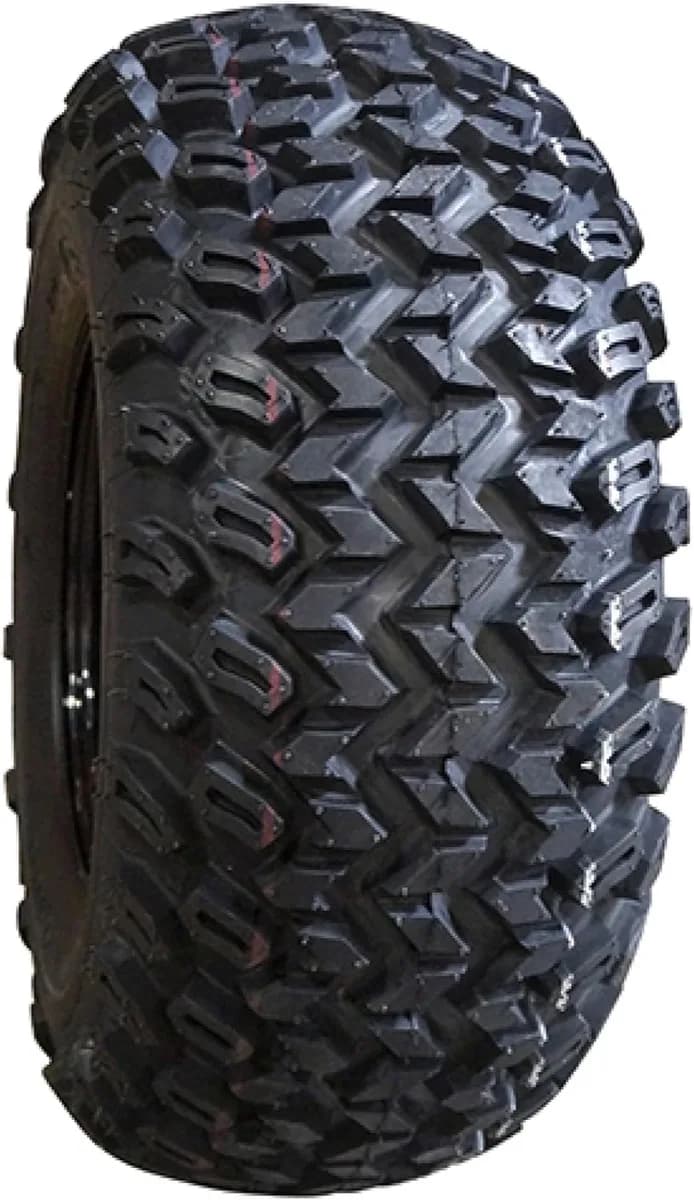
Lifted size
22x11-10 golf cart tires
Lifted carts needing more stance and mixed-terrain traction
Confirm lift height, tire width, wheel offset, brake cable routing, rear-seat sag, and motor load.
Related Tire and Wheel Paths
Golf Cart Wheels and Tires Combo
Compare mounted 10-, 12-, and 14-inch wheel packages after you know the target tire height.
Open guideGolf Cart Tire Pressure Chart
Set cold PSI by tire size, load, and terrain after choosing the tire.
Open guideGolf Cart Lift Kits
Use this before moving to 22- or 23-inch tires.
Open guideGolf Cart Wheel Alignment
Check toe, tire wear, and steering centering before blaming the tire.
Open guideFrequently Asked Questions
What is the standard golf cart tire size?
The most common stock size is 18x8.50-8. It is roughly 18 inches tall, 8.5 inches wide, and fits an 8-inch wheel. Many fleet E-Z-GO, Club Car, and Yamaha carts use this size or something very close.
Can I put 20-inch tires on a stock golf cart?
Sometimes, but it depends on brand, year, wheel offset, tire width, and suspension condition. A 20-inch tire is already taller than common stock tires, so check full steering lock, fenders, inner wells, and rear clearance before buying.
What golf cart tire size needs a lift kit?
Many 22- and 23-inch tire setups need a lift kit. Some 20-inch setups can fit certain carts, but rubbing risk rises quickly with tire height, width, offset, and worn suspension.
Does changing tire size make a golf cart faster?
A taller tire can increase theoretical speed because it travels farther per wheel rotation, but it can also reduce acceleration, braking confidence, hill performance, and range. Fix tire pressure and brake drag before chasing speed through tire size.
How do I read a metric golf cart tire size?
In 205/50-10, 205 is tire width in millimeters, 50 means the sidewall is 50% of that width, and 10 is wheel diameter in inches. The calculated overall diameter is about 18.1 inches.
Why can the measured tire size differ from the calculator?
Sidewall sizes are nominal. Actual mounted height and width can vary with the tire model, tread depth, wheel width, air pressure, load, and manufacturing tolerances. Check the tire maker’s specifications and measure the installed setup.