
Best Golf Cart Lift Kits: Complete Buyer's Guide (2026)

Best golf cart lift kits for EZGO, Club Car, and Yamaha. Compare spindle, A-arm, and drop axle types with pricing, installation tips, and top picks.

Michael
Michael
Feb 28th, 202614 min read
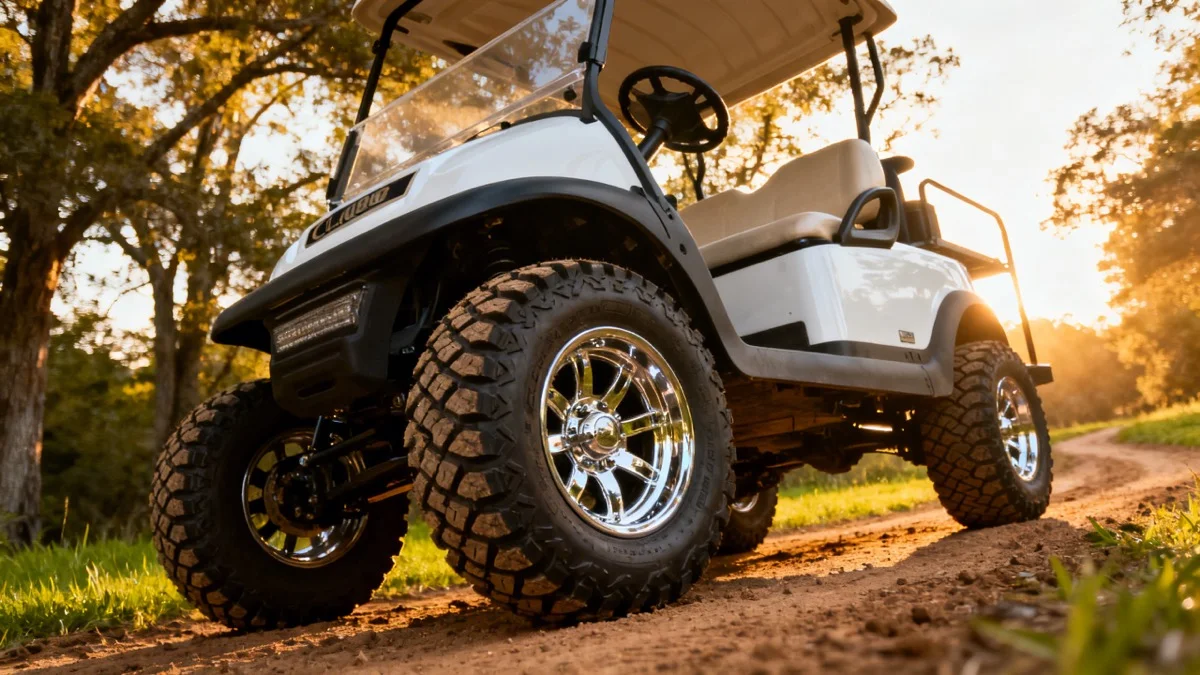
Lifted golf cart with off-road tires and wheels on a trail - complete lift kit buyer's guide for EZGO, Club Car, and Yamaha

As an Amazon Associate, we earn from qualifying purchases. This helps support our site at no extra cost to you.

Lift kits are one of the most popular golf cart upgrades, and for good reason. A lifted cart clears bigger tires, handles rough terrain, looks better, and opens up a world of customization options that stock carts can't match.

But here's the problem: there are four different types of lift kits, three major golf cart brands with different fitment requirements, and prices ranging from $50 to $800+. Most "guides" online are just product listings from retailers trying to sell you whatever they stock. Nobody explains what you actually need or whether you should even lift your cart in the first place.

This guide fixes that. We break down every lift kit type, show you exactly which kit fits your EZGO, Club Car, or Yamaha cart, and recommend specific kits at every price point. Whether you want a mild 3-inch lift for bigger tires or a full 6-inch A-arm setup for off-roading, you'll know exactly what to buy and how to install it.

$50-$800
Lift Kit Price Range
3"-6"
Most Common Lift Heights
1-5 hrs
Typical Install Time
$800-$2,000
Complete Package (Installed)

Do You Actually Need a Lift Kit?

Before spending money on a lift kit, figure out if you actually need one. Not every golf cart owner does.

You probably need a lift kit if:

  • You want tires larger than 18.5 inches (the max for most stock carts)
  • You drive on unpaved roads, gravel, trails, or rough terrain
  • You use your cart for hunting, farming, or utility work
  • You want better ground clearance for curbs and speed bumps
  • You're building a custom cart and want the lifted look

You probably don't need a lift kit if:

  • You only drive on golf courses or smooth pavement
  • You're happy with your current tire size
  • You want to maximize battery range (lifts reduce range 10-20%)
  • Your cart is still under warranty and you can't risk voiding it
  • You're on a tight budget and would rather spend on a better charger or lithium battery upgrade

Types of Golf Cart Lift Kits

There are four main types of lift kits for golf carts. Each has different ride quality, installation complexity, and price. Here's how they compare:

FeatureSpindleA-ArmDrop AxleBlock
Lift Height3"-6"3"-6"3"-5"3"-4"
Price Range$130-$320$350-$800$100-$250$50-$80
Install Time1-2 hours3-5 hours2-3 hours1 hour
DIY DifficultyEasyModerateModerateEasy
Ride QualityStockImprovedStockStock
Off-Road UseCasualExcellentCasualNot Ideal
Best ForMost ownersOff-road/serious useBudget liftRear-only lift

Spindle Lift Kits

Spindle lift kits are the most popular type, and for most golf cart owners, they are the right choice. They replace your front spindles with longer ones that push the wheels down further from the cart body. Your factory suspension stays in place.

Pros:

  • Most affordable lift option ($130-$320)
  • Easiest to install (1-2 hours with basic tools)
  • Uses your existing suspension, so the ride feels familiar
  • Available in 3-inch and 6-inch heights
  • Compatible with all three major brands

Cons:

  • Doesn't improve ride quality or suspension travel
  • Not ideal for serious off-road use
  • 6-inch spindle kits can feel less stable than A-arm kits at the same height

Best for: Neighborhood driving with bigger tires, light trail use, and anyone who wants a lift without a complicated install.

Check Price: RHOX 3" Spindle Lift (Club Car)

A-Arm Lift Kits

A-arm lift kits are the premium option. They replace your entire front suspension with new upper and lower control arms, heavy-duty spindles, and upgraded hardware. The result is a completely different ride.

Pros:

  • Smoother, more comfortable ride than stock
  • Independent front suspension handles rough terrain
  • Stronger construction for off-road abuse
  • Most durable option (circular tubing is stronger than square)
  • Better steering geometry than spindle lifts at 6-inch heights

Cons:

  • Most expensive option ($350-$800)
  • Longer installation (3-5 hours)
  • Requires moderate mechanical ability
  • Heavier than spindle kits

Best for: Off-road use, hunting carts, rough terrain, anyone who wants the best possible ride quality from a lifted cart.

Check Price: Madjax 6" A-Arm Lift (Club Car Precedent)

Drop Axle Lift Kits

Drop axle kits replace your front axle with a longer one that drops down before connecting to the stock spindles. Think of it as a compromise between spindle and A-arm kits.

Pros:

  • More affordable than A-arm kits ($100-$250)
  • Wider front stance improves stability
  • Good option for older carts where spindle kits aren't available

Cons:

  • Heavier than spindle kits
  • Doesn't improve ride quality
  • Limited availability for newer cart models
  • Installation requires axle removal (2-3 hours)

Best for: Older golf carts, budget-conscious buyers who want more stability than a spindle lift, and carts that don't have spindle kit options available.

Block Lift Kits

Block lift kits are the simplest and cheapest way to get some extra height. They use steel or aluminum spacer blocks between the rear axle and leaf springs to lift the back of the cart 3-4 inches.

Pros:

  • Cheapest option ($50-$80)
  • Easiest install (under 1 hour)
  • Good for rear-only lifts when paired with a front kit
  • Works on almost every cart

Cons:

  • Rear-only lift (front stays stock unless paired with another kit)
  • Doesn't improve ride quality or off-road ability
  • Can affect handling if used alone (uneven front-to-rear height)
  • Not a standalone solution for most owners

Best for: Rear-only lifts paired with a front spindle or A-arm kit, extreme budget builds, or adding a couple extra inches of rear clearance.

Check Price: 4" Block Lift Kit (Yamaha G29)

How Much Lift Do You Need?

The right lift height depends on what tire size you want to run. Here's the general rule:

Lift HeightMax Tire SizeBest For
No lift18-18.5"Stock replacement, turf tires
3" lift20"Mild upgrade, street use
4" lift22"Most popular choice, versatile
6" lift23-24"Off-road, aggressive look
8"+ lift24"+Extreme builds, show carts

Tire Clearance by Brand

Not all golf carts are created equal when it comes to wheel well space. EZGO carts are the most generous, while Yamaha carts are the tightest:

Tire HeightEZGOClub CarYamaha
18"No lift neededNo lift neededNo lift needed
20"No lift needed3" lift3" lift
22"3" lift4" lift4" lift
23"4-5" lift6" lift6" lift
24"6" lift6"+ lift6"+ lift

For most owners, a 4-inch lift with 22-inch tires is the sweet spot. It gives you meaningful ground clearance, a noticeable visual upgrade, and compatibility with a wide range of all-terrain and street tires without pushing your cart's drivetrain to its limits.

Brand Compatibility Guide

Lift kits are brand-specific and often model-specific. A kit that fits a Club Car Precedent won't fit a Club Car DS. Here's what you need to know about fitment for each major brand.

EZGO Lift Kits

EZGO carts are the easiest to lift because they already have the most wheel well clearance. Common models:

  • EZGO TXT (1994-present): The most popular EZGO model. Spindle, A-arm, and drop axle kits all available. Wide selection from $130-$600.
  • EZGO RXV (2008-present): Uses a different suspension setup than the TXT. Make sure your kit specifically says "RXV" compatible.
  • EZGO Marathon (1988-1994): Older model with limited kit options. Drop axle kits are the most common choice.
Check Price: EZGO TXT 6" Lift Kit

Club Car Lift Kits

Club Car makes two main platforms, and kits are not cross-compatible:

  • Club Car Precedent (2004-2016) / Onward (2017-present) / Tempo (2018-present): These share the same platform. Most lift kits labeled "Precedent" will fit the Onward and Tempo as well. The most options are available for this platform.
  • Club Car DS (1981-2003): Older platform with its own set of lift kits. Make sure you match the year range, as sub-generations within the DS line have different fitment.

Yamaha Lift Kits

Yamaha carts have the least wheel well clearance, so a lift kit makes the biggest visual difference:

  • Yamaha Drive/G29 (2007-2016): Good selection of spindle and A-arm kits. The most popular Yamaha for aftermarket upgrades.
  • Yamaha Drive2 (2017-present): Newer platform with growing kit availability. Double-check year compatibility before ordering.
  • Yamaha G22 (2003-2007) and older: Limited kit options. Drop axle and spindle kits are available from Jake's and a few others.
Check Price: SGC 4" A-Arm Lift (Yamaha G29)

Best Lift Kit Brands

Not all lift kits are made equal. Cheap, no-name kits from unknown manufacturers can have weak welds, soft metal, and poor fitment that leads to alignment problems or worse. Stick with these proven brands:

RHOX

RHOX is the top choice for most golf cart shops. Their kits are engineered for precise fitment, use heavy-gauge steel, and come with all hardware included. RHOX makes spindle, A-arm, and drop axle kits in 3-inch, 4-inch, 6-inch, and 7-inch heights for EZGO, Club Car, and Yamaha. Expect to pay $130-$550 depending on the kit type and height.

Madjax

Founded in 2010, Madjax has become the go-to brand for A-arm lift kits. Their Quick Attach System makes installation faster, and all kits feature circular tubing (stronger than square tubing used by cheaper brands). Madjax A-arm kits run $350-$570. They also offer complete wheel-and-tire packages that include the lift kit, wheels, and tires in one box.

Jake's

Jake's has been making golf cart lift kits longer than most competitors. They are known for spindle kits with built-in camber adjustment, which other brands don't offer. Jake's spindles are cast from ductile iron, which is 3x stronger than gray iron used in budget kits. Their kits range from $130-$570 and cover EZGO, Club Car, and Yamaha across multiple generations.

All Sports

All Sports (also known as GTW) makes solid mid-range kits with a focus on A-arm and spindle lifts. Their kits offer user-adjustable camber, which is useful if you are particular about your alignment setup. Pricing falls between Jake's and Madjax.

Our Top Picks

Here are our recommended lift kits across different budgets and use cases:

Best Budget Lift: RHOX 3" Spindle Lift Kit

The RHOX 3-inch spindle lift is the best value in the lift kit market. It gives you enough clearance for 20-inch tires, installs in about an hour, and costs around $130-160. Available for Club Car Precedent, Onward, Tempo, DS, EZGO TXT, and Yamaha Drive models.

Why we recommend it: If you just want to upgrade from stock 18-inch tires to 20-inch street or all-terrain tires, a 3-inch spindle lift is all you need. No suspension overhaul, no complicated install, no wasted money.

Check Price on Amazon

Best Overall Lift: Madjax 6" A-Arm Lift Kit

The Madjax 6-inch A-arm lift kit is the gold standard for serious builds. The complete suspension replacement gives you a smoother ride, handles rough terrain with confidence, and fits tires up to 23 inches. The Quick Attach System makes installation easier than other A-arm kits on the market.

Why we recommend it: If you plan to do any off-road driving, take your cart hunting, or just want the best ride quality from a lifted cart, this is the kit. You pay more upfront, but the improvement in ride comfort and handling justifies the price.

Check Price on Amazon

Best for Yamaha: SGC 4" Double A-Arm Lift Kit

Yamaha carts benefit the most from a lift because they start with the least wheel well clearance. The SGC 4-inch double A-arm kit for the Yamaha G29/Drive gives you enough room for 22-inch tires and includes new front shocks. At around $350-450, it hits the sweet spot between budget spindle kits and premium 6-inch setups.

Why we recommend it: Yamaha owners who want more than a spindle lift but don't need a full 6-inch setup. The 4-inch height with A-arm suspension is versatile enough for neighborhoods, trails, and light off-road use.

Check Price on Amazon

Best for EZGO: 6" Spindle Lift Kit with Tie Rod Ends

For EZGO TXT owners, this 6-inch spindle lift kit comes with upgraded tie rod ends for better steering geometry at the lifted height. Since EZGO carts already have generous clearance, a spindle lift gets you to the same tire sizes that other brands need an A-arm kit for.

Why we recommend it: EZGO carts respond well to spindle lifts because of their suspension design. You get 6 inches of lift with a 1-2 hour install instead of the 3-5 hours an A-arm kit takes. A practical choice for EZGO TXT owners who want maximum clearance without maximum hassle.

Check Price on Amazon

Installation Guide

Tools You Will Need

For any lift kit installation, gather these tools first:

  • Floor jack and jack stands (never work under a cart supported only by a jack)
  • Socket set (3/8" and 1/2" drive)
  • Combination wrench set
  • Torque wrench
  • Penetrating oil (PB Blaster or WD-40)
  • Wire brush for cleaning rusty bolts
  • Tape measure (for alignment after install)

DIY vs Professional Installation

FactorDIYProfessional
Cost$0 (just the kit)$150-$300 labor
Time1-5 hoursSame day drop-off
AlignmentYou handle itIncluded
WarrantySelf-guaranteedShop warranty on labor
RiskHigher (mistakes possible)Lower (experienced hands)

Spindle and block kits are excellent DIY projects for anyone who can change a tire. The install is straightforward: jack up the cart, remove wheels, swap spindles, reinstall, align.

A-arm kits are more involved. You're removing and replacing suspension components, which requires more mechanical comfort. If you've done brake jobs or suspension work on a car, you can handle an A-arm install. If you've never worked on suspension, consider professional installation.

The Critical Step Everyone Skips: Alignment

After installing any lift kit, you must align your front wheels. This is the single most important step, and skipping it is the number one cause of problems with lifted carts.

An improper alignment causes:

  • Rapid, uneven tire wear (burning through expensive new tires in months)
  • Steering pull to one side
  • "Death wobble" at higher speeds, which can cause a rollover

The alignment spec is simple: you want 1/16" to 1/8" of toe-in. That means the front edges of your tires are slightly closer together than the rear edges. You can measure this with a tape measure, checking the distance between the front and rear of both tires at axle height.

Most golf cart shops will align your cart for $30-50. If you are paying for professional install, alignment should be included.

Electric vs Gas: How Lifts Affect Performance

A lift kit affects electric and gas carts differently, and this matters when you're choosing what to buy.

Electric Carts

Lifting an electric golf cart and adding bigger tires increases the load on your motor and controller. Expect:

  • 10-20% reduction in range (a cart that goes 25 miles per charge might drop to 20-22 miles)
  • Slower acceleration, especially on hills
  • More strain on the motor, which can reduce motor life if you regularly push it hard
  • Higher current draw, meaning your batteries discharge faster

You can offset some of this by upgrading to lithium batteries, which deliver more consistent power under load. A speed upgrade (higher-speed motor or controller) also helps compensate for the larger tire diameter.

Gas Carts

Gas carts handle lift kits better because their engines produce more torque across a wider RPM range. You'll notice:

  • Minimal range impact (range depends on fuel tank, not tire size)
  • Some loss of hill-climbing power with significantly larger tires
  • Slightly higher fuel consumption from the added weight and rolling resistance

Gas carts are generally the better platform for aggressive lifts with large, heavy off-road tires.

Center of Gravity

Lifting a golf cart raises its center of gravity. A stock golf cart has a center of gravity about 15 inches off the ground. A 6-inch lift raises that to about 23 inches, which significantly changes how the cart handles, especially on turns, slopes, and uneven terrain.

Practical safety tips for lifted carts:

  • Slow down on turns. A lifted cart will tip at lower speeds than a stock cart.
  • Be extra careful on slopes and hills. Side-to-side slopes are the most dangerous.
  • Reduce passenger count on rough terrain. Passengers sitting high in a lifted cart shift the center of gravity even higher.
  • Stick to reputable brands. Cheap kits with poor geometry make handling worse than it needs to be.

Street Legality

Lifting your cart doesn't automatically make it illegal for road use, but it doesn't exempt you from street-legal requirements either. Most states don't have specific height limits for golf carts, but your cart still needs:

  • Headlights, taillights, and turn signals
  • Mirrors
  • DOT-approved windshield
  • Horn
  • Seat belts (for LSV classification)

Golf cart laws vary wildly by state. Check your state's specific requirements before assuming your lifted cart is street-legal. States like Florida, Texas, and South Carolina have very active golf cart communities, and local ordinances may have additional rules about modified carts.

Maintenance After Installation

A lifted cart needs slightly more attention than a stock cart. Here's the maintenance schedule to follow:

Every 3-6 Months

  • Inspect all lift kit bolts and fasteners for tightness
  • Re-torque any loose hardware to manufacturer specs
  • Check bushings for cracking or excessive wear
  • Inspect tie rod ends for play
  • Check tire wear patterns (uneven wear signals an alignment problem)

Annually

  • Full front-end alignment check
  • Lubricate all grease fittings (A-arm kits)
  • Inspect brake lines and cables for proper routing (lifted carts can stretch stock brake lines)
  • Check ball joints for wear (A-arm kits)

As Needed

  • Replace bushings when they show visible wear or cracking (every 3-5 years)
  • Replace tie rod ends if you feel play in the steering
  • Re-align after hitting a large pothole or curb at speed

For general cart upkeep beyond the lift kit, our complete maintenance guide covers everything from battery care to winterization.

What Else to Upgrade With Your Lift

A lift kit rarely goes in alone. Here are the most common companion upgrades:

  • Tires and wheels: The whole reason for the lift. Check our tire and wheel guide for fitment charts and recommendations.
  • Fender flares: Wider tires on a lifted cart may extend past the body. Fender flares provide coverage and a cleaner look.
  • Extended roof/top: A lifted cart is taller, and the stock roof may feel lower relative to your seating position. Extended tops restore headroom.
  • LED lights: If your cart sees any road or evening use, quality headlights and taillights are essential, especially for street-legal compliance.
  • Mirrors: Side mirrors become even more important on a lifted cart, since your sightlines change with the added height.
  • Seat covers: New seat covers complete the refreshed look of a lifted cart.

If you're planning a full build, our customization and mods guide ranks over 30 upgrades by cost, difficulty, and return on investment.

Frequently Asked Questions

How much does professional lift kit installation cost?

Expect to pay $150-300 for professional installation at a golf cart shop, which typically includes alignment. Some shops offer package deals if you buy the kit, tires, and wheels through them. Call a few local dealers for quotes, as pricing varies by region and shop.

Can I lift just the front or just the rear?

You can, but it's not recommended for daily use. A front-only lift (spindle or A-arm) without a matching rear lift creates a "nose-up" stance that looks odd and affects handling. A rear-only block lift without a front lift creates a "rake" stance. Most owners lift both front and rear together for an even ride height.

Will a lift kit make my golf cart faster?

Indirectly, yes. Larger tires cover more ground per wheel rotation, which can add 2-4 mph to your top speed. A cart with stock 18-inch tires doing 14 mph might reach 17-18 mph on 22-inch tires. However, you lose acceleration and climbing power. For dedicated speed upgrades, check our speed upgrade guide.

What happens if I install the wrong lift kit?

Bolt holes won't line up, components won't fit, and you could damage your cart's frame or suspension mounting points trying to force things. Always verify your exact cart make, model, and year before ordering. When in doubt, call the kit manufacturer with your cart's serial number.

Should I buy a lift kit with tires and wheels included?

Complete kits (lift + tires + wheels) are convenient and sometimes cheaper than buying components separately. They guarantee fitment compatibility, which removes the guesswork. However, buying separately gives you more control over tire brand, tread pattern, and wheel style. If this is your first lift, a complete kit is the safer bet.

How does a lift kit affect my golf cart's weight capacity?

A lift kit itself doesn't change your cart's weight rating. However, larger, heavier tires add 40-80 pounds of unsprung weight, which puts more stress on wheel bearings, axles, and brakes. Stay within your cart's stated passenger and cargo limits, especially when driving off-road on a lifted cart. Check your cart's weight specs in our golf cart weight guide.

Where can I find a shop to install my lift kit?

Golf cart dealers and specialty shops in your area can handle lift kit installations. Use our dealer directory to find shops near you, or check our repair services directory for golf cart mechanics who specialize in custom work.

Share this post

Golf Cart Search

Find the Best Golf Carts of 2026

Compare top-rated models, read expert reviews, and find the perfect cart for your needs.
Browse Top-Rated Carts

Related posts

Stay in the loop

Stay Updated with Golf Cart News

Get the latest updates on golf cart services, tips, and exclusive offers delivered to your inbox.