The Florence, Kentucky golf cart survey is open through September 16, 2026. The city launched its Alternative Mobility Survey on September 2 to gather views on golf carts, utility terrain vehicles (UTVs), e-bikes, and electric scooters before considering potential local regulations.
Golf Cart Search compared the city announcement with Kentucky's current vehicle statutes. The paperwork differs by category: a qualifying golf cart can use a local permit route with state title and registration exemptions; a qualifying UTV needs state registration as a special purpose vehicle; and a factory low-speed vehicle (LSV) follows its own title and road-use rules. Taking the survey grants no permission to drive on public streets.
Who can take the Florence survey, and how?
Florence invites residents, businesses, and community members to complete the Alternative Mobility Survey by September 16. The city is seeking opinions from vehicle users and people with concerns about safety, enforcement, or how the vehicles should be regulated.
The Florence-Union Journal's September 3 report independently reported the survey window and described earlier city and county discussions. The city's announcement does not set a permit fee, identify newly approved streets, or give an ordinance adoption date. September 16 is the response deadline.
How do Kentucky golf cart, UTV, and LSV rules differ?
This comparison uses the statutes and Kentucky Transportation Cabinet guidance available on September 6. It describes the state framework, not a proposed Florence ordinance or approval of any particular vehicle or route.
| Vehicle | Permission and paperwork | State road limits |
|---|---|---|
| Golf cart | Local road designation, permit, inspection, insurance; state title and registration exemptions | Designated roads posted at 35 mph or less; no crossings of faster roads |
| Qualifying UTV | Local authorization, inspection, state registration, motorcycle plate, insurance | No interstates or parkways; 20-mile limit on highways with centerline markings |
| LSV | Federal safety compliance, VIN, state title, registration, insurance | Roads posted at 35 mph or less; signal required to cross faster roads |
Sources: golf cart statute, special purpose vehicle statute, and LSV statute.
Does the survey make golf carts street legal in Florence?
No. Florence is collecting opinions before potential regulations. Completing the survey is not a permit application, and the September 16 closing date does not authorize golf cart use on any street.
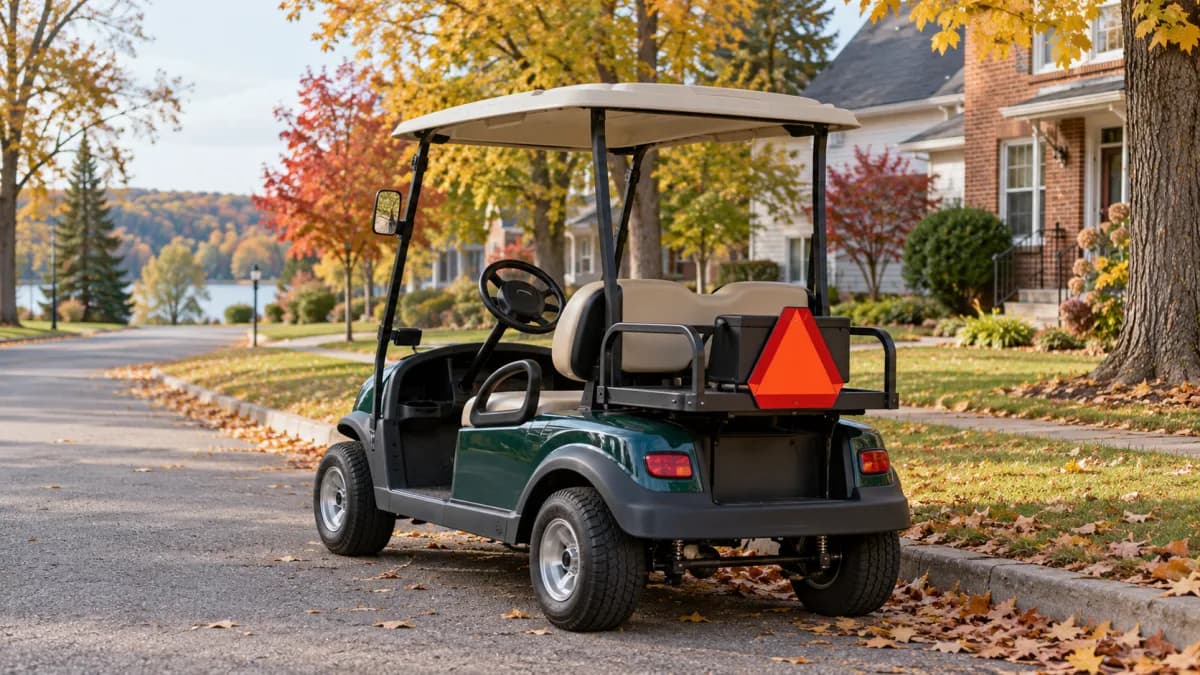
Under KRS 189.286, local authorization must identify the roads open to golf carts. The state framework also requires a valid driver's license, a displayed permit, inspection, proof of insurance carried in the cart, and a slow-moving vehicle emblem.
The statutory definition has equipment, seating, weight, and payload limits. A cart's appearance or advertised speed alone cannot establish eligibility. Local governments may impose stricter operating and equipment rules. The table's title and registration exemptions apply to golf carts using that statutory permit route, not to vehicles registered as LSVs. Our Kentucky golf cart law guide covers the statewide requirements beyond this survey.
Do Kentucky's UTV changes also authorize LSVs?
KRS 186.077 expressly excludes LSVs from the special purpose vehicle category. The version effective July 15, 2026, still requires local authorization for special purpose vehicles on highways within that jurisdiction. Kentucky's vehicle-titling guidance also directs owners to check local ordinances before registering.
For an LSV, Kentucky instead requires manufacturer certification of a maximum design speed of 25 mph. Its LSV title guidance says modern vehicles need a 17-character VIN and identifies golf carts without the necessary origin-document designation or federal safety compliance as ineligible for LSV titling.
The LSV vs. golf cart guide explains the vehicle-category distinction. Owners checking a route also need to examine crossings: Kentucky's LSV statute allows crossing a road posted above 35 mph at an electronically signaled intersection, while the golf cart statute provides no equivalent signal exception.
Primary reporting source
City of Florence: Alternative Mobility Survey