
As an Amazon Associate, we earn from qualifying purchases. This helps support our site at no extra cost to you.
Denago Accessories: Choose by the Problem and Exact Fit
Buy the accessory that solves an actual need, then confirm it against the cart's model, serial number and installed equipment. Passenger count alone does not establish Denago roof, seat, rear-frame or electrical compatibility.
| Need | Accessory to investigate | Evidence needed before purchase |
|---|---|---|
| Difficult entry | Model-specific step | Actual entry height, step application, load limit and stable mounting |
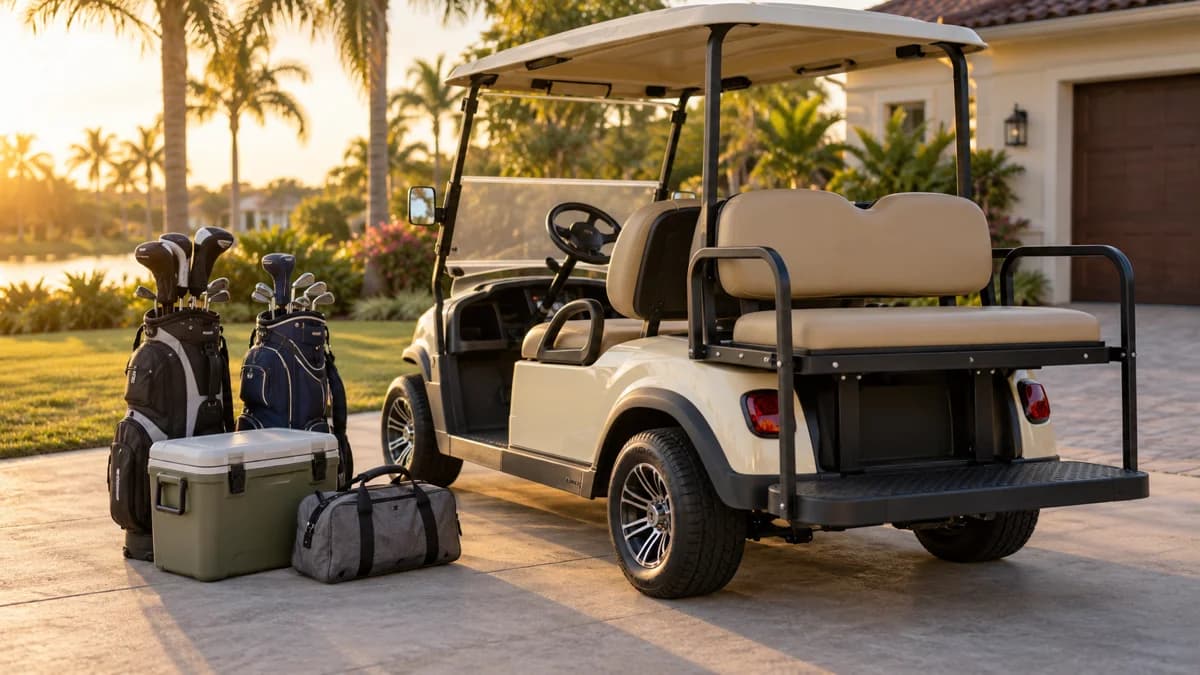
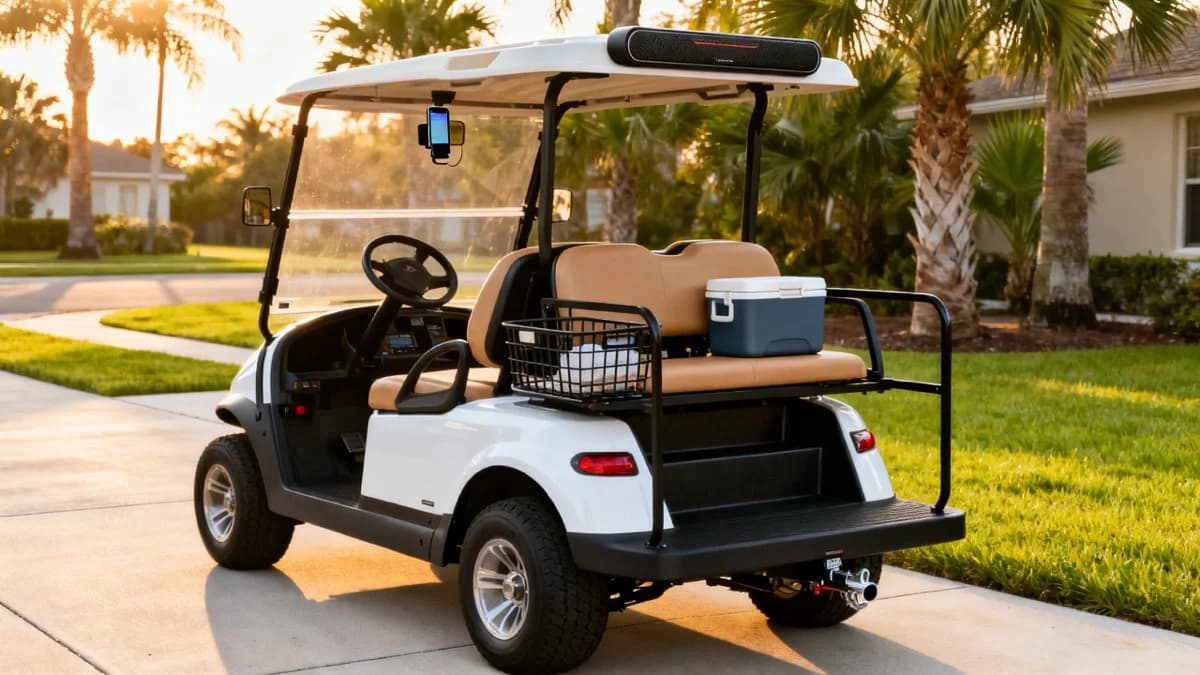
| Carrying gear | Approved rack/carrier | Vehicle load allowance, mount instructions and load position |
| Weather protection | Exact-model enclosure | Roof/body dimensions, mounting, visibility and access |
| Parked storage | Measured cover | Full vehicle dimensions including racks; ventilation and fastening |
| Phone or cooling | Secure mount or portable fan | Clamp/magnet requirements, clearance and retention |
| Audio or external power | Factory-compatible kit | Actual supply, connector, fuse, installation and warranty instructions |
Check what your cart already includes before duplicating lights, audio or charging features.
Rear steps: a specific published design, not universal fit
BA Carts' October 29, 2024 Nomad accessory announcement describes its rear step as providing a six-inch drop and a 200-pound capacity. These are the supplier's historical specifications for that product. They are not measurements of your vehicle or proof of suitability for every passenger.
Measure the actual entry and ask the supplier for the current part application and installation instructions. Check how the step interacts with the rear seat, ground clearance and existing rack. A step should serve entry and exit; it does not authorize riding on it or increase passenger capacity.
The same announcement uses “150 lb capacity” for a receiver without defining whether that means tongue load, carrier load or another limit. Do not use that number as a towing allowance. Obtain the receiver's current rating definition and the cart manufacturer's approved limits before selecting a hitch or loading a carrier. If towing permission is absent, do not infer it from the presence of a receiver.
External inverter: a documented maker-reported use case
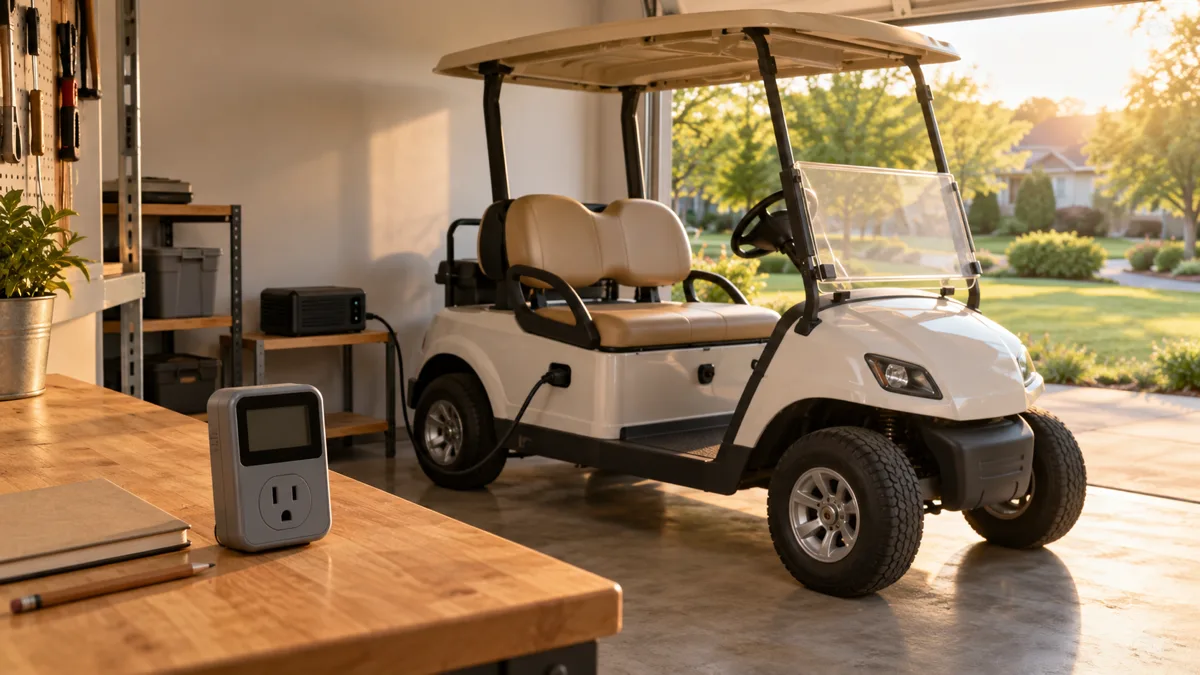
In its April 17, 2026 account, Denago reports that its warehouse team used cart-powered external inverters to restore computers, printers and Wi-Fi during a loading-area outage. That is firsthand reporting by the manufacturer, with a commercial interest; it is not a test we observed. The account does not publish measured load, duration, state of charge or an exact cart-by-cart configuration.
The same article rates the external inverter at 2,000W continuous and suggests about 1,500W combined normal use. It specifies 42–58.4V DC input and limits plug-and-play use to inverter-compatible Denago models. Have the dealer identify the actual factory connection and applicable inverter instructions. A similar-looking connector does not establish compatibility.
For an illustrative load budget, three devices drawing 500W, 300W and 200W total 1,000W, leaving 500W below the maker's suggested 1,500W normal-use level. This arithmetic is not a runtime prediction or proof that a motor/compressor will start; startup demand, inverter limits and battery reserve still need checking. Use actual appliance information and the approved instructions.
Keep electrical installation within the documented factory system. Do not improvise traction-pack taps, feed power into house wiring through a receptacle, or treat a 12V accessory as compatible with traction-pack voltage.
Fit and warranty checks for other upgrades
For a sound system, require the exact mounting bracket, supply voltage, fuse and harness application. “Plug-and-play” must refer to your installed configuration. For wheels, obtain the model-specific thread, seat style, torque, offset, tire diameter and load requirements. Do not substitute a generic lug or re-torque specification.
For an enclosure or seat cover, match the actual layout and manufacturer dimensions. For a tracker, compare the exact hardware and region-specific service plan, billing commitment and coverage before buying. No generic subscription price or battery runtime establishes the cost for your device.
Get accessory approval and warranty conditions in writing, especially for wiring, drilling, added loads and drivetrain changes. Ask who handles an accessory-caused problem and who pays labor or transport. Retain the part number, instructions, invoice and seller's exact fit statement.
Use the Denago review for the vehicle purchase and the accessories guide for broader choices. An accessory label cannot replace model-specific documentation.
Golf Cart Search
Find the Best Golf Carts of 2026
Compare top-rated models, read expert reviews, and find the perfect cart for your needs.