
GEM Golf Cart Review: Price, Problems & Verdict (2026)

GEM golf cart review with 2026 prices from $17,850 to $23,490, real ownership drawbacks, and whether a GEM is worth buying.

Michael
Michael
Apr 24th, 202611 min read
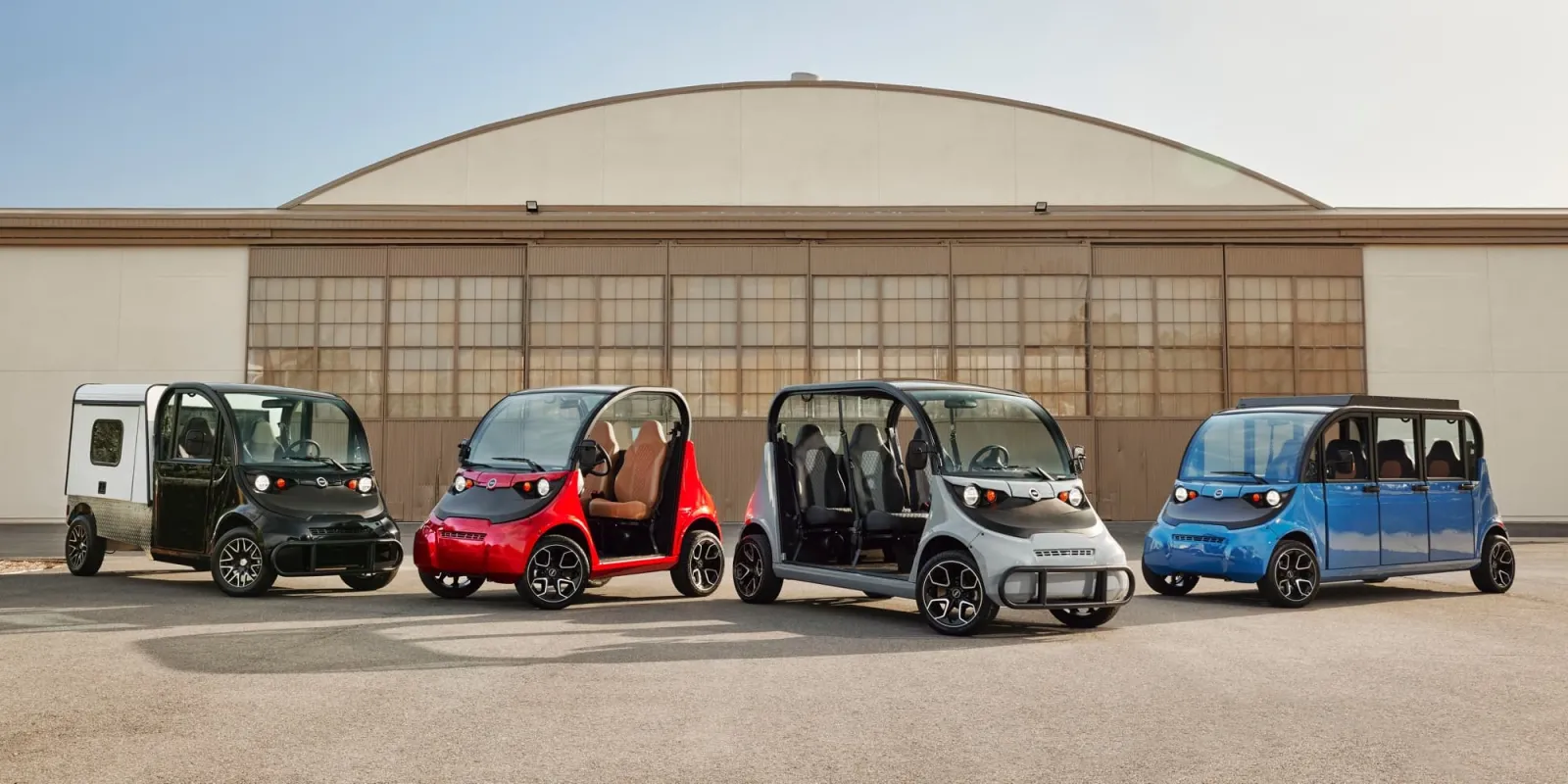
Real GEM electric vehicle lineup photo showing eL XD, e2, e4, and e6 models parked in front of a large building

As an Amazon Associate, we earn from qualifying purchases. This helps support our site at no extra cost to you.

The short version: GEM makes more sense when you stop thinking about it as a normal golf cart.

If you need road-ready neighborhood transportation, campus shuttling, or a small EV for roads posted 35 mph or less, GEM is one of the strongest factory LSV names in the market. If your real need is golf, private-property cruising, or a simple cart you can fix at almost any local shop, GEM is much harder to justify.

Many dealer pages still call GEM a golf cart because that is what people search, but the official GEM lineup is really a low-speed vehicle family with more safety equipment, more paperwork readiness, and a much higher price floor than a normal Club Car, E-Z-GO, or Yamaha.

This review covers 2026 GEM price signals, what the e2, e4, e6, and eL XD do well, where ownership friction shows up, and who should buy one instead of a traditional cart. If you are still deciding whether you even need an LSV, read our LSV vs golf cart guide first, then come back.

Founded 1998

Current Owner Waev Inc.

Built In Anaheim, CA

Top Speed 25 mph

Battery Warranty 7 years / 30,000 miles

Best Fit Buyers who need a true factory LSV

GEM Golf Cart Review: Quick Verdict

My verdict is simple: GEM is a good buy for the buyer who genuinely needs a factory low-speed vehicle, and a weak buy for the person who just wants a golf cart.

GEM is better than most normal golf carts at:

  • factory road-use readiness
  • enclosed-cab comfort
  • safety hardware
  • range on the bigger optional battery pack
  • urban, campus, municipal, and neighborhood commuting use

It is worse than a normal golf cart at:

  • upfront affordability
  • easy parts shopping
  • golf-course simplicity
  • aftermarket support
  • resale liquidity in the mainstream used-cart market

So if you are choosing between a GEM and a normal 4-seat neighborhood cart, the next question should not be “which one is nicer?” It should be “do I actually need a true LSV?” If the answer is yes, GEM belongs on the shortlist alongside more premium road-ready options like the Club Car CRU and the E-Z-GO Liberty LSV. If the answer is no, look at our best golf carts and best golf cart brands pages before you spend GEM money.

What GEM Actually Is

GEM started in 1998 and is now part of Waev Inc., with production in Anaheim, California. Official GEM materials lean hard into the point most buyers need to hear clearly: this is not designed as a golf-course-first cart. It is designed as a localized electric vehicle platform.

That is why the official lineup focuses on:

  • roads posted 35 mph or less
  • LSV paperwork and compliance
  • windshield glass, wipers, turn signals, and seat belts
  • enclosed cab options
  • campus, municipal, hospitality, property-management, and urban-mobility use

The easiest way to think about GEM is this: a normal golf cart is usually best on private property, golf courses, and local neighborhood paths. A GEM is meant to cover the gray area between a golf cart and a full-size car. If your use case includes public roads, registration, and insurance from day one, GEM is playing the right game.

If your use case is mostly golf, beach-house loops, gated-community errands, or private land, a standard cart often wins on value and ownership simplicity. That is why our street-legal guide, golf cart laws hub, and golf cart insurance hub are so important before you buy. The legal classification should drive the purchase, not just the styling.

2026 GEM Models and Real Price Signals

GEM sells four core models that matter most to personal and light-commercial buyers: the e2, e4, e6, and eL XD.

Official consumer pages show the capability side clearly, but they usually do not show a clean MSRP. For real numbers, the best public 2026 base-price signal right now comes from Washington state's public purchasing system. Those prices exclude freight, prep, tax, and common options like full doors, which is why actual dealer asks can land materially higher.

ModelSeatsPublic 2026 base priceOfficial range signalBest fit
GEM e21-2$17,85044 to 63 miles standard, up to 125 maxsolo or 2-seat neighborhood driving
GEM e41-4$19,70041 to 58 miles standard, up to 117 maxfamily and community use
GEM e61-6$23,49030 to 43 miles standard, up to 86 maxshuttle and 6-seat transport
GEM eL XD1-2$21,61030 to 43 miles standard, up to 86 maxwork-truck and utility use

Those are the base numbers. Add full doors, upgraded battery packs, freight, prep, and local dealer fees, and the real delivered number moves quickly.

GEM e2

The GEM e2 is the smallest and easiest model to justify for personal buyers. Official 2026 specs show:

  • up to 125 miles max range on the optional larger battery
  • 25 mph top speed
  • 103-inch overall length
  • 5.0 kW AC induction motor

This is the GEM for buyers who want a compact local commuter, not a golf cart. If your town, campus, or neighborhood has enough public-road driving to make a normal cart feel compromised, the e2 makes more sense than most 2-seat golf carts. If your use case is purely golf or private property, it is usually overbuilt.

GEM e4

The GEM e4 is the most relevant GEM for mainstream golf-cart buyers because it lands in the familiar 4-seat neighborhood-cart format. Official 2026 specs show:

  • 41 to 58 miles standard range, up to 117 miles max
  • 25 mph top speed
  • 6.5 kW AC induction motor
  • 1,364-lb payload rating

This is also the model where the value debate gets sharpest. Around $19,700 base before options, the e4 is competing against very good Club Car, E-Z-GO, and ICON options. The e4 only wins that fight if the buyer really values factory LSV engineering, enclosed comfort, and better road-use credibility.

If that is you, also look at the deeper head-to-head pages for GEM vs Club Car, GEM vs E-Z-GO, Yamaha vs GEM, and the direct model matchup GEM e4 vs Club Car Onward 4 Passenger.

GEM e6

The GEM e6 is where GEM's case gets stronger. Official 2026 specs show:

  • 30 to 43 miles standard range, up to 86 miles max
  • 6-passenger seating
  • six individual door openings available
  • shuttle-first layout with true LSV hardware

At roughly $23,490 base, this is not a casual family-cart purchase. But if you actually need six seats, public-road use, and a more small-EV feel than a stretch golf cart, the e6 is easier to defend. This is why it shows up more naturally in campus, hospitality, and retirement-community use than on golf courses.

GEM eL XD

The GEM eL XD is the work model. Official 2026 specs show:

  • up to 1,629 lbs of payload
  • up to 1,250 lbs of towing
  • 22 rear-configuration options
  • 30 to 43 miles standard range, up to 86 miles max

This is a much better fit for property managers, municipalities, campuses, and facilities teams than for personal golf-cart buyers. It is the GEM that makes the strongest purely functional case because it is solving a clear utility problem, not just trying to be a nicer neighborhood cart.

Why GEM Costs More Than a Normal Golf Cart

Many buyers see GEM prices and assume the brand is simply overpriced. That is not quite right. The better way to say it is that GEM is charging you for a different class of vehicle.

You are paying for things like:

  • VIN-backed LSV identity from the factory
  • automotive windshield glass and wipers
  • three-point seat belts for all passengers
  • backup camera, hill control, regenerative braking, and one-pedal driving
  • enclosed-cab options that feel more like a micro-EV than a golf cart
  • a driving position and cabin layout meant for local-road use

That extra engineering is real. So is the downside: if you do not need it, you are spending thousands on capability you will never use.

This is exactly why a GEM can look impressive in a best golf carts for neighborhoods guide type of search, but still be the wrong buy for a pure golf-course or private-property owner. A standard cart usually starts cheaper, has a bigger used market, and is easier to repair locally.

Where GEM Is Better Than Traditional Golf Carts

GEM does have real strengths, and some of them are hard to replicate with a converted golf cart.

Factory LSV Credibility

This is the main advantage. A GEM starts life as a low-speed vehicle. It is not a cart plus a light kit plus paperwork guesswork. That matters if you live in a strict state, a busy golf-cart community, or anywhere insurers and DMVs want a clean, easily understood path.

If that is your use case, compare it against our best street legal golf carts guide and the street-legal checker, not just the normal neighborhood-cart rankings.

Better Safety Story

Official GEM materials emphasize three-point seat belts, automotive glass, wipers, DOT tires, turn signals, brake lights, and the Occupant Protection System with roof-crush certification to SAE J2358 standards. A normal golf cart can be made more road friendly, but it still does not start from the same engineering brief.

Better Enclosed-Cab Use

For buyers in rainy, coastal, colder, or shoulder-season markets, GEM's enclosed cab story is stronger than most golf-cart alternatives. That does not matter on a sunny golf course. It matters a lot if this thing is replacing a second car for local errands.

Better Range Ceiling

GEM's optional 16 kWh pack creates range numbers that normal golf carts do not typically match, especially on the e2 and e4. That only matters if you are actually driving local-road miles every day. Still, for the right buyer, up to 125 miles on an e2 or up to 117 on an e4 is a genuine advantage.

5 Real GEM Ownership Drawbacks

1. The price floor is high

The cheapest public 2026 base GEM signal is still $17,850 for the e2. The e4 is around $19,700 base. By the time you add doors, freight, prep, and taxes, you are well into territory where buyers can cross-shop premium Club Car, E-Z-GO, and Yamaha builds, or even clean used carts plus a trailer and battery reserve fund.

2. Service is specialized

Officially, GEM points to 200-plus dealer locations and factory support in Anaheim. That is solid for a specialized LSV brand. It is still not the same as the broader repair and parts ecosystem around Club Car, E-Z-GO, and Yamaha.

That means ownership feels different:

  • fewer shops will know the platform well
  • fewer independent mechanics will stock parts
  • diagnostics can be more brand-specific
  • local support quality matters more at purchase time

If you do not have a nearby dealer or trusted local service path, GEM gets much harder to recommend.

3. Older used GEMs can turn into battery and charger projects

This is where forum complaints cluster. Older used GEMs often come with unclear battery history, charger-programming confusion, or previous-owner shortcuts that make diagnosis messy. One recent Reddit thread involved a used GEM with new batteries that still would not hold charge, with replies pointing to charger algorithm mismatch. That is not a verdict on every GEM. It is a reminder that used EVs with specialized charging setups require real verification.

4. It is not the best golf-course-only buy

This sounds obvious, but people still get seduced by the styling and forget the job. If your driving is almost entirely on golf property, private communities, or short paths, a GEM is usually more vehicle than you need. That means more cost, more size, and less ownership simplicity without a proportional payoff.

5. The used-buyer pool is smaller

GEM can hold value fine inside the LSV niche, but resale is less liquid than a used Club Car or E-Z-GO because fewer buyers wake up specifically wanting a GEM. That matters when you sell. It matters even more if the buyer has to ask, “Who is going to service this near me?”

GEM vs Club Car, E-Z-GO, Yamaha, and ICON

For most buyers, this is the comparison set that matters.

BrandWins OnLoses OnBest For
GEMfactory LSV identity, enclosed-road use, safety storyprice, service depth, mainstream resalebuyer who needs a true local-road EV
Club Caraluminum frame, resale, long-term trustroad-ready factory options cost real moneypremium buyer who wants the safest traditional cart bet
E-Z-GOdealer depth, gas options, easier ownershipsteel frame, less LSV distinction on non-LSV modelsbuyer who wants flexibility and support
Yamaharefinement, gas reputation, loyal long-term ownersfewer flashy factory LSV answersbuyer who wants a proven premium cart
ICONfeatures per dollar, strong 25 mph value storysupport and resale below Big 3value-focused neighborhood buyer

If you are comparing a 4-seat GEM directly to normal carts, the cleanest next reads are GEM e4 vs E-Z-GO Express 4, GEM vs ICON, and the broader best golf carts for neighborhoods guide.

Should You Buy a Used GEM?

Only if all three of these are true:

  • the price discount is meaningful
  • the battery and charger setup are verified
  • you already know who will service it

That third point is the one buyers skip. A used GEM with unclear support is not “cheap.” It is a deferred problem. If local service is weak, a cleaner used Big 3 cart is often the smarter long-term buy even if the feature sheet looks less exciting.

For more general used-buying help, start with our used golf cart buying guide and then use the dealer directory if you want a local seller path instead of rolling the dice on private-party listings.

Lower-Cost Alternatives If GEM Feels Too Expensive

This is where many buyers end up. They like the idea of a GEM, but not the invoice.

If that is you, these are the kinds of carts people actually cross-shop:

  • a clean used Big 3 cart with money left over for batteries and repairs
  • a newer value brand like Denago or ICON
  • a lower-cost online electric cart if your use is lighter and support risk is acceptable

The Amazon route is not a one-for-one GEM replacement, but it can make sense for buyers whose real job is basic neighborhood or private-property driving, not fully optimized LSV ownership.

Check Kandi GOAT 2P Price on Amazon Check AODES Trailcross Price on Amazon Check SDLANCH 45-Mile Price on Amazon

If you are leaning that way, read our Amazon golf cart buying risks guide and under-$10,000 roundup before you buy.

Who Should Buy a GEM

Buy a GEM if most of these sound like you:

  • you need a true factory LSV, not a golf cart with aftermarket paperwork hopes
  • you will regularly drive on local roads posted 35 mph or less
  • you want enclosed-cab comfort and weather protection
  • you have nearby GEM support
  • you care more about road-use legitimacy than cheapest total cost

Who Should Skip a GEM

Skip GEM if most of these sound like you:

  • you mainly drive on golf property, private land, or cart paths
  • you want the easiest repair and parts path
  • you care heavily about mainstream resale liquidity
  • you want the most cart for the least money
  • you do not have a nearby GEM dealer or trusted service path

FAQ: GEM Golf Cart Review Questions

Are GEM golf carts any good?

Yes, for the right buyer. GEM is good when the job is local-road transportation, not when the job is “just give me a golf cart.” The stronger the road-use requirement, the stronger GEM's argument becomes.

Is a GEM really safer than a normal golf cart?

In practical road-use terms, yes. GEM's official hardware set is much closer to an entry-level local EV than a simple golf cart. That does not make it a highway car, but it does make it a more serious road-use platform.

What is the best GEM model for most buyers?

For most personal buyers, the GEM e4 is the one to start with. It fits the familiar 4-seat use case, keeps the footprint reasonable, and captures most of GEM's core advantages without stretching all the way to e6 pricing.

What is the cheapest GEM in 2026?

The lowest public 2026 base-price signal is the e2 at about $17,850 before freight, taxes, prep, and common options.

Why are GEM golf carts so expensive?

Because they are not really priced like standard golf carts. You are buying LSV-specific engineering, paperwork readiness, and more complete road-use equipment. Whether that premium is worth it depends entirely on your use case.

Can you drive a GEM on public roads?

Yes, in places where LSVs are allowed. Official GEM guidance points to roads posted 35 mph or less in most states. Always check your local rules first on our laws hub.

Does GEM offer good range?

Yes, especially with the optional larger battery pack. The e2 and e4 range ceiling is one of the best reasons to consider GEM if your local-road mileage is real and frequent.

How good is the GEM warranty?

Current 2026 GEM materials show a 7-year or 30,000-mile battery warranty and a 4-year or 20,000-mile vehicle warranty, which is a serious improvement versus what many buyers still assume from older GEM model years.

Are GEM golf carts good for golf courses?

Usually no. They can be used in golf environments, but they are not the most natural golf-course-only buy. A traditional fleet or personal cart is usually a better fit if road use is not central.

Does GEM beat Club Car for neighborhood use?

Only if your neighborhood use really means public-road use and titled LSV ownership. If it just means local cruising inside a private community, Club Car often makes more financial sense.

Is GEM better than an E-Z-GO Liberty LSV?

Not automatically. GEM has a stronger “true LSV brand” identity. The Liberty LSV usually wins on easier golf-cart-world support and lower ownership friction for many personal buyers.

Should you buy a used GEM instead of a used Big 3 cart?

Only with verified batteries, charger, and local service support. Without that, the used Big 3 path is safer.

Share this post

Golf Cart Search

Find the Best Golf Carts of 2026

Compare top-rated models, read expert reviews, and find the perfect cart for your needs.
Related posts

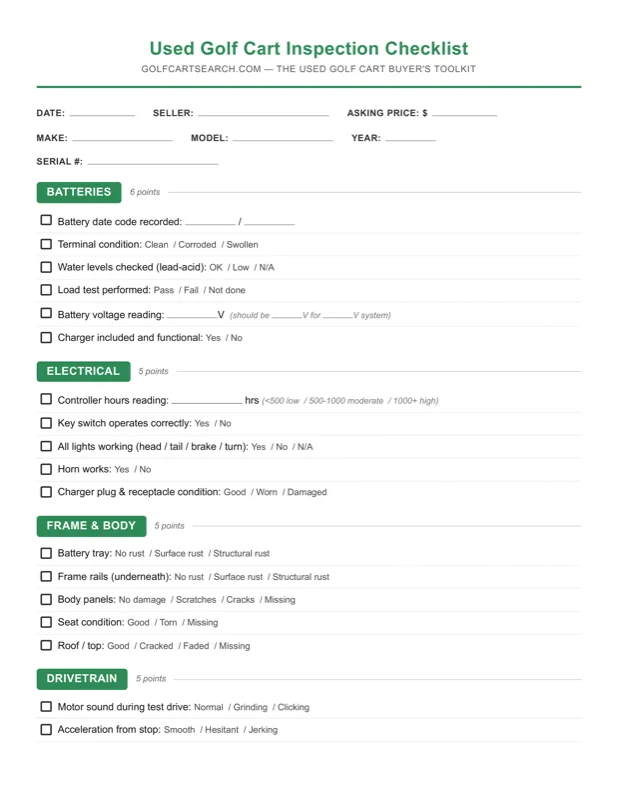
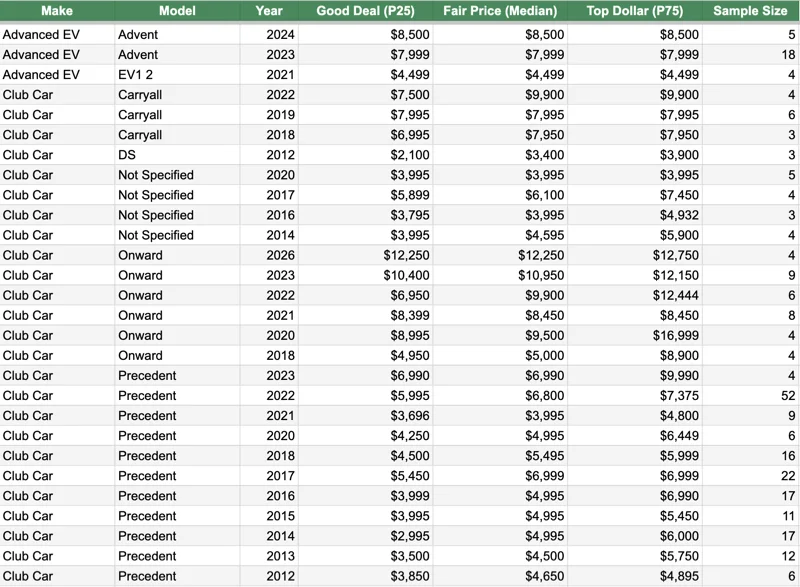
Don't Overpay for a Used Golf Cart

Get pricing data, a printable inspection checklist, and negotiation scripts to help you buy with confidence.

Get the Buyer's Toolkit
Pricing dataInspection checklistNegotiation scripts

Instant download. 30-day guarantee.