
Club Car Golf Cart Review: Every Model, Pricing & Honest Verdict (2026)
Complete Club Car review covering all Onward models from $9,475 to $24,334, the aluminum frame advantage, common problems, and comparisons to EZGO and Yamaha.
Complete E-Z-GO golf cart review covering all 8 models from $8,374 to $15,799, common problems, ELiTE lithium tech, and how EZGO compares to Club Car and Yamaha

As an Amazon Associate, we earn from qualifying purchases. This helps support our site at no extra cost to you.
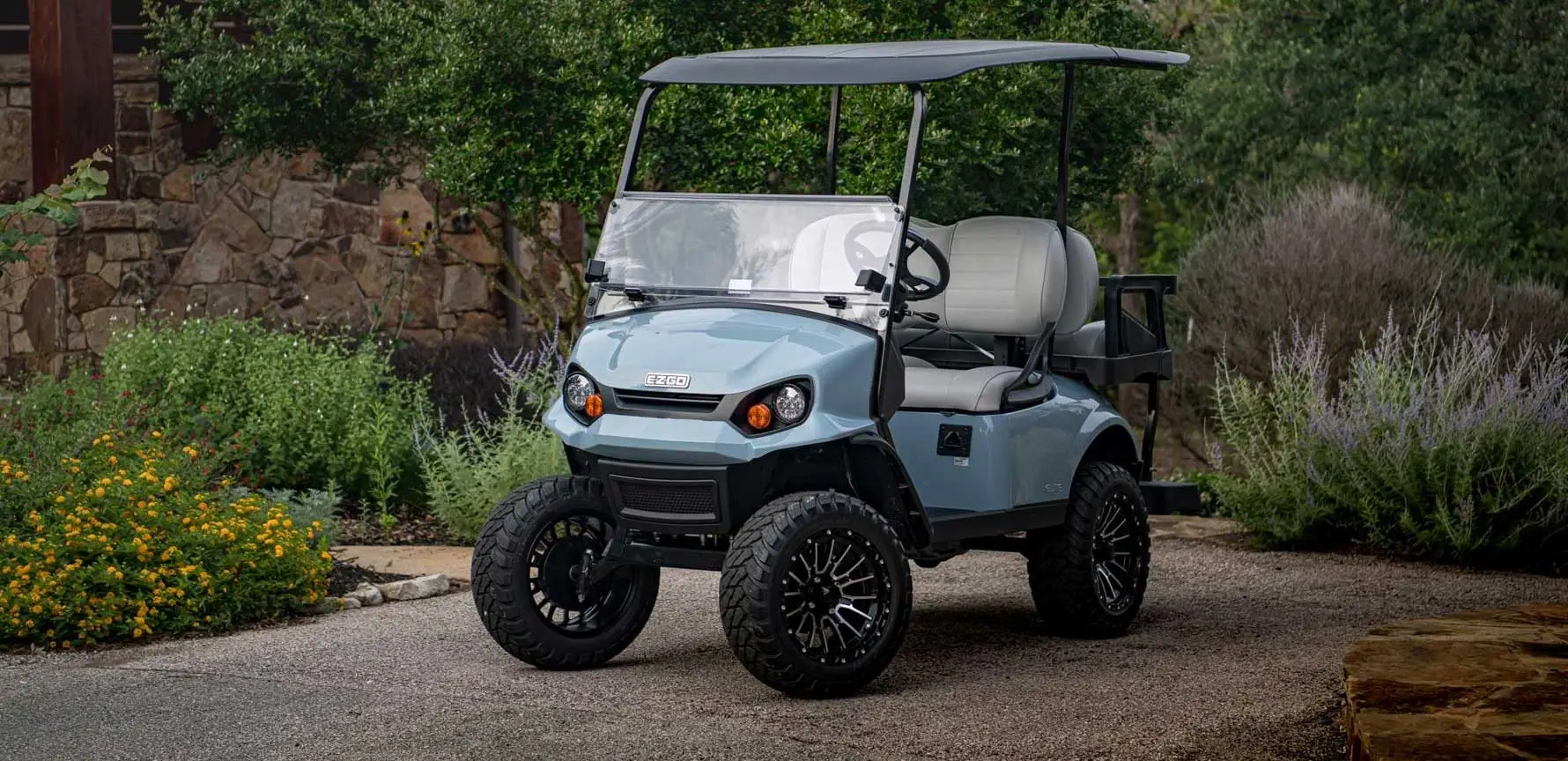
E-Z-GO has been building golf carts since 1954. Backed by Fortune 500 parent Textron, they have sold millions of carts worldwide and built one of the largest dealer networks in the industry. Walk into any golf course pro shop, retirement community, or golf cart dealership in America and you will find EZGOs.
But "been around forever" does not automatically mean "best choice in 2026." Club Car's aluminum frames resist rust better. Yamaha's gas engines run quieter. Newcomers like ICON pack touchscreens and disc brakes at lower price points. So where does EZGO actually stand today?
This review covers every current EZGO model, real pricing from dealers, the five most common problems owners report, and an honest comparison to Club Car, Yamaha, and ICON. You will know exactly whether an EZGO deserves your money by the end.
Founded 1954
Parent Company Textron Inc. (NYSE: TXT)
Price Range $8,374 - $15,799
Warranty 2-Year Parts / 8-Year Battery
E-Z-GO was founded in 1954 in Augusta, Georgia, and still manufactures carts at the same Augusta facility today. The brand was acquired by Textron Inc. in 1960, giving it the backing of a Fortune 500 company with $13+ billion in annual revenue.
Textron's Specialized Vehicles division also builds Cushman utility vehicles at the same Augusta factory. The two brands share the ELiTE lithium battery platform and Samsung SDI cell technology, which means EZGO's battery R&D benefits from Textron's scale.
EZGO's product lineup covers three distinct buyer segments:
One feature that separates EZGO from brands like ICON and Evolution: EZGO still offers gas-powered models. If you need 100+ miles of range, drive on hunting property, or simply prefer gas, EZGO gives you that option alongside their electric lineup. See our electric vs gas comparison for help deciding which powertrain suits you.
The company sells through over 1,000 authorized dealers and service centers, giving EZGO one of the widest service networks in the golf cart industry. Parts availability is a genuine strength. If something breaks, finding a replacement part for an EZGO is easier than for almost any other brand.
EZGO currently sells eight models spanning budget golf course carts to premium street-legal LSVs. Here is what each one offers, what it costs, and who should buy it.
The Valor is EZGO's most affordable cart and the one you see on golf courses everywhere. At $8,374 MSRP, it is available as a 2 or 4 passenger model with either a 48V lead-acid electric drivetrain or the EX1 gas engine.
The Valor uses traditional lead-acid batteries (not the ELiTE lithium system), which keeps the price low but means more maintenance and a heavier cart. You get LED headlights, a standard canopy top, and EZGO's proven AC drive system.
Best for: Golf courses, budget-conscious personal buyers, and anyone who wants a simple, reliable cart without premium features. If you plan to upgrade to lithium batteries later, expect to spend $2,000 to $4,000 for a lithium conversion.
The Freedom RXV is the upgraded version of EZGO's legendary RXV platform. For 2026, it received new styling, updated LED headlights, and the option for the ELiTE lithium drivetrain or the EX1 gas engine.
The RXV platform is where EZGO introduced its exclusive AC drive technology, which delivers strong hill-climbing torque that competing brands struggle to match. The Freedom trim adds comfort features like premium seats and a more refined ride.
Best for: Buyers who want proven reliability with modern upgrades. The RXV platform has been refined over more than a decade. If you choose the ELiTE lithium option, you get Samsung SDI cells with an 8-year warranty at a price point well below the Liberty.
The Express 2 is a 2-passenger cart designed for personal use. It comes exclusively with the ELiTE lithium drivetrain, which means zero battery maintenance and roughly 250 pounds less weight than a comparable lead-acid cart.
Best for: Couples or individuals who want a nimble, low-maintenance cart for neighborhood driving. The 2-seat configuration keeps the footprint small for tight garages and narrow cart paths.
The Express 4 seats four passengers and is available with either ELiTE lithium or the EX1 gas engine. This is the model that makes the most sense for the widest range of buyers.
You get comfortable forward-facing rear seats, the ELiTE lithium or gas powertrain of your choice, LED lighting, and enough cargo space for groceries or golf bags. The 2026 model year adds availability for the new Technology Package with an infotainment system featuring Apple CarPlay and Android Auto.
Best for: Families, neighborhood drivers, and anyone who wants four seats with the flexibility to choose gas or electric. This is EZGO's sweet spot for personal buyers who do not need street-legal speed.
The Liberty is EZGO's flagship personal cart. It comes exclusively with the ELiTE lithium drivetrain and four forward-facing seats. The 2026 model received refreshed headlights and is eligible for the Technology Package with Apple CarPlay, Android Auto, a touchscreen display, and a backup camera.
The Liberty sits higher than the Express, with a more refined suspension, premium seating, and styling that looks closer to a small car than a traditional golf cart. It is the model EZGO designed to compete with the Club Car Onward and ICON i40.
Best for: Buyers who want the full premium EZGO experience without going street-legal. If you live in a golf cart community and drive your cart daily, the Liberty's comfort and build quality justify the price over the Express.
The Liberty LSV is EZGO's top-of-the-line model. It is a factory-built Low-Speed Vehicle with a 25 mph top speed, meeting all federal NHTSA safety requirements out of the box.
Standard equipment includes headlights, taillights, turn signals, mirrors, seat belts, a horn, a windshield, and a VIN plate. For 2026, it also gets the infotainment system with Apple CarPlay and Android Auto, plus a backup camera.
You still need to register and insure the LSV through your state DMV, but you do not need to buy and install any aftermarket street-legal equipment. Check your state's golf cart laws for specific requirements.
Best for: Buyers who want to drive on public roads legally and want a factory solution rather than a DIY street-legal conversion. The $15,799 price is steep, but you avoid the $500 to $1,500 cost and hassle of converting a non-LSV model yourself.
The Valor 6 extends the Valor platform to six passengers with rear-facing third-row seats. It uses a 48V electric drivetrain with standard lead-acid batteries.
Best for: Families or resort operators who need six seats at the lowest possible price. Keep in mind the lead-acid batteries add weight and maintenance. For a 6-seater with lithium, step up to the Express 6.
The Express 6 seats six passengers and is available with ELiTE lithium or EX1 gas. It is the largest personal-use EZGO and competes with the ICON i60 and Club Car Onward 6.
At roughly 1,500 lbs with a full battery, the Express 6 works harder than the 4-passenger models. Expect reduced range with a full load, especially on hilly terrain. For more on range factors, see our golf cart range guide.
Best for: Large families, campground operators, and resort shuttle service. If you routinely carry more than four passengers, this is the way to go. If four seats handle most of your trips, the Express 4 or Liberty are lighter and more efficient.
EZGO publishes MSRP prices, but dealer pricing varies significantly by region. High-demand markets like Florida, Arizona, and the Carolinas often charge at or above MSRP, while dealers in less competitive areas may offer discounts.
| Model | MSRP | Typical Dealer Price | Power Options |
|---|---|---|---|
| Valor | $8,374 | $8,500 - $9,500 | Electric (lead-acid) or Gas |
| Freedom RXV | $8,874 | $9,000 - $10,500 | ELiTE Lithium or Gas |
| Express 2 | $10,544 | $10,500 - $11,500 | ELiTE Lithium only |
| Express 4 | $11,369 | $11,500 - $13,000 | ELiTE Lithium or Gas |
| Liberty | $12,699 | $12,999 - $14,500 | ELiTE Lithium only |
| Liberty LSV | $15,799 | $15,999 - $17,500 | ELiTE Lithium only |
| Valor 6 | $10,915 | $11,000 - $12,500 | Electric (lead-acid) |
| Express 6 | $13,474 | $13,500 - $15,000 | ELiTE Lithium or Gas |
MSRP does not include destination fees, dealer setup, or optional accessories. Budget an additional $500 to $1,000 for delivery and prep on top of the listed prices.
For context on how EZGO pricing compares to the full market, see our golf cart pricing guide covering all major brands.
EZGO's ELiTE lithium technology deserves its own section because it is one of the brand's strongest selling points and a major factor in the buying decision.
The ELiTE system uses Samsung SDI lithium cells, the same company that supplies batteries for BMW and Ford EVs. This is not a generic Chinese lithium pack. The Samsung partnership gives EZGO access to premium cell chemistry, rigorous quality control, and a battery management system engineered for longevity.
Key ELiTE specs:
The practical benefit is real. A lead-acid EZGO weighing 1,100 lbs becomes an 850 lb cart with ELiTE lithium. That lighter weight translates to better acceleration, longer range, less tire wear, and reduced strain on the motor and controller.
The ELiTE system is available on the Freedom RXV, Express 2, Express 4, Express 6, Liberty, and Liberty LSV. The Valor and Valor 6 still use traditional lead-acid batteries.
One caveat to know about: The ELiTE system pairs the battery to the controller through a digital communication protocol. This means you cannot swap in a third-party lithium battery pack without also replacing the controller. If your ELiTE battery fails outside of warranty, you are locked into buying a factory replacement rather than a cheaper aftermarket option. For most owners the 8-year warranty covers this window, but it is worth knowing before you buy.
If you are deciding between lead-acid and lithium, our complete battery guide covers the full comparison.
No golf cart brand is problem-free. Here are the five issues EZGO owners report most often on forums, in dealer reviews, and through our own research. Knowing these upfront helps you catch problems early and make an informed buying decision.
For step-by-step diagnostics on any electric cart issue, our troubleshooting guide covers the full process.
The most common complaint, especially on Valor models and older EZGOs still running lead-acid batteries. One weak cell in a 6 or 8-battery pack can drag down the entire system, causing reduced range, sluggish acceleration, and incomplete charging.
Prevention: Check water levels monthly, keep terminals clean, avoid deep discharges below 20%, and use an automatic battery charger. Lead-acid batteries typically last 4 to 6 years with proper care. For detailed maintenance steps, see our battery guide.
The ELiTE lithium advantage: This problem essentially disappears with the ELiTE system. Samsung SDI cells do not require watering, do not suffer from individual cell imbalance the same way, and carry an 8-year warranty.
A frustrating issue where the cart clicks when you press the accelerator but does not move. The solenoid (an electromagnetic switch that connects battery power to the controller) is either stuck, corroded, or failing.
Fix: Clean the solenoid contacts, check for corrosion on the terminals, and test the solenoid with a multimeter. Replacement solenoids cost $30 to $80 for EZGO models and are widely available at auto parts stores and online. This is a common DIY repair.
Electric EZGOs can refuse to charge due to dirty, corroded, or misaligned charge receptacles. The charger plug may not seat fully, or the cart may start charging and then stop. This is especially common in humid climates where corrosion builds faster.
Fix: Clean the charge receptacle and plug contacts with electrical contact cleaner. Check for bent pins. If the charger itself is failing, replacement chargers for EZGO models run $200 to $500. For EZGO TXT models specifically, the EXEFCH 36V charger is a well-reviewed aftermarket option.
Check EXEFCH 36V EZGO Charger PriceThe speed controller manages power delivery from the batteries to the motor. Symptoms of a failing controller include inconsistent speed, jerky acceleration, reduced top speed, and the cart cutting out under load.
Fix: Controller issues often start as intermittent problems that worsen over time. Check the wiring connections first, as loose terminals cause similar symptoms. A new OEM controller runs $300 to $600. Aftermarket controllers from brands like Navitas can upgrade performance while replacing the faulty unit. See our speed upgrade guide for controller upgrade options.
EZGO uses mechanical drum brakes on most models, and the brake cables stretch over time. Symptoms include a soft brake pedal, reduced stopping power, and the parking brake not holding on inclines.
Fix: Adjust the brake cables every 6 to 12 months. This is a simple 15-minute job with basic tools. If the cables are frayed or the brake shoes are worn, replacement parts cost $20 to $60. Our maintenance guide includes the full brake adjustment procedure.
The problems above are real but manageable. Here is where EZGO genuinely excels.
This is EZGO's single biggest practical advantage. With 70+ years of production and over 1,000 dealers, finding parts for any EZGO model (even ones from the 1990s) is straightforward. Amazon, eBay, dedicated golf cart parts sites, and local dealers all carry EZGO components. Try finding parts for a 5-year-old ICON or Evolution, and you will appreciate the difference.
EZGO is one of the few major brands that still offers gas-powered carts alongside electric. This matters if you need 100+ miles of range for hunting, farming, or large properties. Gas models also avoid the 4 to 6 hour charging wait that electric owners deal with daily. For help choosing between powertrains, see our electric vs gas guide.
The ELiTE lithium system is not just marketing. Samsung SDI is a global tier-1 battery supplier. The 8-year warranty on battery cells and 5-year warranty on the battery management system provide genuine long-term protection. ICON offers 10 years on their battery, but EZGO's Samsung cell quality is widely regarded as superior in the industry.
Seventy years of production data does not lie. EZGO carts routinely last 15 to 25 years. The TXT platform (predecessor to the current lineup) is legendary for running with minimal maintenance. Golf courses run EZGOs for 5,000+ rounds per year. That kind of real-world endurance testing across millions of carts is something newer brands simply cannot match yet.
Textron is a $13+ billion Fortune 500 company. They are not going to discontinue EZGO or leave owners stranded without parts and service. For buyers who worry about brand longevity (a legitimate concern with newer manufacturers), Textron's backing provides certainty.
One trade-off of the corporate structure: Textron routes all technical support through the dealer network. If you have a question about your cart, you call your dealer, not EZGO directly. This works fine if you have a good dealer relationship, but it can be frustrating for DIY owners who want to troubleshoot over the phone.
Here is how EZGO compares to its three closest competitors on the factors that matter most to buyers:
| Factor | EZGO Express 4 | Club Car Onward | Yamaha Drive2 | ICON i40 |
|---|---|---|---|---|
| Starting Price (lithium) | $11,369 | $14,000+ | $14,000+ | $12,999 |
| Gas Option | Yes (EX1) | Yes (Vanguard) | Yes (QuieTech) | No |
| Frame Material | Steel | Aluminum | Steel | Steel |
| Battery Tech | Samsung SDI ELiTE | Lead-acid or lithium | Lead-acid or lithium | ECO Lithium |
| Battery Warranty | 8 years | 2 years | 3 years | 10 years |
| Parts Warranty | 2 years | 2 years | 4 years | 3 years |
| Touchscreen | Optional (2026 Tech Pkg) | Optional | None | 10.1" standard |
| Disc Brakes | Rear drum | Rear drum | Rear drum | 4-wheel standard |
| Dealer Network | 1,000+ | 1,000+ | 1,000+ | 200+ |
| Resale (3-year) | 60-70% | 70-80% | 60-70% | 60-70% |
| Years in Business | 70+ | 60+ | 40+ | 8 |
Key takeaways:
Choose EZGO if you want the best lithium battery technology with Samsung SDI backing, need a gas option, and value the widest parts availability and dealer network. EZGO is the practical choice for buyers who prioritize reliability and serviceability.
Choose Club Car if you live in a coastal or humid area (the aluminum frame will not rust), want the best resale value, or prioritize build quality over price. Club Car commands a premium, but the aluminum frame and higher resale justify the cost for many buyers. See our complete Club Car review or Club Car vs EZGO comparison for a detailed breakdown.
Choose Yamaha if you want the quietest gas engine on the market (QuieTech EFI at 60.5 dB), the longest parts warranty at 4 years, or motorcycle-grade engine reliability. Yamaha builds their own engines in-house. See our complete Yamaha review or Yamaha vs EZGO comparison for more detail.
Choose ICON if you want the most features for the money (touchscreen, disc brakes, LED lighting all standard), do not need a gas option, and have an authorized dealer nearby. ICON undercuts EZGO on features per dollar, but the smaller dealer network and shorter track record are real trade-offs. See our ICON golf cart review for a deep dive.
For a full ranking across all brands, visit our best golf cart brands page.
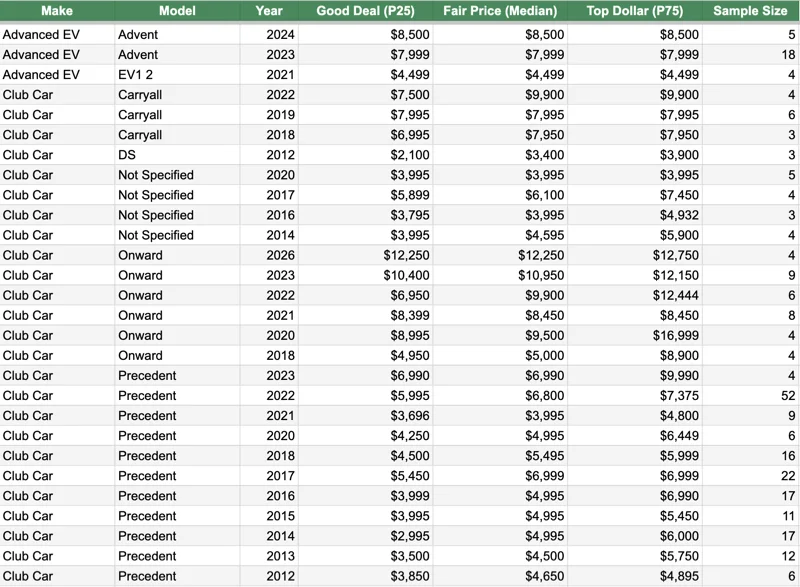
EZGO carts retain roughly 60-70% of their value after 3 years with proper maintenance. That puts them in line with Yamaha but below Club Car, which typically holds 70-80%.
Used EZGO pricing benchmarks:
| Age | Lead-Acid Models | ELiTE Lithium Models |
|---|---|---|
| 1-2 years old | $6,000 - $9,000 | $8,000 - $12,000 |
| 3-5 years old | $4,000 - $7,000 | $6,000 - $9,000 |
| 6-10 years old | $2,500 - $5,000 | $4,000 - $7,000 |
| 10+ years old | $1,500 - $3,500 | N/A (lithium too recent) |
ELiTE lithium models command a $1,500 to $2,500 premium on the used market because the battery warranty transfers to the new owner and buyers know they are getting a maintenance-free battery system.
Factors that help EZGO resale:
Factors that hurt EZGO resale:
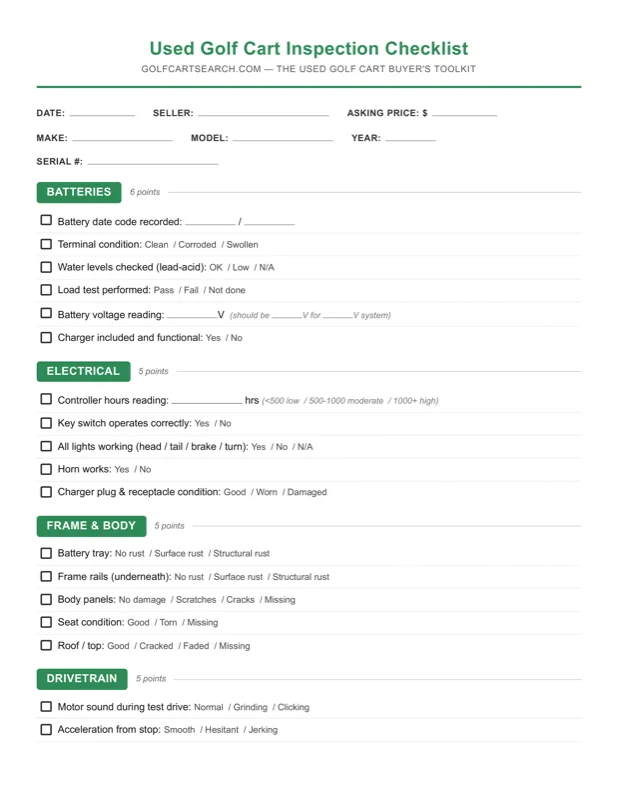
For more on buying used carts, our used golf cart buying guide covers the full inspection process.
Buy an EZGO if:
Consider another brand if:
EZGO has one of the largest aftermarket accessory ecosystems in the golf cart world. Here are upgrades that make a noticeable difference in daily use.
If your EZGO did not come with a windshield (base Valor and RXV models), adding one keeps bugs, rain, and wind out of your face. The ENEKERP fold-down windshield ($80 to $100) fits EZGO TXT and RXV models and installs without drilling.
Check ENEKERP EZGO Windshield PriceFor year-round driving in rain and cold, a full enclosure turns your open cart into a weatherproof cabin. The Xoxocos enclosure ($80 to $120) fits EZGO TXT and RXV models with roll-up doors and a clear windshield panel. See our complete enclosure guide for more options.
Check Xoxocos EZGO Enclosure PriceFor early morning rounds or cold-weather commuting, the NOKINS heated and ventilated seat cushion adds three heating levels, cooling ventilation, and vibration massage. It plugs into the cart's 12V outlet and fits any golf cart seat.
Check NOKINS Heated Seat Cushion PriceA quality phone mount keeps your GPS and music controls accessible without loose phones sliding around the dash. The Haxmuti universal clamp mount ($20 to $25) grips EZGO roof frames and roll bars securely.
Check Haxmuti Phone Mount PriceFor more accessory ideas, see our complete golf cart accessories guide and customization guide.
EZGO is the practical buyer's golf cart brand. It does not have the flashiest features (ICON wins there), the best frame material (Club Car's aluminum wins), or the quietest gas engine (Yamaha wins). What EZGO offers is the total package: reliable carts at fair prices, backed by the widest parts network in the industry and a Fortune 500 parent company that is not going anywhere.
The ELiTE lithium technology with Samsung SDI cells is the standout. The 8-year battery warranty, zero maintenance, and 250 lb weight savings over lead-acid make a real difference in daily use. If you are buying a new EZGO in 2026, choose an ELiTE lithium model unless you specifically need gas power.
The main weaknesses are the steel frame (rust risk in humid climates) and the 2-year parts warranty (shorter than Yamaha's 4-year). These matter more in some situations than others. If you live in the desert Southwest, the steel frame is fine. If you live on the coast, look at Club Car.
For most buyers in golf cart communities, neighborhoods, and golf courses, EZGO delivers the right combination of reliability, value, and long-term support. Find EZGO dealers in our dealer directory, or compare models head-to-head on our brand comparison pages.
EZGO manufactures its carts at the Textron Specialized Vehicles factory in Augusta, Georgia. This is the same facility that has produced EZGO carts since the company was founded in 1954, and it also builds Cushman vehicles. The Augusta facility employs ISO 9001 certified manufacturing processes.
The TXT was EZGO's most popular platform for decades, sold from 1994 through the mid-2010s. The RXV replaced it with an updated chassis, EZGO's exclusive AC drive technology for better hill-climbing, and the IntelliBrake automatic parking brake system. If you are buying new in 2026, the current lineup has moved beyond the TXT/RXV naming to the Valor, Freedom, Express, and Liberty models built on the evolved RXV platform. Used TXT models remain extremely popular and affordable at $2,000 to $5,000.
Annual maintenance on an electric EZGO costs roughly $200 to $400 for lead-acid models (battery water, terminal cleaning, tire rotation, brake adjustment) and $100 to $200 for ELiTE lithium models (tire rotation, brake check, general inspection). Gas models add fuel costs and periodic engine service, running $300 to $600 per year. For the full maintenance schedule, see our maintenance guide.
Yes. Lithium conversion kits for EZGO models cost $2,000 to $4,000 depending on battery capacity and brand. The conversion saves 200+ pounds, eliminates battery maintenance, and typically extends range by 20-30%. It is one of the best ROI upgrades for older EZGOs. Our lithium conversion guide covers the full process and recommended kits.
EZGO carts can be upgraded from the stock 19 mph to 23-25 mph through controller reprogramming, aftermarket controllers, motor upgrades, and higher-profile tires. A simple speed code change costs nothing on some models. An aftermarket 400-500 amp controller runs $300 to $600 and provides the biggest speed improvement. See our speed upgrade guide for the full breakdown.
EZGO carts weigh between 750 and 1,100 lbs depending on the model and battery type. A Valor with lead-acid batteries weighs about 950 to 1,050 lbs. The same cart with ELiTE lithium drops to roughly 750 to 850 lbs. Six-passenger models like the Express 6 weigh 1,000 to 1,200 lbs. For weights by model, see our golf cart weight guide.
Golf Cart Search
Compare top-rated models, read expert reviews, and find the perfect cart for your needs.
Browse Top-Rated Carts
Complete Club Car review covering all Onward models from $9,475 to $24,334, the aluminum frame advantage, common problems, and comparisons to EZGO and Yamaha.

Complete Star EV golf cart review covering all 14 models from $11,888 to $18,999. Sirius, Capella, and Classic lines compared with honest pros and cons.

Complete Yamaha golf cart review covering all 9 models from $9,481 to $20,995. QuieTech EFI tech, common problems, and how Yamaha compares to Club Car and EZGO.
Get the latest updates on golf cart services, tips, and exclusive offers delivered to your inbox.