

Best Golf Carts for Seniors (2026 Guide)
The 10 best golf carts for seniors in 2026. Easy entry, smooth rides, and safety features that matter. Real prices from $6,995 to $15,900.
The 10 best golf carts for neighborhood use in 2026, from $6,995 to $24,334. Real prices, specs, and honest picks for every budget.

As an Amazon Associate, we earn from qualifying purchases. This helps support our site at no extra cost to you.
Golf carts are no longer just for the golf course. Across the country, neighborhoods from The Villages in Florida to Peachtree City in Georgia are seeing golf carts replace cars for short trips, grocery runs, and evening cruises around the block.
The U.S. golf cart market hit $1.87 billion in 2026, with personal neighborhood use as the fastest-growing segment. But picking the right cart for your neighborhood is different from picking one for the course. You need street-legal equipment, passenger comfort for daily use, and enough range to handle real errands.
This guide covers the 10 best golf carts for neighborhood use in 2026, with real prices, honest pros and cons, and specific recommendations based on your budget and household size. We also break down street-legal requirements, total ownership costs, and the accessories that make neighborhood driving safer and more enjoyable.
Before you shop, you need to understand the difference between a golf cart and a Low Speed Vehicle (LSV). This distinction determines whether you can legally drive on your neighborhood streets.
A standard golf cart tops out at 15 to 20 mph and is built for golf courses and private property. An LSV is a federally classified motor vehicle that reaches 20 to 25 mph and includes DOT-compliant safety equipment: headlights, taillights, turn signals, mirrors, seat belts, a windshield, and a horn.
| Feature | Golf Cart | Low Speed Vehicle (LSV) |
|---|---|---|
| Top speed | 15-20 mph | 20-25 mph |
| Federal classification | Not a motor vehicle | Motor vehicle (FMVSS 500) |
| Road use | Private property, some designated roads | Public roads with 35 mph or lower speed limits |
| Registration required | Usually no | Yes (title, plate, VIN) |
| Insurance required | Usually no | Yes |
| Drivers license required | Varies | Yes |
The bottom line: If you want to drive on public neighborhood streets, buy a factory-built LSV. In most states, you cannot convert a standard golf cart into a registered LSV because it will lack the Manufacturer's Statement of Origin needed for titling. Check your state's specific golf cart laws before buying.
We evaluated over 20 models across price, build quality, features, range, safety equipment, and real-world neighborhood usability. Here are our top 10 picks.
| Model | Price | Seats | Range | Top Speed | Battery | Best For |
|---|---|---|---|---|---|---|
| Club Car Onward HP Li | $13,155+ | 2-6 | 25-35 mi | 19-25 mph | 48V Lithium | Best overall |
| ICON i40L | $11,749 | 4 | 30-40 mi | 25 mph | Lithium | Best value |
| Evolution Classic 4 Plus | $6,995 | 4 | 25-35 mi | 25 mph | 48V Lithium | Best budget |
| EZGO Liberty | $11,999+ | 4 | 30-40 mi | 25 mph | ELiTE Lithium | Best for families |
| Yamaha Drive2 2+2 | $12,495+ | 4 | 25-35 mi | 19 mph | PowerTech Li | Smoothest ride |
| Star EV Sirius | $12,326+ | 2-6 | 30-45 mi | 25 mph | LiFePO4 | Most features |
| Denago Nomad XL | $9,195 | 4 | 40 mi | 25 mph | 48V Lithium | Best range |
| Bintelli Beyond | $13,195 | 4 | 30-35 mi | 25 mph | LiFePO4 | Best comfort |
| Club Car CRU | $24,334 | 6 | Extended | 25 mph | 72V Lithium | Best luxury |
| AODES Trailcross | $7,249 | 4 | 40 mi | 25 mph | 48V | Best Amazon deal |
Price: $13,155 to $15,300 (golf cart) or $18,000 to $20,000+ (LSV version)
The Club Car Onward earns the top spot for one reason that matters more than any feature: it will outlast every other cart on this list. Club Car's rust-proof aluminum frame does not corrode, period. While steel-framed competitors show rust after 5 to 8 years in humid climates, Onward frames last decades.
The HP Lithium drivetrain delivers regenerative braking (great for hilly neighborhoods), adjustable drive modes, and a Connect display that shows real-time range estimates. The LSV version ships factory-equipped with DOT glass windshield, LED lights, turn signals, and reinforced safety features, so you do not need to add aftermarket kits.
Pros: Industry-best build quality, best resale value (70-80% after 5 years), 8-year battery warranty, largest dealer network
Cons: Premium pricing, fewer standard tech features than ICON or Evolution, LSV version pushes past $18,000
Read our full Club Car review for a deeper look at every Onward model.
Price: $11,749
The ICON i40L won "Best LSV/Street Legal" in the 2025 industry survey, and for good reason. It comes loaded with features that cost thousands extra on Club Car and EZGO: a 10-inch touchscreen, Bluetooth audio, rear storage, backup camera, tilt steering wheel, on-board charger, factory LED lights, and premium tires on alloy wheels. All included at $11,749.
For neighborhood buyers who want the most features per dollar, the i40L is hard to beat. It is LSV-compliant out of the box and reaches 25 mph. The lithium battery provides 30 to 40 miles of range, covering a full week of neighborhood errands on a single charge for most owners.
Pros: Feature-loaded at a competitive price, LSV-ready, strong range, good dealer support
Cons: Newer brand with less proven long-term reliability data, resale value not yet established, some owners report fit-and-finish inconsistencies
See our complete ICON golf cart review for model comparisons and common problems.
Price: $6,995
The Evolution Classic 4 Plus is the most affordable lithium-powered, LSV-ready cart you can buy in 2026. At $6,995, it costs less than half of a comparable Club Car, and it still includes a 9-inch touchscreen, Bluetooth speakers, FM radio, USB charger, backup camera, and a built-in cooler.
Is it built to the same standard as a Club Car or Yamaha? No. But for buyers who need a reliable neighborhood cart without spending $12,000 or more, the Evolution delivers surprising value. The 48V lithium battery and foldable acrylic windshield handle daily neighborhood duty just fine.
Pros: Unbeatable price for a lithium 4-seater, surprisingly feature-rich, DOT compliance available
Cons: Build quality is a step below the Big 3, limited long-term reliability data, smaller dealer network, foldable acrylic windshield is not DOT glass
Price: $11,999 to $14,500
The EZGO Liberty is a factory-built LSV with one feature that matters enormously for families: all four seats face forward. Rear-facing bench seats are uncomfortable and less safe, especially for children. The Liberty eliminates that issue entirely.
The 2026 model adds refreshed LED headlights and an optional Technology Package with Apple CarPlay, Android Auto, a touchscreen display, and a backup camera. The ELiTE Lithium drivetrain provides 30 to 40 miles of range with consistent power delivery even at low charge levels.
Pros: All forward-facing seats, factory LSV compliance meets all NHTSA standards, Apple CarPlay available, strong EZGO dealer network
Cons: Base model is sparse (Technology Package adds significant cost), 2-year warranty is shorter than some competitors
Read our EZGO review for pricing on every model in the 2026 lineup.
Price: $12,495 to $16,000
If your neighborhood has rough roads, speed bumps, or gravel sections, the Yamaha Drive2 will make every other cart feel like a buckboard wagon. The 2026 PowerTech Li models come standard with independent rear suspension, joining the already excellent Tru-Trak II independent front suspension. That is independent suspension on all four corners, a rarity in this price range.
Yamaha also offers the only serious gas option for neighborhoods. The QuieTech EFI engine is the quietest gas golf cart motor on the market, relevant for the small number of buyers who need 100+ mile range or prefer not to deal with batteries. For most neighborhood buyers, the PowerTech Li electric version is the better pick.
Pros: Best ride quality in the class, 4-year standard warranty (longest among the Big 3), legendary Yamaha reliability, gas option available
Cons: 19 mph top speed on standard models (no LSV version from Yamaha), fewer tech features than ICON or Evolution, styling is more conservative
Our full Yamaha review compares every model and covers common issues.
Price: $12,326 to $14,400+
The Star EV Sirius packs features that no other cart in this price range offers. The standout: an electric-operated locking trunk with a built-in cooler, perfect for grocery runs and beach trips. Add a full-color touchscreen, Bluetooth audio, backup camera, ambient dash lighting, and a lockable lighted glove box, and the Sirius feels more like a small car than a golf cart.
The double wishbone suspension delivers handling quality that rivals carts costing twice as much. LiFePO4 batteries rated for 2,000+ charge cycles mean the battery should outlast most owners' interest in keeping the cart.
Pros: Electric trunk with cooler, automotive-inspired interior, excellent suspension, 4-year warranty, 2-6 passenger configurations
Cons: Smaller dealer network than the Big 3, less proven resale value, some buyers find the styling polarizing
Check out our Star EV review for the full model lineup.
Price: $9,195 to $9,595
If range anxiety keeps you from buying a golf cart, the Denago Nomad XL puts that concern to rest. The 48V 105Ah lithium battery delivers 40 miles of real-world range, enough for most neighborhood owners to go an entire week between charges.
The Nomad XL also comes with full Apple CarPlay and Android Auto, wireless phone connectivity, and an AM/FM stereo. All street-legal equipment is included: LED headlights, taillights, turn signals, horn, mirrors, brake lights, and seat belts. The 8-year full replacement battery warranty is the best in the industry.
Pros: 40-mile range, Apple CarPlay/Android Auto, 8-year battery warranty (full replacement), all street-legal equipment included, competitive pricing
Cons: Newer brand with limited track record, smaller dealer network, no 6-passenger option
Price: $13,195 to $13,495 (4-seater) or $14,990 (6-seater)
The Bintelli Beyond is one of the few carts in this class with power steering. On longer neighborhood rides, that feature alone makes a noticeable difference in driver fatigue. Add a DOT windshield with wipers, wireless phone charger, 9-inch touchscreen, hydraulic disc brakes, and telescopic steering, and the Beyond checks every comfort box.
The wide comfort seats with bolstered sides keep passengers secure during turns, and the LiFePO4 lithium battery handles the 30 to 35 mile range most neighborhood owners need. A 4-year limited warranty adds peace of mind for a mid-range brand.
Pros: Power steering (rare in this class), DOT windshield with wipers, wireless phone charger, hydraulic disc brakes, 4-year warranty
Cons: Pricing overlaps with Club Car Onward territory, limited brand recognition, dealer availability varies by region
Price: $24,334 MSRP (dealers often $30,000+)
The Club Car CRU was not adapted from a golf cart. It was designed from scratch as a street-legal Neighborhood Electric Vehicle. The 72V system with a 10HP continuous / 30HP peak motor, electric power steering, 4-wheel hydraulic disc brakes, and a tinted see-through roof put the CRU in a different category from everything else on this list.
The social seating layout seats 6 passengers around a center table, with reversible front seats that convert for face-to-face seating. In-dash Bluetooth speakers, a digital display with backup camera, and a windshield with wiper and washer round out the package. This is the cart for buyers who want something that feels like a luxury vehicle.
Pros: Purpose-built NEV (not a modified golf cart), electric power steering, 4-wheel hydraulic disc brakes, unique social seating, premium build quality
Cons: $24,000+ price tag, dealer markups can push past $30,000, limited color and configuration options, 6-seat-only configuration
Price: $7,249
For buyers who want to order a 4-passenger cart online and skip the dealer experience entirely, the AODES Trailcross delivers solid value at $7,249 on Amazon. The 48V electric drivetrain provides 40 miles of range, and the street-legal package includes the basics you need for neighborhood roads.
Check Price on AmazonPros: Ships direct to your door, 4 passengers, 40-mile range, competitive price
Cons: No local dealer support for service, unproven long-term reliability, limited brand reputation, assembly required
Choosing between models is easier when you know which features actually matter for daily neighborhood use versus features that just look good on a spec sheet.
Every neighborhood cart needs DOT-compliant headlights, taillights, turn signals, brake lights, mirrors, 3-point seat belts for every seat, a windshield, and a horn. If your cart does not come with these factory-installed, budget $300 to $800 for aftermarket kits. Read our street legal guide for a complete equipment checklist, and review our safety guide for tips on protecting your family.
In 2026, there is no good reason to buy a lead-acid cart for neighborhood use. Lithium batteries charge in 3 to 5 hours instead of 8 to 10, last 2,000+ cycles instead of 500 to 750, weigh half as much, and deliver consistent power at any charge level. The upfront cost difference has shrunk considerably, and lithium carts hold their resale value better. For a deep dive, see our lithium conversion guide.
If you are carrying passengers regularly, forward-facing rear seats are significantly safer and more comfortable than rear-facing bench seats. The EZGO Liberty and several ICON models offer this standard. If you are deciding between 2, 4, or 6 seats, consider that most neighborhood families find 4 seats sufficient while 6-seat models add versatility for larger groups.
A backup camera is now standard on most 2026 models, and you should consider it essential rather than optional. Golf carts have significant blind spots, especially 4 and 6-passenger models with rear-facing seats or cargo areas. In a neighborhood with kids, pets, and cyclists, a backup camera could prevent a serious accident.
For year-round neighborhood use, a canopy top is the bare minimum. A windshield (fold-down or fixed) handles rain, bugs, and debris. In rainy climates, consider a model with a windshield wiper. For cold-weather states, a full enclosure keeps you warm enough to use the cart from October through April.
A few targeted accessories can make a big difference in daily neighborhood use. These are the upgrades we recommend first.
A phone mount turns your cart into a GPS-equipped neighborhood cruiser. The Haxmuti magnetic phone holder clamps to any cart frame and uses N52 magnets to hold your phone securely, even on bumpy roads. At around $20, it is one of the best upgrades you can make.
Check Price on AmazonIf your EZGO TXT did not come with a windshield, the ENEKERP foldable windshield is a solid aftermarket option. The 5mm polycarbonate construction is shatter-resistant and UV-treated, and the fold-down design lets you choose between full coverage and open air. Around $70 to $100 installed.
Check Price on AmazonFor neighborhood riders in cooler climates, the NOKINS heated, ventilated, and vibrating seat cushion extends your riding season by months. It plugs into your cart's 48V system and offers heating, cooling, and massage modes. Pair it with a golf cart heater for full winter comfort.
Check Price on AmazonFor more upgrade ideas, check our complete accessories guide and customization guide.
The sticker price is just the beginning. Here is what neighborhood golf cart ownership really costs over 5 years.
| Expense | Cost Range |
|---|---|
| Cart purchase (new, lithium) | $6,995 to $20,000+ |
| Registration and titling (LSV) | $50 to $200 |
| Insurance (liability) | $75 to $200/year |
| Charging electricity | $50 to $100/year |
| Total Year One | $7,170 to $20,500+ |
| Expense | Electric (Lithium) | Gas |
|---|---|---|
| Fuel/electricity | $50 to $100 | $200 to $400 |
| Maintenance | $200 to $400 | $500 to $1,200 |
| Insurance | $75 to $200 | $75 to $200 |
| Annual Total | $325 to $700 | $775 to $1,800 |
Electric carts save $400 to $1,100 per year in operating costs compared to gas. Over 5 years, that is $2,000 to $5,500 in savings, which often offsets the higher upfront cost of lithium. For full pricing data by brand, see our golf cart pricing guide.
Golf cart insurance is surprisingly affordable. Basic liability for an LSV runs $75 to $200 per year, and full coverage with collision and comprehensive typically costs $200 to $500 annually. Check your state's insurance requirements before registering.
Your ideal neighborhood cart depends on your household, budget, and how you plan to use it. Here are our recommendations by buyer profile.
Pick: Evolution Classic 4 Plus ($6,995)
You want a reliable neighborhood cart without spending $12,000+. The Evolution gives you lithium power, a touchscreen, and 4 seats at a price that is hard to argue with. Accept the trade-off of less-proven build quality for massive upfront savings.
Pick: EZGO Liberty ($11,999+)
Safety comes first with kids aboard. The Liberty's all-forward-facing seats, factory LSV compliance, and strong EZGO dealer network give you confidence on neighborhood roads. Add the Technology Package for CarPlay and a backup camera.
Pick: ICON i40L ($11,749)
You want everything included without paying Club Car prices. The ICON delivers touchscreen, Bluetooth, backup camera, premium wheels, and LSV compliance for thousands less than comparable Big 3 models. Just know you are buying from a newer brand.
Pick: Club Car Onward HP Lithium ($13,155+)
You plan to keep this cart for 10+ years and want it to still look and run great. The aluminum frame, 8-year battery warranty, strongest resale value in the industry, and the largest service network make the Onward the smart long-term investment.
Pick: Club Car CRU ($24,334)
You want a cart that feels like a luxury vehicle and serves as a social centerpiece in your neighborhood. Electric power steering, 4-wheel disc brakes, social seating for 6, and purpose-built NEV engineering. This is the pinnacle of neighborhood electric vehicles.
Pick: AODES Trailcross ($7,249 on Amazon)
You prefer buying online, want it shipped to your door, and are comfortable with basic assembly. The Trailcross offers 4 seats and 40-mile range at a price point that undercuts most dealerships.
Check AODES Trailcross Price on AmazonThe neighborhood golf cart market is changing fast. Here is what is driving the growth:
LSV legislation is expanding. States like Florida, Texas, and Arizona continue to expand LSV-friendly laws, allowing golf carts on more roads and raising speed limits in designated areas. More municipalities are building golf-cart-friendly infrastructure with dedicated paths and crossings.
Tech features are becoming standard. Apple CarPlay, backup cameras, touchscreen displays, and Bluetooth audio were premium options two years ago. In 2026, they come standard on models from ICON, Evolution, Denago, and others. The EZGO Liberty's Technology Package brings CarPlay to the Big 3 for the first time.
Lithium batteries dominate. Electric carts now account for 85% of all golf cart sales, and lithium is rapidly replacing lead-acid as the default battery chemistry. Faster charging, longer lifespan, and better range make lithium the clear choice for daily neighborhood use. Read our battery guide for a full comparison.
New brands are competing hard on value. ICON, Evolution, Denago, and Bintelli are forcing the Big 3 (Club Car, EZGO, Yamaha) to add more standard features and reconsider pricing. Competition is great for buyers, though long-term reliability data on newer brands is still limited.
Ready to test drive? Browse our dealer directory to find golf cart dealers in your area. You can also search by state for the best golf cart dealers with verified reviews and inventory.
If you are still researching brands, our in-depth reviews cover every major manufacturer: Club Car, EZGO, Yamaha, ICON, Star EV, and more.
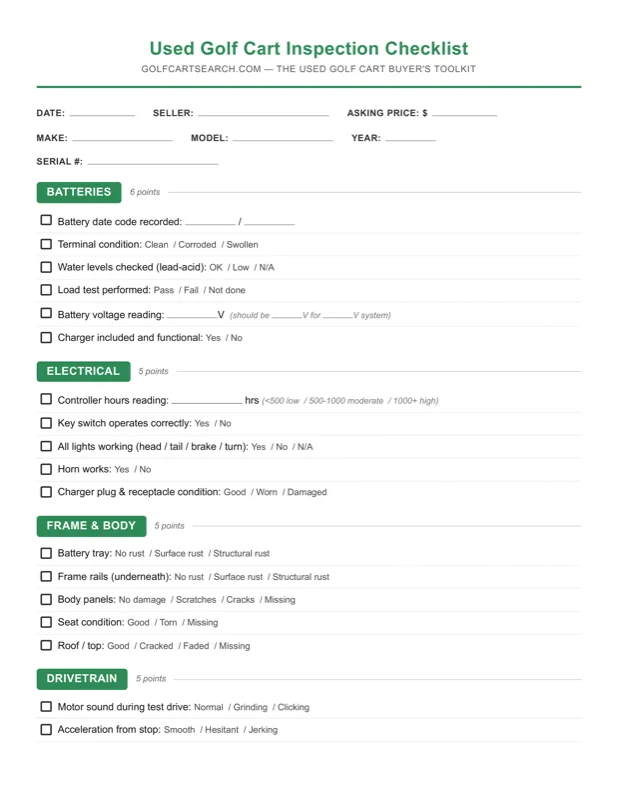
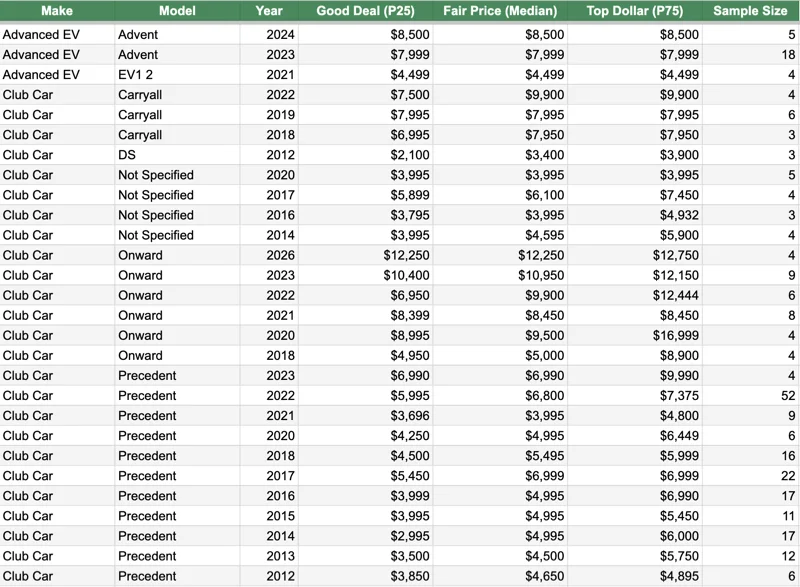
For buyers on a budget, our used golf cart buying guide walks you through what to inspect and what to avoid, and our golf cart value guide helps you understand fair pricing.
LSVs are limited to 25 mph by federal law. Standard golf carts typically reach 12 to 19 mph depending on the model and power source. For most neighborhood use, 20 to 25 mph is plenty. If you want more details on speeds by brand, check our speed guide.
Absolutely. Most 4-passenger carts have a rear cargo area, and models like the Star EV Sirius include a built-in trunk cooler. For frequent grocery trips, look for a cart with a flat cargo area or under-seat storage.
Most carts come with a canopy top that handles light rain. For heavier rain, add a windshield and consider a full weather enclosure. Electric carts are safe to drive in rain, though you should avoid deep standing water.
A garage or carport is ideal for extending your cart's life, but it is not required. If you park outdoors, invest in a quality golf cart cover to protect against UV damage and weather. In winter months, follow our winterization guide to protect the battery and electrical system.
Brands like ICON, Evolution, and Denago source components from China but have U.S.-based operations, warranty support, and growing dealer networks. They are reliable enough for most buyers, especially at their price points. The trade-off compared to Club Car, EZGO, and Yamaha is less proven long-term reliability data (5 to 10+ year track records) and smaller service networks. For a comprehensive brand breakdown, see our best golf cart brands page.
Electric neighborhood carts require minimal maintenance: check tire pressure monthly, keep the battery terminals clean, and inspect brakes and lights before the season. Budget $200 to $400 per year. Gas carts need oil changes, air filters, and spark plugs, costing $500 to $1,200 annually. If something goes wrong, our troubleshooting guide covers the most common problems, or you can find a repair shop near you.
Golf Cart Search
Compare top-rated models, read expert reviews, and find the perfect cart for your needs.
The 10 best golf carts for seniors in 2026. Easy entry, smooth rides, and safety features that matter. Real prices from $6,995 to $15,900.

Compare 2, 4, and 6 seater golf carts side by side. Real prices, dimensions, range data, and a decision guide to pick the right size for your needs.

Find out what your golf cart is worth. Depreciation rates by brand, year-by-year value data, and tips to maximize resale. Real 2026 market prices.
Get the latest updates on golf cart services, tips, and exclusive offers delivered to your inbox.