
Yamaha Golf Cart Review: Every Model, Pricing & Honest Verdict (2026)

Complete Yamaha golf cart review covering all 9 models from $9,481 to $20,995. QuieTech EFI tech, common problems, and how Yamaha compares to Club Car and EZGO.

Michael
Michael
Mar 6th, 202616 min read
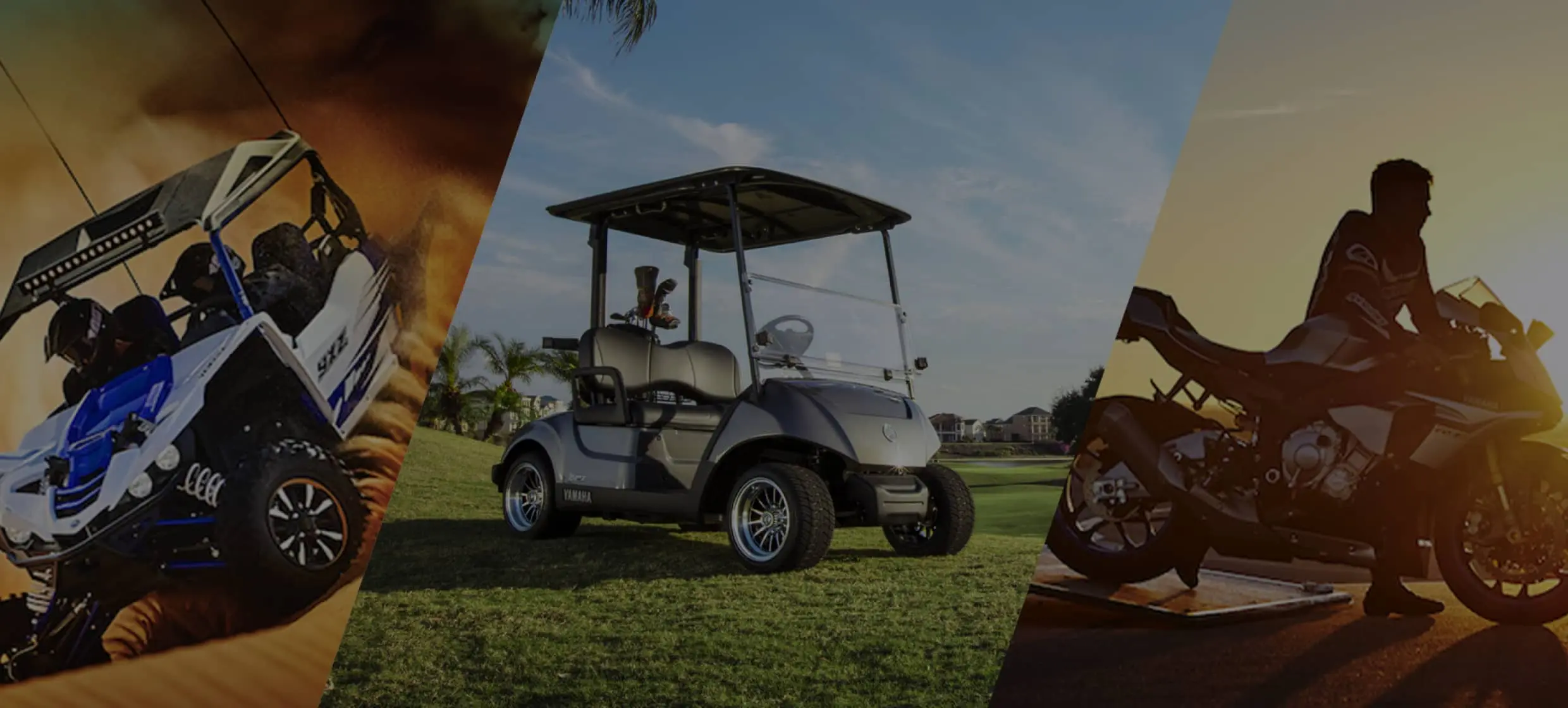
Yamaha golf cart lineup featuring the Drive2 platform with QuieTech EFI technology

As an Amazon Associate, we earn from qualifying purchases. This helps support our site at no extra cost to you.

Yamaha has been building golf carts since 1979, and they bring something no other manufacturer can claim: they build their own engines. While Club Car sources engines from Vanguard and EZGO uses their Textron-built EX1, Yamaha designs and manufactures the QuieTech EFI engine using decades of motorcycle engineering. The result is the quietest gas golf cart on the market at just 60.5 decibels.

But Yamaha is not just about gas engines. Their electric lineup runs on Trojan battery partnerships and a growing lithium option, and the UMAX utility line serves everyone from resort operators to golf course superintendents. With a 4-year parts warranty (the longest in the industry) and a factory in Newnan, Georgia, Yamaha is firmly established as one of the Big 3 alongside Club Car and EZGO.

This review covers every current Yamaha model, real pricing from dealers, the five most common problems owners report, and an honest comparison against Club Car, EZGO, and ICON. By the end, you will know exactly whether a Yamaha deserves your money.

Founded 1955 (golf carts since 1979)

Parent Company Yamaha Motor Co., Ltd.

Models 9 current (Drive2 + UMAX)

Price Range $9,481 - $20,995

Factory Newnan, Georgia

Parts Warranty 4 years (industry best)

Yamaha's History and What Makes Them Different

Yamaha Motor Company started in 1955 as a spinoff from Yamaha Corporation (the musical instrument company founded in 1887). They built motorcycles first, then expanded into boats, ATVs, snowmobiles, and eventually golf carts in 1979.

What sets Yamaha apart from every other golf cart brand: they are the only manufacturer that builds their own powertrain from scratch. Club Car is owned by Platinum Equity (a private equity firm). EZGO is owned by Textron (a defense and industrial conglomerate). Both rely on outside suppliers for key components. Yamaha designs, engineers, and manufactures their engine in-house using the same engineering teams that build motorcycle and outboard motor engines.

This matters because Yamaha's gas engine quality is measurably superior. The QuieTech EFI produces 60.5 decibels of noise. For reference, a normal conversation runs about 60 dB. You can idle a Yamaha gas cart next to someone talking on the phone and they would not need to raise their voice. No competitor comes close to this.

The company manufactures golf carts at their 1.3 million square foot facility in Newnan, Georgia (about 40 miles southwest of Atlanta), employing nearly 1,500 people. The factory has been running since 1988, and Yamaha has produced over 1 million golf carts globally. Engineering comes from Japan; assembly happens in Georgia. This hybrid approach gives Yamaha Japanese engineering precision with American manufacturing logistics for the North American market.

Yamaha's 4-year parts warranty is also the longest standard warranty among the Big 3. Club Car and EZGO both offer 2-year parts warranties. That extra coverage is not marketing fluff; it reflects Yamaha's confidence in their build quality and reduces your out-of-pocket risk during the critical first years of ownership.

Every 2026 Yamaha Model Compared

Yamaha's lineup breaks into two families: the Drive2 series for personal and golf course use, and the UMAX series for commercial and utility applications. Here is every current model with pricing and key specs.

Drive2 Family (Personal and Golf Course)

ModelMSRPSeatsPower OptionsTop SpeedBest For
Drive2 Fleet$9,4812Gas or Electric15 mphGolf courses, fleet use
Drive2 PTV$10,1612Gas or Electric19 mph (25 mph LSV)Personal use, neighborhoods
Drive2 Concierge 4$12,4554Gas or Electric19 mphFamilies, resorts
Drive2 Concierge 6$13,3306Gas or Electric19 mphLarge families, hotels

UMAX Family (Commercial and Utility)

ModelMSRPSeatsPower OptionsBest For
UMAX Bistro$10,7312Gas, Electric, or LithiumFood/beverage service
UMAX Range Picker$12,7402Gas or ElectricGolf course maintenance
UMAX One$15,9952Gas, Electric, or LithiumProperty maintenance, resorts
UMAX Rally$17,9952Gas or ElectricHeavy commercial use
UMAX Rally 2+2$20,9954Gas or ElectricPremium utility with passengers

Drive2 Deep Dive: The Models Most Buyers Want

Drive2 Fleet ($9,481)

The Fleet is Yamaha's golf course workhorse. Governed to 15 mph, it is built for course operations: reliable starts every morning, quiet operation that does not disturb players, and low maintenance costs for fleet managers running 50 to 200 carts.

The Fleet uses the same platform as the PTV but strips out personal-use features. It is available with QuieTech EFI gas or PowerTech AC/Li electric. Most courses choose gas for unlimited range and fast refueling between tee times. For courses committed to going green, the lithium electric option eliminates the headache of maintaining hundreds of lead-acid batteries.

If you are buying for personal use, skip the Fleet and go straight to the PTV. The $680 price difference buys you higher top speed, better seating, and more comfort features.

Drive2 PTV ($10,161)

The PTV (Personal Transportation Vehicle) is the model most private buyers should start with. At $10,161 MSRP, it sits between the EZGO Valor ($8,374) and Club Car Onward 2-Passenger ($9,000+) on price.

What you get: Yamaha's automotive-style dashboard with two USB ports, contoured seats, a spacious bag well and sweater basket, and the option to add a street-legal package that bumps top speed to 25 mph for LSV classification. The QuieTech gas version delivers 45 mpg, which translates to real savings if you drive daily in a golf cart community.

The PTV is available in multiple colors and with factory options including LED headlights, taillights, and a Bluetooth audio system. The independent front suspension (Tru-Trak II) and maintenance-free rack-and-pinion steering give it a tighter, more responsive feel than budget competitors.

Who it is for: Couples, retirees, and neighborhood drivers who want a reliable 2-seater with the quietest gas option on the market, backed by a 4-year parts warranty.

Drive2 Concierge 4 ($12,455)

The Concierge 4 adds a rear-facing bench seat for 4-passenger capacity. It runs on the same Drive2 platform with a stretched wheelbase (98.1 inches) and adds independent rear suspension for a smoother ride with passengers.

At $12,455, it competes directly with the EZGO Express 4 ($11,369) and ICON i40 ($12,999). The Yamaha costs about $1,000 more than the EZGO but includes independent rear suspension that neither the EZGO nor most competitors offer at this price point. The ICON i40 undercuts slightly while packing more tech features (touchscreen, disc brakes), but uses a steel frame and has a fraction of Yamaha's dealer network.

The Concierge 4 uses eight 6V Trojan T-105 batteries in the PowerTech AC electric configuration, or Yamaha's lithium-ion pack for the PowerTech Li option. The gas version runs the same 357cc QuieTech EFI engine as all Drive2 models.

Who it is for: Families, resort shuttle operators, and anyone who regularly carries passengers and wants the ride quality of independent rear suspension.

Drive2 Concierge 6 ($13,330)

The Concierge 6 stretches the platform further to seat 6 passengers with an additional rear-facing row. At $13,330, the $875 premium over the Concierge 4 gets you two extra seats, making it the most cost-effective per-seat option in Yamaha's lineup.

This model is popular with hotels, large retirement communities, and families with kids who pile in for trips to the pool or clubhouse. Keep in mind that loaded weight with 6 adults significantly impacts range on electric models and acceleration on both powertrains.

Who it is for: Large families, HOA shuttle services, resort/hotel property transport, and anyone who regularly moves more than 4 people.

UMAX Utility Line: Built for Work

The UMAX family is Yamaha's commercial and utility lineup. These are not golf carts dressed up as work vehicles; they are purpose-built for demanding applications with reinforced frames, larger cargo beds, and heavy-duty suspensions.

UMAX Bistro ($10,731)

The Bistro is designed for food and beverage service on golf courses, resorts, and event venues. It features a specialized cargo area configured for carrying coolers, supplies, and serving equipment. Available in gas, electric, and lithium configurations.

UMAX One ($15,995)

The UMAX One is Yamaha's do-everything utility vehicle. Think property maintenance, resort operations, campus transportation, and large estate management. At $15,995, it is positioned as a premium utility option with three powertrain choices (gas, electric, lithium).

UMAX Rally ($17,995) and Rally 2+2 ($20,995)

The Rally models represent the top of Yamaha's utility line. The base Rally is a 2-seat heavy-duty hauler built for demanding commercial environments. The Rally 2+2 adds rear-facing passenger seating for $20,995, making it the most expensive cart in Yamaha's lineup.

These are overkill for neighborhood use. If you need a personal cart with some hauling capability, the Concierge 4 or a Drive2 PTV with aftermarket accessories is a better fit. The Rally line makes sense for resorts, country clubs, large agricultural properties, and commercial operations that need a combination of passenger transport and work capability.

For buyers focused on utility and hauling, also consider the Cushman lineup, which specializes in commercial utility vehicles.

Yamaha's Key Technologies

QuieTech EFI (Gas Engine)

This is Yamaha's flagship technology and their strongest competitive advantage. The QuieTech EFI is a Yamaha-built 357cc single-cylinder OHV engine with electronic fuel injection and closed-loop fuel management.

The numbers that matter:

  • 60.5 decibels of noise (quietest gas golf cart engine, period)
  • 45 mpg fuel efficiency
  • Low emissions meeting current EPA requirements
  • Instant starting via EFI (no choke, no carburetor fiddling)

For context on that noise level: a typical EZGO gas cart runs noticeably louder, and older gas carts from any brand can hit 70+ dB. The 60.5 dB QuieTech measurement is comparable to a normal conversation, which means you can drive through a neighborhood at 7 AM without waking anyone up. In golf cart communities where noise complaints are a real issue, this feature alone can justify choosing Yamaha over the competition.

The engine also benefits from Yamaha's motorcycle DNA. The same company that builds engines for the YZF-R1 superbike and the Tenere adventure motorcycle designed this powerplant. That engineering depth shows in long-term reliability: Yamaha gas engines routinely run for 15,000+ hours with basic maintenance.

PowerTech Electric (AC and Li)

Yamaha's electric lineup runs on two systems:

PowerTech AC uses traditional lead-acid batteries (six 8V Trojan T-875 for 2-seaters, eight 6V Trojan T-105 for 4-seaters). Range is up to 45 miles on a full charge, with 8 to 10 hour charging times. The Trojan partnership means you are getting name-brand batteries, not generic cells.

PowerTech Li is Yamaha's lithium option, using lithium iron phosphate (LiFePO4) cells with 105 amp-hour capacity and a Delta-Q onboard charger. LiFePO4 is the safest lithium chemistry available, with virtually no thermal runaway risk. It eliminates the maintenance headaches of lead-acid (no watering, no corrosion, no gradual capacity loss), saves roughly 200 to 250 pounds of weight, and delivers up to 38 miles of range per charge. Yamaha rates the battery for 8 years of service life. For 2026, independent rear suspension is now standard on all PowerTech Li models.

Yamaha's lithium technology is solid but trails EZGO's Samsung SDI ELiTE system on both warranty coverage (EZGO offers 8 years vs Yamaha's 3 years) and brand-name battery cell recognition. Owners considering a lithium upgrade for older Yamaha electric models should look at the EXEFCH 48V 105Ah lithium battery ($800 to $1,000), which offers a drop-in replacement path with significant weight and range improvements.

Check Lithium Battery Price on Amazon

For the latest on battery options across brands, see our complete golf cart battery guide and our lithium battery conversion guide.

Tru-Trak II Independent Front Suspension

Every Drive2 model includes Yamaha's Tru-Trak II independent front suspension, which provides better bump absorption and handling than the leaf-spring setups found on many competitors. The Concierge 4 and 6 add independent rear suspension as well, making them among the smoothest-riding 4 and 6-passenger carts available.

Maintenance-Free Rack-and-Pinion Steering

Yamaha uses automotive-style rack-and-pinion steering rather than the simpler (and less precise) steering systems found on some competitors. It requires zero maintenance and provides tighter, more predictable handling.

5 Common Yamaha Golf Cart Problems

No golf cart brand is problem-free. Here are the five issues Yamaha owners report most frequently, based on forum discussions, dealer feedback, and owner surveys:

1. Fuel Pump Failures (Gas Models)

The most talked-about Yamaha problem. The fuel pump on Drive2 gas models can fail, typically between 3 and 7 years of use, leaving you stranded. Symptoms include hard starting, sputtering at speed, and sudden engine cutouts. The fix is a fuel pump replacement ($150 to $300 installed). Some owners carry a spare as preventive maintenance.

This issue affects a minority of carts, but it comes up frequently enough in forums that it deserves mention. The 4-year warranty covers it if failure happens early.

2. Hot-Start Power Loss (2019+ QuieTech Models)

Multiple forum reports describe 2019 and newer QuieTech models starting with reduced power or no power when the engine is hot, particularly after stopping and restarting on a warm day. The cart starts but will not accelerate normally until it cools down. This appears to be related to the EFI system and heat soak. Some dealers have addressed it with ECU updates, but it remains an intermittent issue for some owners. Related: some owners report power loss on steep inclines, which may stem from the same heat management issue.

3. Speed Sensor Malfunctions

The Drive2's electronic speed control relies on a speed sensor that can malfunction, typically causing the cart to run at reduced speed or trigger a fault code. Cleaning or replacing the sensor ($50 to $150) usually resolves it. This is more of an annoyance than a major repair, but it can be confusing if you do not know what is happening.

4. Clutch Wear (Gas Models)

Gas model clutches wear over time, particularly on carts that do a lot of stop-and-go driving or carry heavy loads. Symptoms include sluggish acceleration, a burning smell, or the engine revving without the cart moving proportionally. Clutch replacement runs $200 to $400 and is a normal wear item, not a defect.

5. Suspension Bushing Wear

The independent suspension that gives Yamaha carts their smooth ride uses rubber bushings that wear over time. As they degrade, you will notice rattles, clunks over bumps, and a generally less composed ride. Bushing replacement is $100 to $200 in parts and can be done by most golf cart mechanics. Expect to address this around year 5 to 8 depending on usage.

Yamaha vs Club Car vs EZGO vs ICON

Here is how Yamaha compares to its three closest competitors on the factors that matter most:

FactorYamaha Drive2 PTVClub Car OnwardEZGO Express 4ICON i40
Starting Price$10,161$9,000+$11,369$12,999
Gas OptionYes (QuieTech EFI)Yes (Vanguard)Yes (EX1)No
Gas Noise Level60.5 dB (best)LouderLouderN/A
Frame MaterialSteelAluminumSteelSteel
Battery Warranty3 years6 years8 years (ELiTE)10 years
Parts Warranty4 years (best)2 years2 years3 years
TouchscreenNoneNoneOptional10.1" standard
Disc BrakesRear drumRear drumRear drum4-wheel standard
Independent SuspensionFront (rear on Concierge)FrontFrontFront
Dealer Network1,000+1,000+1,000+200+
Resale (3-year)60-70%70-80%60-70%60-70%
Years in Business47 (golf carts)67+70+8

Key takeaways:

Choose Yamaha if you want the quietest gas engine on the market, the longest parts warranty at 4 years, or motorcycle-grade engine reliability. Yamaha is the best gas golf cart brand, period. If you plan to run gas, no other manufacturer matches the QuieTech EFI on noise, fuel efficiency, and long-term durability. See our Yamaha vs Club Car comparison and Yamaha vs EZGO comparison for detailed breakdowns.

Choose Club Car if you live in a coastal or humid area where the aluminum frame advantage matters, want the best resale value, or plan to keep the cart for 10+ years. The premium pricing pays back in durability and resale. See our complete Club Car review.

Choose EZGO if you want the most advanced lithium technology (Samsung SDI ELiTE with 8-year warranty), the widest aftermarket parts availability, or the lowest entry price on a Big 3 brand. EZGO is the practical electric choice. See our complete EZGO review.

Choose ICON if you want the most features for your money (touchscreen, disc brakes, LED lighting all standard), do not need a gas option, and have an authorized dealer nearby. ICON undercuts on features per dollar, but the smaller dealer network is a real trade-off. See our ICON review.

For a full ranking of all brands, visit our best golf cart brands page.

Yamaha Resale Value

Yamaha carts retain roughly 60-70% of their value after 3 years with proper maintenance. That puts them in line with EZGO but below Club Car, which typically holds 70-80%.

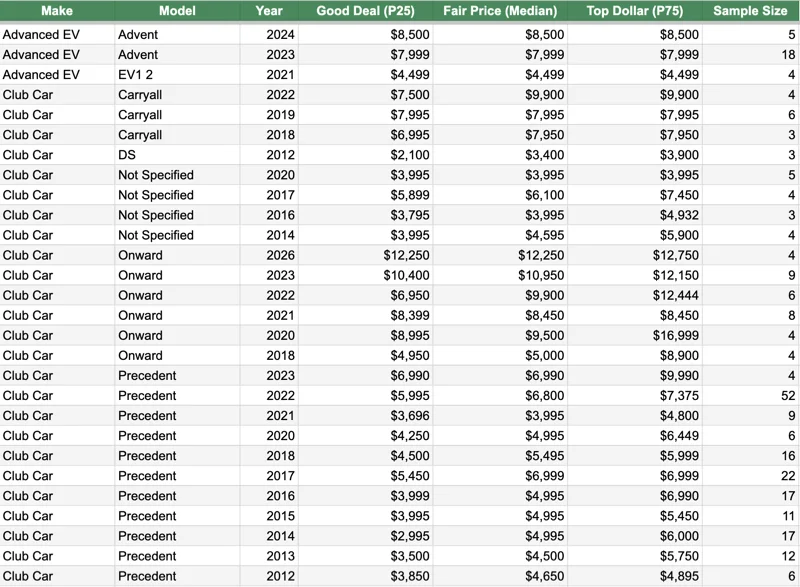
Used Yamaha pricing benchmarks:

AgeGas ModelsElectric (Lead-Acid)Electric (Lithium)
1-2 years old$7,000 - $9,500$6,000 - $8,500$8,000 - $11,000
3-5 years old$5,000 - $7,500$4,000 - $6,500$6,000 - $8,500
6-10 years old$3,000 - $5,500$2,000 - $4,000$4,000 - $6,500
10+ years old$1,500 - $3,500$1,000 - $2,500N/A (lithium too recent)

One interesting pattern with Yamaha: gas models actually hold value slightly better than comparable electric models on the used market. This is because the QuieTech engine is Yamaha's strongest differentiator. Used buyers specifically seeking a Yamaha often want the gas version for the quiet operation. This is the opposite of the industry trend, where electric typically commands a premium.

Factors that help Yamaha resale:

  • The 4-year parts warranty transfers to subsequent owners (within the warranty period)
  • Yamaha's motorcycle brand reputation carries weight with buyers
  • The QuieTech engine has a strong reputation for longevity
  • Parts are widely available through the 1,000+ dealer network

Factors that work against Yamaha resale:

  • Steel frame can show rust in coastal areas, unlike Club Car's aluminum
  • Lithium battery warranty is shorter than EZGO (3 years vs 8 years)
  • Less aftermarket customization options compared to EZGO and Club Car
  • No touchscreen or premium tech features that newer buyers expect

For a broader look at golf cart pricing and depreciation, see our pricing and buyer's guide and used golf cart buying guide.

Who Should Buy a Yamaha Golf Cart

Buy a Yamaha if:

  • You want a gas-powered cart and noise matters (neighborhoods, retirement communities, early morning drives)
  • The 4-year parts warranty gives you peace of mind, especially if buying your first golf cart
  • You value engine reliability backed by 70 years of powersports engineering
  • You need both gas and electric options from the same manufacturer with the same platform
  • Your local Yamaha dealer has a good reputation for service
  • You want a proven Big 3 brand without paying the Club Car premium

Skip Yamaha and consider alternatives if:

  • You want the latest lithium battery technology with the longest warranty (go EZGO ELiTE with 8-year Samsung SDI coverage)
  • You live in a coastal or humid area and frame rust concerns you (go Club Car aluminum)
  • You want maximum tech features like a touchscreen and disc brakes (go ICON)
  • You primarily want an electric cart and do not care about gas (EZGO and Club Car have stronger electric lineups)
  • Budget is the top priority and you want the lowest entry price from a Big 3 brand (go EZGO Valor at $8,374)
  • You want the broadest aftermarket parts ecosystem (EZGO and Club Car have more third-party accessories)

Yamaha Accessories Worth Adding

Yamaha carts come well-equipped from the factory, but a few aftermarket additions can improve your daily experience.

A reliable phone mount keeps navigation and music controls accessible on the dash. The Haxmuti universal clamp mount ($20 to $25) fits Yamaha's roof frame and handles bumpy cart paths without vibrating loose.

Check Price on Amazon

For cold-weather driving, the NOKINS heated and ventilated seat cushion adds three heating levels and cooling ventilation through the cart's 12V outlet. It makes early-morning and late-season drives in golf cart communities noticeably more comfortable.

Check Price on Amazon

If you have a Yamaha Drive2 with an EZGO-compatible enclosure fitment, the Xoxocos golf cart enclosure ($100 to $130) adds rain and wind protection for year-round driving.

Check Price on Amazon

For electric model owners, keeping your charger in good shape is critical. If your original charger fails, the EXEFCH 48V charger ($150 to $200) is a solid replacement option compatible with many 48V Yamaha electric models.

Check Price on Amazon

For more upgrade ideas, see our complete accessories guide, customization guide, and best golf cart enclosures guide.

Yamaha Golf Cart Maintenance Tips

Yamaha carts are straightforward to maintain, but a few brand-specific tips will keep yours running longer:

Gas models:

  • Change oil every 100 hours or annually (Yamaha recommends 10W-30)
  • Replace the air filter every 200 hours or when visibly dirty
  • Inspect the fuel pump at your annual service; proactive replacement around year 5 can prevent roadside failures
  • Check clutch engagement annually after year 3
  • The QuieTech EFI eliminates carburetor maintenance, but keep the fuel injector clean with quality gas

Electric models:

  • Lead-acid batteries: check water levels monthly and only use distilled water
  • Keep battery terminals clean and coated with anti-corrosion spray
  • Charge after every use, even short trips, to maximize battery life
  • Lithium models: virtually zero battery maintenance needed
  • Check tire pressure monthly (low pressure kills range on electric models)

All models:

  • Lubricate suspension bushings annually to extend their life
  • Inspect brake cables and adjust as needed (every 6 to 12 months)
  • Check steering rack for play or looseness
  • Keep the undercarriage clean, especially if you drive on sandy or muddy terrain

For a complete maintenance schedule, see our golf cart maintenance guide. If you need professional service, find a shop through our repair directory or check our best golf cart repair services in your state.

Yamaha's Place in the Market

Yamaha occupies a unique position among the Big 3. They are not the cheapest (that is EZGO). They do not have the best resale or aluminum frame (that is Club Car). They do not have the most advanced lithium tech (that is also EZGO, with Samsung SDI).

What Yamaha does better than anyone: gas engines, warranty coverage, and the confidence that comes from buying from a company that has been building engines for 70 years. If you are choosing a gas golf cart, Yamaha is the default answer. The QuieTech EFI at 60.5 dB is not a marginal improvement over competitors; it is a fundamentally different experience.

For electric buyers, Yamaha is a solid but not exceptional choice. The PowerTech systems work well, and the Trojan battery partnership ensures quality cells. But the 3-year lithium warranty looks thin next to EZGO's 8 years and ICON's 10 years. If you are going electric-only and do not care about gas as a backup, the competitors offer more compelling packages.

The 4-year parts warranty is the tiebreaker for many buyers. When you are spending $10,000 to $15,000 on a golf cart, knowing that Yamaha stands behind the product for twice as long as Club Car or EZGO provides real peace of mind. That warranty, combined with the 1,000+ dealer network, means you are never far from service if something goes wrong.

Find Yamaha golf carts for sale near you on our dealer directory, or compare models on our Yamaha brand page. Check your state's requirements for operating a golf cart on our golf cart laws page, and make sure you have proper coverage through our golf cart insurance guide.

Frequently Asked Questions

Are Yamaha golf carts reliable?

Yes. Yamaha golf carts are among the most reliable on the market, particularly gas models. The QuieTech EFI engine benefits from Yamaha's 70 years of engine manufacturing experience across motorcycles, ATVs, and marine engines. Electric models use proven Trojan battery partnerships. The 4-year parts warranty (longest in the industry) reflects Yamaha's confidence in their reliability.

How many Yamaha golf cart dealers are there?

Yamaha maintains over 1,000 authorized dealers across the United States, putting their network on par with Club Car and EZGO. Coverage is strongest in major golf cart markets like Florida, Arizona, Texas, South Carolina, and Georgia. Use our dealer directory to find Yamaha dealers near you.

What is the difference between Drive2 and UMAX?

The Drive2 family is designed for personal and golf course use, with models ranging from the 2-seat Fleet ($9,481) to the 6-seat Concierge 6 ($13,330). The UMAX family is built for commercial and utility applications, with reinforced frames, cargo beds, and heavy-duty features, priced from $10,731 (Bistro) to $20,995 (Rally 2+2). Most private buyers want a Drive2 model.

Yes. The Drive2 PTV with the street-legal package includes headlights, taillights, turn signals, mirrors, seat belts, and a 25 mph top speed to qualify as a Low-Speed Vehicle. However, Yamaha does not currently sell a dedicated LSV model like the EZGO Liberty or Club Car CRU. State requirements vary, so check our street legal guide and golf cart laws by state for specifics.

What battery does a Yamaha golf cart use?

Yamaha electric models use Trojan batteries in the PowerTech AC configuration: six 8V Trojan T-875 batteries for 2-seaters (48V total) and eight 6V Trojan T-105 batteries for 4-seaters (48V total). The PowerTech Li option uses lithium-ion cells that eliminate maintenance. Gas models use a standard 12V automotive battery for starting and accessories. For more detail, see our battery guide.

Can I convert a Yamaha gas cart to electric?

Technically yes, but it is expensive ($3,000 to $6,000+) and voids the warranty. The conversion involves removing the gas engine, fuel system, and exhaust, then installing an electric motor, controller, battery pack, and charger. Most owners who want electric are better off selling their gas cart and buying an electric model. The exception is older gas carts (10+ years) where conversion can be cost-effective compared to buying new. See our electric vs gas comparison for more context.

Share this post

Golf Cart Search

Find the Best Golf Carts of 2026

Compare top-rated models, read expert reviews, and find the perfect cart for your needs.
Browse Top-Rated Carts

Related posts

Stay in the loop

Stay Updated with Golf Cart News

Get the latest updates on golf cart services, tips, and exclusive offers delivered to your inbox.