As an Amazon Associate, we earn from qualifying purchases. This helps support our site at no extra cost to you.
Golf cart speed sensor symptoms usually show up as a cart that takes off normally, then suddenly crawls, jerks, surges, loses motor braking, or throws a controller fault. Owners often blame the controller first, but on Club Car IQ, EZGO PDS, EZGO RXV, and some Yamaha electric carts, the speed feedback circuit is one of the first things to check before you buy an expensive controller.
This guide covers what the speed sensor does, where to find it, how to separate a bad sensor from weak batteries or throttle problems, and what replacement should cost in 2026. If the cart will not move at all, start with our golf cart won't start guide. If it moves but feels weak, surges, or drops into slow mode, keep reading.
Golf Cart Speed Sensor Symptoms: Quick Answer
The clearest golf cart speed sensor symptoms are sudden reduced top speed, limp mode after a strong launch, jerky acceleration, inconsistent reverse behavior, no regenerative braking, and controller fault codes that point to motor speed feedback. On many carts, a broken magnet or damaged encoder causes the same behavior as a failed sensor.
Watch for these signs:
- The cart accelerates for a few feet, then falls into slow mode.
- Top speed drops from 17 to 22 mph down to roughly 6 to 12 mph.
- The cart surges, bucks, or feels like it is fighting itself.
- Reverse feels faster than normal, too slow, or inconsistent.
- The cart rolls too freely downhill because motor braking is weak or missing.
- The controller LED, handheld programmer, or diagnostic beeps point to speed feedback.
- The sensor plug is loose, wet, corroded, melted, or pulled tight.
- The magnet under the sensor is cracked, missing, loose, or rubbing.
Do not replace the controller just because the cart is slow. A controller can fail, but batteries, cables, the solenoid, the MCOR or throttle sensor, and the speed feedback circuit can all create similar symptoms.
What a Golf Cart Speed Sensor Does
An electric golf cart controller needs to know how fast the motor is turning. The speed sensor, encoder, or motor feedback circuit gives the controller that signal. The controller uses it for top-speed control, regenerative braking, hill control, reverse speed limiting, rollback protection, and fault detection.
On a simple DC cart, the sensor may sit on the end of the motor and read a magnet attached to the armature shaft. On some carts, the "speed sensor problem" is really a cracked speed magnet. On EZGO RXV and newer AC drive systems, the feedback may come from an encoder bearing, external encoder, motor brake circuit, or controller-specific harness.
That matters because a $25 magnet and a $500 RXV diagnostic bill are very different repairs. Before ordering parts, identify the exact cart, motor, controller, voltage, and year. Our golf cart top speed by brand guide can help you tell whether the cart is actually slow for its model or just slower than you expected.
Speed Sensor vs Speed Magnet vs Controller
A speed sensor is the pickup that reads motor movement. A speed magnet, tone ring, or encoder is the target that creates the signal. The controller is the computer that interprets the signal and decides how much power and braking to allow.
Here is the practical difference:
| Part | What It Does | Common Failure | Typical Cost |
|---|---|---|---|
| Speed sensor | Reads motor rotation | Dead sensor, broken wires, loose plug | $40 to $180 |
| Speed magnet | Gives the sensor a target | Cracked, loose, melted, wrong magnet | $15 to $60 |
| Encoder bearing | Sends motor position data on some RXV-style systems | Jerking, speed faults, brake faults | $120 to $300+ |
| Controller | Uses the signal to manage speed and braking | Fault codes, no output, thermal limits | $300 to $1,500+ |
A high speed magnet is not a cure-all. On compatible Club Car and EZGO PDS carts, it can change the feedback signal enough to raise top speed modestly. It will not fix bad wiring, a failing encoder, weak batteries, or a controller that is limiting speed for a safety reason. For the upgrade side, use our speed upgrade guide after the cart is already running correctly.
Golf Cart Speed Sensor Location by Brand
Speed sensor location depends on the brand and drive system. The cart's body style alone is not enough, especially after battery conversions, motor swaps, and controller upgrades.
| Cart Type | Common Location | What to Inspect First |
|---|---|---|
| Club Car DS, Precedent, Tempo, Onward with IQ-style drive | Rear of electric motor, usually near the passenger side of the motor end cap | Sensor screws, plug, harness, motor magnet |
| Club Car with MCOR throttle | Speed feedback is still at the motor, MCOR is a separate throttle input | Do not confuse throttle hesitation with speed feedback loss |
| EZGO TXT PDS or sepex systems | End cap area of the motor, above or near the magnet | Sensor, retaining hardware, magnet, PDS diagnostic beeps |
| EZGO RXV | Encoder or feedback circuit tied into motor and brake system | Encoder bearing, motor brake, harness corrosion, controller faults |
| Yamaha Drive and Drive2 electric | Varies by controller and motor package | Confirm the exact model before ordering a generic sensor |
| Gas Club Car, EZGO, Yamaha | Usually no electric motor speed sensor for drive control | Governor, clutch, belt, throttle cable, carburetor |
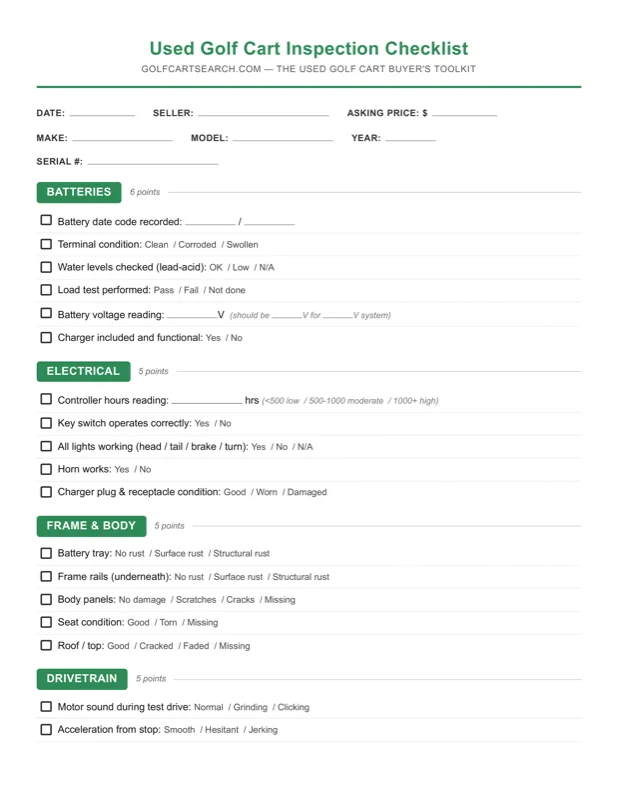
For brand research, compare the model family pages for Club Car, EZGO, and Yamaha. If you are still identifying a used cart, the used golf cart buying guide has a broader inspection checklist.
Symptoms That Are Often Not the Speed Sensor
Speed sensor symptoms overlap with other electric cart problems. Check these before replacing parts.
Weak Batteries or Low Pack Voltage
Weak batteries are the most common false positive. A 48V cart can feel normal for the first few seconds, then sag hard under load. That makes the cart crawl, surge, or shut down even when the sensor is fine. Use our battery voltage chart to check pack voltage and individual batteries before buying a speed sensor.
You do not need an expensive meter for basic voltage checks. A budget meter like the AstroAI digital multimeter is enough for pack voltage, individual battery voltage, and simple continuity checks.
Check Price: AstroAI Digital MultimeterBad Battery Cables or Corroded Connections
Loose or corroded battery cables can mimic a speed feedback problem because the controller sees voltage drop when the cart pulls current. Inspect lugs, crimps, melted insulation, and cable gauge. If cables are green, hot, or undersized after a lift kit or motor upgrade, read our battery cable size guide.
For sensor plugs, use electrical contact cleaner only with the cart powered down and the connector fully dry before reconnecting it. CRC QD Electronic Cleaner is a common option for small electrical connectors.
CRC QD Electronic Contact CleanerMCOR or Throttle Sensor Problems
On Club Car carts, the MCOR tells the controller what your pedal is asking for. A bad MCOR can cause hesitation, dead pedal, surging, or inconsistent acceleration, which feels close to a speed sensor problem from the driver's seat. If the cart reacts strangely to pedal position, compare your symptoms against our Club Car MCOR guide.
Solenoid or Controller Issues
A solenoid that clicks but drops out under load can make the cart surge or quit. A controller can also limit output because of heat, low voltage, high current, or a real fault code. If the sensor and batteries test clean, move to our controller symptoms guide before ordering a controller.
Dragging Brakes, Tire Size, or Alignment
A cart that "lost speed" after tires, wheels, brakes, or a lift may not have an electrical problem. Dragging brakes, toe-in problems, big tires, or low tire pressure can all slow the cart and increase current draw. Use our guides to golf cart brake maintenance and golf cart wheel alignment before chasing sensors.
How to Test a Golf Cart Speed Sensor
Testing a golf cart speed sensor starts with safety and basic checks. Do not probe random controller wires unless you have the service manual for your exact cart. A wrong short at the controller can turn a cheap diagnosis into an expensive repair.
Step 1: Identify the Drive System
Write down the brand, model, year, pack voltage, motor label, and controller model. A Club Car DS, Club Car Precedent, EZGO TXT, EZGO RXV, and Yamaha Drive can all use different speed feedback parts. If you have an aftermarket controller, check its fault LED or app before assuming the factory diagnosis applies.
Step 2: Check Battery Pack Voltage
Charge the cart fully, then test pack voltage at rest and under load. A healthy sensor cannot save a pack that collapses as soon as the motor pulls current. For 36V, 48V, and 72V pack ranges, use the battery voltage test guide.
Step 3: Read Fault Codes Before Unplugging Anything
Many controllers can report a speed sensor, encoder, motor feedback, over-speed, or motor brake fault. Record the fault before clearing codes or disconnecting batteries. On some carts, the fault code is more useful than any driveway test.
Step 4: Inspect the Sensor Plug and Harness
Look for pulled wires, broken locking tabs, melted plastic, water, green corrosion, pinched loom, and connectors hanging too close to the axle or tire. Clean light corrosion with contact cleaner, let it dry completely, then protect the connection with a small amount of dielectric grease on the seal area. Do not pack grease onto signal pins.
Permatex Dielectric GreaseStep 5: Inspect the Magnet, Tone Ring, or Encoder Area
If your motor uses a removable sensor and magnet, remove the sensor carefully and inspect the magnet underneath. A cracked or loose magnet is one of the most common reasons a cart takes off strong, then drops into slow mode. If the magnet is broken, replace the magnet or sensor kit rather than gluing loose pieces back together for road use.
For compatible carts, you can compare replacement sensor and magnet options before ordering parts.
Shop Golf Cart Speed Sensor Magnets on AmazonStep 6: Test Power, Ground, and Signal Only With the Right Diagram
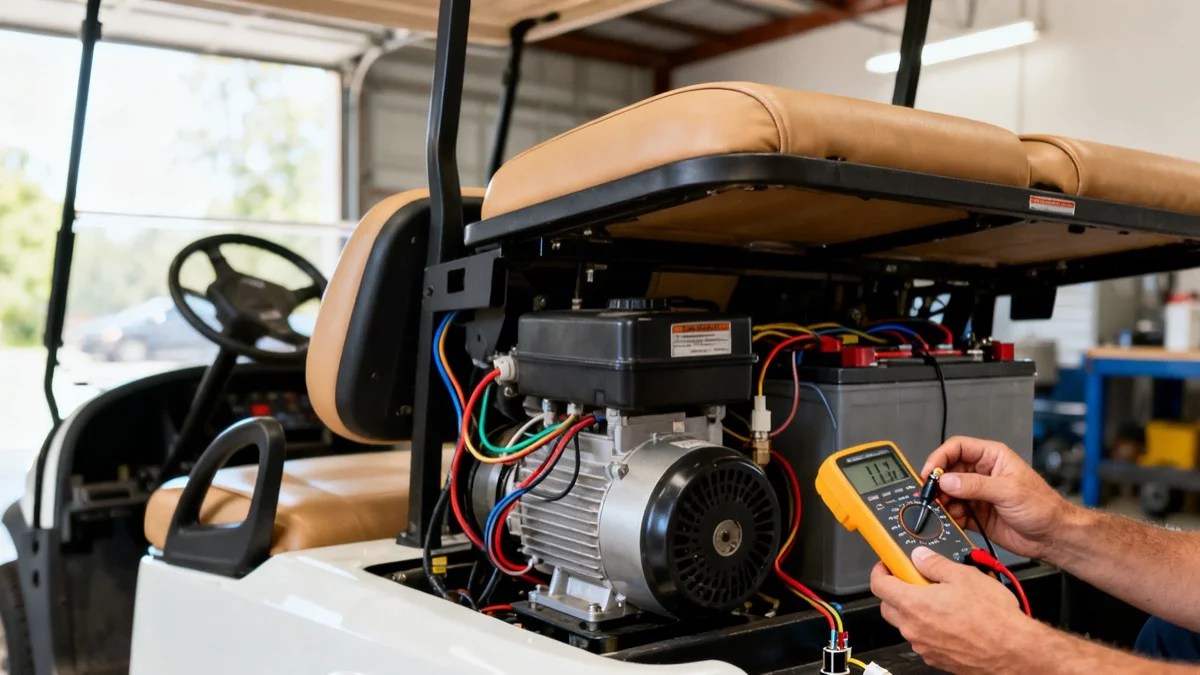
A multimeter can confirm continuity, connector voltage, ground, and sometimes signal changes, but pinouts are not universal. Hall-effect sensors, encoders, and controller-specific feedback circuits do not all test the same way. If the service manual gives sensor voltage ranges, follow that procedure. If it does not, stop before back-probing the controller.
For owners who maintain more than one cart, a sturdier auto-ranging meter like the Klein MM400 is easier to use around packs, chargers, and accessories.
Check Price: Klein Tools MM400 MultimeterStep 7: Replace the Cheapest Confirmed Fault First
If the magnet is cracked, replace the magnet or kit. If the plug is damaged, repair the harness. If the sensor has proper power and ground but no signal where the manual says it should, replace the sensor. If sensor inputs are correct and the controller still reports speed feedback faults, move toward controller or encoder diagnosis.
Golf Cart Speed Sensor Replacement Cost in 2026
Most golf cart speed sensor repairs are not expensive compared with batteries, motors, or controllers. The bigger cost is misdiagnosis. Replacing a good sensor does nothing if the real issue is pack voltage, the MCOR, or an RXV encoder bearing.
| Repair | Typical 2026 Parts Cost | Typical Installed Cost |
|---|---|---|
| Clean and reseat sensor connector | $0 to $15 | $75 to $150 diagnostic minimum |
| Club Car speed magnet | $15 to $60 | $100 to $225 |
| Club Car speed sensor kit | $50 to $180 | $150 to $350 |
| EZGO PDS sensor or magnet | $25 to $150 | $150 to $350 |
| EZGO RXV encoder bearing or feedback repair | $120 to $300+ | $250 to $600 |
| Wiring harness repair | $10 to $80 materials | $125 to $400 |
| Controller replacement after confirmed diagnosis | $300 to $1,500+ | $600 to $1,800+ |
If you are comparing repair quotes, ask whether the shop diagnosed the battery pack, speed feedback circuit, and controller fault history. For local help, check golf cart repair near you or start with our golf cart troubleshooter.
Should You Replace the Speed Sensor Yourself?
DIY replacement makes sense when the sensor is external, the cart is out of warranty, the connector is easy to reach, and the fault is obvious. A Club Car IQ-style sensor or EZGO PDS magnet is usually within reach for a careful owner with basic hand tools.
Use a shop when:
- The cart is an EZGO RXV with motor brake or encoder faults.
- The cart has a lithium conversion and new controller programming.
- Wiring is melted, pinched, or previously hacked.
- The cart is street legal and used in traffic.
- The cart is under dealer warranty.
- The controller needs calibration or reprogramming.
Street-legal carts need extra caution because speed changes can affect compliance. Check your local requirements on our golf cart laws page, especially if you use the cart in neighborhoods, beach towns, or communities like The Villages.
Speed Magnets: Upgrade or Mistake?
A high speed magnet can be useful on the right cart, but it is not the same job as a sensor repair. On compatible Club Car or EZGO PDS carts, the magnet can modestly raise top speed, often by a few mph, by changing how the controller sees motor speed. On the wrong cart, it can create errors, reduce braking behavior, or hide a real fault.
Before installing one, confirm:
- Your motor and controller are compatible.
- Batteries and cables are healthy.
- Brakes, tires, and steering are ready for the extra speed.
- Your community, course, or state rules allow the new top speed.
- The cart is not already speed-limited by dealer programming.
If your real goal is more speed, compare speed magnets, controller upgrades, motors, tires, and lithium conversions in our how to make a golf cart faster guide. If you just want to know what a normal cart should run, see how fast golf carts go.
View Club Car Speed Sensor Magnets on AmazonBuying the Right Speed Sensor Part
Do not buy a sensor from a listing title alone. Golf cart parts listings often group Club Car, EZGO, Yamaha, GE motors, ADC motors, IQ systems, PDS systems, and RXV parts too loosely.
Before you order, confirm:
- Brand, model, year, and serial number range.
- Pack voltage, usually 36V, 48V, 51.2V lithium, or 72V.
- Motor brand and motor label.
- Controller brand and model.
- Whether your cart uses a removable magnet, sensor kit, encoder bearing, or external encoder.
- Connector shape and wire count.
- OEM part number, if available.
- Return policy after opening the electrical part.
If you are shopping for a cart and the seller says it "just needs a speed sensor," price it like an unknown electrical diagnosis. That phrase can mean a $25 magnet, a $300 harness job, weak batteries, or a controller issue. Compare asking prices on golf carts for sale and inspect the cart before negotiating.
Brand Notes for Club Car, EZGO, and Yamaha
Club Car IQ and Precedent owners should inspect the motor magnet before blaming the controller. A cracked magnet can make the cart feel strong at launch, then drop into limp mode. If pedal response is inconsistent from a stop, compare symptoms with the MCOR first.
EZGO TXT PDS owners should use diagnostic beeps and motor-end inspection together. PDS carts commonly point owners toward the sensor, magnet, or harness. EZGO RXV owners should be more careful because encoder bearing and motor brake issues can overlap with speed sensor complaints.
Yamaha owners should confirm the exact drive system before ordering a generic sensor. Many slow Yamaha complaints come from batteries, controller settings, clutch issues on gas carts, or wiring rather than a simple motor sensor.
For broader brand comparisons, read Club Car vs EZGO, Yamaha vs Club Car, or our best golf cart brands guide.
When to Stop Testing and Call a Shop
Stop driveway testing when the cart bucks hard, loses motor braking on hills, shows repeated controller faults, has a melted sensor plug, or has unknown wiring from a previous owner. You can still do useful prep before calling a shop: photograph the controller label, motor label, sensor plug, battery pack, and fault code screen.
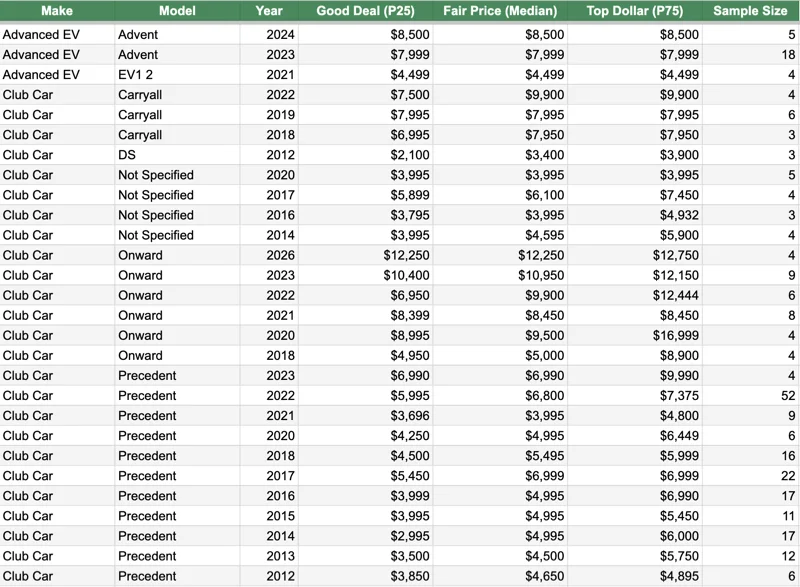
If you need help choosing a local dealer or comparing repair estimates, use our dealer directory and repair directory. If you are deciding whether the repair is worth it, compare the quote against values in the used golf cart buying guide and the best golf carts guide.
Golf Cart Speed Sensor FAQ
What are the most common golf cart speed sensor symptoms?
The most common symptoms are sudden limp mode, jerky acceleration, loss of top speed, no motor braking, reverse speed changes, fault codes, and a cracked or loose motor magnet. The classic pattern is a cart that starts strong, then drops into slow mode after a few feet.
Where is the speed sensor on a golf cart?
On many Club Car IQ and EZGO PDS carts, the speed sensor is on the end of the electric motor near the rear axle. It may be held by small screws or a retaining clip and connected by a small harness plug. RXV and newer AC drive carts may use an encoder or motor feedback system instead.
How much does golf cart speed sensor replacement cost in 2026?
Simple sensor or magnet repairs usually cost $15 to $180 for parts, or $150 to $350 installed. EZGO RXV encoder bearing repairs are more involved and can cost $250 to $600 installed depending on parts, labor, and diagnosis time.
Can a bad speed sensor make a golf cart go slow?
Yes. If the controller stops receiving believable motor speed data, it may limit output to protect the cart. That can make the cart crawl, surge, or feel normal for a second before it drops into limp mode.
Can a weak battery look like a bad speed sensor?
Yes. Low pack voltage, one weak battery, corroded cables, hot lugs, and undersized battery cables can all cause slow speed or surging. Always test the pack before replacing speed feedback parts.
Is a speed sensor the same as a speed magnet?
No. The speed sensor reads movement, while the magnet, tone ring, or encoder gives the sensor a signal to read. A cracked magnet can cause the same symptoms as a dead speed sensor, so inspect both.
Can I test a golf cart speed sensor with a multimeter?
Sometimes. A multimeter is useful for pack voltage, continuity, connector power, and ground checks. Signal testing depends on the exact sensor and controller, so use the service manual pinout before probing controller wiring.
Can I drive with a bad golf cart speed sensor?
Avoid regular driving until the problem is diagnosed. A bad sensor or encoder can affect motor braking, hill control, reverse limits, and top-speed control. That is especially important on hills, public roads, and street-legal carts.
Do gas golf carts have speed sensors?
Most gas golf cart speed problems are not motor speed sensor problems. Check the governor, clutch, belt, throttle cable, carburetor, ignition, and fuel system first.
Will a high speed magnet fix a bad speed sensor?
No. A high speed magnet is a speed upgrade for compatible carts, not a repair for bad wiring, failed sensors, encoder faults, weak batteries, or controller problems. Repair the fault first, then consider speed upgrades.
Golf Cart Search
Find the Best Golf Carts of 2026
Compare top-rated models, read expert reviews, and find the perfect cart for your needs.