
As an Amazon Associate, we earn from qualifying purchases. This helps support our site at no extra cost to you.
Golf cart top speed depends less on the badge and more on the legal class. A standard personal golf cart from Club Car, EZGO, or Yamaha usually tops out around 19 mph. A street-legal Low-Speed Vehicle, or LSV, is usually built to run 20-25 mph. A fleet cart used on a golf course may be programmed closer to 12-15 mph.
This guide compares golf cart top speed by brand and model for 2026, using manufacturer specs, dealer spec sheets, and our internal model database. Use it when you are comparing a new cart, checking whether a used cart is performing normally, or deciding whether a speed upgrade makes sense.
Quick Answer: Golf Cart Top Speed by Brand
If you only need the short version, these are the typical factory top speeds by major brand.
| Brand | Typical Top Speed | Fastest Common Factory Setup | What to Know |
|---|---|---|---|
| Club Car | 15-19 mph | 25 mph Onward LSV or CRU | Onward PTV models are usually 19 mph |
| EZGO | 17-19 mph | 25 mph Liberty LSV | RXV, Valor, Express, and Liberty personal carts sit around 19 mph |
| Yamaha | 15-19 mph | About 19.5 mph on PTV setups | Drive2 Fleet is often slower than Drive2 PTV |
| Star EV | 19.5 mph | 25 mph with LSV configuration | Sirius and Capella models are commonly LSV-capable |
| ICON | 20-25 mph | 25 mph on most lithium models | Strong speed value, but check local service support |
| Evolution | 19 mph | 25 mph with LSV package | D5 and Classic models often have golf and LSV settings |
| Advanced EV | 19-25 mph | 25 mph on Advent and Horizon models | Specialty/commercial carts may be limited to 19 mph |
| Atlas | 25 mph | 25 mph LSV models | Lithium, disc brakes, and LSV positioning are central to the lineup |
| Denago | 25 mph | 25 mph Nomad/Rover models | Often includes high/low speed modes |
| Kandi | 9-25 mph | 25 mph LSV trims | Huge spread between compact and full-size models |
The fastest factory carts are not always the best carts. A 25 mph cart needs stronger braking, stable steering, good tires, proper lighting, seat belts, and legal paperwork if you plan to use it on public roads. If you are still comparing complete carts, start with our best golf carts guide, best golf cart brands ranking, and model comparison tool.
Stock Speed vs LSV Speed
The biggest mistake buyers make is treating "golf cart" and "LSV" as the same category.
| Vehicle Type | Typical Speed | Legal Meaning |
|---|---|---|
| Golf course fleet cart | 10-15 mph | Often programmed for course safety |
| Personal transportation vehicle (PTV) | 15-19.5 mph | Neighborhood/private community use, rules vary |
| Low-Speed Vehicle (LSV) | 20-25 mph | Federally recognized street-legal class when properly equipped |
| Modified golf cart | 25-35+ mph | Often private-road only unless it meets stricter vehicle rules |
Most states treat vehicles that can travel 20-25 mph differently from standard golf carts. An LSV usually needs a VIN, title, registration, insurance, seat belts, mirrors, lighting, reflectors, windshield, parking brake, and other equipment. The exact requirements vary, so check your state on our golf cart laws page before you buy based on speed alone.
For a deeper legal breakdown, read our guides to making a golf cart street legal, license requirements, and golf cart DUI laws.
Fastest Golf Cart Models in 2026
These are the models and model families that matter most if factory top speed is a priority.
| Model or Line | Brand | Factory Top Speed | Notes |
|---|---|---|---|
| Liberty LSV | EZGO | 25 mph | Street-legal version of the Liberty platform |
| Onward 4 Passenger LSV | Club Car | 25 mph | Lithium LSV with required street equipment |
| Sirius LSV models | Star EV | 25 mph | Sirius specs list 19.5 mph standard, 25 mph if LSV |
| i20, i40, i60, EPIC, PURE | ICON | 25 mph | Most lithium ICON trims are listed at 25 mph |
| Classic, Forester, D5 with LSV package | Evolution | 25 mph | Commonly 19 mph in golf mode, 25 mph with LSV package |
| Advent and Horizon models | Advanced EV | 25 mph | Many personal models are 25 mph, specialty carts may be slower |
| 2, 4, and 6 Passenger models | Atlas | 25 mph | LSV-oriented lithium lineup |
| Nomad and Rover models | Denago | 25 mph | Some trims include high and low speed modes |
| Strike and Stealth models | Venom EV | 25 mph | Often listed as 25 mph street legal and 19 mph golf mode |
| Kruiser LSV trims | Kandi | 25 mph | Full-size Kruiser trims can be LSV-capable |
For most buyers, the practical ceiling is 25 mph, not because electric motors cannot go faster, but because 25 mph is the top end of the LSV category. Once you go beyond that, you are usually outside normal golf cart and LSV rules.
Club Car Top Speed by Model
Club Car is conservative on speed for its standard personal carts. That is not a flaw. Club Car focuses on stability, long-term durability, resale value, and dealer support. The Club Car Onward 4 Passenger specifications list 19 mph on level ground across gas, electric, lithium, lifted, and non-lifted variants. Club Car's street-legal Onward LSV is rated up to 25 mph.
| Club Car Model | Typical Top Speed | Best Fit |
|---|---|---|
| Onward 2 Passenger | 19 mph | Golf, neighborhoods, private communities |
| Onward 4 Passenger | 19 mph | Family neighborhood cart |
| Onward Lifted 4 Passenger | 19 mph | Neighborhoods, mild rough surfaces |
| Onward 4 Forward | 19 mph | Four forward-facing passengers |
| Onward 6 Passenger | 19 mph | Families and resorts |
| Tempo | 15 mph | Golf course and fleet use |
| Carryall Turf models | 15-17 mph | Utility, turf, facilities |
| Onward 4 Passenger LSV | 25 mph | Street-legal local transportation |
| CRU | 25 mph | Premium neighborhood electric vehicle |
If you want a premium cart that holds value, the standard Onward at 19 mph is usually enough. If your neighborhood requires a registered LSV, start with the Onward LSV instead of trying to convert a standard Onward later.
EZGO Top Speed by Model
EZGO personal carts are also usually around 19 mph. The company separates personal carts from street-legal LSVs clearly. For example, the MY25 Express 6 specs list 17 mph for gas Express 6 configurations and 19 mph for ELiTE lithium configurations. The RXV ELiTE owner manual lists programmable level-ground speed up to 19 mph on RXV Freedom 2+2.
| EZGO Model | Typical Top Speed | Best Fit |
|---|---|---|
| Valor | 19 mph | Budget personal cart |
| Freedom RXV | 19 mph | Personal transportation, golf, neighborhoods |
| Express 2 | 19 mph | Compact lithium personal cart |
| Express 4 | 19 mph | Family and neighborhood use |
| Liberty | 19 mph | Four-forward personal cart |
| Liberty LSV | 25 mph | Street-legal local use |
| Valor 6 | 19 mph | Six-passenger value cart |
| Express 6 | 17-19 mph | Six-passenger personal or resort cart |
EZGO's ELiTE lithium system is more about consistent performance and low maintenance than dramatic top speed. If you are comparing acceleration, hill climbing, and motor output too, read our golf cart horsepower guide and AC vs DC motor guide.
Yamaha Top Speed by Model
Yamaha is similar to Club Car and EZGO: fleet carts are often slower, personal carts are usually around 19 mph, and real-world speed depends heavily on programming and configuration. Yamaha's Drive2 PTV specs list 19.0 mph for the QuieTech EFI personal cart and 15.0 mph for some other configurations. Yamaha's Concierge 4 specs list a maximum forward speed of 19 mph.
| Yamaha Model | Typical Top Speed | Best Fit |
|---|---|---|
| Drive2 Fleet | 15 mph | Golf course fleet use |
| Drive2 PTV | 19 mph | Personal transportation |
| Drive2 Concierge 4 | 19 mph | Four-passenger forward-facing layout |
| Drive2 Concierge 6 | 19 mph | Six-passenger family or resort use |
| UMAX Rally 2+2 | 19 mph | Utility and rougher-property use |
Yamaha is rarely the fastest on a spec sheet, but many owners like the way Drive2 carts feel at speed because the chassis and suspension are predictable. That matters more than another 2 or 3 mph if you are carrying passengers or driving in a crowded community.
Star EV Top Speed by Model
Star EV is one of the better examples of why the PTV vs LSV distinction matters. The official Star EV Sirius page lists Sirius top speed as 19.5 mph, or 25 mph if configured as an LSV. That applies across the main Sirius passenger configurations.
| Star EV Model | Typical Top Speed | Best Fit |
|---|---|---|
| Sirius 2 | 19.5 mph, 25 mph if LSV | Premium 2-passenger neighborhood cart |
| Sirius 2+2 | 19.5 mph, 25 mph if LSV | Premium 4-passenger cart |
| Sirius 4 | 19.5 mph, 25 mph if LSV | Four forward-facing passengers |
| Sirius 4+2 | 19.5 mph, 25 mph if LSV | Six passengers |
| Capella 2 and 2+2 | 19.5 mph, 25 mph if LSV | Smaller value-focused Star EV models |
| Capella 4 and 4+2 | 19.5 mph, 25 mph if LSV | Four and six-passenger options |
| Classic XP/XPR models | 19.5 mph, LSV-capable | Traditional styling with LSV option |
Star EV is a strong fit if you want 25 mph capability but still want a cart that feels like a neighborhood vehicle rather than a lifted off-road toy. Our full Star EV review covers the model lineup in more detail.
ICON Top Speed by Model
ICON leans hard into the 25 mph street-legal market. The ICON owner manual lists the i40 at 25 mph, and ICON's FAQ describes low-speed vehicles as 20-25 mph and FMVSS 500 compliant. Most current ICON electric passenger trims are marketed around 25 mph, with the i40-ECO listed lower at 20 mph.
| ICON Model or Line | Typical Top Speed | Best Fit |
|---|---|---|
| i20 | 25 mph | 2-passenger neighborhood use |
| i40 | 25 mph | 4-passenger neighborhood use |
| i40L | 25 mph | Lifted 4-passenger use |
| i60 and i60L | 25 mph | Six-passenger family use |
| EPIC E20/E40/E60 | 25 mph | Premium lithium models |
| PURE P20/P40/P60 | 25 mph | Premium personal transportation |
| i40-ECO | 20 mph | Lower-cost 4-passenger option |
| G40/G60 gas models | 19-24 mph | Gas buyers who still want ICON styling |
The tradeoff is not speed. It is long-term support. Before buying an ICON because it is faster on paper, confirm there is a dealer or independent shop near you that will handle warranty work, parts, brakes, suspension, and electrical issues. Our ICON review covers that ownership tradeoff.
Evolution Top Speed by Model
Evolution often lists its carts at 19 mph in standard form and 25 mph with an LSV package. The D5 line is especially common in golf cart communities because it offers modern tech, lithium power, and a 25 mph LSV setup at a lower price than many legacy-brand LSVs.
| Evolution Model | Typical Top Speed | Best Fit |
|---|---|---|
| Classic 2 Plus | 19 mph, 25 mph with LSV package | Budget lithium 2-seater |
| Classic 4 Plus | 19 mph, 25 mph with LSV package | Budget lithium 4-seater |
| Forester 4 Plus | 19 mph, 25 mph with LSV package | Lifted/off-road look |
| Forester 6 Plus | 19 mph, 25 mph with LSV package | Six-passenger lifted use |
| D5-Ranger 2+2 | 19 mph, 25 mph with LSV package | Modern 4-passenger neighborhood cart |
| D5-Ranger 2+2 Plus | 19 mph, 25 mph with LSV package | Higher-feature D5 setup |
| Turfman utility models | 19 mph | Utility and facilities |
| Carrier 6/8 Plus | 19 mph | People-moving and resort use |
Evolution is a good example of a cart that can feel quick even when the listed top speed is the same as another brand, because motor output, controller tuning, tire size, and lithium battery voltage stability all affect acceleration. For range tradeoffs at 20-25 mph, see our golf cart range guide.
Advanced EV, Atlas, Denago, and Other 25 MPH Brands
Several newer brands use 25 mph as a core selling point. These carts often include lithium batteries, digital displays, turn signals, backup cameras, seat belts, and street-legal hardware from the factory.
| Brand | Models to Know | Typical Top Speed | Notes |
|---|---|---|---|
| Advanced EV | Advent 2, Advent 4L, Advent 6L, Horizon 4 | 25 mph | Specialty hospitality and ambulance carts are often 19 mph |
| Atlas | 2, 4, 6 Passenger models | 25 mph | LSV-oriented lithium lineup |
| Denago | Nomad, Nomad XL, Rover XL, Rover XXL | 25 mph | Some trims list 15 mph low mode and 25 mph high mode |
| Tomberlin | Engage, E-Merge | 19-25 mph | Longtime street-legal LSV brand |
| GEM | e2, e4, e6, eL XD | 25 mph | More NEV than traditional golf cart |
| Venom EV | Strike, Stealth | 19 or 25 mph | Often listed with golf mode and street-legal mode |
| Aetric | Scout, X4, X6 | 25 mph | Value-focused LSV-style lineup |
| MammothEV | XR2, XR4, XR6 | 25+ mph | High-feature lithium carts |
These brands can be compelling if your priority is factory speed and standard features. The main question is support. Before buying, ask the dealer who services the cart, how fast parts ship, whether the cart has a title or Manufacturer Statement of Origin, and whether your local DMV will register it as an LSV.
Amazon Golf Cart Speed Benchmarks
Amazon is now a real buying channel for full-size electric carts, but the speed specs vary widely. Some online carts are private-property toys, while others are closer to LSV-style neighborhood carts.
| Amazon-Available Model | Listed Top Speed | Best Use |
|---|---|---|
| Kandi Collapsible Mini | 9 mph | RV parks, campgrounds, tight storage |
| Kandi GOAT 2P | 15.5 mph | Private property, utility, low-speed trails |
| AODES E-TrailCross | 25 mph | Value-priced 4-passenger lithium cart |
| SDLANCH 45-Mile | 23 mph | Range-focused online purchase |
| Kandi Kruiser LSV trims | Up to 25 mph | Full-size LSV-style use |
The AODES E-TrailCross is the strongest speed value among the Amazon carts we currently track because it combines 4-passenger seating, lithium power, and a 25 mph listing at a price usually below legacy-brand LSVs.
Check AODES Trailcross Price on AmazonThe SDLANCH 45-Mile is slower on paper at 23 mph, but it can still make sense if you value advertised range more than hitting the full 25 mph LSV ceiling.
Check SDLANCH 45-Mile Price on AmazonIf you are comparing online carts, read our full golf carts on Amazon buying guide before ordering. Delivery, assembly, title paperwork, and service support matter more than 2 mph of top speed.
Why Real-World Top Speed Is Lower
A cart rated at 25 mph may not run 25 mph every day. These are the most common reasons:
- Battery state of charge: Electric carts slow down as voltage drops, especially with older lead-acid packs.
- Battery chemistry: Lithium usually holds voltage better under load than lead-acid. It helps the cart feel stronger, but it does not override controller programming.
- Passenger and cargo weight: Four adults, coolers, tools, and beach gear add load. If you are near payload limits, speed drops.
- Tire pressure and tire size: Low tire pressure adds rolling resistance. Larger tires can raise theoretical speed but reduce torque if the motor and controller are not matched.
- Terrain: Hills, wet grass, sand, and rough cart paths reduce speed fast.
- Controller programming: Many carts have course, fleet, PTV, and LSV speed settings.
- Governor or belt condition on gas carts: A worn belt or conservative governor setting can make a gas cart feel slow.
- Brake drag or alignment issues: If the brakes are dragging, speed and range both fall.
If your cart is suddenly slower than normal, start with battery voltage, tire pressure, brake drag, and controller settings before assuming the motor is bad. Our troubleshooting guide, wont-start guide, and battery voltage chart will help narrow it down.
Does Lithium Make a Golf Cart Faster?
Lithium can make a golf cart feel faster, but it does not always raise the top speed.
It helps in three ways:
- Less weight: A lithium pack can remove 150-250 lbs compared with lead-acid batteries.
- Less voltage sag: The cart holds power better as you accelerate or climb.
- More consistent range: The cart feels stronger deeper into the charge cycle.
The programmed speed limit still controls the final number. If the controller is capped at 19 mph, lithium alone usually will not make it a 25 mph cart. For more detail, read our lithium conversion guide.
If your 48V cart is compatible and you are replacing tired lead-acid batteries anyway, a 51.2V lithium pack can improve responsiveness and reduce weight. Confirm fitment, charger compatibility, cable condition, and controller limits before buying.
Check EXEFCH 51.2V Lithium Battery PriceShould You Upgrade for More Speed?
A speed upgrade can make sense on private roads, large properties, campgrounds, or communities where local rules allow it. It is a bad idea if the cart still has weak brakes, old tires, loose steering, worn suspension, or no seat belts.
Common speed upgrades include:
| Upgrade | Typical Cost | What It Usually Does |
|---|---|---|
| Dealer speed code or programming | $100-$300 | Raises a factory-limited cart within approved settings |
| Larger tires | $400-$1,200 | Can add speed, but may reduce torque |
| Controller upgrade | $300-$800 | Adds current and tuning flexibility |
| Motor upgrade | $500-$1,200 | Adds speed, torque, or both depending on motor |
| Lithium conversion | $1,500-$4,000 | Improves weight and voltage consistency |
| Full performance package | $2,000-$5,000+ | Can push modified carts well beyond 25 mph |
Read our full speed upgrade guide before spending money. The best upgrade depends on whether you want top speed, hill climbing, acceleration, or range. Those are not the same problem.
Safety and Legal Checks Before Driving 25 MPH
At 25 mph, a golf cart is moving fast enough that weak equipment matters. Before using a fast cart with passengers, check:
- Seat belts for every passenger
- Functional headlights, brake lights, turn signals, and horn
- Side mirrors and rearview mirror
- Tire speed rating, tread, pressure, and age
- Brake condition and stopping distance
- Steering play and suspension wear
- Battery hold-downs and cable routing
- Insurance and registration if used on public roads
A basic turn signal kit can help with private-road or community compliance, but it does not automatically make a cart street legal. You still need to match your state and local requirements.
Check Golf Cart Turn Signal Kit Price on AmazonIf you carry kids, older passengers, pets, or beach gear, read our golf cart safety guide and golf cart weight guide. Weight distribution and stopping distance matter more as speed rises.
Which Speed Is Right for You?
Use case matters more than bragging rights.
| Use Case | Best Speed Range | Best Cart Type |
|---|---|---|
| Golf course only | 12-15 mph | Fleet or golf-focused cart |
| Private neighborhood paths | 15-19 mph | PTV from Club Car, EZGO, Yamaha, Star EV, or similar |
| Public low-speed roads | 20-25 mph | Properly registered LSV |
| Farm, ranch, campground | 15-25 mph | Utility or lifted cart, depending on terrain |
| Beach town or island rental | 15-25 mph | Local-law compliant rental or LSV |
| Performance hobby build | 25+ mph | Private-road modified cart with upgraded brakes and tires |
For most families, 19 mph is enough if you are staying inside a community or golf course. If you need public-road access, buy a 25 mph LSV from the start. If you want 30 mph or more, treat the project like a performance vehicle build, not a normal golf cart purchase.
Best Buying Advice by Brand
If you want the most sensible choice, not just the fastest one, use this framework.
| Buyer Priority | Best Direction |
|---|---|
| Best resale and dealer support | Club Car Onward or Onward LSV |
| Strong legacy-brand lithium option | EZGO ELiTE or Liberty LSV |
| Best gas-cart feel | Yamaha Drive2 QuieTech EFI |
| Factory 25 mph at lower price | ICON, Evolution, Advanced EV, Denago, AODES |
| Premium street-legal neighborhood cart | Star EV Sirius, Club Car Onward LSV, Tomberlin, GEM |
| Online purchase with strong speed value | AODES E-TrailCross |
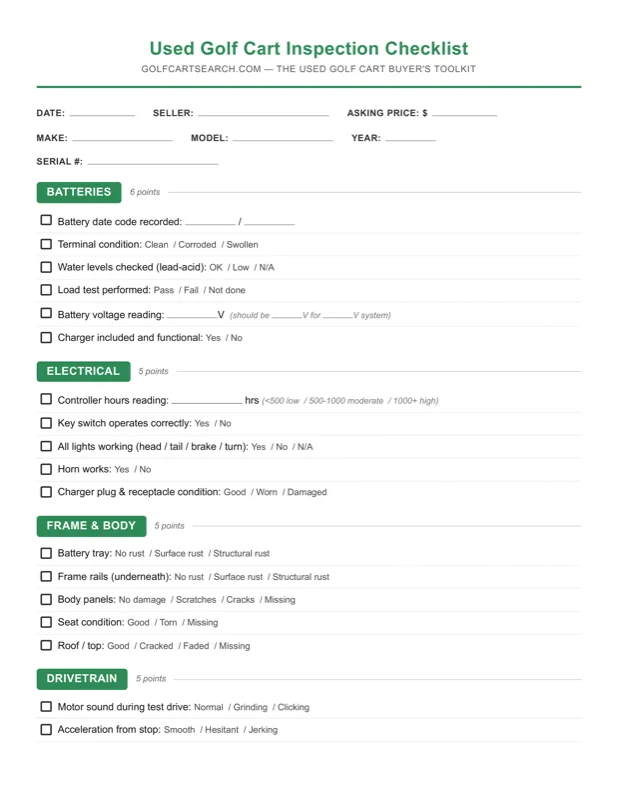
| Used cart you can service anywhere | Club Car, EZGO, Yamaha |
If you are still shopping, compare local options on our dealer directory. A test drive tells you things a spec table cannot: brake feel, steering stability, noise, seat comfort, acceleration, and how planted the cart feels at 19-25 mph.
Golf Cart Top Speed FAQ
FAQ: What is the average top speed of a golf cart?
Most standard personal golf carts top out around 15-19 mph. Fleet carts on golf courses may be limited to 10-15 mph. Street-legal LSVs usually run 20-25 mph.
FAQ: What golf cart brand is fastest?
The fastest factory brands are usually LSV-focused brands rated at 25 mph, including ICON, Advanced EV, Atlas, Denago, Star EV LSV models, Evolution LSV packages, Tomberlin, GEM, Venom EV, and some Kandi LSV trims.
FAQ: Why do Club Car, EZGO, and Yamaha often stop at 19 mph?
Legacy brands separate standard personal carts from LSVs. A 19 mph top speed keeps many personal carts in PTV territory, while 25 mph versions usually require street-legal equipment and registration.
FAQ: Can I drive a 25 mph golf cart on public roads?
Only if your cart is legally equipped and registered for the roads you plan to use. In many states, a 25 mph cart is an LSV and needs registration, insurance, a licensed driver, and required safety equipment.
FAQ: Is 30 mph too fast for a golf cart?
For most stock carts, yes. A cart that runs 30 mph should have upgraded brakes, tires, suspension, steering, seat belts, and a driver who understands that it may no longer qualify as a normal golf cart or LSV.
FAQ: Does a bigger motor always mean higher top speed?
No. A bigger motor can improve torque, acceleration, and hill climbing, but top speed also depends on controller programming, gearing, tire diameter, battery voltage, and legal speed settings.
FAQ: How do I check my golf cart top speed accurately?
Use a GPS speedometer app on flat pavement with properly inflated tires and a fully charged battery. Do not rely only on an old analog speedometer or a dash display that has not been calibrated for tire size.
FAQ: Should I prioritize speed or range?
For daily neighborhood use, prioritize range, brakes, comfort, and service support before speed. A 25 mph cart with poor range or weak local support is usually worse than a 19 mph cart that is reliable and easy to maintain.
Golf Cart Search
Find the Best Golf Carts of 2026
Compare top-rated models, read expert reviews, and find the perfect cart for your needs.