
Club Car MCOR Symptoms & Replacement Guide (2026)

Club Car MCOR symptoms guide with test steps, replacement costs, fitment notes, and how to separate MCOR failure from battery or speed sensor issues.

Michael
Michael
Apr 13th, 202611 min read
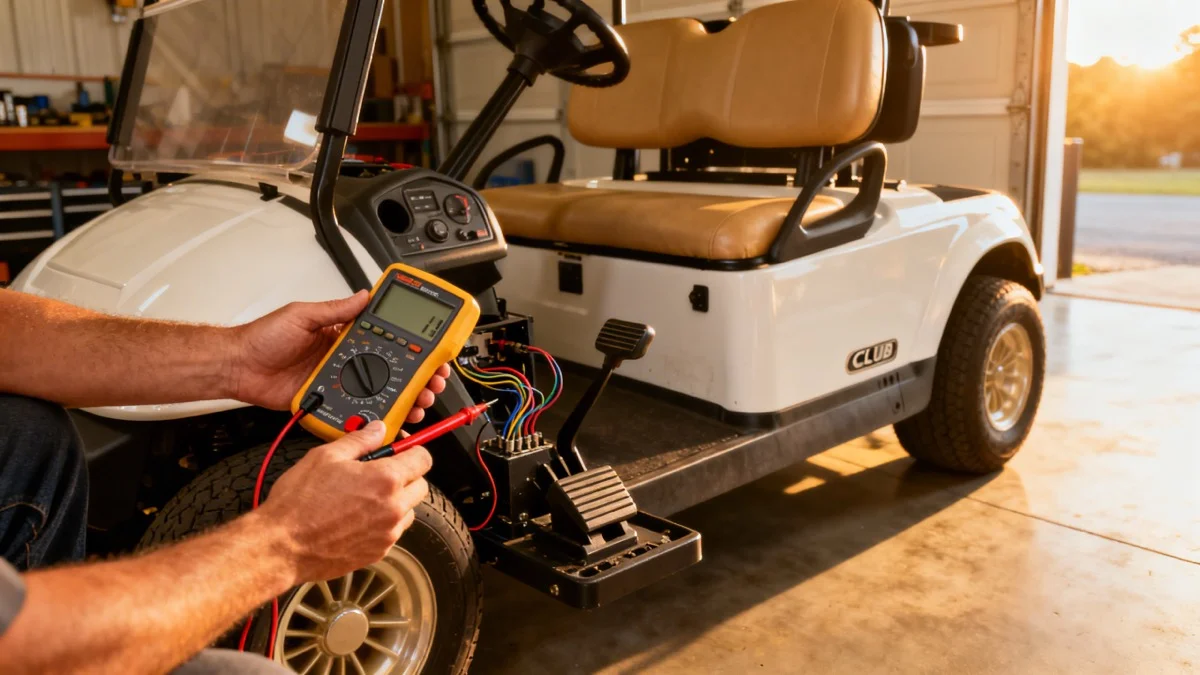
Golf cart owner diagnosing Club Car MCOR symptoms with tools near the pedal assembly in a garage

As an Amazon Associate, we earn from qualifying purchases. This helps support our site at no extra cost to you.

If your Club Car hesitates, surges, or seems to have dead spots in the pedal, the MCOR is one of the first things people blame. Sometimes they are right. A lot of the time, they are replacing the wrong part.

That is the problem with most MCOR content online. It either jumps straight to the replacement part, or it treats every older Club Car symptom like a guaranteed throttle failure. Real diagnosis is messier than that. Weak batteries, bad connections, a failing speed sensor, and tow/run or microswitch issues can all feel like "bad MCOR" to the driver.

This guide is narrower and more useful. It explains which Club Car models actually use MCOR, what symptoms really point to it, how to separate MCOR failure from lookalike problems, what replacement costs look like in 2026, and when it is smarter to pay a repair shop than keep guessing in the garage.

Main Affected Carts Older electric Precedent models

Big Cutoff Date December 6, 2021

Direct Part Price About $130 to $150

Common False Positive Weak battery pack

DIY Difficulty Easy to moderate

Best First Tool Digital multimeter

Club Car MCOR Symptoms: Quick Answer

The most common Club Car MCOR symptoms are:

  • hesitation when you first press the pedal
  • jerky or uneven takeoff
  • surging while holding steady throttle
  • dead spots where the pedal does nothing
  • intermittent loss of movement that returns when you release and press again
  • reduced response even though the cart still turns on normally

Those are the symptoms that make me think "possible MCOR." They are not the same thing as "definitely MCOR."

If the cart has obviously weak batteries, no solenoid click, cracked speed-sensor hardware, or a charger problem, the MCOR may be a secondary issue or not the issue at all. For general electric-cart diagnosis, our golf cart troubleshooting guide, won't start guide, and battery voltage chart guide are the better first stop.

What the MCOR Actually Is on a Club Car

You do not need to obsess over the acronym. In practical terms, the MCOR is the pedal-side throttle input module on older electric Club Car carts. It tells the controller how much accelerator input the driver wants. If that signal becomes erratic, the controller gets mixed messages, and the cart can hesitate, surge, or stop responding smoothly.

Club Car service literature for electric utility models describes the MCOR as providing FOOT INPUT to the controller, and Club Car diagnostic references tie throttle faults to the MCOR circuit and its 16-pin connector. That is the useful way to think about it: the MCOR is part of the pedal-input path, not a magical fix-all box.

For many owners, the bigger question is not what it does. It is whether their cart even has one.

Which Club Car Models Still Use MCOR?

This is the most important section in the whole article.

A 2022 Navitas product bulletin says Club Car switched Onward, Precedent, and Tempo vehicles built on or after December 6, 2021 from the older MCOR-style throttle to an APPS throttle. If your cart is newer than that cutoff, you should not assume it has an MCOR at all.

That means the main MCOR audience in 2026 is:

  • older electric Club Car Precedent carts
  • some older electric DS, Carryall, and utility carts
  • buyers shopping used electric Club Cars from the 2000s and 2010s

Here is the practical fitment summary:

Cart TypeLikely MCOR?What to Check
Precedent / Tempo / Onward built before Dec. 6, 2021Usually yes on the main electric platformsConfirm model year and current pedal setup
Precedent / Tempo / Onward built on or after Dec. 6, 2021Usually no, now APPSDo not order MCOR until serial or parts lookup confirms
Gas Club Car modelsNo, not the same issueLook at throttle cable, governor, or engine-side causes instead
Older DS / Carryall / utility electricsSometimes yesSerial number and conversion-kit fitment matter a lot

If you are not sure what you own, the safest move is to confirm by serial number before buying parts. The dealer directory can help if you need a local Club Car source, and our used buying guide explains how to verify model-year details when you are shopping a cart that may already have aftermarket parts.

Symptoms That Really Point to MCOR

Not every bad-driving Club Car has a bad MCOR. These are the symptoms that genuinely move it up the list.

1. Hesitation right off idle

You press the pedal, nothing much happens for a second, then the cart lunges forward. That "dead-then-go" feel is one of the most common MCOR complaints, especially on older Precedent carts.

2. Surging at steady pedal

The cart will not hold a smooth, even pull. Instead it speeds up, softens, then comes back. Owners often describe this as a stutter, pulse, or shuttering feel when they hold the pedal at a normal neighborhood pace.

3. Dead spots in pedal travel

Sometimes the pedal works fine in part of its travel, but the cart stops responding smoothly through another part of the range. That is a classic sign that the throttle signal is not clean through the full pedal sweep.

4. Intermittent movement

The cart moves, then stops responding, then starts moving again after you release and reapply the pedal. That is the kind of symptom that makes owners suspect the MCOR or the related pedal-input wiring.

5. Throttle-fault style behavior

Club Car service literature ties throttle faults to the MCOR circuit and its connector. If a shop or controller diagnostic tool is pointing you toward throttle-fault behavior, the MCOR and its wiring become a much stronger suspect than a random guess from the internet.

Here is the short symptom table I would actually use in the garage:

SymptomMCOR LikelihoodAlso Check
Dead pedal spotsHighPedal linkage, connector, wiring
Surging at steady speedMedium to highBattery pack, speed sensor
Jerky launchMediumWeak batteries, solenoid, controller
Cart turns on but barely responds to pedalMediumTow/run switch, limiter, low voltage
Total no-move situationLow to mediumBatteries, solenoid, speed sensor, charger state

What Gets Misdiagnosed as MCOR All the Time

This is where people waste money.

Weak batteries

Recent Reddit troubleshooting threads still show the same pattern: owners describe "shuttering" or hesitation, and trained techs reply that the symptoms sound more like failing batteries than MCOR. That matches real-world repair logic. A weak pack can make a Club Car feel flat, inconsistent, or jerky under load, especially uphill.

Before you order any throttle part, test the pack. A decent digital multimeter is the right starting tool, and our battery voltage chart guide gives you the exact numbers to compare.

Check Price: Digital Multimeter

Bad battery or controller connections

Loose or corroded connections can interrupt the controller's inputs and outputs in ways that feel like sensor trouble. Club Car service references specifically call out loose or disconnected MCOR-side connector problems, and basic electrical housekeeping still solves plenty of "mystery" drive issues.

If the cart sat for a while, lives at the coast, or has been modified, inspect and clean connections before ordering a part.

CRC QD Electronic Contact Cleaner ->

Speed sensor or speed magnet problems

This one catches a lot of owners. A speed-sensor issue can create hesitation, reduced speed, and odd drive behavior that gets blamed on the pedal. If your Club Car is crawling, cutting in and out under load, or acting strange after controller work, do not skip the speed sensor and speed magnet check. Our speed guide and troubleshooting guide cover that path in more detail.

Solenoid or switch issues

A bad microswitch, tow/run switch, or solenoid can keep the cart from moving properly even when the MCOR is fine. If you hear no click, or if the cart behaves like it is never fully waking up, go through the won't start checklist first.

Charger or low-pack state issues

If the batteries are not being charged properly, the drive symptoms downstream can still feel like throttle trouble. That is why I also look at the cart's charge behavior, especially on older 48V Club Cars. Our charger guide and charging-port guide are the right next read if the pack is consistently coming up low.

How to Test a Club Car MCOR Before You Buy Parts

You do not need dealer-level tools to do the first round of diagnosis well. You do need to be methodical.

Step 1: Confirm your cart actually uses MCOR

Do this before everything else. If the cart is a newer Precedent, Tempo, or Onward built after the December 6, 2021 cutoff, you may be chasing the wrong part family entirely.

Step 2: Check the pack voltage first

This is the easiest high-value test. If the battery pack is weak, your entire diagnosis becomes noisy. Test the full pack and, if needed, each battery. If the pack is low, charge and retest before blaming the pedal input.

Step 3: Drive-test the symptom on purpose

Do not rely on one quick spin around the driveway. Try:

  • slow takeoff from a stop
  • holding a steady mid-speed throttle
  • uphill pull if you have one nearby
  • forward and reverse
  • reapplying the pedal several times in a row

True MCOR-type problems often show themselves as inconsistency in pedal response, not just one isolated weak launch.

Step 4: Inspect the connector and pedal area

Club Car service references tie throttle faults to the MCOR connector and wiring. That means you should look for:

  • loose or partially seated connectors
  • rubbed-through insulation
  • obvious corrosion
  • broken tabs or signs of previous bad repair work

If the cart has already had steering-column, dash, or pedal-area work, check there carefully.

Step 5: Rule out solenoid and speed-sensor issues

If the symptom is no-move, hard cutout, or limp behavior, do not stop at the MCOR. Check the solenoid test path and speed-sensor path too. The goal is not to prove the MCOR is bad. The goal is to avoid replacing a good MCOR.

Step 6: Decide whether you need dealer diagnostics

If the cart is showing throttle-fault behavior and you have already confirmed good batteries, good charge state, and no obvious speed-sensor or solenoid problem, then paying for a proper golf cart diagnosis can save money. Use our repair directory or repair near me guide if you are done guessing.

Club Car MCOR Replacement Cost and Fitment in 2026

Current part-price signals are pretty consistent:

  • direct 2012-up Precedent MCOR 4 replacements are commonly around $130 to $150
  • Precedent conversion kits for older carts are commonly around $200 to $230
  • older DS, Carryall, or utility conversion kits can cost more depending on whether you need a full retrofit harness

Examples from current parts sellers:

  • 3 Guys Golf Carts currently lists a 2012-up Precedent MCOR 4 at $149.99
  • Cart Teq currently lists the OEM AM293001 conversion harness kit for 2007-2011 Precedent at about $231.99
  • Vintage Golf Cart Parts currently lists a broader 2001-2011 DS and Precedent conversion kit at about $159.73

Installed cost is higher because real jobs include diagnosis and labor. A straightforward later-Precedent swap often lands around $250 to $450 installed, depending on shop rate and whether the cart already has wiring or pedal-group problems. Older conversion-kit jobs can go higher.

This is also where fitment mistakes happen. The short version:

Fitment CaseTypical Parts PathCurrent Price Signal
Later Precedent electric, 2012-upDirect MCOR 4 replacementAbout $130 to $150
Older Precedent electric, 2004-2011Conversion kit such as AM293001About $200 to $230
Older DS / utility electricYear-specific retrofit or conversion kitVaries widely
Precedent / Tempo / Onward after Dec. 6, 2021Usually APPS, not MCORDo not order until confirmed

If you are doing the work yourself, a combined socket set is worth having because Club Car work usually mixes simple hand tools with some awkward access around the pedal group.

DEWALT Socket Set ->

Should You Replace the MCOR Yourself?

For a clean later-model Precedent with a direct MCOR 4 replacement, yes, this is a realistic DIY job if you are comfortable with:

  • basic disassembly around the pedal area
  • unplugging and reconnecting electrical connectors
  • testing with a multimeter before and after
  • following the exact fitment for your cart

For older conversion-kit jobs, the answer is "maybe, but only if you are patient." The older the cart and the more previous-owner wiring surprises it has, the less attractive a DIY MCOR conversion becomes.

My rule:

  • DIY it if you have a confirmed part, a clean cart, and good battery readings
  • Pay a shop if the cart has multiple symptoms, hacked wiring, or you are still not sure the MCOR is the main problem

If you are already spending money on diagnosis, it can also be smart to zoom out and ask whether the cart needs more than one fix. Our maintenance guide and Club Car review help with that bigger-picture ownership question.

Why MCOR Matters When Buying a Used Club Car Precedent

MCOR problems do not mean a used Club Car is bad. They do mean your test drive needs to be smarter.

When inspecting a used electric Precedent:

  1. Start from a dead stop several times.
  2. Hold a steady neighborhood pace and feel for surging.
  3. Try reverse.
  4. Try a hill if you can.
  5. Check the charge state before and after the test.
  6. Ask whether the cart has already had an MCOR replacement or conversion.

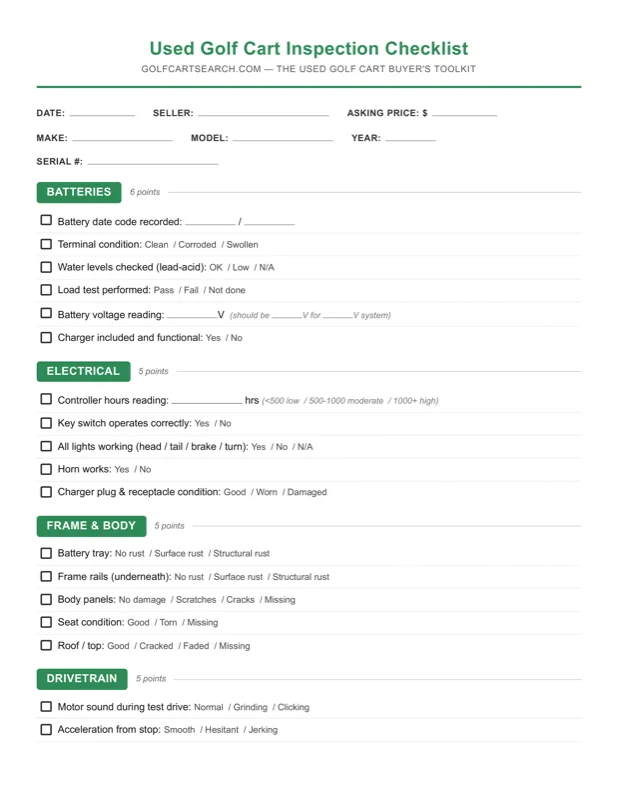
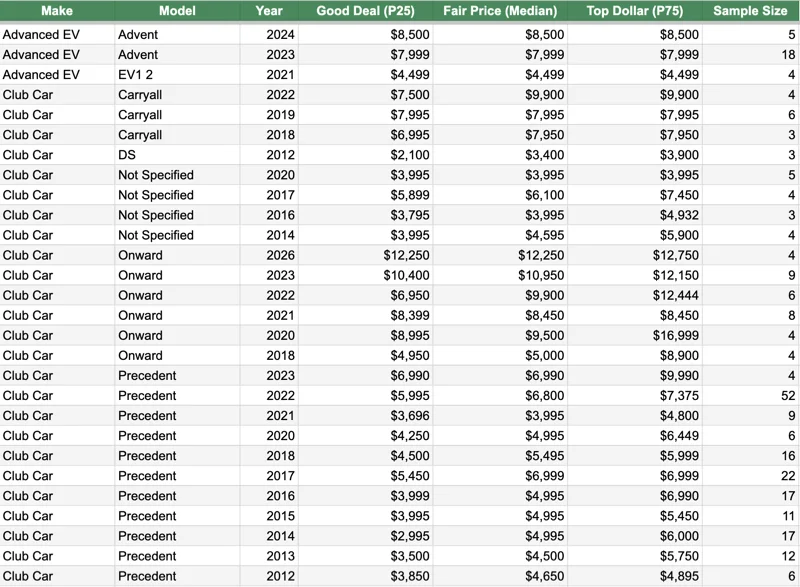
The smart way to frame MCOR symptoms on a used cart is as a negotiation issue, not a panic issue. If the cart is otherwise clean, the batteries are healthy, and the seller is realistic on price, an MCOR repair is manageable. If the cart also has weak batteries, charger problems, hacked wiring, or strange controller behavior, then the "cheap fix" story gets much less believable. That is when I would compare the deal against other used Club Cars on the market and use our value guide before making an offer.

My Verdict on Club Car MCOR Problems

Here is the honest version: MCOR issues are real, but they are also over-diagnosed.

If your older electric Club Car has hesitation, surging, or dead pedal spots, MCOR belongs high on the list. But it does not belong there alone. The cheapest smart move is still the boring move:

  • test the batteries
  • inspect the connector and wiring
  • rule out speed sensor and solenoid issues
  • confirm the cart actually uses MCOR before ordering parts

For most owners, the best outcome is not "I replaced the MCOR." It is "I replaced only the part that was actually bad."

If you are stuck between DIY and paying for diagnosis, find a local golf cart repair shop or compare local used replacement carts before you throw more money at guesses. That is especially true if the cart is older and already showing multiple electrical issues.

FAQ: Club Car MCOR Symptoms and Replacement

Does every electric Club Car Precedent have an MCOR?

No. The main line in the sand is December 6, 2021. According to Navitas' 2022 Club Car product bulletin, Precedent, Tempo, and Onward carts built on or after that date switched to APPS. Older electric carts are the main MCOR audience now.

Can a bad MCOR cause a Club Car not to move at all?

It can, but total no-move symptoms are not specific enough to call it MCOR by themselves. A weak pack, bad solenoid, tow/run switch issue, or speed-sensor problem can do the same thing. That is why I would never replace the MCOR before basic battery and input checks.

Is MCOR 4 the same as every older Club Car throttle setup?

No. Some later Precedent carts use a direct MCOR 4 replacement, while older Precedent and DS carts often need a conversion kit. Ordering by "Club Car MCOR" without checking year and setup is one of the easiest ways to buy the wrong part.

What is the first tool to buy if you suspect MCOR trouble?

A digital multimeter. It helps you rule out low battery voltage and basic circuit problems before you spend money on the wrong fix. Our full tool kit guide covers the rest of the useful starter tools.

Can bad batteries really feel like a bad MCOR?

Absolutely. In fact, that is one of the most common misdiagnoses in owner forums and repair threads. If the batteries are weak under load, the cart can hesitate or surge in a way that feels like erratic pedal response.

Is MCOR replacement expensive?

Usually not compared with batteries or a controller. A later Precedent direct replacement is often around $130 to $150 for the part. Labor and diagnostic time are what push the total into the $250 to $450 range.

Should a used Club Car with MCOR symptoms scare you away?

Not automatically. Treat it as an inspection flag. If the rest of the cart is strong and the seller prices the issue honestly, it can still be a good buy. If the cart has MCOR symptoms plus weak batteries and charger trouble, that is a different conversation.

What if my newer Club Car does not have MCOR?

Then you are likely dealing with the newer APPS throttle setup or another input issue entirely. Do not buy MCOR parts just because the internet says "all Club Cars use MCOR." They do not.

Share this post

Golf Cart Search

Find the Best Golf Carts of 2026

Compare top-rated models, read expert reviews, and find the perfect cart for your needs.
Related posts

Don't Overpay for a Used Golf Cart

Get pricing data, a printable inspection checklist, and negotiation scripts to help you buy with confidence.

Get the Buyer's Toolkit
Pricing dataInspection checklistNegotiation scripts

Instant download. 30-day guarantee.