Charger Parts and Fitment
Golf Cart Chargers: Compare 36V and 48V Options
Find the right golf cart charger by voltage, plug type, battery chemistry, and charging system. The wrong charger can fit the hole and still be wrong for the cart.
Start with the charger directory below, then compare actual products for common E-Z-GO, Club Car, Yamaha, lithium, port repair, and diagnostic use cases.
As an Amazon Associate, we earn from qualifying purchases.

Match your golf cart charger
Golf Cart Charger Directory by Type
Choose the charger family first. A product listing can mention your brand and still be wrong if the voltage, plug, chemistry, or charging logic does not match your cart.

E-Z-GO 36V D-Style Chargers
Common on older TXT and Medalist carts with six 6V lead-acid batteries. Confirm D-style receptacle, 36V pack voltage, battery chemistry, and whether the cart was converted.
Amazon is useful for D-style smart chargers when the cart is a normal 36V lead-acid TXT or a clearly documented lithium conversion.

E-Z-GO 48V Triangle Chargers
Used on many 48V E-Z-GO TXT and RXV-style setups. Confirm 48V pack voltage, triangle receptacle, lead-acid chemistry, and RXV-specific behavior before replacing the charger.
Use an online triangle-plug charger only when the cart is lead-acid and the plug and voltage match. Confirm factory lithium and regen-brake setups with a dealer or repair shop.
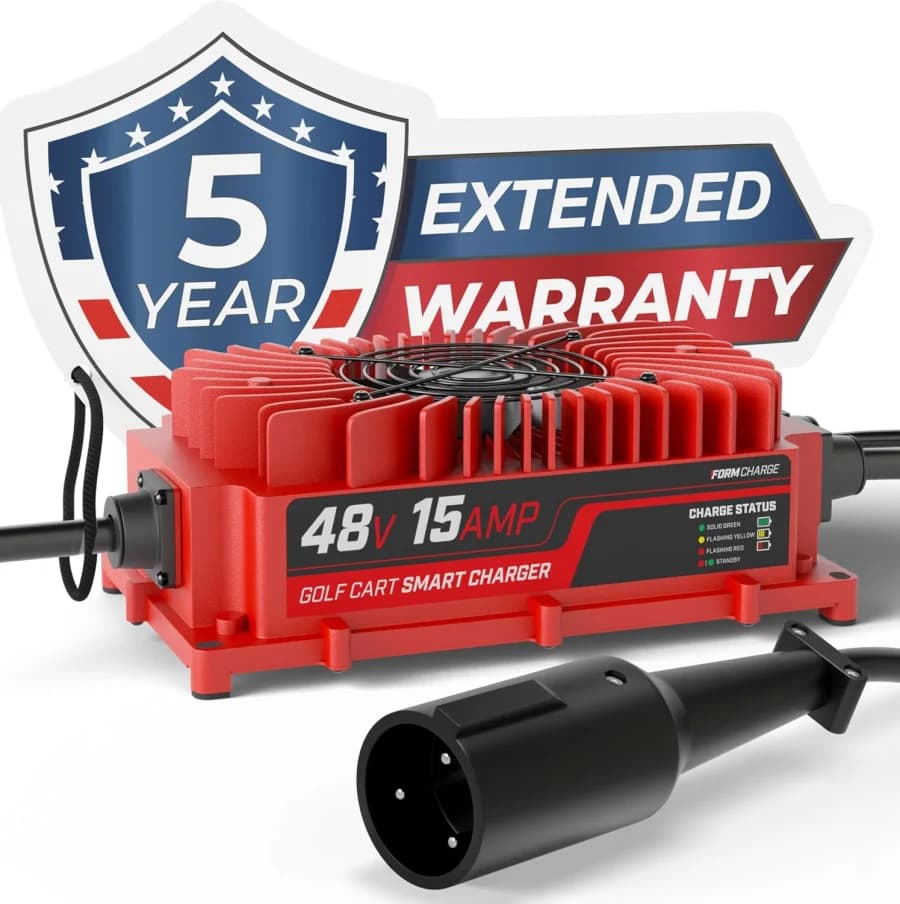
Club Car 48V Round-Plug Chargers
Club Car DS, Precedent, Tempo, and Onward can involve active OBC, bypassed OBC, ERIC, HP lithium, or dealer-specific charging rules. The round plug is only one clue.
Buy online only after confirming OBC or ERIC status. Use a Club Car dealer or specialist if the charger clicks but will not start, the OBC was bypassed, or the cart is factory lithium.
Yamaha 48V Chargers
Yamaha charger fitment changes by G-series, G19-G22, Drive/G29, Drive2, 2-pin round, leaf plug, and lead-acid versus lithium setup.
Online is reasonable when the cart is clearly G29, Drive2, G19-G22, or another listed Yamaha family and the plug photo matches your cart.

Lithium LiFePO4 Chargers
Lithium chargers must match the battery maker spec, not just the old cart model. Confirm 58.4V, 43.8V, ring terminals, onboard charger wiring, BMS limits, and charge current.
Best for clear lithium conversion kits with published charger requirements. Use the battery maker charger when warranty, BMS behavior, or cold-weather charging is uncertain.

Ports, Cords, and Diagnostics
A bad charger port, loose receptacle, corroded battery cable, weak pack, bad outlet, or low pack voltage can look like a bad charger.
Amazon works for receptacles, meters, and basic diagnostic tools. Use a shop for melted ports, unknown wiring, repeated fuse failures, and charger faults under load.
Shop Common Golf Cart Chargers and Charging Parts
Three retailer listings checked October 16, 2026. Match the exact battery profile, connector and charging circuit before comparing current prices.
36V E-Z-GO TXT
FORM 36V 18A D-style TXT charger
A confirmed 36V D-style TXT charging system.
Confirm the supplied generation, selected battery mode, approved profile and 18A current. Not for 48V TXT, RXV or factory ELiTE systems.
48V Club Car lead-acid
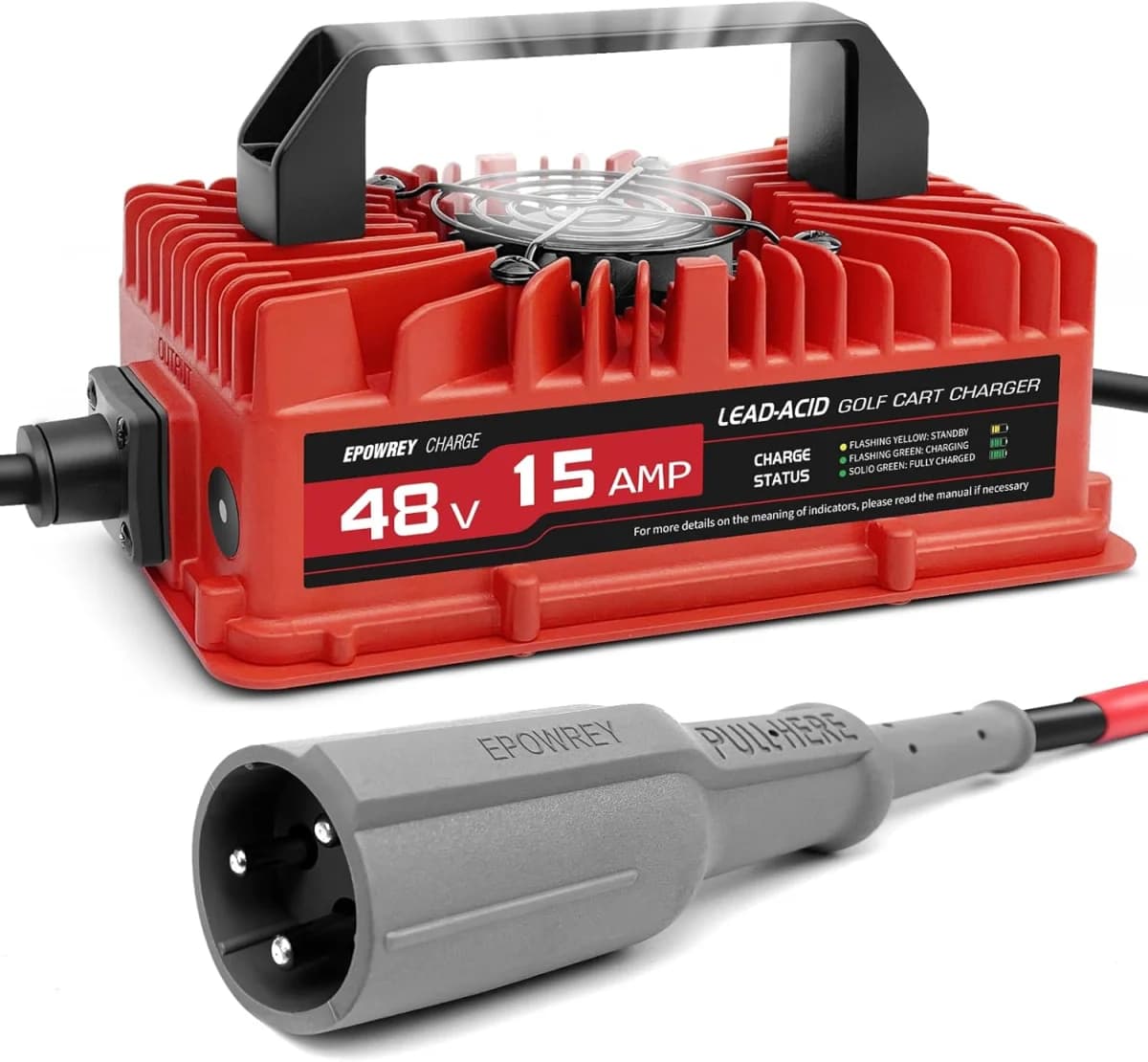
EPOWREY 48V 15A Club Car charger
A compatible 48V lead-acid Club Car system with the round three-pin plug.
Requires a functioning OBC or documented compatible non-OBC arrangement. Not lithium, a failed-OBC fix or a universal ERIC replacement.
48V Yamaha Drive plug
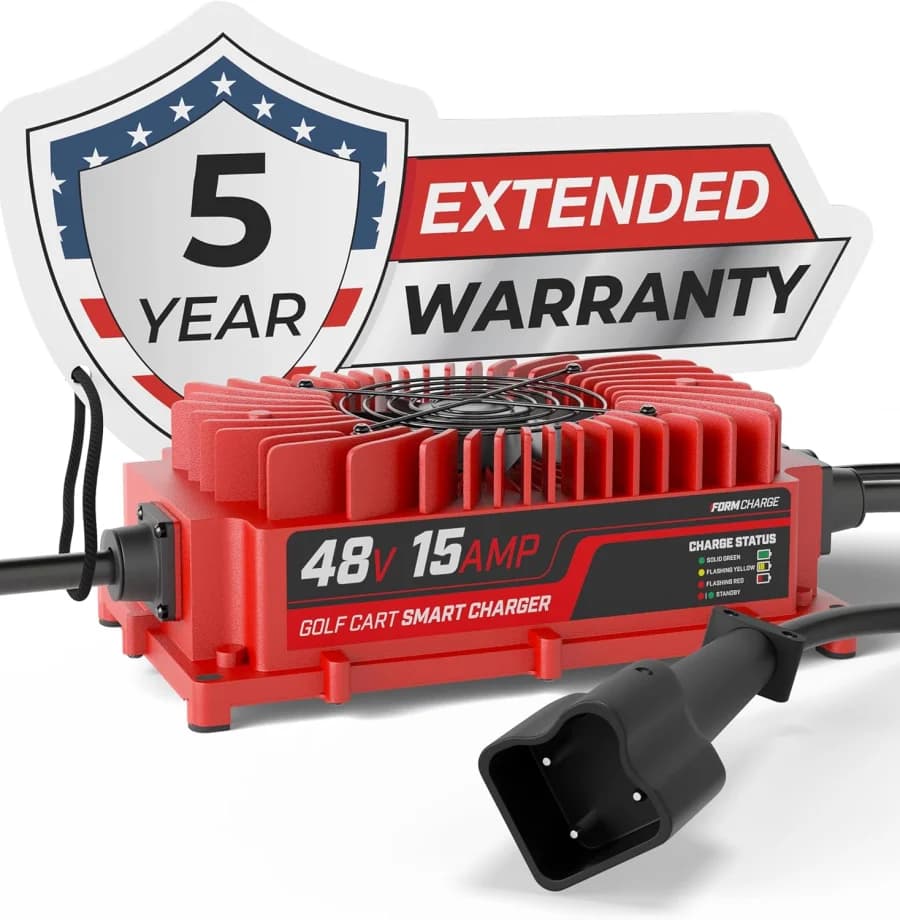
FORM 48V 15A Yamaha Drive-plug charger
A verified 48V Yamaha Drive-style charging system.
Confirm charger generation, available battery mode and battery-approved profile/current. Not older Yamaha plugs, gas starter batteries or automatic factory-lithium approval.
For a lithium conversion, compare the battery kit and included charger first. For 48V TXT/RXV or an unidentified factory system, use the exact battery/charger documentation and a qualified shop rather than choosing a similar plug.
Where to Buy Golf Cart Chargers
Chargers are easier to ship than batteries, but the fitment risk is high. Use the buying path that matches how certain you are about the cart.
Buy online when the fitment is exact
Amazon works for common E-Z-GO, Club Car, Yamaha, and lithium chargers when voltage, plug, battery chemistry, and charging-system notes match your cart.
Use a specialist for charging-system uncertainty
Club Car OBC/ERIC questions, factory lithium, regen braking, converted ports, and repeated charger faults deserve dealer or repair-shop confirmation.
Test before replacing the charger
Weak batteries, low pack voltage, a bad wall outlet, a loose receptacle, or corroded cables can make a good charger look dead.
Golf Cart Charger Fitment Checklist
Run these checks before ordering. They catch the common charger returns: wrong voltage, wrong plug, wrong chemistry, or a cart charging system that needs a special path.
Count the batteries first
Six 6V batteries usually means 36V. Six 8V, eight 6V, or four 12V batteries usually means 48V. Lithium packs must be checked by label.
Match the actual charge port
Compare the cart receptacle to the product photo. E-Z-GO D-style, E-Z-GO triangle, Club Car round, Yamaha round, Yamaha leaf, crowfoot, and SB50 are different paths.
Confirm battery chemistry
Flooded lead-acid, AGM, gel, and lithium need different charger profiles. A plug that fits can still be the wrong charger.
Check charging-system logic
Club Car OBC/ERIC, E-Z-GO RXV behavior, factory lithium, onboard chargers, and bypassed ports can change what replacement works.
Charger Fitment by Brand
Use these as starting points and check the cart itself. Used carts are often rebuilt, converted to lithium, or fitted with replacement charge ports.
Charger Compatibility Traps
These are the mistakes that make a charger look defective when the order was wrong or the cart has another charging problem.
DIY or Shop?
Replacing a known charger is simple. Diagnosing a cart that will not charge is different. Use this split before throwing parts at the problem.
DIY-friendly
Replacing a normal plug-in charger when voltage, plug, battery chemistry, and fitment are exact.
Test first
Charger clicks, lights flash, cart sat dead, or charger starts only when the plug is wiggled.
Use a shop
Melted ports, burnt wiring, unknown lithium conversion, active Club Car OBC issues, or repeated fuse failures.
Use dealer path
Factory lithium carts, warranty-covered carts, ERIC or HP lithium systems, and commercial fleet chargers.
Useful Charger Guides Before Buying
Use these pages when the product card is not enough to identify your plug, voltage, charger fault, or charging setup.
Best Golf Cart Battery Charger Guide
The full charger buying guide for 36V, 48V, plug types, lead-acid, and lithium.
Golf Cart Charger Plug Compatibility
Photos and plug explanations for E-Z-GO, Club Car, Yamaha, crowfoot, and SB50 setups.
Golf Cart Charger Light Codes
Decode flashing lights before replacing a charger that may be reporting a battery fault.
Charging Port Problems
Diagnose loose ports, hot plugs, worn receptacles, and charging that only works when wiggled.
Extension Cord Safety
What to check before charging through an extension cord in a garage, barn, or storage area.
Golf Cart Battery Replacement Options
Match the battery side of the charging system before buying a replacement charger.
Golf Cart Parts Near Me
Find local parts counters and repair shops when charger fitment, testing, or installation matters.
Golf Cart Charger FAQs
How do I know which golf cart charger fits?
Match the battery pack voltage, charge plug, battery chemistry, and cart charging system. A 36V E-Z-GO D-style charger, 48V E-Z-GO triangle charger, Club Car round-plug charger, Yamaha charger, and lithium charger are not interchangeable just because the listing says golf cart charger.
Can I use a 48V golf cart charger on a 36V cart?
No. The charger voltage must match the pack voltage. A 48V charger can overcharge and damage a 36V pack, while a 36V charger will not properly charge a 48V pack.
Do lithium golf cart batteries need a different charger?
Usually yes. Lithium LiFePO4 batteries need the charger profile specified by the battery maker, commonly 58.4V for many 48V LiFePO4 packs and about 43.8V for many 36V LiFePO4 packs. Do not reuse a lead-acid charger unless the battery maker explicitly allows it.
Why does a Club Car charger need extra checking?
Many Club Car carts use older OBC logic, newer ERIC charging, or a bypassed charging setup, so a matching round 3-pin plug is not enough. Confirm DS, Precedent, Tempo, Onward, OBC, ERIC, bypass status, battery chemistry, and charger requirements before buying.
Should I repair or replace a golf cart charger?
Diagnose the battery and complete charging system first. Then compare the exact compatible replacement quote with qualified repair, parts availability and warranty. Stop using damaged equipment, and let the test, not the charger's age or brand, show which part failed.