As an Amazon Associate, we earn from qualifying purchases. This helps support our site at no extra cost to you.
Loose golf cart seat hinges need a check of both sides of the connection before you order a cushion. Find out whether the hinge moves against the seat backing, the hinge comes out of its receiver, or the receiver moves against the vehicle. Replacing the wrong piece can leave the same loose seat behind.
Stop using a seat that shifts out of position, has a cracked or detached mount, or cannot engage as its instructions require. Keep passengers off it until the fault is assessed and repaired. Do not use a test drive to see whether an unsecured bench stays put.
This guide focuses on the front bench mounting system. For torn vinyl or collapsed foam, use the separate seat replacement and upholstery guide. For a passenger conversion behind the front bench, use the rear-seat kit guide.
Golf cart seat hinges: identify four separate parts
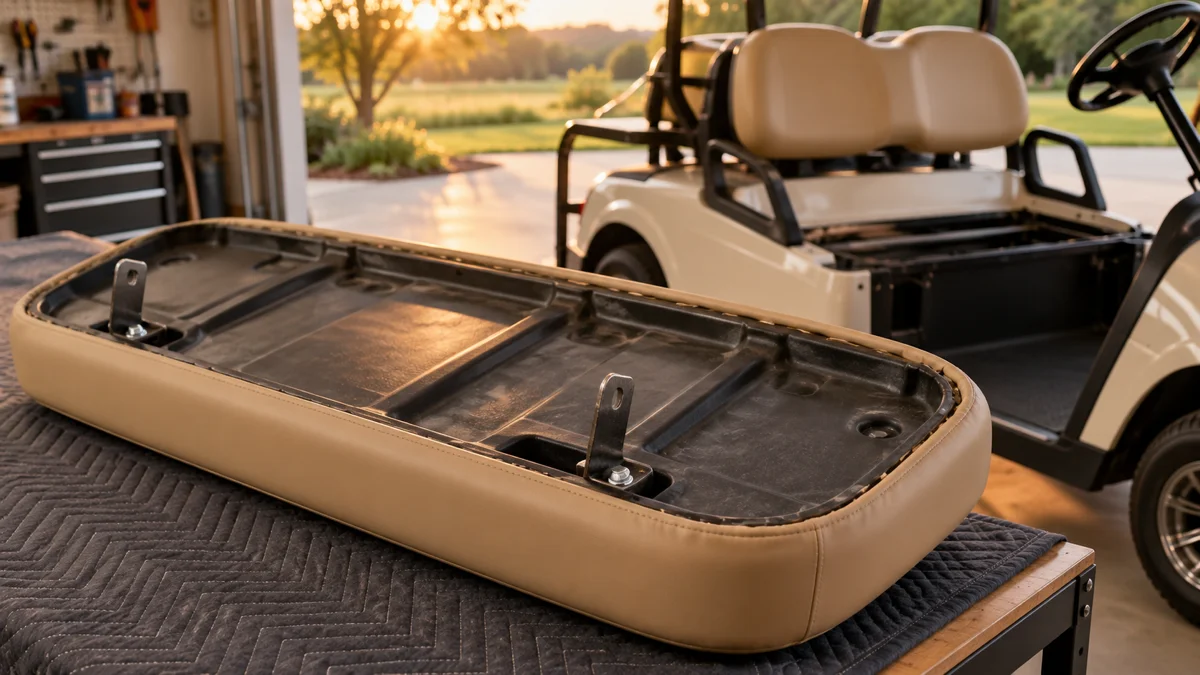
Owners and parts listings can use “seat hinge” for different pieces. Label the parts in your photographs before asking a supplier to identify the fault:
- Seat backing: the board, molded base or other structure beneath the cushion. This is what the seat-side hardware attaches to.
- Seat-side hinge or tab: the part attached to that backing. It may pivot, hook into another part or use a vehicle-specific arrangement.
- Vehicle-side receiver or support: the mating component, slot or mounting structure on the cart.
- Retention and resting points: any specified latch, catch, support or pad that holds or supports the assembled seat in its operating position.
These are functional labels for describing a problem, not a claim that every cart has four removable parts. Have the supplier name the components on the exact assembly drawing. A photograph of one detached tab does not establish the condition of the structure that used to hold it.
Identify the cart as well as the seat. A Club Car, E-Z-GO or Yamaha badge is a starting point; it does not identify a replacement cushion fitted by a previous owner. Include the vehicle identification labels, confirmed model/year, and any seat brand or part label.
What our three-document seat comparison found
On November 1, 2026, we reviewed two current manufacturer-hosted owner manuals and one supplier-hosted replacement-seat instruction PDF. We extracted their text, checked the relevant diagrams and compared seat access, hinge reuse and mounting location. This is document analysis, not hands-on testing or a survey of failed seats.
The 2027 Yamaha DR2 AC manual, J0J-F8199-38-E0, printed page 17, shows lifting the seat for checking and servicing. Its owner instruction is not a hinge replacement specification. Confirm the cover and model through Yamaha's manual directory.
The 2027-and-later E-Z-GO RXV ELiTE manual, 10193239-B, printed page 15, describes pivoting the front bench forward using a hip restraint, then lifting it off for complete removal. The same page separately describes the rear-facing load-deck seat. Follow your actual model's instructions, found through E-Z-GO's owner-manual page.
The useful replacement-seat finding came from the MadJax Aviator instructions hosted by Nivel: all five application sections we checked reuse the original hinges. Buying that replacement cushion does not, by itself, replace a failed old hinge.
| Aviator application section | Hinge detail in the cited instructions |
|---|---|
| Club Car Precedent / Tempo / Onward, page 2 | Retained OEM hinges; retained hardware or specified ¼-20 bolts |
| E-Z-GO TXT / MadJax XSeries / Navitas chassis, page 4 | Retained hinges and screws; three pre-drilled front holes |
| E-Z-GO RXV, page 6 | Retained hinges and screws; three pre-drilled front holes |
| Yamaha Drive / Drive2, page 8 | Retained hinges; outermost front holes and supplied M6 hardware |
| ICON, page 10 | Retained hinges; innermost front holes and specified hardware |
Those are instructions for that seat product's applications, not a universal fitment chart. Match the actual seat and revision before using them. Five sections in one supplier document are not five independent fit tests, and none proves that an unidentified hinge on your cart is serviceable.
Our practical conclusion: check the package contents and both mating mounts before paying for a new seat. A better-looking cushion can still depend on the hardware you are trying to replace.
Golf cart seat hinges: locate the moving connection
Park on firm, level ground and follow the vehicle's parking and preparation instructions. Before moving or removing a seat, read its access procedure and any required electrical isolation or other service precautions. Under-seat space may contain batteries, wiring, fuel equipment or moving components. Key-off alone is not a universal service-isolation method.
For example, the cited Yamaha pre-operation page says to remove the key and apply the parking brake. That instruction belongs to its checks; it does not substitute for additional precautions required by a repair procedure. Do not reach under an unsupported seat or put fingers into a hinge or pinch point.
Start with what is visible without dismantling anything. Photograph the seat in its normal resting position, then follow the approved access procedure only if you can do so safely. Never pry a reluctant seat loose because a different model's cushion lifts off.
| Observation to record | Connection that needs assessment |
|---|---|
| Hinge moves against the underside of the cushion | Fasteners, inserts and surrounding backing |
| Seat-side tab appears intact but will not stay engaged | Mating receiver, alignment and any specified retention parts |
| Receiver moves with the seat | Receiver attachment and supporting vehicle structure |
| Base rests unevenly after recent seat work | Correct assembly, orientation, clearances and specified supports |
| Skin or foam shifts while the mounting system stays in position | Upholstery and cushion condition, assessed separately |
This map helps describe the fault. It does not diagnose it from movement alone. There is no universal acceptable-play measurement in this comparison, and no recommendation to bend a tab until it feels tight.
If the noise continues when the seat and its mounts are secure, record where it comes from rather than buying another hinge. Our general troubleshooting guide helps organize symptoms; a noise from the front structure may instead need the windshield-rattle checks.
Check backing damage before tightening hardware
A screw turning without clamping, an insert moving in the base, a visible crack, or a hinge pulling away needs more than a tighter grip on the screwdriver. Stop and have the attachment assessed. The intended repair depends on the actual material, fastener system and remaining sound structure.
Do not substitute longer screws, drill new holes, add a large washer or glue a broken receiver without an approved repair for that assembly. Those changes can hide the original failure or leave the hinge attached to material that cannot support it. A home-made plate also needs more justification than matching the outline of a part shown online.
Keep loose removed parts only when removal is authorized and safe. Label their original locations and photograph the mating surfaces. Do not reuse bent, cracked or suspect hardware just because a new cushion's instructions say to retain OEM hinges. Ask whether each retained component remains suitable for reuse.
Use a qualified golf cart repair provider if the receiving structure, seat backing or attachment integrity is uncertain. A torn cover can wait for a separate cosmetic decision; an insecure mounting connection needs resolution before the seat carries anyone.
Order the mating parts, not just a familiar shape
Send the supplier these views:
- The complete installed seat and cart identification labels.
- The accessible underside, showing backing material and the hinge attachment pattern.
- Both seat-side hinges and both vehicle-side receiving points.
- Close-ups of the failed connection, with any part markings legible.
- The seat brand/model label and any recent installation paperwork.
Ask the supplier to confirm the exact part numbers and whether they are sold individually, in pairs or as a kit. Confirm which existing pieces must be retained, which new hardware is included, and whether a damaged receiver or base requires a separate repair. If a mounting pattern differs from the drawing, resolve the mismatch before assembly.
Do not copy the bolt specification from another row of the Aviator chart. A metric diameter, inch thread, fastener length and mounting-hole position are separate compatibility questions. Thread engagement, clearance and tightening instructions must come from the actual seat/vehicle procedure.
For parts browsing, start with the seat parts directory. If the front bench was changed during a rear conversion, identify that kit through its own paperwork. The load-capacity guide explains why a seat's presence does not establish the cart's permitted passenger or cargo load. Likewise, seat belts and their anchor requirements are separate from cushion hinges; do not use a hinge as an improvised belt anchor.
Optional aids for an accessible visual check
Use equipment you already own when it does the job. These three items are observation and parking aids, not a repair kit or proof that a seat is safe. Follow the actual vehicle procedure, and keep tools clear of exposed electrical connections. Current seller offers, shipping and tax determine the purchase cost; check the linked offer rather than relying on a copied Amazon price.
A small flashlight helps illuminate an accessible receiver or read a part label. The Streamlight 66118 Stylus Pro is one option. A light does not make an unsafe under-seat reach acceptable, and there is no need to buy one if your existing light gives a clear view.
Check current Streamlight price on AmazonAn inspection mirror can show a concealed side of an accessible bracket without putting your head beneath the seat. The Ullman C-2 is an option for looking, not levering a hinge or probing energized equipment. If access is obstructed, have the shop inspect it.
Check Ullman mirror price on Amazon →Suitable wheel chocks may supplement the cart's required parking procedure where appropriate to the tires and ground. The MaxxHaul 70472 pair is one option to assess for that setup. Chocks do not replace the parking brake, service isolation or proper support, and this seat check does not require jacking up the cart.
Check MaxxHaul chock price on Amazon →For other jobs, build a model-appropriate tool kit around the work you can safely perform. More tools are not a reason to attempt an unidentified structural repair.
Get a repair quote with a defined scope
There is no substantiated national installed-price range in this research. Price the fault actually found: hinge only, mating receiver, damaged backing, replacement cushion, supporting structure, or a combination. Ask for parts, hardware, labor, tax and transport separately, plus the inspection needed before the shop can give a firm total.
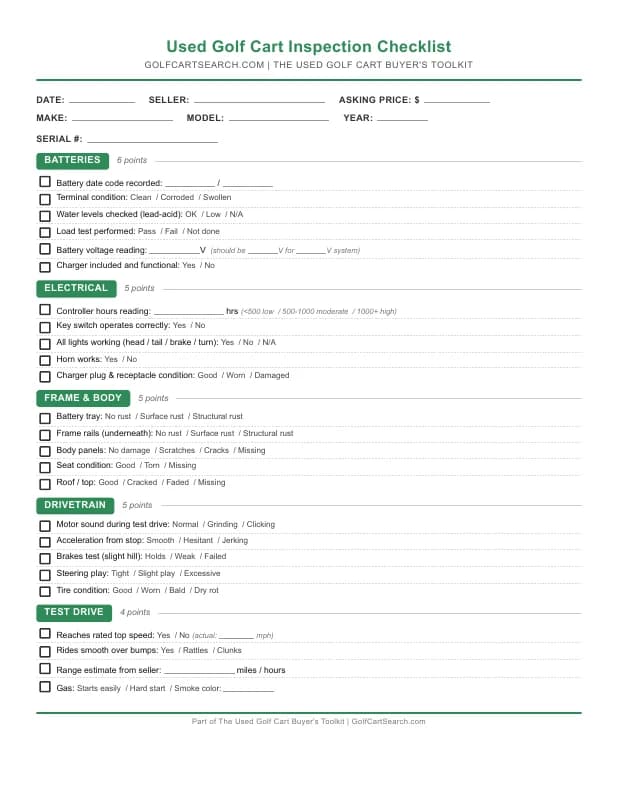
For an owner deciding between repairs, a cushion-only offer should say whether hinges and hip restraints are included or reused. For a buyer inspecting a used cart, ask for the mounting problem to be assessed before accepting a seller's promise that “it just needs a seat.” Use a written estimate for the actual work rather than subtracting a generic hinge price from the asking price. Our used-cart inspection guide covers the other systems that also need checking.
Find a local dealer that can identify the cart and installed seat assembly. Keep the repair invoice and part numbers with the vehicle's maintenance records, especially when an aftermarket cushion changes which instructions the next owner needs.
Frequently asked questions about loose front seats
Why is my golf cart front seat loose?
Identify which connection moves: cushion backing to hinge, hinge to receiver, or receiver to vehicle structure. A torn cover is a separate issue. Stop using a seat that shifts out of position, has a failed mount or will not engage correctly, and have the damaged connection assessed.
Does a new golf cart seat include new hinges?
Not necessarily. The MadJax Aviator instructions reviewed November 1, 2026 reuse OEM hinges in all five application sections we checked. Confirm the package contents for the exact replacement seat, including hinges, receivers, brackets and fasteners.
Are golf cart seat hinges universal?
Do not assume so. Identify the vehicle and installed seat assembly, then confirm both mating parts, mounting pattern and backing material. One cushion manufacturer specifies different hinge mounting locations and hardware across its vehicle applications.
How does the RXV front seat come off?
The cited 2027-and-later RXV ELiTE manual, 10193239-B page 15, describes pivoting the bench forward by lifting a hip restraint, then lifting it off for complete removal. Follow the manual for your actual vehicle and its preparation requirements; this is not a universal removal procedure.
Can I fix a loose hinge with a longer screw?
Do not choose a longer screw without the seat manufacturer's repair instructions. First establish whether the fastener, threaded insert, backing or receiving structure is damaged. A different screw can fail to engage correctly or project into an area that needs clearance.
Should every golf cart front seat have a latch?
Use the exact assembly drawing and operating instructions to establish its retention system. A hinge, receiver, latch and cushion support perform different jobs. Do not add a generic latch because another model has one, or assume a missing retainer is normal.
How much does golf cart seat hinge repair cost?
Get an itemized quote for the identified hinge, mating receiver, backing repair or cushion, hardware and labor. We have not established a national installed-price range. A hinge-only price does not cover a cracked receiver or failed seat base.
Can a cover or rear-seat kit solve a loose front bench?
A cover does not repair a mounting connection. An aftermarket rear-seat kit is a separate assembly and does not establish a front-seat repair, higher vehicle load limit or approval for additional passengers.
Golf Cart Search
Find the Best Golf Carts of 2026
Compare top-rated models, read expert reviews, and find the perfect cart for your needs.