As an Amazon Associate, we earn from qualifying purchases. This helps support our site at no extra cost to you.
Golf cart seat replacement cost depends on one question: are your seats ugly, uncomfortable, or actually rotten? If the vinyl is faded but the foam is still firm, a $30-$120 cover can make the cart presentable. If the foam is wet, flat, or crumbling, expect $200-$500 per seat for upholstery work or $300-$1,200 for full replacement cushions and assemblies.
This guide breaks down the real 2026 cost ranges, when covers are enough, when DIY upholstery makes sense, and when you should replace the whole seat. It is written for owners of Club Car, EZGO, Yamaha, ICON, Star EV, and other common neighborhood carts.
Cheapest Fix $30-$120 Covers
DIY Recover $80-$250
Pro Upholstery $200-$500 Per Seat
Full Replacement $300-$1,200
Golf Cart Seat Replacement Cost in 2026
Most golf cart seat jobs fall into one of four buckets. Start with the cheapest fix that solves the actual problem.
| Seat fix | Typical cost | Best for | DIY difficulty |
|---|---|---|---|
| Slip-on or towel-style cover | $30-$120 | Faded vinyl, light cracking, resale prep | Easy |
| Staple-on replacement cover | $50-$200 | Torn vinyl with good foam underneath | Medium |
| DIY reupholstery with new vinyl and foam | $80-$250 | Custom look, worn foam, owner with tools | Medium-hard |
| Professional reupholstery | $200-$500 per seat | Custom stitching, foam repair, clean finish | None |
| Full front seat cushion replacement | $300-$800 | Bad foam, rotten plywood, broken seat base | Easy-medium |
| Full rear flip-seat kit | $300-$700+ | Adding or replacing rear passenger seating | Medium |
| OEM dealer seat assembly | $500-$1,200+ | Factory color match, newer premium models | Easy-medium |
For a clean two-passenger cart, the common sweet spot is a $60-$150 front-seat cover or replacement vinyl set. For a four-passenger family cart with front and rear cushions, budget $150-$400 for a strong cosmetic refresh or $600-$1,500 if both rows need foam, boards, and upholstery.
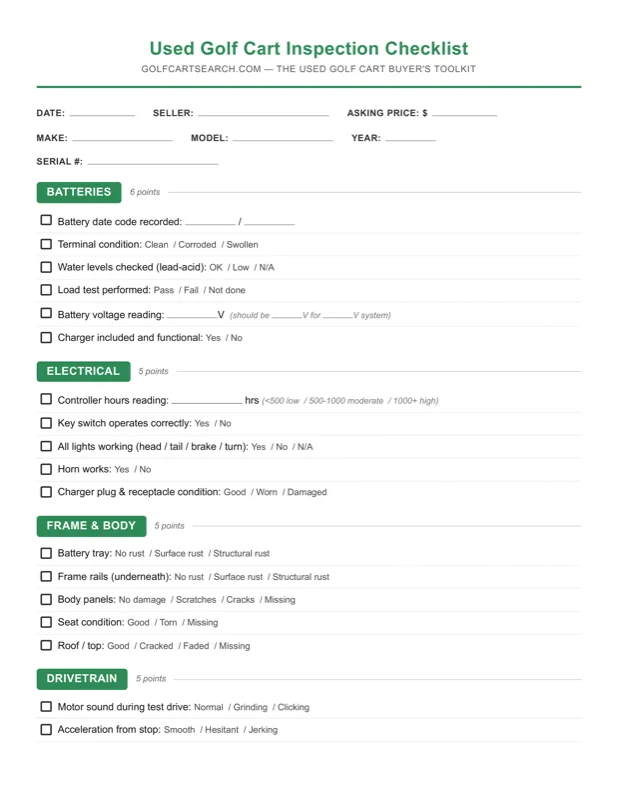
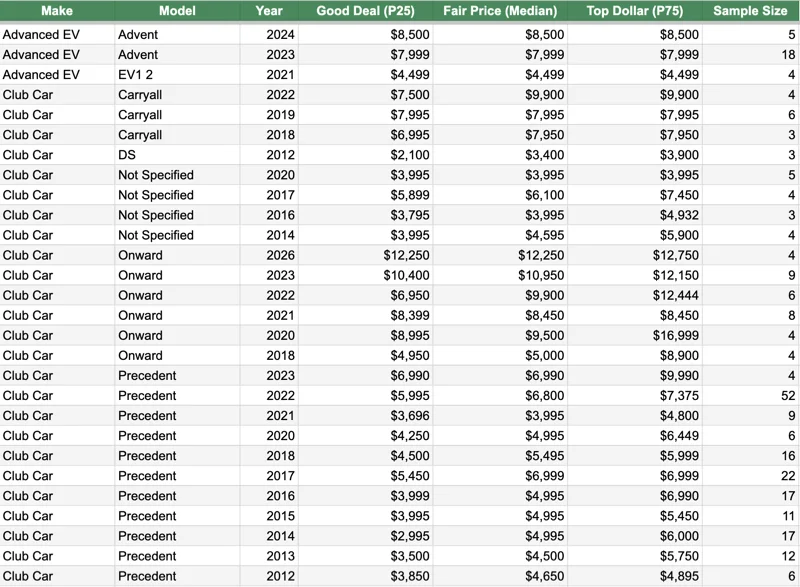
Seat condition also affects used-cart value. A cart with fresh batteries, good tires, and torn seats still looks neglected. If you are pricing a cart before buying, compare the seat repair budget against our used golf cart buying guide, used golf cart prices by brand, and golf cart value guide.
When the fix is a product instead of upholstery labor, the golf cart seats parts finder groups covers, rear seat kits, belts, armrests, and springs by fitment.
Covers vs Upholstery vs Full Seat Replacement
The right fix is usually obvious once you inspect the vinyl, foam, and seat board separately.
Use Seat Covers for Cosmetic Damage
Choose a cover when the seat is ugly but still comfortable. Cosmetic damage includes fading, hairline cracks, sunscreen stains, small surface splits, and older vinyl that feels dry but has not opened up. Covers are also useful if you park outdoors and want to protect new seats from UV damage.
For a practical Club Car protector, the Coivy washable seat cover is a useful low-cost option. It is breathable, has a nonskid bottom, and includes front pockets, usually around $30. It will not rebuild broken foam, but it is an inexpensive way to protect or hide a worn bench.
If you want a broader comparison of mesh, towel, vinyl, and heated covers, use our best golf cart seat covers guide. That post is about protection and comfort. This guide is about deciding whether the seat itself needs work.
Use Replacement Covers for Torn Vinyl
Replacement covers are the next step up from slip-on covers. Instead of sitting over the old seat, they replace the original vinyl skin. Most staple to the underside of the plywood seat base or fasten with hook-and-loop strips.
This is the best fix when the vinyl is torn but the foam underneath still has shape. You get a cleaner, tighter look than a slip-on cover without paying an upholstery shop. Budget $50-$200 for the material, plus $15-$40 if you need a staple gun and stainless staples.
Brand-specific covers matter here. A Club Car Precedent seat cover will not stretch neatly over an EZGO TXT cushion, and Yamaha Drive seats have their own shape. A no-staple vinyl cover is a strong option for owners who want a clean look without rebuilding the entire seat.
Use DIY Upholstery for Worn Foam or Custom Looks
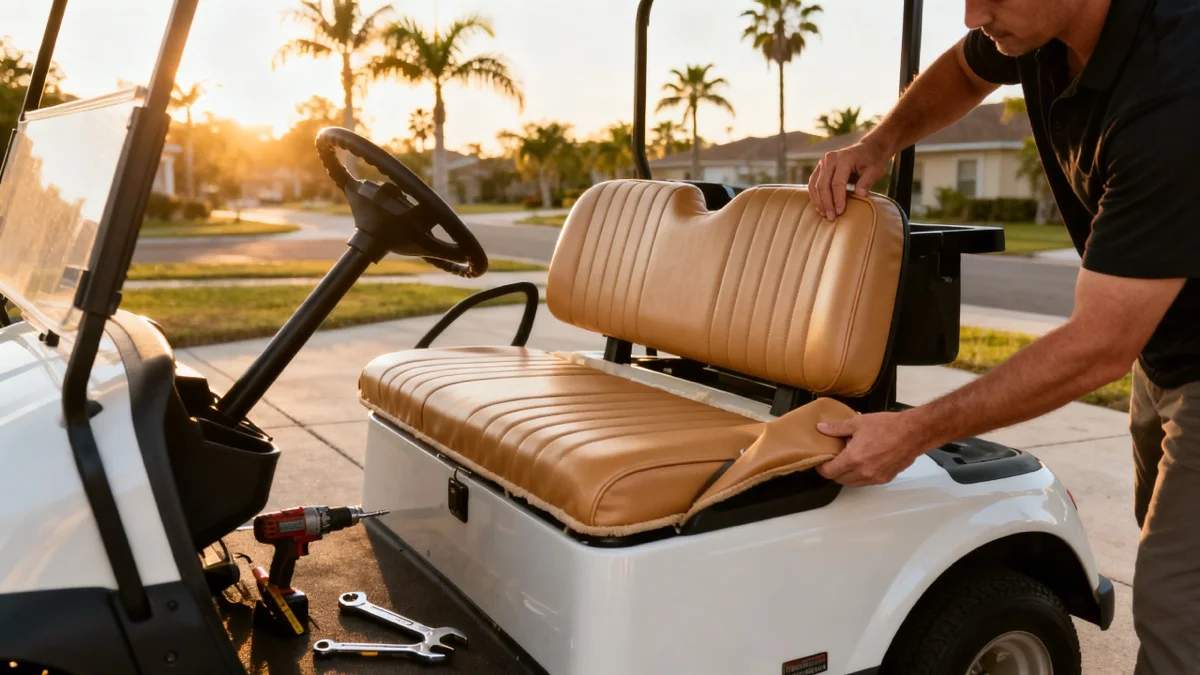
DIY upholstery makes sense when you want a better-than-cover finish and are comfortable removing seats, pulling staples, stretching vinyl, and shaping foam. The job is not mechanically complicated, but it rewards patience.
Budget $80-$250 for marine vinyl, foam, adhesive, staples, and small tools for a front bench. Add more if you are doing a rear seat, custom two-tone panels, piping, or thicker foam. A DIY job can look excellent, but loose corners and wrinkles are common on the first attempt. Practice on a rear cushion or old cover if you are nervous.
For a durable staple-on job, marine vinyl covers are a better fit than a loose universal towel cover when the old skin needs to come off. They are more work to install, but they look closer to a factory replacement when stretched correctly.
Use Professional Upholstery for Custom or High-Value Carts
Professional reupholstery is the right choice when you want custom stitching, bolsters, piping, logo embroidery, color matching, or foam reshaping. It also makes sense on higher-value carts where amateur upholstery would stand out, such as a loaded Club Car Onward, EZGO Liberty, Yamaha Drive2, or premium Garia.
Typical shop pricing runs $200-$500 per seat. A simple bench recover with standard marine vinyl may stay near the low end. A two-row cart with custom stitching, new foam, and matching armrests can climb past $800 quickly.
Ask the shop three questions before you commit:
- Does the price include foam repair, or just new vinyl?
- Will they use marine-grade vinyl and UV-resistant thread?
- Can they reuse the original boards, hinges, and brackets?
If the quote is close to the cost of full replacement cushions, compare both options before paying a deposit.
Use Full Seat Replacement for Structural Problems
Replace the seat when the structure is bad. That means soft plywood, stripped hinge screws, waterlogged foam, broken plastic bases, missing brackets, or rear cushions that no longer latch safely. A cover over rotten plywood is a short-term disguise, not a repair.
Full replacement is also smarter when you are changing passenger capacity. If you are converting a two-seater into a four-seater, use a full rear flip-seat kit rather than piecing together cushions. Our rear seat kit guide covers frame strength, leaf-spring upgrades, footrests, and brand fitment.
Golf Cart Seat Replacement Cost by Brand
Brand fitment is where many owners waste money. Golf cart seats look similar from 10 feet away, but cushion shape, mounting holes, hinge location, backrest width, and rear-seat frames vary by model.
Club Car Seat Replacement Cost
Club Car is split into two big groups: DS and Precedent-style carts. The DS has a wide, flatter bench shape. The Precedent, Tempo, and Onward platform uses a more modern cushion shape, so DS parts usually do not fit neatly.
Typical Club Car costs:
- Slip-on covers: $30-$90
- No-staple vinyl covers: $60-$150
- Front cushion replacement: $300-$700
- Professional upholstery: $200-$500 per seat
- OEM or dealer-matched cushions: $500-$1,200+
Club Car seats are worth repairing cleanly because the carts tend to hold value well. If your cart also needs batteries or suspension work, compare the total restoration budget against our Club Car review, Club Car DS vs Precedent guide, and Club Car Tempo vs Onward vs Precedent comparison.
EZGO Seat Replacement Cost
EZGO TXT and RXV seats are common, so aftermarket choices are broad. TXT parts are especially easy to find, but year range matters. RXV seats and rear kits can use different brackets and cushion shapes.
Typical EZGO costs:
- Universal covers: $30-$100
- Staple-on vinyl covers: $60-$180
- Front cushion replacement: $250-$650
- Rear cushion replacement: $100-$300
- Full rear seat kit: $300-$700+
If you are restoring an older TXT or RXV, inspect more than the cushion. Torn seats often travel with worn leaf springs, tired tires, old batteries, and faded body panels. Our EZGO review, EZGO TXT vs RXV guide, and golf cart maintenance guide can help you decide whether the seat work is part of a sensible refresh.
Yamaha Seat Replacement Cost
Yamaha Drive and Drive2 seats are comfortable, but they are not as interchangeable with generic EZGO and Club Car parts as many listings imply. Yamaha-specific covers are usually worth the extra money.
Typical Yamaha costs:
- Basic covers: $35-$100
- Yamaha-specific vinyl covers: $60-$180
- Front cushion replacement: $300-$800
- Professional upholstery: $200-$500 per seat
- Dealer-matched replacements: $500-$1,200+
For Yamaha owners, fit is more important than chasing the cheapest universal cover. A loose cover can bunch at the front edge and make the seat look worse than the original vinyl. Read our Yamaha golf cart review if you are deciding whether to restore an older Drive or move into a newer Drive2.
ICON, Evolution, Star EV, and Newer Brands
Newer brands often use proprietary seats, and the aftermarket is thinner than it is for the Big 3. Universal covers may work for temporary protection, but full cushion replacement is usually dealer-direct or brand-specific.
Expect:
- Universal protective covers: $30-$120
- Dealer replacement cushions: $400-$1,200+
- Custom upholstery: $250-$600 per seat
- Longer wait times for color-matched OEM parts
This is one reason dealer support matters. If you are comparing newer value brands, see our ICON review, Evolution review, Star EV review, and best golf cart brands ranking before you buy.
How to Inspect Golf Cart Seats Before Spending Money
Do this inspection before ordering parts. It takes five minutes and prevents the most common mistake: buying a cover when the seat needs foam or board repair.
Check the Vinyl Surface
Look for cracks, splits, dried edges, loose seams, and black mildew in stitching. Small surface cracks are cover territory. Wide tears that expose foam usually need a replacement cover or upholstery.
Run your hand across the seating area. If the vinyl feels brittle or flakes under pressure, the whole surface is near the end of its life. In that case, a fitted vinyl replacement cover is better than a thin towel-style cover.
Check the Foam
Press the center of the bottom cushion and the front edge. Good foam springs back. Bad foam stays dented, feels crunchy, smells musty, or has a hard ridge where passengers slide in and out.
Waterlogged foam is a bigger problem than cosmetic vinyl damage. If you see open tears and the cart lived outside, assume the foam absorbed water. That can lead to mildew smell and a seat that never feels dry.
Check the Seat Board
Lift the seat and inspect the underside. Many cushions use plywood or composite boards. Look for dark water stains, soft edges, loose staples, stripped screws, broken hinge mounts, or sagging around bolt holes.
If the board is soft, do not spend money on a nice cover until the base is fixed. A new vinyl skin stapled to rotten plywood will loosen quickly.
Check Rear Seat Safety
Rear seats carry more risk because passengers face backward and the frame carries more load. Inspect the grab bar, footrest, brackets, hinge points, cushion bolts, and rear leaf springs. If the rear cushion is torn but the frame is also rusty or bent, price a full kit.
For four-passenger carts, seat work may connect to suspension and load capacity. Our golf cart weight calculator, 2 vs 4 vs 6 seater guide, and trailer hitch and towing guide explain why passenger weight changes more than comfort.
DIY Golf Cart Seat Reupholstery Steps
DIY upholstery is realistic if you keep the design simple. A flat bench cushion is forgiving. Deep bolsters, custom piping, and diamond stitching are better left to a shop unless you already sew upholstery.
Tools and Materials
For a basic recover, gather:
- Marine-grade vinyl or a model-specific replacement cover
- Foam if the original cushion is flat or water damaged
- Heavy-duty staple gun
- Stainless or monel staples
- Pliers or staple remover
- Socket set for seat bolts
- Utility knife
- Measuring tape and marker
- Spray adhesive rated for foam and vinyl
- Mild cleaner and rags
A basic staple-on cover plus a T50 staple gun and stainless staples is enough for many front benches. Do not use cheap indoor staples on an outdoor cart. They rust, stain the vinyl, and loosen.
Step 1: Remove the Seat
Turn the key off, set the parking brake, and remove loose items from the cart. Most front seat bottoms lift out or unbolt from brackets. Seat backs may use bolts through the rear supports.
Take photos before removing brackets, hinges, and spacers. Reassembly is easier when you know exactly how each piece sat.
Step 2: Pull the Old Cover
Flip the cushion over and remove the old staples with pliers or a staple remover. Work slowly around corners so you do not rip chunks from the board. Once the old vinyl is off, inspect the foam and board before touching the new material.
If the foam is dry and firm, reuse it. If it is damp, moldy, flat, or crumbling, replace it now. Covering bad foam saves money for about a week.
Step 3: Repair Foam and Board Issues
Small foam divots can be smoothed with a thin foam overlay. Deep sagging needs new foam. For plywood, replace the board if screw holes are stripped or the edges are soft. Use the old board as a template for hole locations.
Do not make the new foam too thick unless the seat design can handle it. Extra foam can make the vinyl hard to stretch, raise the driver too high, and interfere with the backrest angle.
Step 4: Stretch and Staple the New Cover
Lay the cover face down, center the foam and board, then start stapling at the center of each side. Pull the vinyl snug, not stretched to the point of whitening. Work from the center toward the corners, alternating sides to keep tension even.
Corners decide whether the job looks clean. Fold the vinyl like a tight package, trim excess only after you are confident, and avoid thick bunches under hinge points.
Step 5: Reinstall and Test
Reinstall the seat, tighten the bolts, and sit in every position. Check for loose corners, wrinkles, shifting, or rubbing near hinges. If the seat back was removed, make sure the angle feels normal before taking the cart out.
While the cart is apart, clean the surrounding panels. Our golf cart cleaning guide covers vinyl-safe cleaners, UV protectant, and what not to use on acrylic windshields or plastic trim.
Product Picks for Seat Repair and Protection
Keep product buying proportional to the cart. A $60 cover makes sense on almost any cart. A $900 custom interior only makes sense when the rest of the cart is already clean.
Best Cheap Protection: Coivy Washable Seat Cover
The Coivy cover is the fastest fix for a Club Car seat that needs protection or a cleaner look. It is washable, breathable, and easy to remove.
Check Coivy Seat Cover PriceBest Budget Universal Cover: 10L0L Seat Cover Set
For standard bench seats on many EZGO TXT, EZGO RXV, and Club Car DS carts, the 10L0L breathable set is a good first move for hiding light wear and keeping seats cool.
Check 10L0L Cover PriceBest No-Staple Vinyl Upgrade: NOKINS Diamond Cover
If you own a Club Car Precedent, Tempo, or Onward and want a tighter look, the NOKINS cover is cleaner than a loose universal cover.
Check NOKINS Cover PriceBest Staple-On Look: A2Z Marine Vinyl Cover
The A2Z marine vinyl cover is better for owners who want a permanent, factory-style recover and are comfortable with a staple gun. It takes more effort but produces a tighter finish when installed well.
Check A2Z Cover PriceBest Premium Comfort Upgrade for 1994–2013 E-Z-GO TXT: NOKINS Climate Seat
For year-round riders with a 1994–2013 E-Z-GO TXT, the NOKINS heated, ventilated, and vibrating full front seat is a comfort upgrade rather than a cheap repair. It is a model-specific bolt-on replacement, not a universal cushion.
Check NOKINS E-Z-GO TXT Seat PriceUsed Cart Buying Advice: Seats Are a Negotiation Tool
Bad seats rarely kill a deal by themselves, but they should change the price. The key is separating cosmetic wear from hidden neglect.
Use these rough negotiation numbers:
- Faded but intact seats: ask for $50-$150 off
- Torn vinyl with firm foam: ask for $150-$300 off
- Wet or sagging foam: ask for $300-$600 off
- Rotten boards or broken rear seat frame: ask for $500-$1,000+ off
- Custom upholstery needed on a premium cart: get a real quote before buying
Seats also tell you how the cart was stored. Cracked seats, cloudy windshield, faded body panels, chalky tires, and corroded battery terminals usually point to outdoor storage. If you see that pattern, inspect the batteries, frame, charger, and wiring carefully. Our battery guide, battery voltage chart, and rust prevention guide cover those checks.
If the cart is otherwise solid, seats are one of the easier fixes. If the seat damage is one item in a long repair list, use the golf cart cost calculator, dealer directory, and repair shop directory to compare repair cost against buying a cleaner cart.
Should You Replace Seats Before Selling?
Usually yes, but keep the spend modest. Seats are one of the first things buyers touch. A fresh seat makes test drives feel cleaner and makes listing photos look better.
Best resale moves:
- Install a $30-$100 cover if the old seat is ugly but firm
- Clean vinyl and apply UV protectant if the seat is intact
- Replace obviously torn covers before listing
- Avoid expensive custom colors unless the cart already has matching upgrades
- Fix rear-seat safety issues before letting buyers ride
Do not overspend on seats if the cart still has weak batteries, bad brakes, bald tires, or a failing charger. Our how to sell your golf cart guide, trade-in vs private sale guide, and dealer fees guide explain where cosmetic prep pays off and where it does not.
Seat Replacement Mistakes to Avoid
The common mistakes are easy to prevent.
Buying by passenger count only. A two-passenger cover still has to match the seat shape. Buy by brand, model, and year range.
Ignoring foam condition. New vinyl over wet or collapsed foam still feels bad. Fix the cushion, not just the surface.
Using indoor upholstery material. Golf carts live in sun, humidity, rain, sunscreen, and dirt. Use marine-grade vinyl or outdoor-rated fabric.
Using rust-prone staples. Outdoor seats need stainless or monel staples. Cheap staples rust and bleed through.
Choosing dark vinyl in hot states. Black seats look sharp but get hot fast in Florida, Arizona, Texas, and coastal communities. Light tan, white, gray, or two-tone vinyl is easier to live with.
Forgetting rear passengers. Rear cushions, armrests, grab bars, and footrests wear too. If your cart carries kids or guests, inspect the whole rear seat area. Our golf cart safety guide is worth reading before adding passenger capacity.
Frequently Asked Questions
How much does golf cart seat replacement cost?
Golf cart seat replacement costs $30-$120 for basic covers, $80-$250 for DIY upholstery materials, $200-$500 per seat for professional upholstery, and $300-$1,200 for full replacement cushions or seat assemblies. The cheapest correct fix depends on whether the vinyl, foam, board, or frame is damaged.
Is reupholstering cheaper than replacing golf cart seats?
Yes, if the base and foam are usable. Reupholstering keeps the original cushion and replaces the surface. Full replacement costs more because you are buying cushion foam, board, vinyl, brackets, and sometimes a complete seat frame.
Can cracked golf cart seats be repaired?
Small cracks can be hidden with covers or patched temporarily, but cracked vinyl usually keeps spreading once sun damage has started. If the foam is still dry and firm, a fitted replacement cover is the cleaner repair.
How long does golf cart upholstery last?
Basic vinyl may last 2-4 years outdoors. Good marine-grade vinyl can last 5-8 years with cleaning and UV protectant. Indoor storage, a cart cover, and light-colored material extend life.
Are aftermarket golf cart seats good?
Many aftermarket seats are good if they match your exact model. Brands like MadJax, GTW, Suite Seats, and model-specific cover makers are common in the golf cart aftermarket. The risk is poor fitment, not the idea of aftermarket parts.
Do I need a shop to replace golf cart seats?
No, not for basic covers or bolt-on cushions. Most owners can install slip-on covers, no-staple covers, and some full cushion replacements. Use a shop for custom upholstery, foam shaping, or broken frame repairs.
What is the best material for replacement golf cart seats?
Marine-grade vinyl is the safest choice for most carts because it handles sun, water, mildew, and cleaning better than indoor fabrics. Breathable mesh covers are cooler, but they are more of a protector than a full seat rebuild material.
Should I replace front and rear seats at the same time?
If the colors need to match, yes. If the rear seat is rarely used and still looks good, you can do the front first. On four-passenger carts, mismatched front and rear cushions can make the cart look patched together in resale photos.
Where can I find golf cart seat replacement help?
Start with your cart brand, model, and year. Then compare model-specific covers, cushion assemblies, and local upholstery quotes. If you want a shop to handle it, search our repair directory or ask a nearby golf cart dealer which upholstery shop they use.
Golf Cart Search
Find the Best Golf Carts of 2026
Compare top-rated models, read expert reviews, and find the perfect cart for your needs.