
Best Golf Cart Lift Kits: Complete Buyer's Guide (2026)
Best golf cart lift kits for EZGO, Club Car, and Yamaha. Compare spindle, A-arm, and drop axle types with pricing, installation tips, and top picks.
Compare acrylic, polycarbonate, and impact-modified golf cart windshields. Covers fold-down vs fixed, tinted vs clear, brand compatibility, and top picks.

As an Amazon Associate, we earn from qualifying purchases. This helps support our site at no extra cost to you.
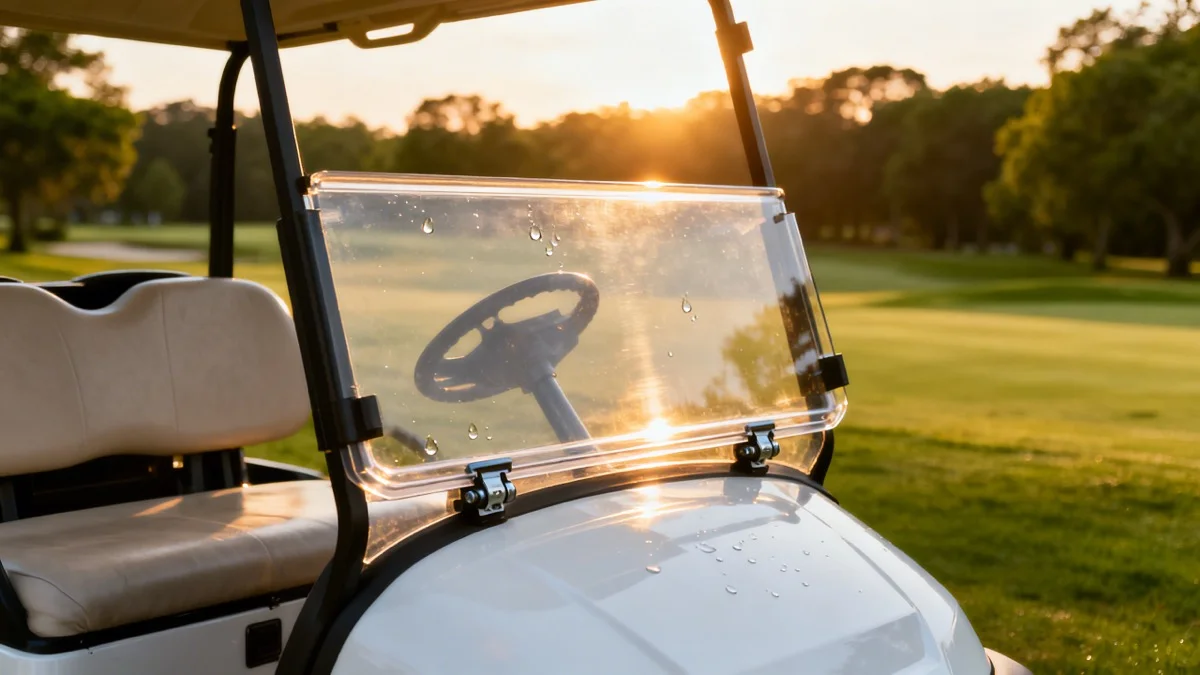
A good windshield transforms your golf cart from a fair-weather toy into something you can actually drive year-round. It blocks wind, rain, bugs, and stray golf balls while keeping you comfortable on the course, in your neighborhood, or on public roads.
But picking the right one isn't straightforward. You're choosing between three different materials, multiple styles, tinted vs. clear, and model-specific fitment that varies across EZGO, Club Car, and Yamaha. Get it wrong and you're stuck with a windshield that doesn't fit, cracks on the first impact, or turns cloudy after six months.
This guide covers everything you need to know: materials compared side by side, fold-down vs. fixed vs. roll-up, brand compatibility, our top picks, street-legal requirements, installation, and maintenance. Whether you're replacing a worn-out windshield or adding one for the first time, you'll find the right option here.
The material your windshield is made from determines its durability, clarity, price, and whether it qualifies for street-legal use. Here's how the three main options stack up:
| Feature | Acrylic | Impact-Modified Acrylic | Polycarbonate |
|---|---|---|---|
| Price | $75 to $130 | $120 to $180 | $150 to $300+ |
| Impact Resistance | Low (can crack/shatter) | High (withstands ball strikes) | Highest (virtually unbreakable) |
| Scratch Resistance | High | Moderate | Low (scratches easily) |
| UV Resistance | Good with coating | Good | Excellent with coating |
| Weight | Light | Moderate | Light |
| Optical Clarity | Excellent | Very good | Very good |
| Street Legal (DOT) | No | Some models | Yes (AS4/AS5 rated) |
| Best For | Casual use, golf courses | All-around protection | Street-legal, off-road |
Acrylic is the most common and affordable windshield material. It offers excellent optical clarity and resists scratches better than polycarbonate. The downside: it can crack or shatter on direct impact from a golf ball, rock, or branch. If you're using your cart mostly on the golf course or around a gated community, acrylic gets the job done at the lowest price point.
Standard acrylic windshields run 3/16 inch thick. They're easy to find for every major cart brand and come in both fold-down and fixed styles.
Impact-modified acrylic is a blend of roughly 70% polycarbonate and 30% acrylic. This gives you the scratch resistance of acrylic with significantly better impact protection. A golf ball won't crack it, and it handles rough terrain much better than pure acrylic.
This is the sweet spot for most golf cart owners. You get a meaningful upgrade in durability without jumping to the premium price of full polycarbonate. Thickness typically runs 1/4 inch, and these windshields are available for most popular cart models.
Polycarbonate is the toughest windshield material you can buy. It's the same material used in bulletproof glass, motorcycle visors, and safety shields. For golf carts, polycarbonate is virtually shatterproof, making it ideal for off-road use, busy golf courses, and any situation where impact protection matters.
The tradeoff is scratch resistance. Polycarbonate scratches far more easily than acrylic, so you need to be careful with cleaning (more on that below). Quality polycarbonate windshields come with hard coatings to help, but they still won't match acrylic's scratch resistance.
Polycarbonate is also required for street-legal golf carts in most states. DOT-rated windshields carry an AS4 or AS5 safety rating stamped directly on the material.
Beyond material, you need to choose a windshield style. Each has clear advantages and tradeoffs:
| Feature | Fold-Down | Fixed (One-Piece) | Roll-Up |
|---|---|---|---|
| Ventilation | Excellent (flip top half down) | None (fully sealed) | Good (rolls up for airflow) |
| Rain Protection | Good (some leaks at hinge) | Best (no seams) | Moderate |
| Durability | Good (hinge is weak point) | Best (no moving parts) | Fair (zipper/Velcro wear) |
| Ease of Use | Simple flip | No adjustment needed | Takes 30+ seconds |
| Price Range | $80 to $180 | $90 to $200 | $60 to $120 |
| Street Legal | Some models | Best option | Rarely |
| Best For | Versatility, most owners | Winter use, rain, LSVs | Budget, warm climates |
Fold-down models are the most popular choice, and for good reason. The top half folds forward on hinges, giving you a fully open front when the weather is nice and full protection when it isn't. This flexibility makes fold-downs ideal for owners who use their carts across different seasons and conditions.
The weak point is the hinge. Cheap plastic hinges degrade in UV light and can crack within a year or two. Look for windshields with UV-stabilized or metal hinge hardware. If a manufacturer doesn't mention hinge quality, that's usually a red flag.
Fixed windshields are a single solid piece with no moving parts. They provide the best weather sealing (no hinge gap for rain to leak through) and the longest lifespan. If you use your cart primarily in cold or wet conditions, or you're building a street-legal LSV, a fixed windshield is the way to go.
The obvious downside: no ventilation. On a hot summer day, a fixed windshield turns your cart into a greenhouse. Many owners pair a fixed windshield with a full enclosure that has zippered sides for airflow.
Roll-up windshields attach with zippers, Velcro, or snaps and roll up when you don't need them. They're the most affordable option and work well in warm climates where you mainly need occasional rain or wind protection. However, they're the least durable style and rarely meet street-legal standards. They tend to yellow and become brittle faster than rigid windshields.
This comes down to how and when you drive:
Choose clear if you:
Choose tinted if you:
Tinted windshields block 50% to 85% of UV rays depending on the tint level. They reduce interior heat, cut glare on sunny days, and give your cart a sleeker look. The downside is reduced visibility at dusk and dawn, and they disqualify your cart from street-legal status in most states.
Golf cart windshields are not universal. Each brand and model requires a windshield designed specifically for its roof struts, body lines, and mounting points. Here's what to look for:
EZGO carts are among the most popular, and windshield options are plentiful:
Club Car models use distinct windshield designs:
Yamaha windshields are grouped by generation:
After researching dozens of options, here are the best windshields for each major golf cart brand. We prioritized build quality, customer reviews, material quality, and value for money.
The ENEKERP windshield stands out with its 5mm polycarbonate construction, making it thicker and tougher than most competitors in this price range. It fits EZGO TXT models from 1994 to current, including the Valor and Freedom variants. The fold-down design uses reinforced hinges, and polycarbonate means you won't worry about golf ball impacts.
At around $80 to $100, it's one of the best values in the EZGO windshield market. That's polycarbonate performance at barely more than acrylic prices.
Price: Around $80 to $100
Check Price on AmazonThe 10L0L windshield for Club Car Precedent, Onward, and Tempo models (2004 and newer) has earned 4.4 stars across 450+ reviews, making it one of the most proven options on the market. It features impact-modified acrylic construction, a clean fold-down design, and straightforward bolt-on installation.
What buyers consistently praise is the fitment. This windshield lines up with Precedent mounting points without the shimming or bending that cheaper alternatives sometimes require.
Price: Around $100 to $120
Check Price on AmazonFinding a quality windshield for the Yamaha Drive2 (2017 and newer) can be tricky since it's a newer platform. The 10L0L polycarbonate fold-down windshield is purpose-built for these carts with model-specific mounting hardware included. Polycarbonate construction handles impacts well, and the fold-down design gives you ventilation options.
Price: Around $90 to $120
Check Price on AmazonMadJax is one of the most respected names in golf cart accessories. Their Precedent windshield uses higher-grade acrylic with better optical clarity than budget alternatives. The hinge hardware is more robust, and the overall fit and finish is a step above. If you want a windshield that looks and feels like an OEM part, MadJax delivers.
Price: Around $130 to $160
Check Price on AmazonFor owners who want the best of both worlds, a vented windshield offers airflow without fully folding down. This US-made windshield for Club Car Precedent and Onward models features a vent section that opens to allow airflow while still providing rain and wind protection. Premium build quality and American manufacturing come at a higher price, but the durability and finish match.
Price: Around $180 to $220
Check Price on AmazonIf you're converting your golf cart to a street-legal LSV, the windshield is one of the required safety components. Requirements vary by state, but here's what most jurisdictions require:
Street-legal windshields cost more than standard options, typically $150 to $300+. You'll also need to budget for a wiper kit ($30 to $80) if your cart doesn't already have one.
Check your state's specific requirements on our golf cart laws page. States like Florida, California, and Texas have detailed LSV equipment standards that go beyond just the windshield.
Most golf cart windshields are designed for DIY installation. If you're comfortable with basic tools, expect the job to take 30 to 60 minutes. Here's the general process:
Remove the old windshield (if replacing): Unscrew the mounting hardware along the roof struts and bottom frame. Save the hardware in case the new windshield doesn't include replacements.
Unpack and inspect: Remove the new windshield from its packaging carefully. Check for cracks, scratches, or defects before mounting. Leave any protective film on until installation is complete.
Test fit: Hold the windshield against the cart's frame without fastening it. Check that the mounting holes align with your cart's existing holes. If drilling new holes, mark the locations with masking tape.
Attach the bottom first: Start by securing the bottom mounting points. Tighten screws just enough to hold the windshield in place but still allow slight adjustment.
Secure the top/sides: Work from the bottom up, attaching side clips and top mounting points. Don't fully tighten anything until all points are connected.
Final tightening: Once everything is aligned, go back and snug all mounting hardware. Don't overtighten, as this can crack the windshield material.
Remove protective film: Peel off any remaining protective film from both sides.
Proper cleaning is the single biggest factor in how long your windshield lasts. Most premature yellowing and hazing comes from using the wrong products.
Light surface scratches can be buffed out with a plastic polish like Novus #2 or Meguiar's PlastX. Apply with a soft cloth using circular motions, then buff with a clean microfiber. For deeper scratches, you may need progressive wet sanding with 800, 1200, and 2000-grit sandpaper followed by polishing.
If your windshield has extensive hazing, deep cracks, or yellowing that won't polish out, it's time for a replacement. Check out our maintenance guide for a full seasonal care schedule.
Even with proper care, windshield issues crop up over time. Here are the most common problems and how to handle them:
Caused by UV damage, improper cleaning products, or age. Mild yellowing can sometimes be restored with a dedicated acrylic polish. If the yellowing has penetrated through the material, replacement is the only fix. Prevention is key: use UV protectant and never clean with ammonia-based products.
Interior fogging happens when warm, moist air hits the cool windshield surface. Solutions include anti-fog sprays designed for plastic windshields, the shaving cream method (apply a thin layer, let sit, wipe clean), and moisture-absorbing packets stored in the cart.
Hinges are the most common failure point on fold-down windshields. UV exposure degrades plastic hinges within one to three years. If your hinges are cracking, you can often buy replacement hinge kits rather than replacing the entire windshield. When buying a new fold-down windshield, check that the hinges are UV-stabilized or metal.
A rattling windshield usually means loose mounting hardware or missing rubber gaskets. Tighten all mounting screws and add foam weatherstripping tape at contact points. If the windshield is warped or doesn't sit flush, it may be the wrong model for your cart.
Still not sure which windshield is right for you? Here's a quick-reference breakdown based on common use cases:
Golf course use only: Standard acrylic fold-down ($75 to $120). You don't need impact resistance, and the fold-down lets you enjoy open air on nice days.
Neighborhood and community driving: Impact-modified acrylic fold-down ($120 to $180). Better durability for daily use, and the fold-down offers flexibility.
Street-legal LSV: DOT-rated polycarbonate fixed windshield ($150 to $300+). Required by law in most states, plus you'll need a wiper kit.
Off-road and rough terrain: Polycarbonate fold-down ($130 to $200). You need impact protection, and polycarbonate handles branches, rocks, and rough conditions. Pair with a lift kit and off-road tires for the full setup.
Hot climate, daytime use: Tinted acrylic or impact-modified fold-down ($90 to $170). The tint cuts glare and heat, making summer driving much more comfortable.
Year-round, all-weather: Fixed one-piece windshield with a full enclosure ($100 to $200 for windshield). Best rain and cold protection with no hinge gaps.
A windshield works best as part of a complete weather protection setup. Here are the accessories that pair well:
For a complete rundown of golf cart accessories, see our accessories guide. If you're doing a full cart customization, plan your windshield choice around your other upgrades.
For casual golf course or neighborhood use, $80 to $130 gets you a quality acrylic or basic polycarbonate windshield that will last several years. If you need impact protection or street-legal compliance, budget $150 to $250. Going cheaper than $60 usually means thin material, plastic hinges, and poor fitment that will cost you more in the long run.
Yes. Most aftermarket windshields include all necessary mounting hardware and drill templates. You'll need to drill mounting holes into your cart's roof struts and frame, but the process is straightforward with basic tools. Just make sure you buy a windshield designed for your specific cart model.
OEM windshields guarantee perfect fitment and typically use higher-grade materials, but they cost 30% to 50% more. Quality aftermarket windshields from brands like 10L0L, MadJax, and ENEKERP offer very good fitment at lower prices. For most owners, aftermarket is the better value. Buy OEM if you have a newer or premium cart and want guaranteed perfect fit.
Vibration noise usually means the windshield isn't fully seated in its mounting points. Check that all screws are snug (not overtightened) and that rubber gaskets or foam tape are in place at every contact point. Fold-down windshields can also buzz at the hinge if the latch isn't fully engaged.
Measure the width between your cart's windshield mounting points (inside edge to inside edge), the height from the bottom rail to the top of the roof opening, and the roof strut length (54 inches for standard, 80 inches for extended). Match these dimensions to the windshield's listed compatibility.
Ready to upgrade your cart? Find local dealers and installation services on our dealer directory or repair services page. For more golf cart guides, reviews, and buying advice, check out our best golf carts and brand comparisons.
Golf Cart Search
Compare top-rated models, read expert reviews, and find the perfect cart for your needs.
Browse Top-Rated Carts
Best golf cart lift kits for EZGO, Club Car, and Yamaha. Compare spindle, A-arm, and drop axle types with pricing, installation tips, and top picks.

Compare the best golf cart chargers for 36V and 48V systems. Covers Club Car, EZGO, and Yamaha with pricing, troubleshooting tips, and top picks.

Find the best golf cart covers for 2, 4, and 6-passenger carts. Compares materials, sizing, and top picks from Formosa, 10L0L, and Classic Accessories.
Get the latest updates on golf cart services, tips, and exclusive offers delivered to your inbox.