
As an Amazon Associate, we earn from qualifying purchases. This helps support our site at no extra cost to you.
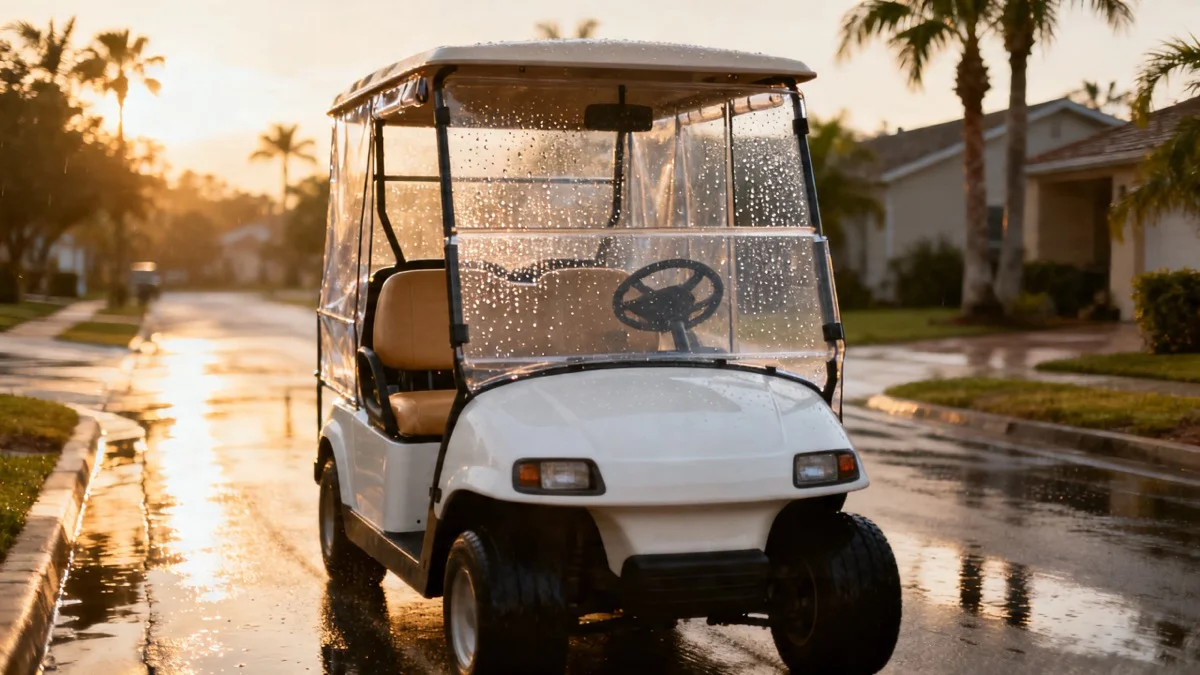
Can you drive a golf cart in the rain? Usually yes, if we are talking about light rain, paved surfaces, and a cart that is actually set up for it. The bigger question is not whether a golf cart can survive a drizzle. It is whether your brakes, visibility, seat condition, charger port, and battery area are ready for wet use without turning a short ride into a repair job.
That is where most owners get tripped up. Rain itself is rarely the whole problem. Wet brakes, slick pavement, standing water, fogged windshields, soaked seat foam, and charging a damp cart cause more trouble than the rain cloud overhead. This guide gives you the practical answer: when rain driving is fine, when it is a bad call, what gets damaged first, and which upgrades actually make a difference on EZGO, Club Car, Yamaha, and newer neighborhood carts.
If your cart regularly pulls neighborhood duty, pair this with our golf cart safety guide, street-legal guide, and the state-by-state golf cart laws hub. If you want local help upgrading or servicing your cart before wet season, use our dealer directory or find a nearby repair shop.
Can You Drive a Golf Cart in the Rain? The Short Answer
Yes, you can drive a golf cart in the rain when all of these are true:
- it is light rain, not a thunderstorm
- you still have clear forward visibility
- the surface is wet, but not flooded
- your brakes and tires are in good shape
- you are willing to slow down well below your normal pace
For most neighborhood and community driving, that means treating 10 to 15 mph as the practical ceiling once the pavement is wet. If the cart is carrying kids, groceries, or rear-facing passengers, I would stay at the bottom of that range. If the surface is glossy, downhill, covered with pine needles, or has fresh puddles, slow down even more.
Where owners go wrong is assuming rain driving is all-or-nothing. It is not. A golf cart that handles light rain fine can still be the wrong vehicle for:
- standing water at intersections or path crossings
- dark public-road driving without full lighting
- steep hills with wet drum brakes
- carts with bald or over-inflated tires
- a fogged windshield or soaked open cabin
That is why a rainy-day golf cart setup is less about bravery and more about margin. If the cart cannot stop confidently, shed water, and stay dry enough to charge safely later, the weather is already beyond what the setup should handle.
What Rain Actually Damages on a Golf Cart
The parts that suffer first are usually not the ones new owners worry about.
Wet brakes and slick tires change the cart before anything electrical fails
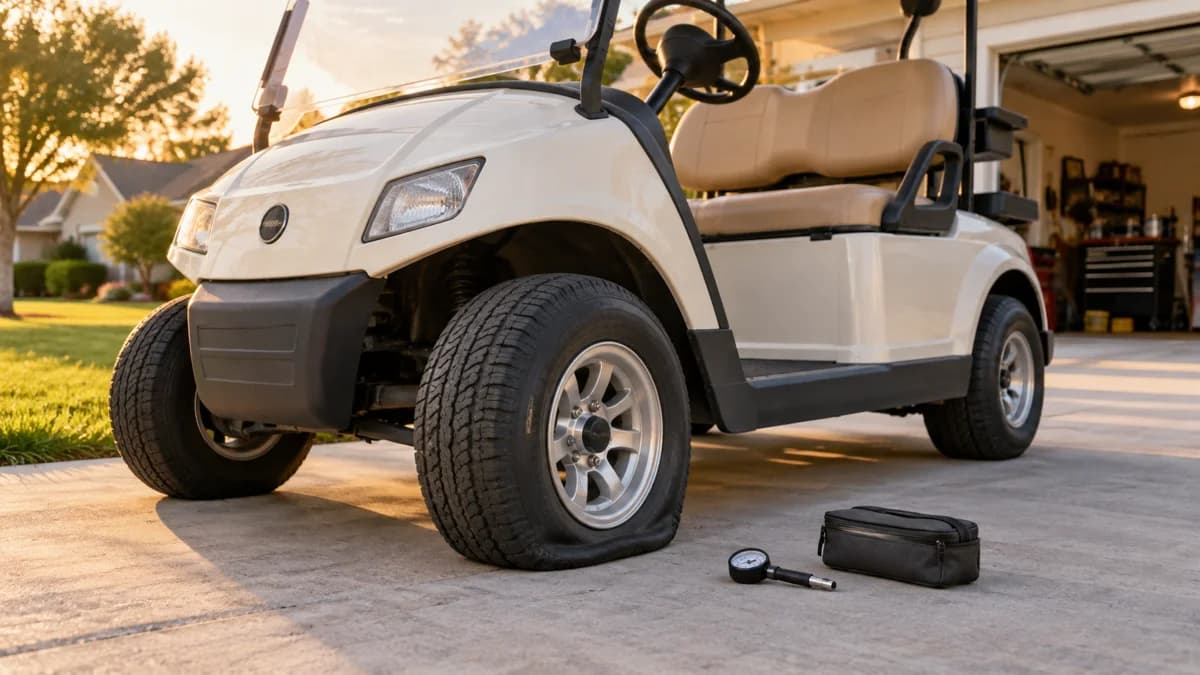
Most personal golf carts still rely on rear drum brakes or simple mechanical setups. Those brakes still work in the rain, but they do not feel the same until the friction surfaces dry out. Add a little downhill grade, passenger weight, or worn tread, and stopping distance stretches fast.
That is why wet-weather golf cart safety starts with two unglamorous checks:
- brake condition
- tire condition and pressure
If the cart already pulls, squeals, or feels soft in dry weather, rain makes it more obvious. Our maintenance guide and brake guide are the right next reads if your cart has any doubt here.
Seats and foam can get expensive if they stay wet
A lot of carts survive the rain mechanically, then get ugly and musty because the seats keep soaking up water. That is especially common on carts parked outside in Florida, South Carolina, and Texas, where warm humidity turns one wet ride into mildew inside the seat foam.
The money damage is usually cosmetic first:
- faded or split vinyl
- mildew smell trapped in foam
- soft, sagging seat bottoms
- rusty staples or seat hardware
Replacing seat covers can be a simple $30 to $80 fix, but full reupholstery usually costs a lot more. If your cart already lives outdoors, protecting the seats is one of the cheapest wins you can buy.
Battery areas, terminals, and charger ports hate trapped moisture
This is where electric carts separate into two groups.
Older lead-acid carts are more vulnerable because moisture around the battery tray, cable ends, and vented battery tops accelerates corrosion. Newer sealed lithium packs are better protected, but that does not make the whole cart waterproof. The charger receptacle, exposed connectors, and anything sitting under the seat can still get wet.
Club Car even calls out one advantage on newer Onward lithium models: the battery management system is housed in a self-contained, water-tight metal battery enclosure. That helps, but it still does not mean you should splash through pooled water or plug in the cart while the charge port is damp.
If you have ever dealt with a flaky charger connection, see our charging-port problem guide and battery maintenance guide. Those issues show up faster on carts that live outside.
Steel hardware and frames corrode faster than owners expect
Not every cart handles repeated wet use the same way. Club Car has a long-standing advantage with aluminum frames. Many other carts, especially value-priced models and older steel-frame designs, need more attention if they see coastal moisture, wet grass, and road spray all season.
If your cart lives near the coast, in a humid planned community, or outside year-round, rain is only part of the corrosion story. Salt air and trapped moisture are the bigger long-term problem. That is why our rust-prevention guide matters just as much as this rain guide for buyers in beach and lake markets.
How to Drive a Golf Cart Safely in the Rain
The safest rainy-day technique is boring on purpose.
Slow down earlier than you think you need to
Rain changes braking and steering before it causes obvious drama. On dry pavement, a golf cart can feel forgiving enough that drivers get casual with turns and late braking. In the rain, the same move feels sloppy immediately.
Your wet-weather checklist should be:
- Brake earlier.
- Turn more gently.
- Leave more room to the cart or car ahead.
- Stay off painted lines, leaves, gravel, and muddy edges.
If your cart is lifted or running wider aftermarket tires, be even more conservative. The same lift kit and bigger tire setup that looks good in a driveway can feel busier and less planted on wet pavement.
Keep the windshield clear or stop driving
A bad golf cart rain setup usually fails on visibility before traction. Water beads, plastic haze, fogging, and low light stack together fast on fold-down windshields. If you are peering through a cloudy plastic screen while guessing at puddle depth, the ride is already not worth it.
That is one reason a proper windshield matters even if you do not care about bugs or cold air. On specific carts like the TXT, fitment matters just as much as the material itself. Our EZGO TXT windshield replacement guide covers the older-versus-newer split that causes most buying mistakes.
Respect wet public roads more than wet private paths
Driving across a wet cart path inside a golf community is one thing. Mixing with traffic, parked cars, cyclists, and slick intersections on public roads is another. If the route includes roads where you care about registration, insurance, and equipment compliance, rain should make you more conservative, not more casual.
Use the registration-by-state guide, the insurance hub, and high-traffic state pages like Florida golf cart laws and South Carolina golf cart laws before you assume your setup is road-ready in wet weather.
When Rain Means Park the Cart
The right call is sometimes not to drive at all.
Do not drive through standing water
This is the clearest no-go signal. A shallow sheen across pavement is one thing. Water deep enough that you cannot judge the road surface, curb edge, or drain opening is another. Once the water reaches the underside of the cart, the risk shifts from inconvenience to preventable damage.
Standing water creates problems fast:
- brakes stay wet longer
- splash reaches more wiring and connectors
- mud and debris get thrown into the battery and underbody area
- you stop being able to judge traction
If the route includes puddles deep enough to make you wonder, park the cart and wait it out.
Do not drive in lightning or storm-force rain
A golf cart is not weather shelter. If there is lightning, heavy gusting wind, or rain strong enough to beat visibility down to a guess, the answer is no. This is especially true for carts used around families, pets, and rear-facing passengers.
Do not drive if the cart is not equipped for rain in the first place
I would not take a bare open cart into regular wet-weather use if it has:
- no windshield
- weak headlights or no headlights
- slick or old tires
- poor seat condition
- a battery area that already shows corrosion
That is not because the cart cannot move. It is because rain exposes every maintenance shortcut at once.
Electric vs Gas Golf Carts in Wet Weather
The short version is simple: neither type is thrilled about soaking conditions, and both can handle light rain better than people think.
| Topic | Electric cart | Gas cart |
|---|---|---|
| Light rain use | Usually fine | Usually fine |
| Biggest weak point | Wet terminals, charge port, battery area | Wet electricals, air-side engine components, storage neglect |
| Post-rain priority | Dry before charging | Dry before long outdoor storage |
| Best fit for wet climates | Sealed lithium plus good cover or enclosure | Good if maintained, but not immune |
| What both still need | Good brakes, tires, windshield, dry storage | Good brakes, tires, windshield, dry storage |
If you are choosing between electric and gas for broader ownership reasons, the bigger comparison still lives in our electric vs gas guide. For rain specifically, the difference is smaller than people expect. The real separator is condition and setup, not fuel type alone.
Best Gear for Rainy Golf Cart Use
This is the part that actually changes rainy-day ownership.
Best overall upgrade for staying dry: Xoxocos golf cart enclosure
If your goal is to actually use the cart in light rain instead of merely surviving it, an enclosure matters more than almost any other accessory. It keeps your torso, seats, and battery area drier, blocks side spray, and makes short neighborhood trips realistic in shoulder-season weather.
The Xoxocos enclosure is the best fit here because it is already integrated naturally across the site for wet-weather use, and the price stays in the range most owners will actually pay.
Typical price: about $80 to $120
Best for: neighborhood carts, campground carts, shoulder-season use, rainy community errands
If you want the broader category breakdown first, our full golf cart enclosure guide compares soft enclosures, track-style setups, and long-term durability.
Best visibility upgrade for EZGO TXT owners: ENEKERP fold-down windshield
For EZGO TXT owners who need better rain visibility and wind protection without jumping straight into a full street-legal build, the ENEKERP fold-down windshield is still one of the more practical buys in the category. It also fits the topic naturally because rain safety is often a visibility problem before it is anything else.
Typical price: around $80 to $100
Best for: older TXT carts, neighborhood use, drizzle, cool-weather driving
If you are running an EZGO TXT and need year-specific fitment help, use the dedicated TXT windshield guide.
Best low-cost upgrade for damp seats: Coivy washable seat cover
Rain does not need to wreck your seats to become annoying. If your cart lives outside or gets used for quick wet errands, a washable seat cover is one of the cheapest upgrades that actually changes ownership. It helps with damp shorts, sunscreen, dirty clothes, and the mildew cycle that starts when wet foam never really dries.
Typical price: around $30
Best for: carts parked outdoors, family carts, beach and lake markets, older vinyl seats
For a deeper fitment and material breakdown, read our seat covers guide.
Quick rain-gear cost table
| Upgrade | What it solves | Typical cost |
|---|---|---|
| Windshield | Better visibility, less direct rain and wind | $80 to $180 |
| Driveable enclosure | Keeps riders and cabin much drier | $80 to $300 |
| Seat cover | Protects vinyl and reduces mildew headaches | $30 to $80 |
| Storage cover | Helps if the cart is parked outside | $30 to $150 |
That is why I would usually spend money in this order:
- windshield
- enclosure
- seat protection
- storage cover if the cart lives outside
What to Do Right After Driving in Rain
This is the part that saves money.
Dry the cart before you forget
After a wet ride:
- Park under cover if possible.
- Wipe the seats, dash, steering wheel, and roof supports.
- Lift the seat and check the battery or storage area for trapped water.
- Let the brakes dry out with a short, gentle roll if you still need to reposition the cart.
- Leave the cart open long enough for moisture to escape before covering it.
If you use a garage storage setup, this part gets much easier. A covered parking spot with airflow is worth more than a lot of flashy accessories.
Check the battery and charging area before plugging in
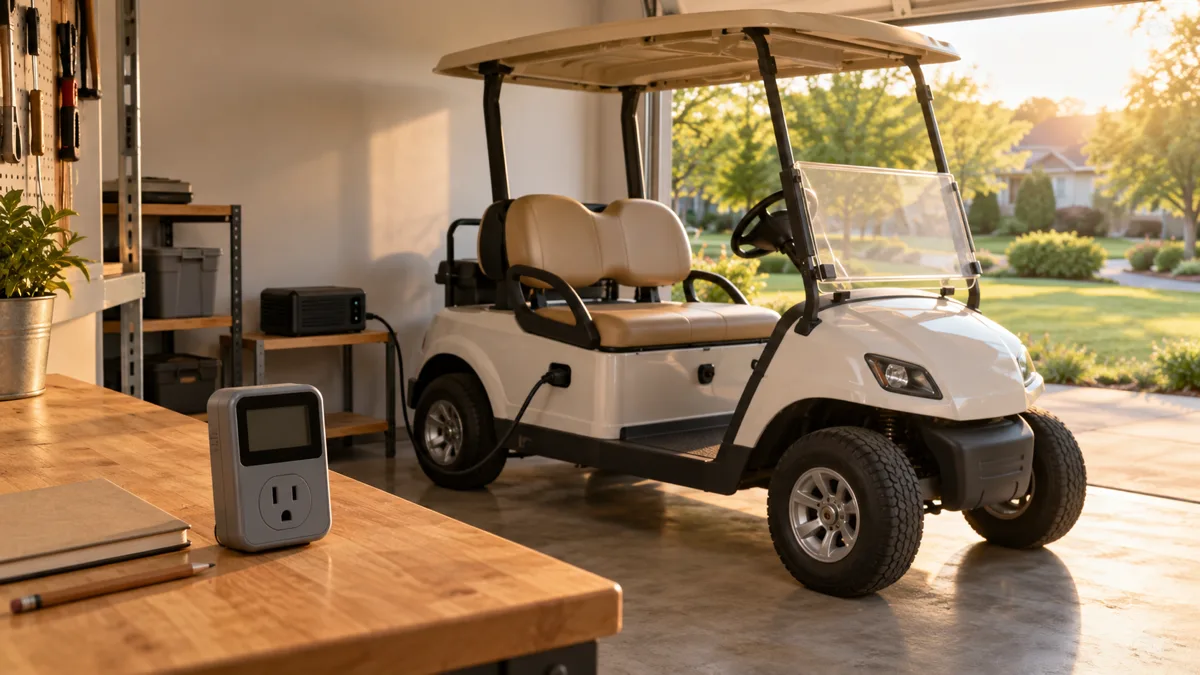
On electric carts, this is the non-negotiable step. Make sure the charge port and visible cable ends are dry. If the cart was driven through spray or sat in heavy rain, inspect the tray area under the seat before you reach for the charger.
If your cart has a history of charging quirks, do not assume the weather is unrelated. Moisture accelerates marginal connector problems. That is exactly where our charging-port diagnosis guide becomes useful.
Keep an eye on corrosion after repeated wet use
If you drive in rain often, add this to your monthly routine:
- inspect battery terminals
- inspect seat hardware and staples
- inspect exposed steel brackets
- check for mildew smell or damp foam
That overlaps heavily with the routines in our maintenance guide and winter storage guide, even if you live in a warm-weather state.
Can You Leave a Golf Cart in the Rain Overnight?
Once in a while, yes. As a habit, no.
One forgotten night outside is usually not catastrophic. The bigger issue is repetition. If a cart gets rained on, stays damp, then gets parked outside again the next day, the damage becomes cumulative:
- more seat wear
- more mildew
- more corrosion
- more charger-port trouble
- faster aging on switches and plastic trim
That is why buyers in outdoor-living markets should think about storage at the same time they think about rain driving. If your cart lives outside all year, this guide should be paired with our covers guide, rust-prevention guide, and best carts for beach towns.
Can You Drive a Golf Cart in the Rain on Public Roads?
You can, but the standard should be much higher than for a private path or golf course.
Once you are on public roads, rain stops being a comfort problem and becomes a legal-and-safety problem. You need to think about:
- clear visibility
- lights and reflectors
- mirrors
- insurance
- local registration and route rules
If your cart is already operating like a neighborhood vehicle, check the insurance hub, state pages like Florida golf cart insurance, and the broader street-legal conversion guide. On wet public roads, the bar should be closer to LSV thinking than casual golf-cart thinking.
That is also where soft, contextual gear advice matters: a windshield that is merely tolerable on a cart path can feel terrible in road spray at dusk. Rain is where weak setups reveal themselves.
My Call on Golf Carts and Rain
If the rain is light, the surface is not flooded, and the cart has a windshield, decent tires, and a driver willing to slow down, a golf cart can usually handle the trip. If the route includes standing water, thunder, dark public roads, wet charging afterward, or a cart that already has maintenance question marks, I would park it.
Rain does not destroy golf carts by magic. Neglect does. Most wet-weather damage comes from letting moisture sit, driving a bare cart harder than the setup deserves, or plugging in before the cart has dried out.
If you are still shopping, use the best golf carts page, best brands guide, and dealer directory to compare carts that make rainy-weather ownership easier from day one.
Frequently Asked Questions
Can you drive a golf cart in the rain?
Yes, in light rain, as long as visibility is still good, the cart is not entering standing water, and you slow down enough that the brakes and tires stay predictable. Rain becomes a bad idea when you add hills, darkness, flooded pavement, or a cart that is not maintained.
Can electric golf carts get wet?
They can tolerate normal rain exposure, but they are not waterproof vehicles. Light rain is one thing. Repeated soaking, pooled water under the seat, and wet charging are what create corrosion and electrical headaches. Sealed lithium carts are better protected than older flooded lead-acid setups, but exposed connectors still matter.
Can you charge a golf cart after it gets wet?
Only after it dries. Check the charger receptacle, visible terminals, and the battery area under the seat before plugging in. If anything is damp, wait. Charging a wet cart is the easiest mistake to avoid and one of the dumbest ways to damage a charger or connector.
Can you leave a golf cart in the rain overnight?
Sometimes, yes. Repeatedly, no. A single forgotten night outside usually is not catastrophic, but routine rain exposure ages seats, connectors, hardware, and switches much faster. If the cart lives outdoors, use a cover and stay ahead of corrosion and seat care.
Do golf cart brakes work normally in the rain?
Not exactly. They still work, but they are less sharp until they dry out. Wet golf carts need more following distance and earlier braking, especially downhill or with a full passenger load. If your brakes already feel weak in dry weather, rain is the wrong time to ignore it.
What upgrades help most with rainy golf cart use?
The most useful order is windshield first, enclosure second, seat protection third. A windshield helps immediately with spray and visibility. An enclosure makes light-rain trips much more realistic. A washable or waterproof seat cover keeps repeated damp use from ruining the interior.
Is gas or electric better in the rain?
Neither gets a free pass. Both can handle light rain if the cart is maintained. Electric carts are more sensitive to wet battery trays, charge ports, and terminals. Gas carts avoid the charging issue but still suffer from wet brakes, corrosion, and outdoor neglect. Condition matters more than fuel type.
How much does golf cart rain protection cost?
A practical setup usually runs from about $110 to $380 total. That can mean a windshield for $80 to $180, a driveable enclosure for $80 to $300, and a seat cover for $30 to $80. Outdoor storage protection adds another $30 to $150 if you need a cover too.
Do you need windshield wipers on a golf cart in the rain?
On private property, not usually. On public roads and street-legal setups, wipers often become part of the equipment conversation, especially when local rules treat the cart more like an LSV than a course cart. Always check the route and local rules before assuming a simple plastic windshield is enough.
Can golf cart batteries get wet?
They can get damp, but they should not sit in standing water or be charged wet. Flooded lead-acid batteries are the most vulnerable because moisture around caps, cables, and trays accelerates corrosion. Sealed lithium systems hold up better, but they still need dry connectors and reasonable protection.
Should you drive a golf cart during a thunderstorm?
No. If there is lightning, strong wind, or visibility bad enough that you are guessing at traction and stopping room, park it and wait. A golf cart is too exposed to justify pretending a real storm is just a little bad weather.
Golf Cart Search
Find the Best Golf Carts of 2026
Compare top-rated models, read expert reviews, and find the perfect cart for your needs.