Solenoid, Contactor, and No-Move Fitment
Golf Cart Solenoids Finder
Find golf cart solenoids, 36V and 48V contactors, E-Z-GO TXT resistor and diode kits, Club Car DS and Precedent solenoids, Yamaha G-series parts, gas starter solenoids, cables, meters, and corrosion tools by exact cart platform and symptom.
Start with voltage and drivetrain, then confirm whether the symptom is actually the solenoid or a weak pack, hot cable, key switch, pedal switch, MCOR, controller, or starter-generator problem.
As an Amazon Associate, we earn from qualifying purchases. We use Amazon links for common stock solenoids, diagnostic tools, cable cleanup, and corrosion supplies where online buying can make sense.
Start with the electrical path
Golf Cart Solenoids Directory by Setup
Most solenoid mistakes start with the wrong voltage, wrong drivetrain, wrong terminal layout, or a symptom that was actually caused by batteries or cables.
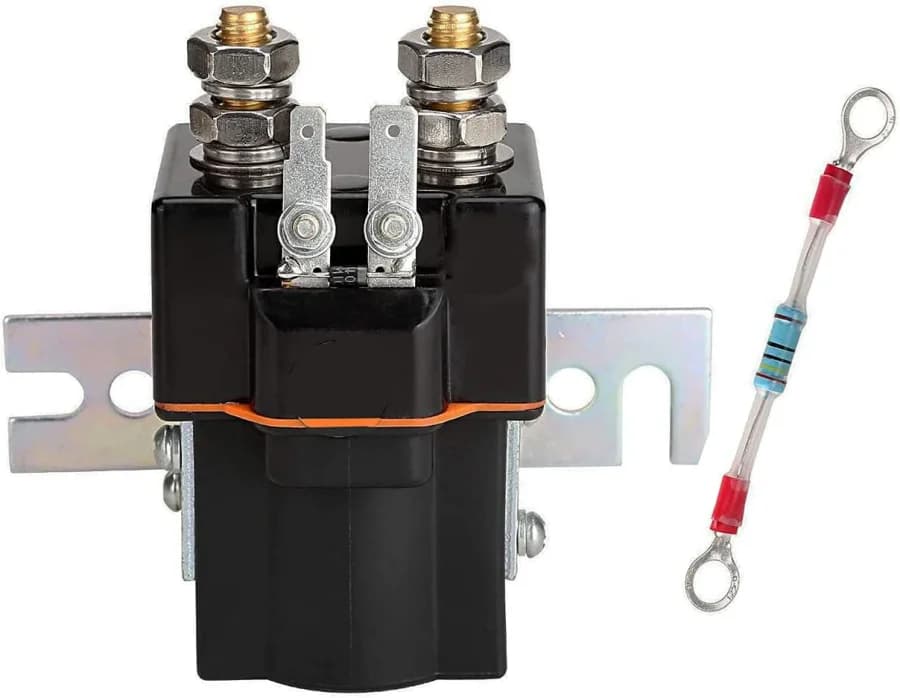
Electric Main Solenoids
The main solenoid or contactor connects the battery pack to the drive circuit. Match voltage, coil trigger, terminal orientation, mounting bracket, and resistor or diode hardware.
Buying path
Buy online only after batteries, cable ends, and trigger voltage are checked. A click with no movement is not enough proof by itself.
E-Z-GO TXT, Medalist, and Marathon
Older 36V TXT, Medalist, and Marathon carts can need a resistor and diode kit. DCS, PDS, RXV, 48V TXT, ELiTE lithium, and gas carts are separate cases.
Buying path
Use model-year and controller-type language before ordering. Pause when the old solenoid wiring does not match the listing photos.
Club Car DS, Precedent, Tempo, and Onward
Club Car electric fitment depends on DS versus Precedent-style platforms, 36V or 48V pack, OBC or ERIC charging era, MCOR behavior, and controller symptoms.
Buying path
Use online stock solenoids only when the voltage and terminal layout are explicit. Diagnose MCOR, batteries, cables, and controller input first.
Yamaha G-Series, Drive/G29, and Drive2
Yamaha solenoid fitment changes by G-series generation, Drive/G29, Drive2, gas or electric drivetrain, 36V or 48V system, and controller type.
Buying path
Buy online when G22, G29, Drive, or Drive2 fitment is clearly named. Use a shop for AC-drive, lithium, or controller fault symptoms.
Gas Starter Solenoids
Gas carts use starter solenoids, not electric drive contactors. Match engine family, starter-generator circuit, small terminals, large posts, and OEM cross-reference.
Buying path
Online is reasonable after checking the 12V battery, grounds, key/pedal microswitch, starter-generator, and cable condition.
Testing Tools, Cables, and Corrosion
A weak pack or bad cable can mimic a bad solenoid. Check voltage, continuity, cable ends, corrosion, and voltage drop before replacing parts.
Buying path
A multimeter, terminal brush, cleaner, and dielectric grease are safer first buys than guessing at high-current electrical parts.
Shop Common Solenoid and Diagnostic Paths
Use these as shopping starting points after diagnosis. A solenoid is high-current hardware, so fitment and cable condition matter more than the cheapest listing.
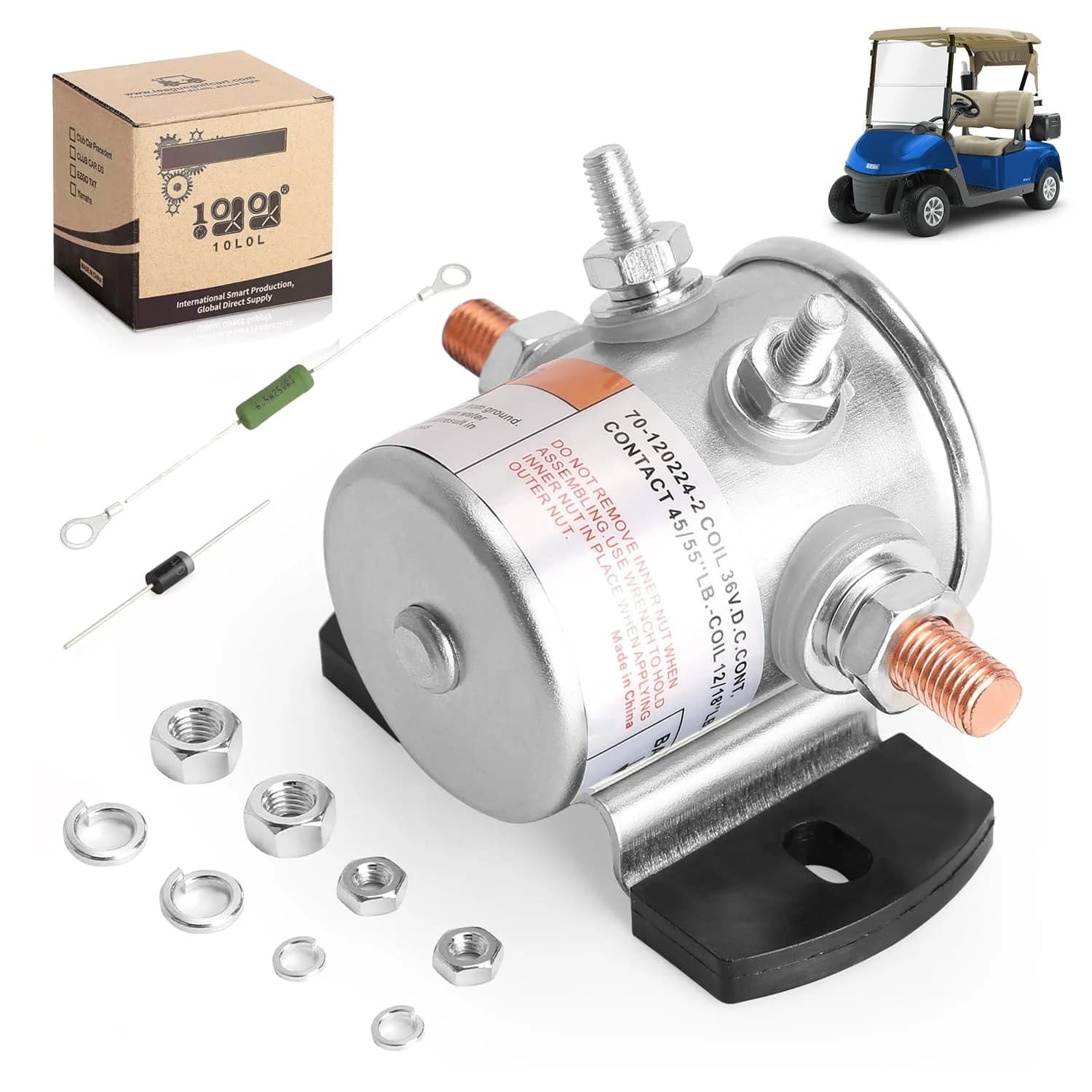
E-Z-GO 36V solenoid
10L0L 36V E-Z-GO solenoid kit with resistor and diode
Older 36V TXT, Medalist, and Marathon electric carts when the controller system and hardware match
Do not buy for 48V TXT, RXV, gas, DCS/PDS edge cases, or carts where the old resistor and diode setup is unknown.
Club Car 48V solenoid
48V 4-terminal solenoid for Club Car DS and Precedent
Stock-style 48V Club Car DS and Precedent carts after batteries, cables, MCOR, and controller checks
Match voltage, terminal layout, coil rating, OEM number, and resistor or diode requirements before replacing.
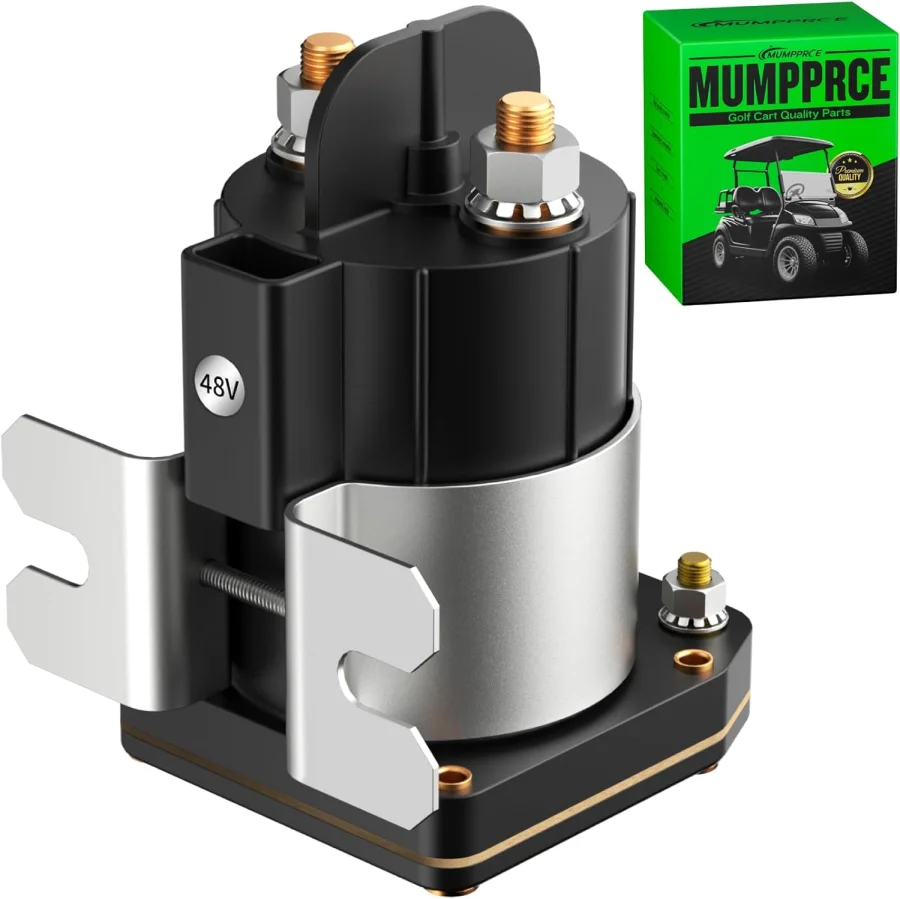
Yamaha 48V solenoid
Heavy-duty 48V solenoid for Yamaha G22/G29
Electric Yamaha G22/G29 carts with diagnosed solenoid or contactor failure
Match electric-only fitment, voltage, terminal layout, bracket, OEM number, and controller system.
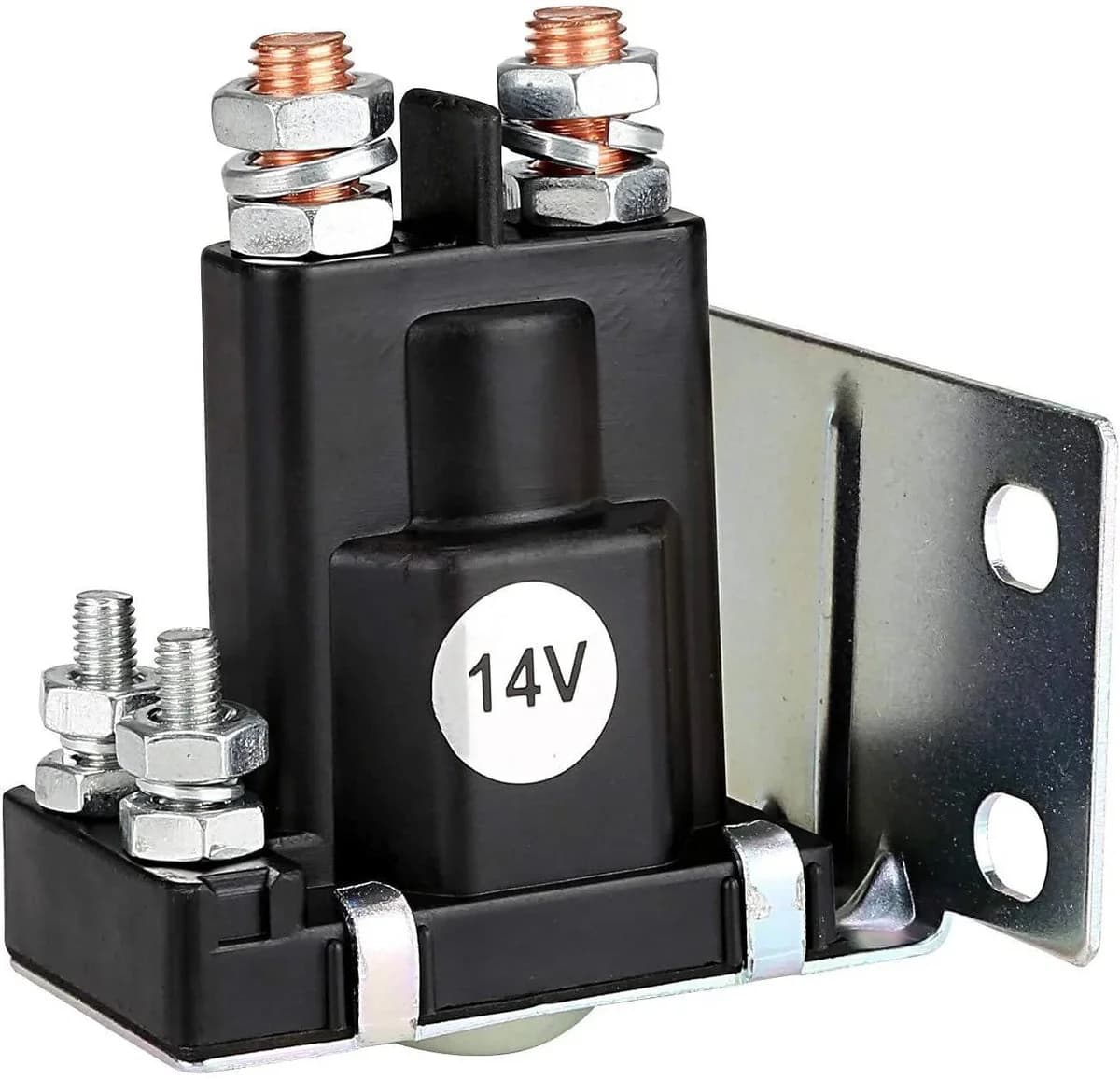
Gas starter solenoid
E-Z-GO TXT gas 14V starter solenoid listings
Gas TXT, Medalist, ST, and compatible starter-generator circuits after 12V battery and cable checks
Gas starter solenoids are not electric drive solenoids. Match OEM cross-reference, terminals, bracket, and year range.
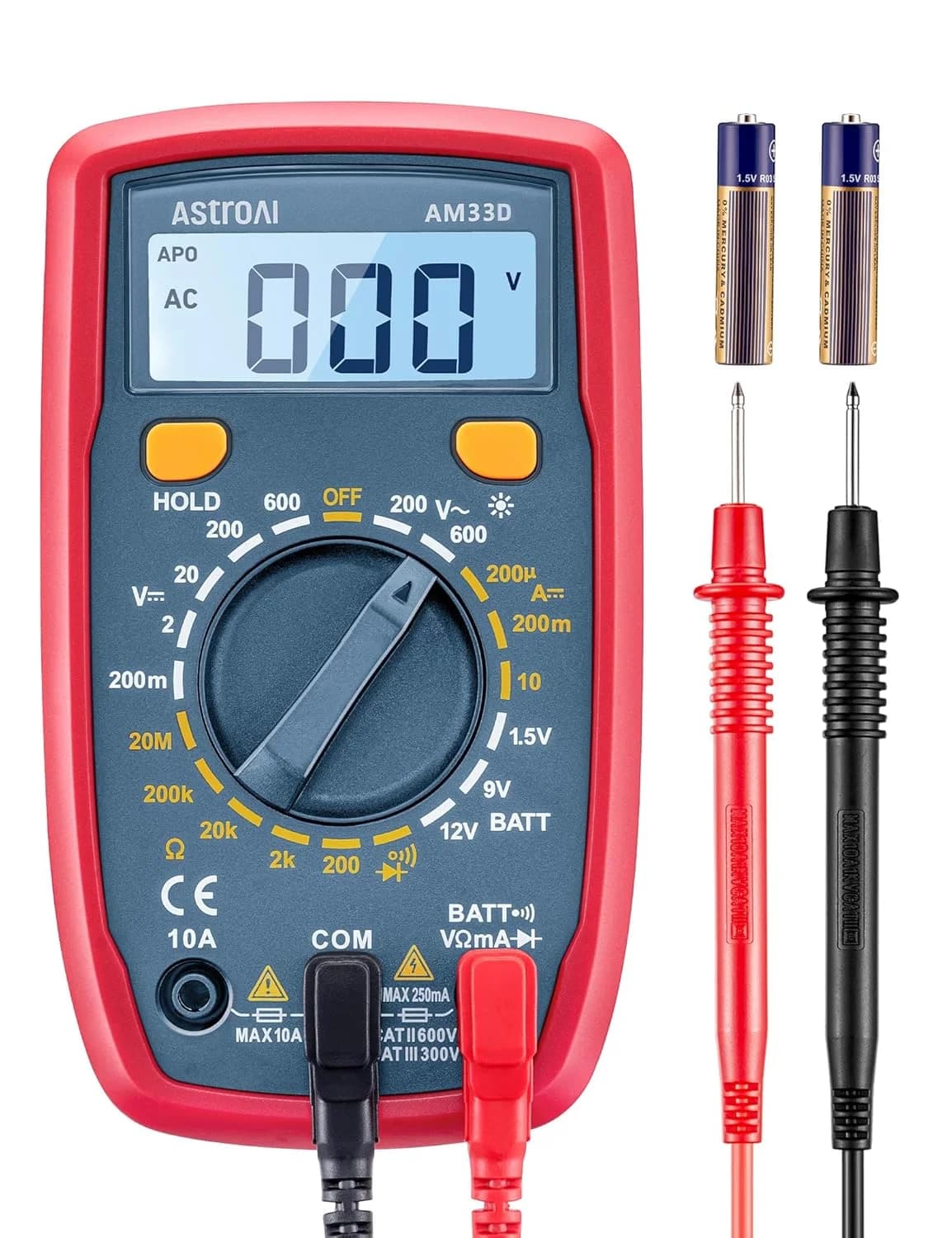
Diagnostic tool
AstroAI digital multimeter
Checking pack voltage, individual batteries, small trigger terminals, continuity, and accessory wiring
Use before replacing a solenoid, controller, charger, battery, key switch, or cable based on symptoms alone.
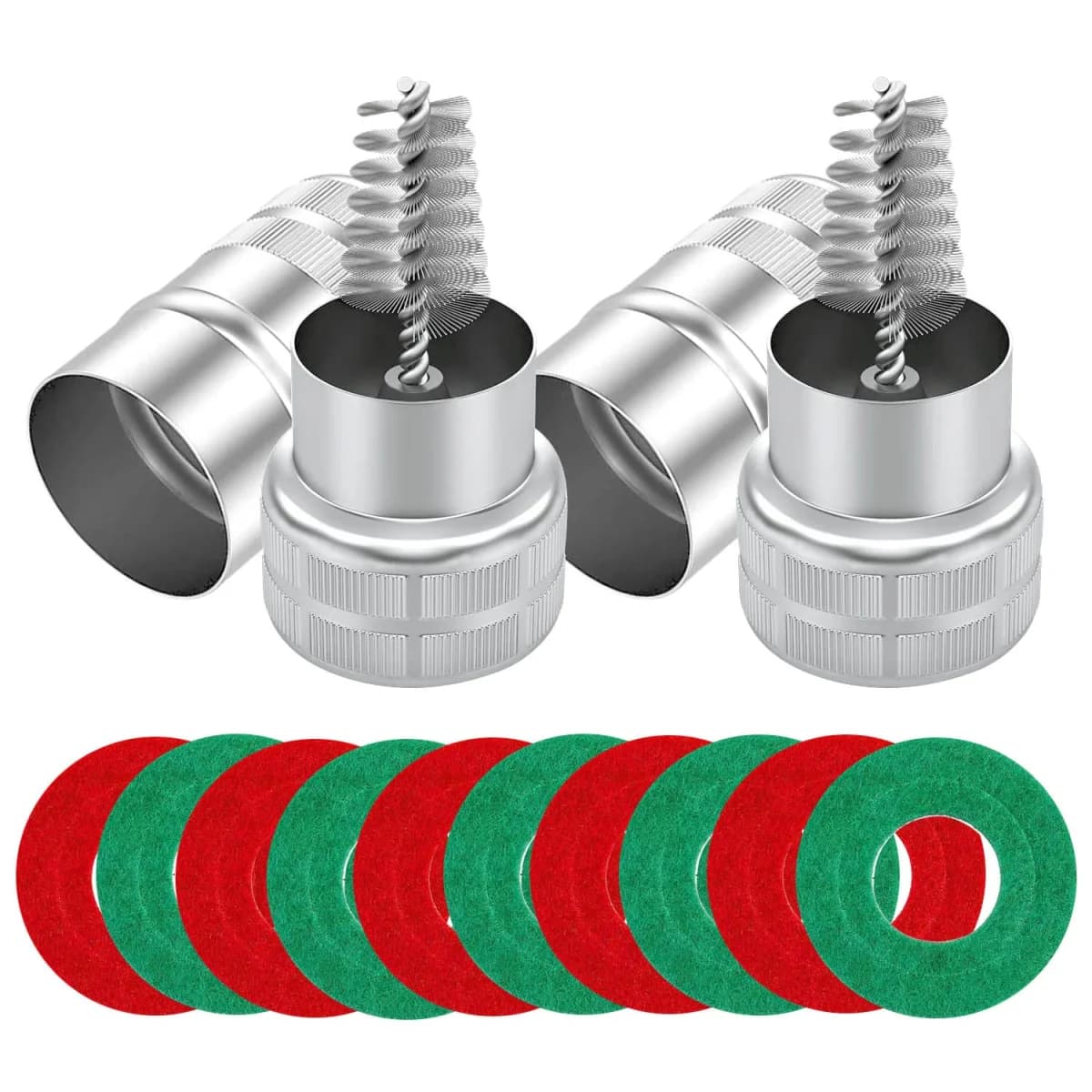
Cable cleanup
Battery terminal cleaner kit
Cleaning battery posts and cable ends that can mimic solenoid failure
Disconnect safely first. Replace cables if lugs are loose, burnt, split, or heavily corroded.
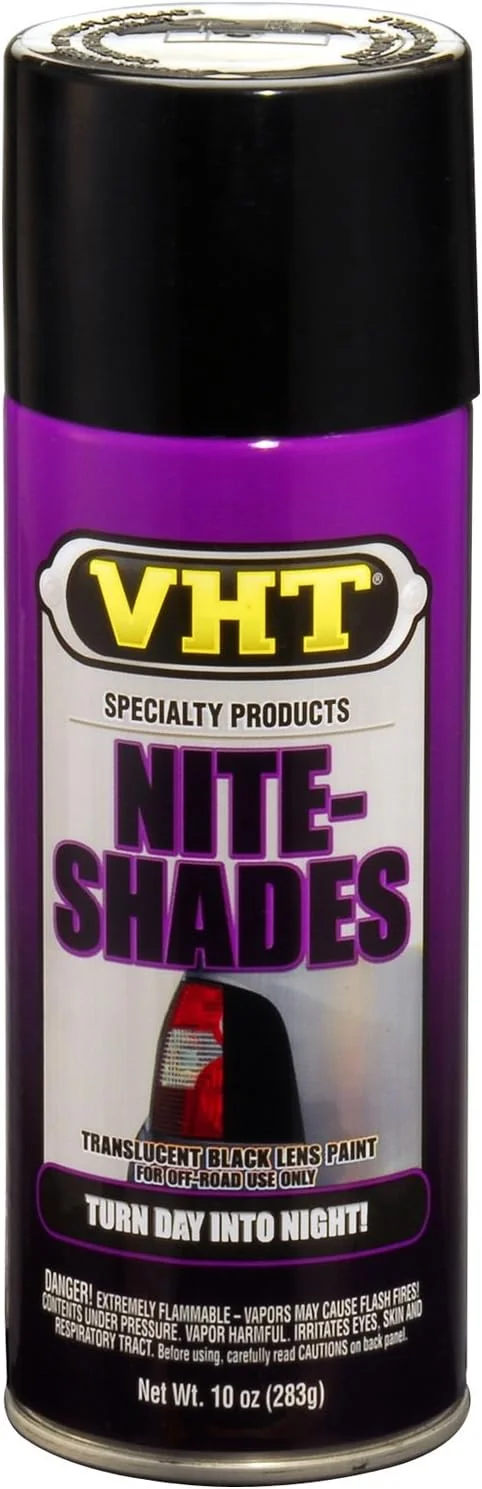
Battery cleaner
CRC battery cleaner
Cleaning lead-acid battery terminals, trays, and cable ends before diagnosing voltage drop
Use on battery corrosion, not as a cure for damaged lugs, melted insulation, or loose crimped cable ends.
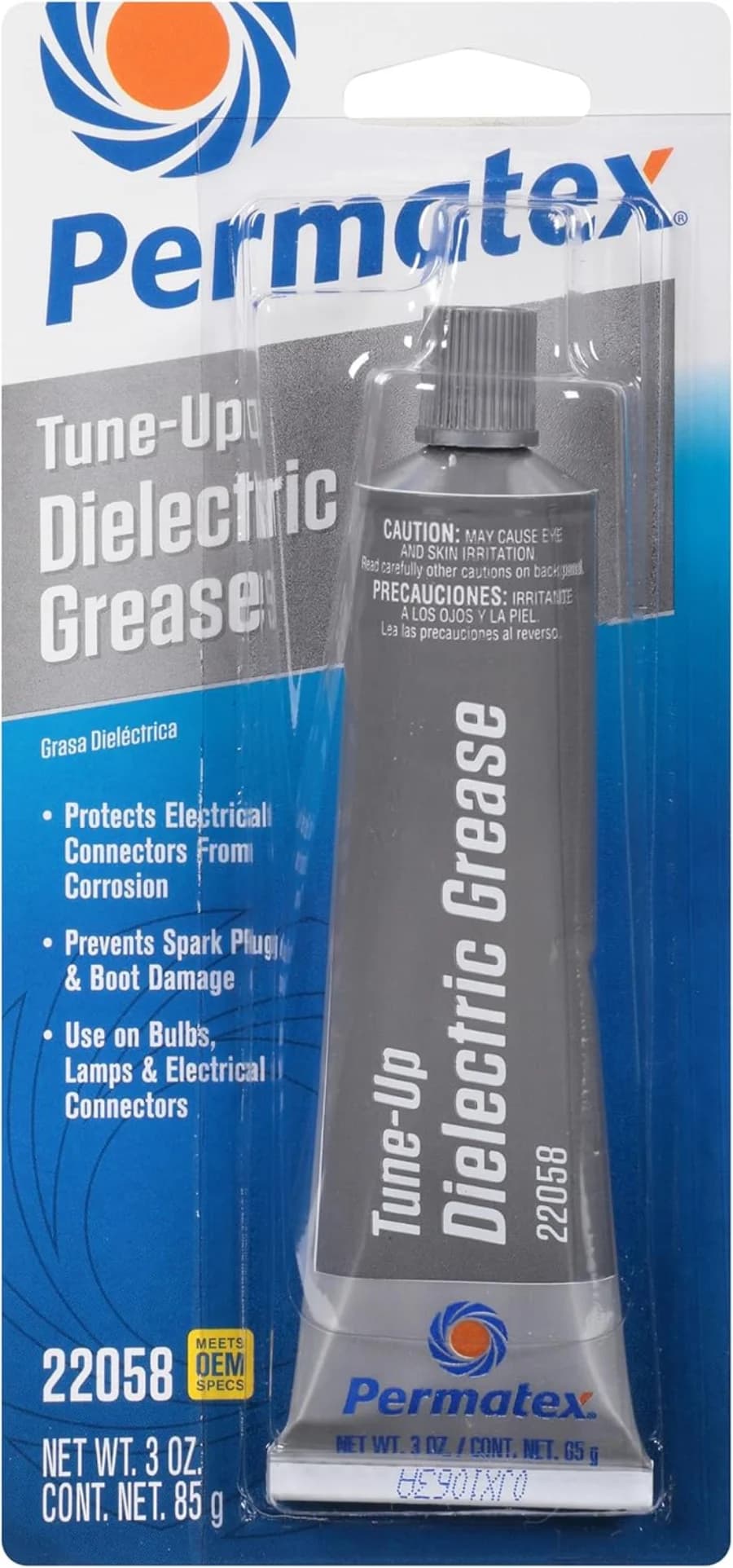
Electrical protection
Permatex dielectric grease
Protecting clean connector boots, small terminals, and service points from moisture after repairs
Apply lightly after the connection is clean and tight. It will not repair a poor high-current connection.
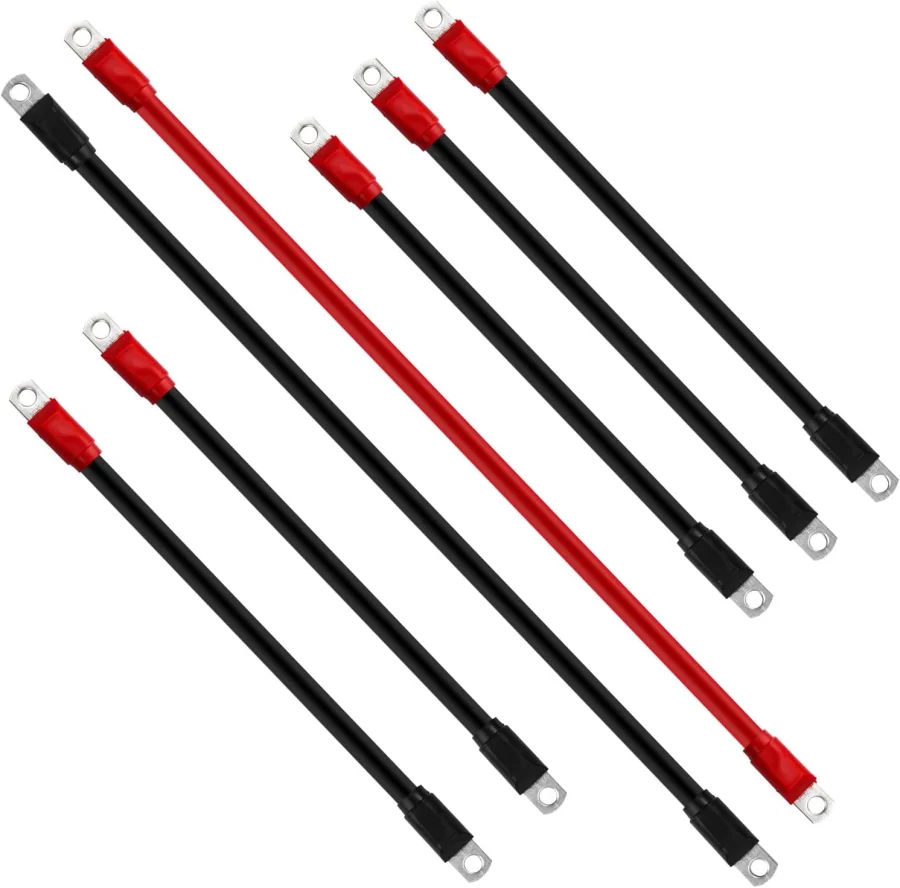
Battery cables
Seven-piece 4-gauge golf cart battery cable kit
Replacing worn cables that create heat, voltage drop, and false solenoid symptoms
This is not model-specific. Match cable count, exact lengths, gauge, terminal size, and pack layout before ordering.
Where to Buy Golf Cart Solenoids
Solenoids are inexpensive enough that many owners buy them too quickly. The better path is to test first, then buy exact-fit hardware.
Buy online when fitment is exact
Stock solenoids, resistor and diode kits, meters, cleaners, and cable kits are reasonable online buys when the listing names your cart and voltage.
Test before replacing parts
A click, chatter, or no-click symptom can still be batteries, cables, key switch, pedal switch, MCOR, controller, or charger state.
Use a shop for repeat failures
Repeated solenoid failures usually point to voltage drop, cable heat, controller upgrades, wrong coil rating, or deeper wiring problems.
Solenoid Fitment Checklist
Do this before you remove wires. Photos, labels, and voltage checks prevent most wrong-part and wrong-wire failures.
Identify the cart
Confirm brand, model family, year range, serial clues, gas or electric drivetrain, and whether the cart has stock or upgraded electronics.
Match voltage and coil
Separate 36V electric, 48V electric, 72V builds, and 12V or 14V gas starter solenoids before comparing listings.
Compare terminals
Check large post count, small terminals, bracket direction, cable reach, resistor, diode, and whether the original wiring has been modified.
Test the symptom
Measure pack voltage, trigger signal, and output voltage before treating a click, buzz, or silence as proof of solenoid failure.
Golf Cart Solenoid Package Quick Chart
Use this to separate stock replacements, gas starter circuits, high-amp builds, and diagnostic-first repairs.
Parts
36V solenoid, resistor, diode, mounting bracket, correct hardwareBest use
Older TXT, Medalist, and Marathon electric cartsWatchout
DCS, PDS, RXV, 48V, and gas carts can need different partsParts
48V 4-terminal solenoid, matching coil, cable inspectionBest use
DS and Precedent-style electric carts after testingWatchout
MCOR and controller faults can mimic solenoid failureParts
48V Yamaha solenoid, OEM cross-reference, bracket matchBest use
G22/G29/Drive electric carts with known-fit hardwareWatchout
Drive2, AC-drive, and lithium systems need extra confirmationParts
12V or 14V starter solenoid, starter cables, key/pedal signalBest use
Gas carts that click but do not crankWatchout
Starter-generator or ground faults can be downstreamParts
Continuous-duty contactor, heavier cables, controller-rated hardwareBest use
Alltrax, Navitas, motor upgrades, and speed buildsWatchout
Stock solenoids can overheat on upgraded cartsParts
Multimeter, terminal brush, cleaner, dielectric grease, cable checksBest use
Clicks, chatter, intermittent no-move, or post-storage corrosionWatchout
Cleaning does not fix burnt lugs or undersized cablesSolenoid Fitment by Brand
Brand alone is not enough. Solenoids split by drivetrain, voltage, controller system, terminal layout, and supporting hardware.
E-Z-GO TXT, Medalist, Marathon, RXV, and gas TXT
Older 36V TXT-style carts often use resistor and diode kits, while RXV, 48V TXT, ELiTE lithium, and gas starter circuits are separate paths
Confirm TXT versus RXV, 36V versus 48V, DCS/PDS/non-DCS language, resistor and diode hardware, gas starter circuit, and whether the cart has controller upgrades.
Club Car DS, Precedent, Tempo, and Onward
48V DS and Precedent-style replacements are common, but MCOR, OBC/ERIC, and controller symptoms often confuse diagnosis
Match DS or Precedent-style body, voltage, terminal layout, coil rating, OEM cross-reference, cable condition, and whether the cart is factory lithium.
Yamaha G-series, Drive/G29, and Drive2
Yamaha electric and gas carts can share body names while using different solenoids, starter circuits, and controller logic
Confirm G-series, G22, G29/Drive, Drive2, gas or electric drivetrain, pack voltage, controller type, and bracket or terminal arrangement.
ICON, Evolution, Star EV, Advanced EV, and Atlas
Newer lithium and LSV-style carts may use dealer-specific contactors, sealed harnesses, AC controllers, and warranty-controlled parts
Start with the dealer or service manual before replacing a main contactor on a newer lithium cart. Warranty, BMS, controller, and software behavior matter.
Solenoid Compatibility Traps
These are the mistakes that turn a simple part swap into a repeated no-move problem.
Replacing the solenoid because it clicks
A click only proves the coil is trying to close. Check batteries, cables, trigger voltage, and output voltage before ordering.
Buying the right brand but wrong voltage
A 36V E-Z-GO solenoid, 48V Club Car solenoid, and 14V gas starter solenoid are different parts.
Leaving off resistor or diode hardware
If the original setup uses a resistor or diode, match it or confirm the service manual before omitting it.
Ignoring cable heat
Hot lugs, dark insulation, and loose crimps can kill a new solenoid or make a good one look bad.
Using a stock solenoid on a high-amp build
Controller and motor upgrades can require a heavier continuous-duty contactor and upgraded cables.
Confusing gas and electric symptoms
Gas carts click but do not crank. Electric carts click but do not move. The parts and test path are different.
DIY or Shop?
Solenoid replacement can be approachable, but high-current golf cart wiring is not a place to guess.
Easy prep
Checking pack voltage, photographing wire locations, cleaning terminals, and confirming model and voltage before ordering.
Moderate DIY
Replacing a known-fit stock solenoid on a simple cart after disconnecting pack power and labeling every cable.
Plan carefully
Matching resistor and diode hardware, replacing cable kits, diagnosing no-click symptoms, or working around modified wiring.
Use a shop
Melted cables, controller upgrades, lithium or AC-drive carts, repeated solenoid failures, or any wiring you cannot identify.
Useful Solenoid Guides Before Buying
These pages help separate a bad solenoid from weak batteries, cable corrosion, charging problems, controller faults, and gas starter-generator issues.
Golf Cart Solenoid Symptoms
Diagnose click-no-move, rapid clicking, no-click, gas starter solenoids, multimeter tests, and replacement costs.
Open guideGolf Cart Will Not Start
Work through batteries, tow/run, fuses, solenoid click, key switch, pedal switch, controller, and gas no-start issues.
Open guideBattery Voltage Chart
Check pack voltage and individual battery health before blaming solenoids, controllers, chargers, or motors.
Open guideBattery Cable Size and Replacement
Find cable symptoms, voltage-drop clues, cable sizing, lug problems, corrosion, and replacement logic.
Open guideController Symptoms and Upgrades
Separate solenoid, controller, throttle, motor, cable, and upgraded-controller symptoms before replacing expensive parts.
Open guideGolf Cart Repair Shops
Find local repair shops when the solenoid symptom is tied to high-current wiring, controllers, lithium, or repeated failures.
Open guideGolf Cart Solenoids FAQ
How do I know which golf cart solenoid fits?
Match the cart brand, model family, gas or electric drivetrain, pack voltage, coil voltage, terminal layout, mounting bracket, and whether the original setup uses a resistor, diode, or heavy-duty contactor. E-Z-GO TXT, RXV, Club Car DS, Precedent, Yamaha G-series, Drive/G29, and gas starter solenoids are not automatically interchangeable.
Are 36V and 48V golf cart solenoids interchangeable?
No. The solenoid or contactor must match the cart voltage and control system. A 36V E-Z-GO solenoid, a 48V Club Car solenoid, a Yamaha 48V solenoid, and a 14V gas starter solenoid are different buying paths.
What does it mean if a golf cart clicks but will not move?
A click means the solenoid coil is trying to engage, but it does not prove the high-current contacts are passing power. Weak batteries, corroded cables, a bad forward/reverse switch, throttle input faults, or controller problems can create the same symptom.
Do I need the resistor and diode when replacing a solenoid?
Some systems do. Many older E-Z-GO setups use resistor and diode hardware with the solenoid circuit. If the old part has those pieces, match the kit or confirm the service manual before leaving them off.
Should I replace a golf cart solenoid myself?
A stock solenoid swap can be a reasonable DIY job if you disconnect pack power, label cables, test with a multimeter, and the cart is otherwise stock. Use a shop for melted cables, no trigger signal, controller upgrades, repeated failures, lithium or AC-drive faults, and any wiring you cannot identify.