
As an Amazon Associate, we earn from qualifying purchases. This helps support our site at no extra cost to you.
A golf cart drive belt is one of the cheapest parts that can make a gas cart feel weak, noisy, or completely dead. If your cart squeals on takeoff, revs high but barely moves, smells like hot rubber, or crawls up hills, the belt should be high on your inspection list.
This guide covers drive belt size by brand, how to tell a drive belt from a starter generator belt, when replacement is a DIY job, what parts cost in 2026, and when a slipping belt is actually a clutch problem.
If the cart will not move at all, start with our broader golf cart troubleshooting guide. If the engine will not crank, use the golf cart won't start guide before buying belts. Electric-cart owners should also know that most electric carts do not use this type of external drive belt, so our electric vs gas golf cart guide may help you separate drivetrain issues from electrical ones.
Applies To Gas golf carts
Common Part Cost $20 to $90
Shop Repair Range $90 to $250
DIY Time 20 to 60 minutes
Most Common Symptom Squeal on takeoff
Most Common Mistake Wrong year fitment
Golf Cart Drive Belt: Quick Answer
Most gas golf carts use a CVT drive belt between the engine clutch and the rear driven clutch. The belt transfers engine power to the transaxle. If it is cracked, glazed, stretched, too narrow, or the wrong size, the engine can rev without the cart pulling correctly.
The fastest safe answer:
- Club Car DS and Precedent gas, many 1992 and newer carts: often OEM 1016203, around 1 inch by 37-3/4 inches
- EZGO TXT and Medalist gas, many 1994.5 and newer Robin-engine carts: often OEM 72054-G01, around 1-1/8 inches by 42 inches
- Yamaha G2 through G22 and many later G29 carts: often OEM J55-G6241-00, around 1-3/16 inches by 39 inches
- Yamaha 2007 to 2011 Drive/G29 gas: often OEM JW1-G6241-00, around 1-1/16 inches by 41-1/8 inches
Use those numbers as a starting point, not the final answer. Golf cart belt fitment changes by year, engine, clutch style, and whether the cart has been modified. Always match the OEM part number, model year, serial number, and old belt measurements before ordering.
Golf Cart Drive Belt Size Chart
The table below covers the common gas-cart belt families owners ask about most. It is not a substitute for a parts manual or serial-number lookup, but it will help you spot obvious ordering mistakes.
| Cart family | Common OEM reference | Common size listed | Notes |
|---|---|---|---|
| Club Car DS gas, 1992 and newer | 1016203 | 1 inch x 37-3/4 inches OD | Used on many DS and Precedent gas carts, but older DS belts differ |
| Club Car Precedent gas, 2004 and newer | 1016203 | 1 inch x 37-3/4 inches OD | Verify engine and year before ordering |
| EZGO Medalist and TXT gas, 1994.5 and newer Robin engines | 72054-G01, 72024-G01, 72025-G01 | 1-1/8 inches x about 42 inches OD | Does not cover every Kawasaki or EX1 setup |
| EZGO Marathon gas, older models | 14153-G1 family | about 1-3/16 inches x 45 inches OD | Older carts need extra verification |
| Yamaha G2, G8, G9, G11, G14, G16, G20, G21, G22 | J55-G6241-00, J38-46241-00 | about 1-3/16 inches x 39 inches OD | Does not fit every G3 or Drive2 |
| Yamaha Drive/G29 gas, 2007 to 2011 | JW1-G6241-00 | 1-1/16 inches x 41-1/8 inches OD | Early G29 belt differs from many later listings |
| Yamaha G29 Drive, many 2012.5 to 2016 carts | J55-G6241-00 | about 1-3/16 inches x 39 inches OD | Often grouped with G2 to G22 |
| Yamaha Drive2 gas, 2017 and newer | J0D-G6241-00 family | about 1-1/8 inches to 1-3/16 inches x 39.4 inches | Serial-number verification matters |
Several reputable parts pages show the same fitment theme: the part number matters more than the generic phrase "golf cart belt." For example, Vintage Golf Cart Parts lists Club Car 1016203 as a 1992 and newer DS/Precedent belt around 1 inch by 37-3/4 inches, while CartPros lists EZGO 72054-G01 at 1-1/8 inches by 42 inches for E-Z-GO gas carts. Yamaha can be trickier because early Drive/G29 carts used a different belt than many later G29 carts.
Drive Belt vs Starter Generator Belt
Gas carts often have two belts. Mixing them up is one of the fastest ways to order the wrong part.
The Drive Belt
The drive belt is the wide belt between the engine clutch and the rear driven clutch. On most gas carts it sits low and rearward in the engine bay. It does the heavy work of moving the cart. If it breaks, the engine may run but the wheels will not receive power.
The drive belt is the focus of this guide.
The Starter Generator Belt
The starter generator belt is narrower. It connects the engine to the starter generator, which spins the engine for starting and charges the 12V battery after the engine runs.
The starter generator belt often has an adjustment procedure. The drive belt usually does not. An E-Z-GO owner manual for a gas model calls for checking the CVT belt condition as a pre-ride item and separately gives starter/generator belt tension procedures, including 25 to 30 pounds of tension for a new starter/generator belt and lower tension for an existing belt.
If your cart cranks slowly, squeals during starting, or the 12V battery keeps dying, the starter generator belt may be the issue. If the engine revs but the cart does not pull, the wide drive belt or clutch system is more likely.
Symptoms of a Bad Golf Cart Drive Belt
A worn golf cart drive belt rarely fails without warning. It usually gives you noise, smell, or performance clues first.
Squealing or Barking on Takeoff
A belt that squeals when you press the accelerator is slipping across the clutch faces. It may be worn narrow, glazed smooth, contaminated with oil, or the wrong size. It can also mean the clutch faces are polished or the starter belt is loose, so inspect the full belt area before blaming the drive belt alone.
Weak Hill Climbing
A gas cart with a worn belt often feels acceptable on flat pavement but weak on hills. The engine rpm rises, but the cart does not accelerate in proportion. This is especially common on carts used in hilly neighborhoods, farms, campground loops, and hunting properties.
For more load-related setup advice, see our guides to farm and ranch golf carts and hunting and off-road golf carts.
Burning Rubber Smell
A hot rubber smell means the belt is slipping, rubbing, or being overheated by a clutch problem. Do not keep driving to "burn it in." Heat can damage the belt cords, glaze the clutch sheaves, and leave rubber buildup that makes the next belt slip too.
High Engine RPM, Slow Cart Speed
If the engine sounds strong but the cart crawls, the belt may be too narrow or the clutches may not be shifting. A belt that has worn about 1/8 inch narrower than its factory width can cause a noticeable torque loss on some EZGO setups, which is why width matters as much as outside length.
Visible Cracks, Fraying, or Missing Chunks
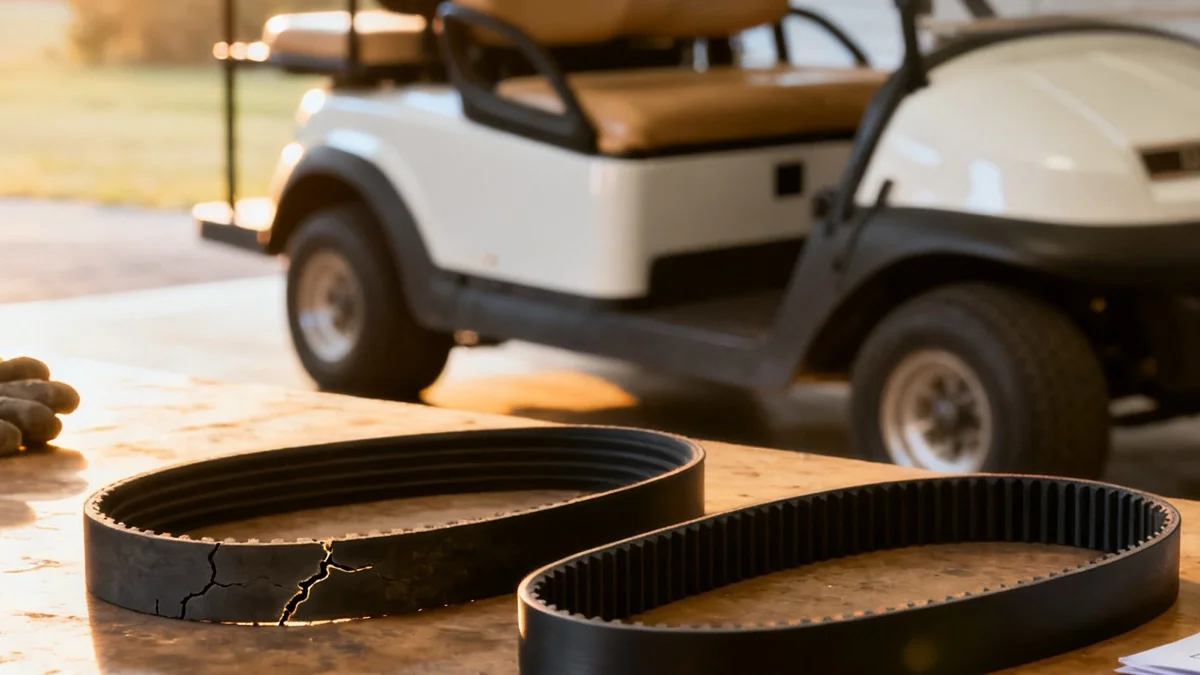
Lift the seat and inspect the outside ribs, sidewalls, and inner surface. Replace the belt if you see cracks across the rubber, cords showing at the edges, chunks missing, severe glazing, or a belt that looks twisted.
Belt Dust Around the Clutch
Some rubber dust is normal. Heavy black dust, shredded rubber strings, or debris packed around the clutch cover means something is slipping or misaligned. Clean the area and inspect both clutches before installing a new belt.
How to Measure a Golf Cart Drive Belt
The safest way to buy a belt is to match the cart's exact model, year, serial number, engine, clutch style, and OEM part number. Measuring the old belt helps, but a stretched belt can mislead you.
Use this order:
- Find the cart serial number. Use our golf cart serial number guide if you are not sure where to look.
- Identify the model family. Confirm DS vs Precedent, TXT vs RXV, G29 vs Drive2, and gas vs electric.
- Read the part number on the old belt. Clean the belt gently. Many belts still show a printed OEM or aftermarket number.
- Measure top width. Measure the widest top edge with calipers or a ruler.
- Measure outside circumference. Wrap a flexible tape around the belt outside. Do not rely on a belt that is shredded or badly stretched.
- Compare to a reputable fitment table. If size and OEM number disagree, trust the cart's serial-number lookup first.
Do not buy only by voltage. A 48V electric cart and a gas cart can share a body name but have completely different drivetrains. For electric no-move issues, our solenoid replacement guide, battery cable guide, and 12V wiring guide are better starting points.
Brand Notes: Club Car, EZGO, and Yamaha
Club Car Drive Belt Fitment
Many Club Car DS and Precedent gas carts use OEM 1016203, but the model year matters. Older DS carts used different belts, and Carryall or utility models can be different from a standard golf model.
Common signs of a Club Car belt problem include a lazy launch, a squeal when the clutch first grabs, and a cart that feels jumpy after the belt heats up. If you are comparing models or maintenance costs, our Club Car review covers common ownership issues beyond belts.
If you need a Club Car belt and starter generator belt together, search by OEM 1016203 and 101916701, then verify your model year before ordering.
Check Club Car Belt Kit PricesEZGO Drive Belt Fitment
Many EZGO Medalist and TXT gas carts from 1994.5 and newer use the 72054-G01 family, but newer Kawasaki, RXV, EX1, Workhorse, and shuttle setups can differ.
This is where owners get burned: they order "EZGO TXT belt" without checking engine type. A Robin-engine TXT and a later Kawasaki or EX1 cart may not share the same belt. If your cart has been used as a fleet vehicle, rental, or utility cart, assume nothing until you check the serial number.
For a common 1994-up TXT or Medalist Robin-engine setup, the 10L0L EZGO belt listing cross-references 72054-G01, 72024-G01, and 72025-G01.
10L0L EZGO TXT/Medalist drive beltFor broader ownership issues, see our E-Z-GO golf cart review.
Yamaha Drive Belt Fitment
Yamaha belt fitment is easy to oversimplify. Many G2 through G22 carts and later G29 carts use the J55-G6241-00 family, but 2007 to 2011 Drive/G29 carts are commonly listed with JW1-G6241-00 at a longer 41-1/8 inch outside diameter. Drive2 gas carts can differ again.
If your Yamaha is a 2007 to 2011 Drive, do not blindly order a later G29 belt. If it is a 2017 and newer Drive2, verify the Drive2 part number and engine before buying. The Yamaha golf cart review covers more Yamaha-specific gas-cart ownership notes, including clutch wear symptoms.
For Yamaha owners doing a seasonal tune-up, a tune-up kit that includes drive belt, starter generator belt, filters, and spark plug can be more efficient than buying one belt at a time.
10L0L Yamaha tune-up kit with beltsHow to Replace a Golf Cart Drive Belt
Most basic drive belt replacements are simple if the clutches are clean, accessible, and undamaged. The job gets harder when the belt has exploded, the clutch faces are rusty, or the cart has a custom engine swap.
Tools and Supplies
You may need:
- Safety glasses and mechanic gloves
- Wheel chocks
- Flashlight or work light
- Phone camera for before photos
- Basic SAE and metric socket set
- Clean rags
- Mild degreaser or brake cleaner sprayed on a rag
- Correct replacement drive belt
- Starter generator belt if it is also worn
Many belt jobs need very few tools, but gas-cart covers, guards, and brackets vary. A mixed SAE and metric socket set is useful because Club Car and EZGO often lean SAE while Yamaha often uses metric. Our essential golf cart tool kit guide covers the full garage setup.
DEWALT mixed socket setStep 1: Park and Make the Cart Safe
Park on a flat surface. Turn the key off, remove it, set the parking brake, and let the engine cool. Chock the wheels if you are working on an incline. You do not need the engine running for belt inspection or replacement.
Step 2: Photograph the Belt Routing
Lift the seat and take photos from several angles. Photograph the wide drive belt, the narrow starter generator belt, clutch faces, belt guards, and any spacers or covers you remove.
Step 3: Inspect Before Removing Anything
Look for:
- Belt dust
- Oil or grease on clutch faces
- Rust or grooves on pulley faces
- Wobble in either clutch
- Missing bolts or washers
- Cracks in the old belt
- Shredded belt cords wrapped around the shaft
If a clutch is loose, wobbling, cracked, or missing hardware, stop. Replacing the belt will not fix the root problem.
Step 4: Remove the Old Drive Belt
On many carts, you can rotate the rear driven clutch by hand while walking the belt up and off the sheave. Keep your fingers clear of pinch points. Do not jam a screwdriver between the belt and pulley face unless the service manual calls for a specific method. Gouging the clutch face can destroy the new belt quickly.
If the belt will not come off, remove the belt guard or consult a service manual for your model. Some carts give more room if you remove a cover or loosen a bracket.
Step 5: Clean the Clutch Faces
Wipe the pulley faces with a clean rag. If they are oily, apply brake cleaner to the rag, not directly into bearings or seals. Do not use belt dressing. A golf cart CVT belt needs clean, dry clutch faces. Sticky dressing can attract dirt and cause inconsistent engagement.
Step 6: Compare the Old and New Belt
Place the new belt next to the old belt. Check:
- Width
- Outside length
- OEM cross-reference
- Tooth or rib pattern
- Sidewall angle
- Direction arrows if printed
A badly worn old belt may be narrower or longer than the new one, but it should not look like a completely different family. If the new belt is obviously wider, much shorter, or marked for another model, do not force it.
Step 7: Install the New Belt
Seat the belt on the primary clutch and rear driven clutch. Rotate the clutch slowly by hand to help the belt settle. Keep the belt straight and avoid twisting it. If the belt has directional arrows, follow them. If it has no arrows, install it so the printed text is readable from a consistent viewing angle, then keep that direction if you ever remove and reuse it.
Step 8: Reinstall Guards and Test Carefully
Reinstall any guards or covers. Start the cart in a safe, open area. Drive slowly first. Listen for squealing, grinding, or rubbing. If the cart launches smoothly and no rubber smell appears, take a short test loop and recheck the belt after it cools.
Do not floor the accelerator immediately after installation. A short break-in drive helps you catch problems before they shred the new belt.
Can You Tighten a Golf Cart Drive Belt?
Usually, no. The wide CVT drive belt is not adjusted like an automotive alternator belt. On most gas carts, belt tension is controlled by belt size, clutch spacing, clutch spring condition, engine mounts, and clutch movement.
If a new, correct drive belt still slips, inspect these before buying another belt:
- Worn primary clutch sheaves
- Weak or sticking driven clutch spring
- Dirty clutch faces
- Oil contamination
- Engine mount movement
- Wrong belt family
- Bent or missing clutch hardware
- Oversized tires and heavy loads making stock clutching feel weak
The starter generator belt is different. That belt often has a tension adjustment at the starter generator bracket. If the cart squeals only while cranking, check that narrow belt separately.
Drive Belt Problems vs Clutch Problems
A belt is cheap. A clutch is not. Diagnose the difference before replacing parts blindly.
| Symptom | More likely belt | More likely clutch |
|---|---|---|
| Cracked or frayed belt | Yes | Maybe secondary damage |
| Squeal only on first takeoff | Yes | Maybe dirty sheaves |
| New correct belt still slips | Maybe | Yes |
| Engine revs but cart barely moves | Yes | Yes |
| Belt rides very low in clutch | Yes if worn narrow | Yes if clutch is worn |
| Cart jerks hard into motion | Maybe | Yes |
| Burning smell after new belt | Wrong belt or contamination | Misalignment or sticking clutch |
| Belt keeps shredding | Maybe wrong belt | Very likely clutch or alignment issue |
If the cart also has brake drag, tire problems, or drivetrain noise, inspect those systems too. Our golf cart brakes guide, tire pressure chart, and maintenance checklist can help you avoid treating every slow-cart problem as a belt issue.
Golf Cart Drive Belt Replacement Cost in 2026
Here is what most owners should budget:
| Repair path | Typical cost | Best for |
|---|---|---|
| Aftermarket drive belt only | $20 to $90 | DIY replacement on a known stock cart |
| OEM or severe-duty belt | $50 to $120 | Commercial, hilly, or heavy-use carts |
| Drive belt and starter belt kit | $25 to $70 | Older gas carts with both belts aged out |
| Full tune-up kit with belts | $45 to $100 | Seasonal gas-cart maintenance |
| Shop diagnosis and belt replacement | $90 to $250 | Unknown fitment, damaged belt, or no tools |
| Clutch repair or replacement | $200 to $600+ | New belt slips, clutch sticks, or sheaves are damaged |
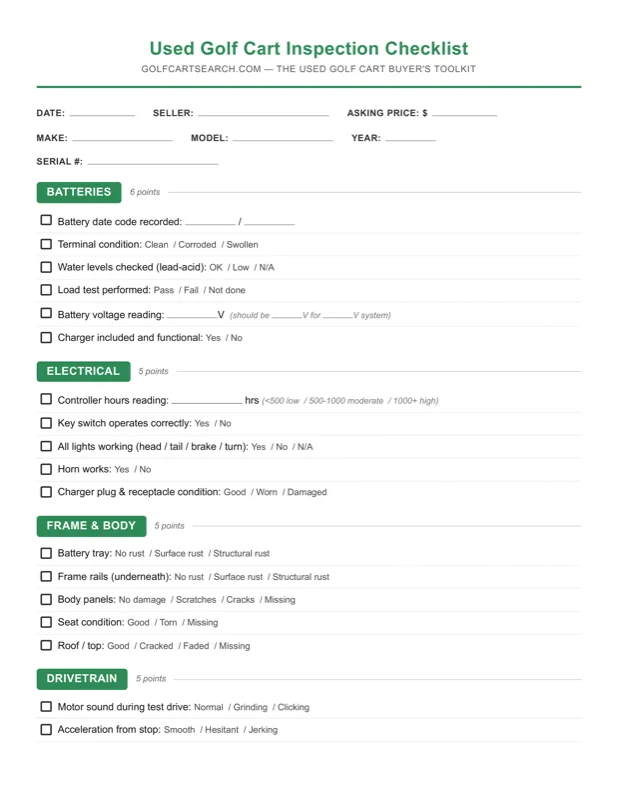
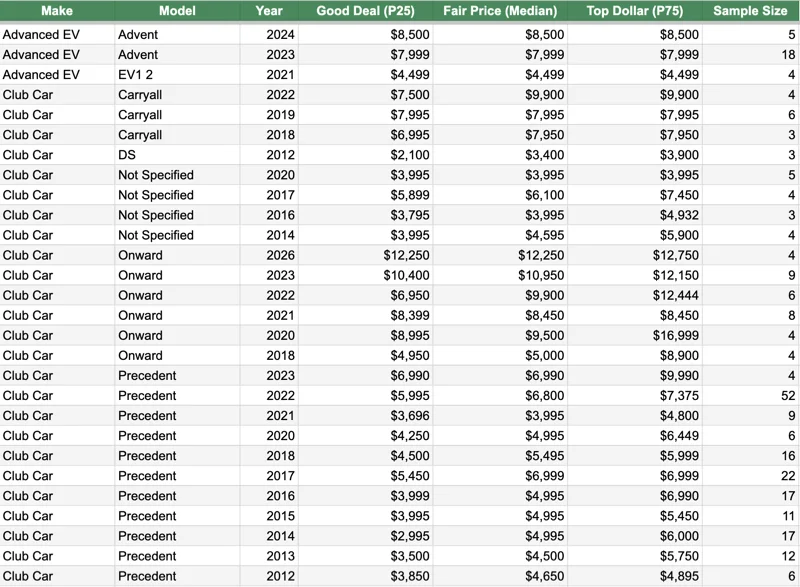
If a seller says "it just needs a belt," be careful. Sometimes that is true. Other times, the belt is a symptom of a worn clutch, neglected engine mounts, or a cart that has been hauling too much weight for years. Use our used golf cart buying guide and used prices by brand guide before assuming a $30 belt fixes a cheap cart.
Buying Tips: OEM, Aftermarket, and Severe-Duty Belts
Match the OEM Number First
The best belt listing is the one that clearly states the OEM number it replaces and the exact model years it fits. A vague listing for "EZGO Club Car Yamaha belt" is risky unless it has a model selector and clear dimensions.
Choose OEM for Heavy Use
Use OEM or a high-quality severe-duty belt if the cart is used at a course, resort, rental fleet, campground, farm, or steep neighborhood. The extra $20 to $60 is cheap compared with repeated labor or a shredded belt on a busy weekend.
Aftermarket Is Fine for Many Neighborhood Carts
A well-matched aftermarket belt can be fine for casual neighborhood use, especially when the cart is stock and the old belt failed from age rather than abuse. Look for exact fitment, aramid or reinforced construction, and return options in case the listing is wrong.
Avoid Universal Fit Claims
Some belts fit several brands, but that does not make them universal. A belt that is close can still be wrong enough to squeal, overheat, or ride poorly in the clutch.
Replace Both Belts When They Are the Same Age
If the drive belt is cracked from age, the starter generator belt may not be far behind. On older gas carts, a two-belt kit can save you from reopening the same area later.
Preventing Repeat Belt Failure
A new belt should not shred quickly. If it does, look for a system problem.
Keep Clutch Faces Clean and Dry
Oil, grease, belt dressing, and heavy dust reduce grip. Clean dry clutch faces matter more than adding any product to the belt.
Avoid Overloading a Stock Gas Cart
Big tires, rear seats, cargo boxes, steep hills, and heavy passengers all increase load. If your cart has several upgrades from our customization guide, the belt and clutch system may need more attention than a stock course cart.
Inspect Belts During Seasonal Maintenance
Check belts during spring prep, before long campground trips, and before storing a gas cart for months. Our spring maintenance checklist and winter storage guide cover the broader schedule.
Do Not Ignore New Noises
A new squeal, bark, rubber smell, or launch shudder is useful information. Stop early and inspect. Waiting until the belt throws rubber can turn a 30-minute job into a clutch cleanup.
When to Call a Repair Shop
Replace the belt yourself if the cart is stock, you know the model and year, the clutches look clean, and the old belt comes off normally.
Use a golf cart repair shop if:
- The belt shredded and wrapped around the clutch
- You cannot identify the cart model or engine
- The new correct belt slips immediately
- A clutch wobbles or rattles
- The belt keeps riding off-center
- The cart has an engine swap or performance clutch
- You smell burning rubber after a short test drive
- You are working on a commercial cart that cannot be down for long
You can find local help through our golf cart repair directory. If you decide the drivetrain repair is more than the cart is worth, compare replacement options in our best golf carts guide, best golf cart brands guide, and dealer directory.
Frequently Asked Questions
What size drive belt does a golf cart use?
It depends on the cart. Common examples include Club Car DS and Precedent gas belts around 1 inch by 37-3/4 inches, EZGO TXT and Medalist gas belts around 1-1/8 inches by 42 inches, and many Yamaha G2 through G29 belts around 1-3/16 inches by 39 inches. Always verify by OEM number and serial number.
Are electric golf carts belt driven?
Most electric golf carts are not externally belt driven. Gas carts usually use a CVT belt between the engine clutch and rear clutch. Electric carts usually use a motor connected to the transaxle through internal gearing.
What is the difference between a drive belt and starter generator belt?
The drive belt moves the cart. The starter generator belt cranks the gas engine and helps charge the 12V battery. The drive belt is wider and sits between the engine clutch and rear driven clutch. The starter generator belt is narrower and usually adjustable.
How do I know if my golf cart drive belt is bad?
Look for squealing, weak hill climbing, high rpm with low speed, a burning rubber smell, cracks, frayed edges, missing chunks, heavy belt dust, or a belt that rides too low in the clutch.
Can I tighten a golf cart drive belt?
Usually no. The wide CVT drive belt depends on correct belt size, clutch condition, and alignment. If the correct belt still slips, inspect the clutches. The narrower starter generator belt is the one that often has a tension adjustment.
How much does drive belt replacement cost?
A DIY belt replacement usually costs $20 to $120 depending on aftermarket vs OEM. A shop repair commonly totals $90 to $250. If clutch repair is needed, expect $200 to $600 or more.
Can I replace only the drive belt?
Yes, if the starter generator belt is still healthy. If both belts are old, cracked, or glazed, replace both while the seat and covers are already open.
Why does my new golf cart belt squeal?
Common causes are wrong belt size, dirty clutch faces, oil contamination, worn clutch sheaves, weak clutch springs, bad alignment, or a loose starter generator belt making noise nearby.
Should I use belt dressing on a golf cart drive belt?
No. Belt dressing can attract dirt and create inconsistent clutch engagement. Clean the clutch faces and use the correct belt instead.
How often should I inspect a golf cart drive belt?
Inspect the belt during every seasonal maintenance session and before heavy-use periods. On commercial, hilly, dusty, sandy, or overloaded carts, inspect more often.
Golf Cart Search
Find the Best Golf Carts of 2026
Compare top-rated models, read expert reviews, and find the perfect cart for your needs.