As an Amazon Associate, we earn from qualifying purchases. This helps support our site at no extra cost to you.
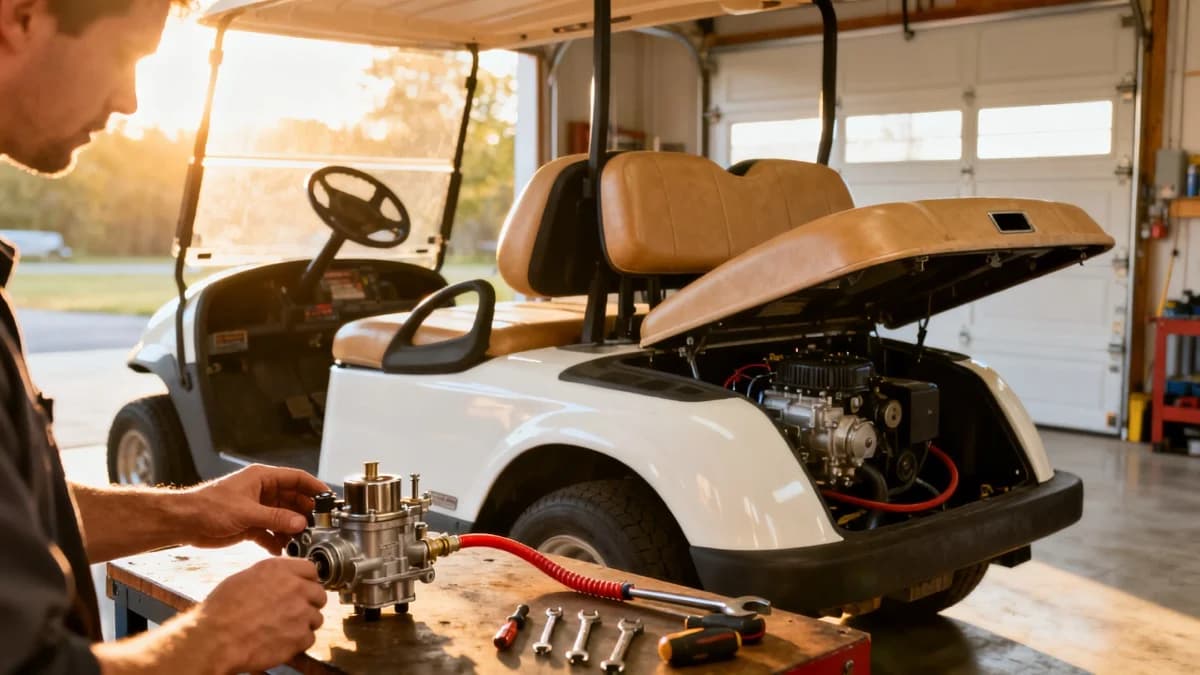
A dirty golf cart carburetor is one of the most common gas-cart problems after storage. The cart may crank, fire for a second, then die. It may need choke to stay running, backfire through the intake, bog on hills, smell like fuel, or run fine one day and act impossible the next.
The hard part is that carburetor symptoms overlap with fuel pump, spark plug, air filter, valve, clutch, and starter-generator issues. Replacing the carb before checking the basics can turn a $15 cleaning job into a frustrating parts chase.
This guide covers the practical path: how to spot carburetor symptoms, what to check before removing parts, how to clean a golf cart carburetor, what rebuild and replacement costs look like in 2026, and what changes by EZGO, Club Car, and Yamaha.
If your cart will not crank at all, start with the golf cart won't start guide. If it cranks and starts but runs badly, this carburetor guide is the next step.
Applies To Gas golf carts
DIY Cleaning $10 to $40
Rebuild Kit $25 to $70
Aftermarket Carb $60 to $120
Shop Repair $100 to $300
First Check Fresh fuel
Golf Cart Carburetor Problems: Quick Answer
A carburetor problem is most likely when a gas golf cart has fresh battery power, cranks normally, has spark, and still will not keep running without choke or throttle help. The classic pattern is simple: the engine gets enough fuel to fire, but not enough clean fuel flow through the idle or main passages to keep running.
Use this quick table before you buy a carburetor:
| Symptom | Likely Carb Area | First Check |
|---|---|---|
| Starts then dies | Idle circuit or pilot jet | Fresh fuel and fuel flow |
| Only runs with choke | Lean mixture, clogged jet, intake leak | Vacuum lines and intake gasket |
| Backfires through intake | Lean fuel mixture | Carb passages, valves, timing |
| Black smoke or fuel smell | Rich mixture, float needle, choke stuck | Float, choke plate, air filter |
| Bogs under throttle | Main jet, accelerator pump, fuel level | Fuel filter, pump output, air filter |
| Fuel dripping from carb | Float needle or float height | Shut fuel off and inspect bowl |
One important distinction: most golf carts are pedal-start vehicles, so they may not idle like a lawn mower or car. A cart that shuts off when you release the pedal is normal if the pedal switch is doing its job. The carburetor problem is when it cannot stay running while the pedal is pressed, cannot transition off choke, or dies immediately after firing.
Carburetor or Something Else?
Before removing the carburetor, confirm the engine has the three basics: fuel, spark, and air. Carburetors get blamed because they are visible and mechanical, but several cheaper problems create the same symptoms.
Fresh fuel. If the cart sat for months, drain old gasoline and refill with fresh fuel. Stale fuel smells sour or varnish-like, and it leaves deposits in the smallest passages first. If you are bringing a cart out of storage, follow the gas section in the spring golf cart maintenance checklist.
Fuel filter and pump flow. A clogged filter or weak vacuum-pulse fuel pump can make a good carb look bad. Disconnect the fuel line at the carb side, aim it into a safe container, and crank briefly. You should see fuel pulse from the line. No flow points toward the filter, pump, fuel shutoff, pickup tube, or vacuum line. If fuel never reaches the carb, use the golf cart fuel pump symptoms guide before ordering carburetor parts.
Spark plug condition. A fouled plug can mimic a rich carb, and weak spark can make the cart start cold but die under load. Pull the plug, inspect the electrode, confirm gap against your service manual, and replace it if it is black, oily, cracked, or worn. For many EZGO 4-cycle carts, an EZGO 4-cycle spark plug is a cheap first check.
Ignition test. An inline spark tester is cleaner and safer than holding a plug near the engine while fuel vapors may be present. A Lisle inline spark tester lets you verify that spark is present while the starter turns the engine.
Air filter and intake leaks. A clogged air filter can make the engine run rich. A cracked intake boot, loose carb mounting nuts, or bad gasket can create a lean condition that looks like a clogged carb. If the cart only runs with choke, do not skip vacuum leaks.
Starter and charging system. If the engine cranks slowly, stops cranking, or the 12V battery is weak, diagnose that before tuning fuel. The starter generator symptoms guide covers slow crank, no charge, hot cables, belt squeal, and voltage-regulator confusion.
Drivetrain load. If the engine runs well but the cart jerks, revs high, or struggles to move, the issue may be downstream. See the golf cart clutch problems guide and drive belt replacement guide before tuning the carb.
Tools and Supplies for Carburetor Cleaning
You do not need a dealer-level tool chest to clean a basic golf cart carburetor, but you do need patience and a clean work surface. Take photos as you go, especially around throttle linkage, choke linkage, spring locations, and gasket orientation.
Useful supplies:
- Carburetor and choke cleaner spray
- Nitrile gloves and eye protection
- Small screwdrivers
- Metric and SAE socket set, depending on cart
- Needle-nose pliers
- Small container for screws and jets
- Compressed air or canned air
- New bowl gasket or rebuild kit
- Fuel line clamps or pinch pliers
- Clean rags
- Multimeter for related electrical checks
For cleaner, use a product intended for carburetors, not general household degreaser. A spray like carburetor and choke cleaner is meant to dissolve gum and varnish from fuel passages, throttle plates, and linkage. Use it outside or in a well-ventilated space. It is flammable and hard on paint, rubber, and some plastics.
A multimeter is not a carburetor tool, but it helps stop bad diagnosis. If the cart has weak 12V power, a bad ground, or inconsistent starter-generator charging, carb tuning will not fix it. A basic AstroAI digital multimeter is enough for battery voltage, continuity, and simple resistance checks. For a deeper electrical path, use the golf cart battery voltage chart and the golf cart solenoid symptoms guide.
How to Clean a Golf Cart Carburetor
This is the safe, practical version for most older gas carts. Exact fasteners, linkages, and adjustment specs vary by year and engine, so use your service manual for final torque, float height, mixture, and idle settings.
Step 1: Make the cart safe
Park on a flat surface, set the parking brake, turn the key off, and disconnect the negative cable from the 12V battery. Shut off the fuel valve if your cart has one. Work outside or with the garage door open. Keep flames, heaters, and smoking materials away from the cart.
If fuel has been leaking, stop and clean the area before testing spark or cranking. Fuel vapor and ignition testing do not mix.
Step 2: Photograph linkage and hoses
Before removing anything, take photos from several angles. Capture the choke cable, throttle cable, return springs, vacuum line, fuel line, intake boot, and airbox. Most carburetor frustrations come from getting one spring or cable back in the wrong hole.
If your cart has unknown age or model details, decode it before ordering gaskets or a replacement. The golf cart serial number and VIN guide and free VIN decoder can help identify what you actually own.
Step 3: Remove the airbox and inspect
Remove the air filter housing enough to see the carb throat. Check whether the choke plate moves fully open and closed. Look for dirt, loose hardware, missing airbox seals, soaked filters, or fuel pooling.
If the outside is dirty, clean around the carb before opening anything. You do not want grit falling into the intake or bowl.
Step 4: Try a light external cleaning
If the cart almost runs, spray carb cleaner on the throttle plate, choke plate, and linkage. Let it evaporate, then try starting with fresh fuel. This may help sticky plates or light varnish.
Do not use long sprays into the intake while cranking. A short diagnostic burst can confirm a fuel problem, but using spray as a fuel substitute can create backfire risk and hide the real issue.
Step 5: Remove the carburetor
Clamp or plug the fuel line, then disconnect it from the carb. Remove throttle and choke linkages carefully. Unbolt the carburetor from the intake. Watch for spacers, insulators, and gaskets, then lay them out in order.
If a gasket tears, replace it. Air leaks at the intake side can make a freshly cleaned carb run lean, which sends you right back into diagnosis.
Step 6: Open the bowl and clean jets
Place the carb on a clean bench. Remove the float bowl. Inspect for varnish, sediment, water beads, white corrosion, or greenish deposits. Remove the main jet and pilot jet only if you can do it without damaging the slots. Clean passages with carb cleaner and compressed air.
Do not drill jets. Do not force wire through tiny passages unless the service manual allows it and you know the wire is softer than the jet material. Enlarging a jet changes the fuel mixture.
Step 7: Check float and needle
The float controls fuel level in the bowl. If the float is stuck, fuel can overflow. If the needle tip is worn or debris is trapped under it, the carb can flood. If the float height is wrong, the engine can run rich or lean even after cleaning.
If the needle, seat, bowl gasket, or small O-rings look worn, install a correct golf cart carburetor rebuild kit for your exact model. Fitment matters more than price.
Step 8: Reassemble and test
Reinstall the jets, float, needle, and bowl. Reinstall the carb with the correct gasket order. Connect the fuel line, choke linkage, throttle linkage, and any vacuum line. Reconnect the 12V battery, turn fuel back on, and check for leaks before starting.
Once it runs, let it warm up and test throttle response. If the cart still only runs with choke, still backfires, or still dies under load, stop adjusting randomly. Recheck fuel flow, intake leaks, spark, valve adjustment, and compression.
Carburetor Cleaning, Rebuild, and Replacement Cost
Costs vary by brand, engine, and whether you use aftermarket or OEM parts. The good news is that many golf cart carburetor jobs are still cheaper than major battery, controller, motor, or clutch work.
| Job | DIY Parts | Shop Range | Best For |
|---|---|---|---|
| External cleaning | $10 to $20 | $50 to $100 | Sticky linkage, light varnish |
| Remove and clean | $10 to $40 | $100 to $200 | Starts then dies after storage |
| Rebuild kit | $25 to $70 | $150 to $300 | Worn gaskets, needle, float parts |
| Aftermarket carb replacement | $60 to $120 | $150 to $400 | Damaged or heavily corroded carb |
| OEM or rare carb replacement | $150 to $350+ | $250 to $600+ | Exact fit, emissions, hard-to-match engines |
If a shop quotes far above these ranges, ask what else is included. Carburetor symptoms often lead to additional work: fuel filter, fuel pump, vacuum line, spark plug, valve adjustment, compression test, starter-generator belt, or pickup tube cleaning.
For older carts, also compare repair cost to market value. A clean running Big 3 gas cart can be worth repairing, especially if the frame, body, seats, tires, and drivetrain are solid. If the cart also needs brakes, tires, upholstery, batteries for accessories, or major engine work, compare the total against the used golf cart buying guide, used golf cart prices by brand, and what is my golf cart worth guide.
Clean vs Rebuild vs Replace
Clean the carburetor when the cart ran well before sitting, the carb body looks clean, the throttle shaft is not loose, and the problem started after stale fuel. This is the best first move for most spring no-starts and rough-running storage problems.
Rebuild the carburetor when the float needle, gaskets, bowl seal, accelerator pump parts, or small O-rings are worn but the carb body is still healthy. A rebuild makes sense when the original carb is better quality than the cheapest replacement, or when exact fitment is hard to match.
Replace the carburetor when the body is corroded, jets are damaged, screws are stripped, throttle shaft play is obvious, fuel leaks continue after a rebuild, or a correct aftermarket replacement costs less than the time to salvage yours.
The cheapest carb is not always the cheapest repair. If the linkage angle, choke style, jetting, fuel inlet, or gasket stack is wrong, the cart may run worse than it did before. Fitment matters on older EZGO, Club Car, and Yamaha carts.
Brand Notes: EZGO, Club Car, and Yamaha
EZGO carburetor notes
EZGO has used multiple gas engine families over the years, including 2-cycle Marathon models, 4-cycle Robin engines, MCI variants, and later Kawasaki-powered carts. A carburetor for a 295cc engine is not automatically correct for a 350cc engine, and older 2-cycle carts are their own category.
Before ordering, confirm model, year, engine size, and OEM cross-reference. If the cart is a TXT, RXV, Marathon, Workhorse, ST, or older utility model, do not order by appearance alone. EZGO fitment mistakes are common because many carburetors look similar in photos.
If your EZGO runs but lacks pull under load, separate engine fuel problems from belt and clutch problems. The golf cart horsepower and torque guide, top speed by brand guide, and clutch guide can help you avoid tuning the carb to fix a drivetrain issue.
Club Car carburetor notes
Many older Club Car DS and Precedent gas carts use FE290 or FE350 Kawasaki engines. Those engines have specific carburetors, gaskets, fuel pumps, ignition parts, and linkage setups. Match the engine, not just the body style.
Club Car owners should pay close attention to intake leaks and fuel pump vacuum lines. A small crack can make the engine act lean, require choke, or surge after warmup. If the cart starts easily but dies once hot, also consider ignition coil, valve, and compression checks.
For broader ownership context, compare the Club Car golf cart review and Club Car DS vs Precedent guide before spending heavily on an older cart.
Yamaha carburetor notes
Older Yamaha G-series and Drive gas carts may use carburetors, but newer Yamaha QuieTech EFI models do not. If you have EFI, there is no carb bowl or jet to clean. Rough running on EFI points toward fuel injection, pump pressure, sensor, ignition, or dealer-level diagnostics.
For carbureted Yamaha carts, verify whether you have a G2, G9, G16, G22, G29 Drive, or another model before ordering parts. Yamaha fitment ranges can be narrow, and throttle or choke linkage details matter.
If you are comparing older Yamaha gas carts against newer EFI models, the Yamaha golf cart review and electric vs gas golf cart comparison explain the maintenance tradeoffs.
How to Prevent Carburetor Problems
Carburetor problems are usually storage and fuel-quality problems. Preventing varnish is easier than cleaning jets after the cart sits.
Use fresh fuel. If the cart is used lightly, do not keep topping off old gas forever. Run the tank lower, then refill with fresh fuel from a reliable station.
Stabilize fuel before storage. Before winter or any long sit, add fuel stabilizer, then run the cart long enough to pull treated fuel into the carburetor. STA-BIL Storage Fuel Stabilizer is a common storage product for gas carts, generators, mowers, and small engines.
Decide whether to drain or stabilize. For shorter storage, treated fuel in a full tank is simple. For longer storage, some owners drain the tank and run the engine until it stops so the carb bowl is empty. The winterization guide covers both approaches.
Replace the fuel filter every season. It is cheap insurance. A restricted filter can mimic a carb problem and starve the engine under load.
Keep the airbox sealed. Missing airbox clips, torn intake boots, or loose clamps can let dirt into the carb and lean out the mixture.
Run the cart regularly. Gas carts dislike sitting. If the cart is stored in a garage, follow the golf cart garage storage setup guide and never run a gas cart in a closed space because of carbon monoxide.
Track maintenance. Add fuel filter, air filter, spark plug, oil, belt inspection, and carb symptoms to your annual checklist. The complete golf cart maintenance guide has the broader service schedule.
When It Is Not the Carburetor
If a thorough cleaning does not change anything, stop and widen the diagnosis. The carburetor may be innocent.
Common lookalikes:
- Weak or intermittent spark
- Fouled spark plug
- Bad ignition coil
- Weak fuel pump
- Cracked vacuum line
- Clogged tank pickup
- Plugged fuel cap vent
- Intake gasket leak
- Tight valves or low compression
- Starter-generator not cranking consistently
- Clutch or belt problem under load
- Exhaust restriction
For symptom-based diagnosis, use the golf cart troubleshooting guide or diagnose a gas golf cart problem with the interactive tool. For general lifespan and repair judgment, read how long golf carts last. If the cart is becoming a repair pile, compare replacement options in the golf carts for sale directory and find local help through golf cart repair shops.
Final Verdict
For most gas carts, the best path is simple: fresh fuel, fuel flow, spark, air filter, then carburetor cleaning. If the cart starts then dies after sitting, a dirty idle circuit or varnished jet is a strong suspect. If it only runs with choke, think lean condition: clogged jet, intake leak, or low fuel delivery.
Do not order a carburetor by photo alone. Match brand, year, engine, linkage, choke setup, and gasket stack. A $90 aftermarket carb can be a smart repair when it fits correctly, but a careful cleaning or rebuild often preserves a better original carb for less money.
For most owners, budget $10 to $40 for DIY cleaning, $25 to $70 for a rebuild kit, $60 to $120 for many aftermarket carburetors, and $100 to $300 for a normal shop cleaning or rebuild. If diagnosis expands into valves, ignition, fuel pump, compression, or starter-generator work, the real repair is no longer just the carburetor.
FAQ
How do I know if my golf cart carburetor is bad?
The strongest signs are hard starting after storage, starts then dies, needing choke to keep running, rough running, bogging under throttle, backfiring through the intake, fuel dripping, black smoke, or fuel smell. Confirm fresh fuel, spark, fuel pump flow, and air filter condition before blaming the carburetor.
How much does golf cart carburetor cleaning cost?
DIY cleaning usually costs $10 to $40 for cleaner, gaskets, and small supplies. A shop cleaning commonly runs about $100 to $200, while a rebuild or repair with diagnosis may reach $300. Costs rise if the fuel pump, vacuum line, spark plug, valve adjustment, or compression test is part of the same visit.
Should I clean, rebuild, or replace my carburetor?
Clean it first if the cart sat with old fuel and the carb body is not damaged. Rebuild it if gaskets, float needle, bowl seal, or small parts are worn. Replace it if the body is corroded, threads are stripped, throttle shaft is loose, or a correct replacement costs less than a careful rebuild.
Can I clean a golf cart carburetor without removing it?
You can clean the throat, plates, and linkage without removing it, and that can help mild sticking. A real cleaning requires removing the carb, opening the bowl, cleaning jets and passages, checking the float needle, and replacing damaged gaskets.
Why does my gas golf cart start then die?
It usually means the engine gets enough fuel to fire but not enough fuel to keep running. Stale fuel, clogged idle passages, restricted filter, weak fuel pump, cracked vacuum line, or fouled spark can all do it. If it runs only with choke or partial throttle, the carburetor idle circuit is a strong suspect.
Why does my golf cart only run with the choke on?
The engine is probably too lean. Common causes include a clogged pilot jet, dirty idle passage, intake leak, cracked vacuum line, low fuel level in the bowl, or weak fuel delivery. Do not keep driving it this way because lean running can create heat and backfire problems.
How much is a golf cart carburetor replacement?
Many aftermarket carburetors cost about $60 to $120. OEM, rare, or exact-fit units can cost $150 to $350 or more. Installed replacement commonly lands around $150 to $400 after labor, gaskets, and adjustment.
Is an aftermarket golf cart carburetor okay?
Yes, if it matches your exact cart and engine. Verify model year, engine size, OEM number, throttle linkage, choke style, fuel inlet, and gasket stack. A cheap mismatch can run rich, run lean, leak fuel, or create worse drivability than the original dirty carb.
Do electric golf carts have carburetors?
No. Electric carts do not have carburetors, gasoline tanks, fuel pumps, or spark plugs. Electric no-start or no-move problems point toward batteries, cables, charger, solenoid, controller, motor, key switch, or wiring.
Do newer Yamaha gas golf carts have carburetors?
Some older Yamaha gas carts use carburetors. Newer QuieTech EFI models use electronic fuel injection instead, so there is no carburetor bowl or jet to clean. EFI rough running needs a different diagnostic path.
Can stale gas ruin a golf cart carburetor?
Stale gas can gum up jets, float needles, bowls, and tiny idle passages. It may not permanently ruin the carb, but it can make the cart hard to start, stall, backfire, or require a rebuild if deposits harden over time.
What should I check before buying a new carburetor?
Check fuel freshness, filter flow, pump output, spark plug, air filter, intake leaks, vacuum lines, throttle and choke linkage, and exact model fitment. If those checks pass and cleaning does not help, replacement becomes much more reasonable.
Golf Cart Search
Find the Best Golf Carts of 2026
Compare top-rated models, read expert reviews, and find the perfect cart for your needs.