
Best Golf Cart Heaters: Propane vs Electric (2026 Buyer's Guide)

Find the best golf cart heater for your setup. Compare propane vs electric by brand, voltage, and price with BTU ratings and compatibility charts.

Michael
Michael
Mar 2nd, 202614 min read
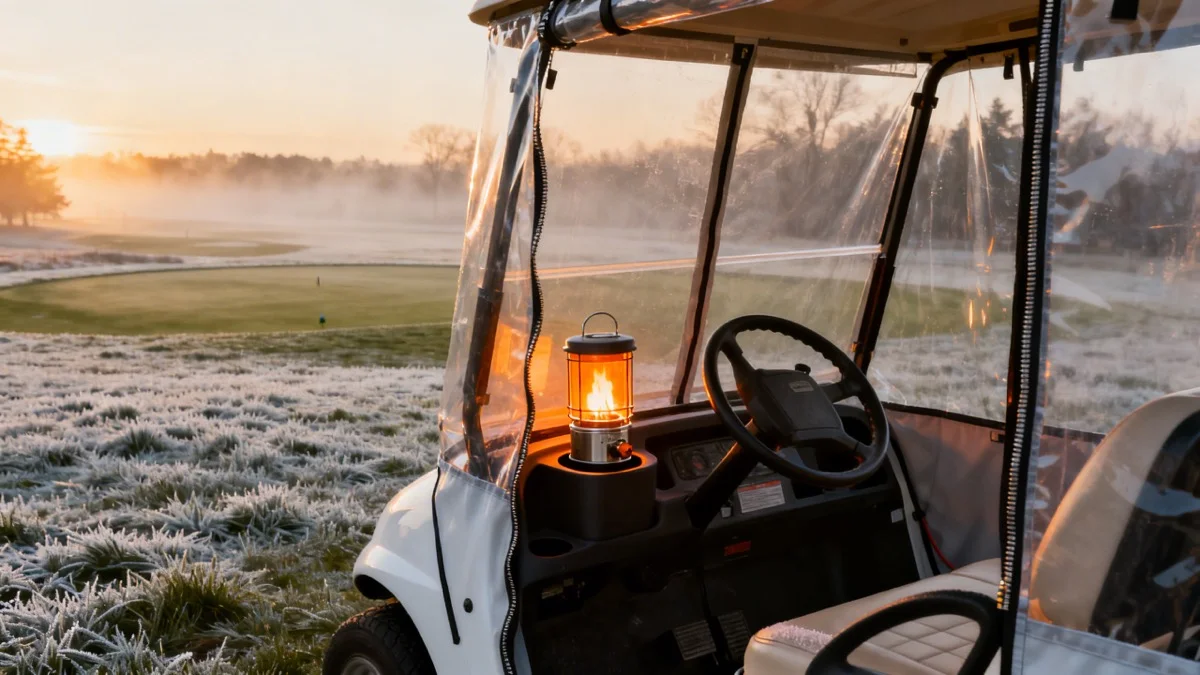
Golf cart heater mounted in cup holder of white Club Car with enclosure on a cold morning

As an Amazon Associate, we earn from qualifying purchases. This helps support our site at no extra cost to you.

Cold mornings on the course or chilly evening rides through the neighborhood can make golf cart season feel shorter than it needs to be. A good heater extends your riding season by months and turns a miserable 40-degree round into a comfortable one.

The problem? Golf cart heaters split into two fundamentally different categories, propane and electric, and the right choice depends entirely on your specific cart setup. Pick wrong and you'll either waste money on a heater that barely works or create a genuine safety hazard.

This guide walks you through the decision step by step: what type of heater matches your cart, which products are worth buying at every price point, and exactly how to figure out compatibility with your brand and voltage system.

Propane Heaters

4,000-6,300 BTU

$40-$100

Electric Heaters

400W (~1,365 BTU)

$35-$190

Heated Seat Covers

USB-powered

$25-$130

Operating Cost

$0.50-$1.50/round

Propane fuel

Propane vs Electric Golf Cart Heaters: Which Type Do You Need?

Before looking at specific products, you need to answer one question: do you have an enclosure on your golf cart?

This single factor determines which heater type is safe and effective for your setup.

Propane heaters produce radiant heat (like a campfire) that warms you directly. They output 4,000-6,300 BTU, which is 3-5x more heat than electric models. They work on any cart regardless of battery voltage. But they produce carbon monoxide, so they require ventilation. Use propane heaters on open carts or carts with partial enclosures that allow airflow.

Electric heaters blow warm air using carbon fiber or PTC heating elements powered by your cart's battery system. They produce zero emissions and run silently. But at 400W (roughly 1,365 BTU equivalent), their heat output is modest. That warm air dissipates instantly on an open cart. Electric heaters only make sense inside a golf cart enclosure where the cabin traps heat.

Here's how to decide:

Your SetupBest Heater TypeWhy
Open cart, no enclosurePropaneRadiant heat works in open air; electric heat dissipates
Partial enclosure (windshield + roof)PropaneStill too much airflow for electric to be effective
Full 4-sided enclosureElectricTrapped air heats up; no CO risk in sealed space
Full enclosure, want max heatPropane + vented enclosureLeave side panels partially open for ventilation

If you're shopping for an enclosure to pair with your heater, our enclosure buyer's guide covers the best options by brand and cart model.

How to Check Your Golf Cart's Voltage

Electric heaters come in 36V and 48V versions, and using the wrong voltage will damage your heater or electrical system. Here's how to check:

Count your batteries:

  • Six 6V batteries = 36V system
  • Six 8V batteries = 48V system
  • Four 12V batteries = 48V system
  • Eight 6V batteries = 48V system

By brand and model (general guidelines):

  • EZGO TXT (pre-2010): Usually 36V
  • EZGO TXT (2010+) and EZGO RXV: Usually 48V
  • Club Car Precedent and Onward: 48V
  • Club Car DS (older models): 36V
  • Yamaha Drive2: 48V
  • Yamaha G-series (older): 36V

If you've upgraded to lithium batteries, check the voltage rating on your lithium pack. Most lithium conversions maintain the original system voltage (48V is most common).

Not sure what batteries your cart has? Our complete battery guide covers every configuration by brand and model year.

Best Propane Golf Cart Heaters

Propane heaters are the most popular option for golf cart owners. They produce serious heat, work on any cart, and require zero electrical connections. The tradeoff: you'll need to buy 1 lb propane cylinders ($3-$5 each) and follow basic ventilation safety practices.

Best Overall Propane: Mr. Heater MH4GC Golf Cart Heater

The Mr. Heater MH4GC is the gold standard for golf cart heating. It's the #1 best seller in golf cart accessories on Amazon for good reason.

Key specs:

  • Heat output: 4,000 BTU
  • Fuel: 1 lb propane cylinder (not included)
  • Runtime: 5.5 hours per cylinder
  • Price: $70-$80

What makes it the best: The MH4GC was designed specifically for golf carts, not adapted from a camping heater. Its burner and pilot system are wind-resistant, so the flame stays lit while the cart is moving. The 90-degree tip-over safety switch is calibrated for cart use, meaning it won't trip every time you hit a bump (a common complaint with generic propane heaters). It also includes an Oxygen Depletion Sensor (ODS) that shuts the unit off automatically if oxygen levels drop.

The included cup holder adapter fits standard golf cart cup holders on Club Car, EZGO, Yamaha, and most other brands.

Operating cost: About $0.50-$0.75 per round with a $3-$5 cylinder lasting 5.5 hours.

Check Price on Amazon

Best High-Output Propane: Roykaw 6,300 BTU Heater

If 4,000 BTU isn't cutting it on brutally cold mornings, the Roykaw puts out 6,300 BTU, the highest output of any cup-holder golf cart heater.

Key specs:

  • Heat output: 6,300 BTU
  • Fuel: 16.4 oz disposable propane cylinder
  • Runtime: ~3 hours on high
  • Price: $45-$80

The Roykaw is built from aluminum and brass with a push-button piezo ignition. The higher BTU output trades runtime for heat: you'll burn through a cylinder in about 3 hours on high rather than the 5.5 hours the Mr. Heater gets. For a quick 18-hole round in freezing temps, that's a fair tradeoff.

Roykaw also sells a combo version with an armrest cup holder mount if your cart's built-in holders are occupied.

Check Price on Amazon

Best Budget Propane: Truwild 5,500 BTU Heater

The Truwild offers a middle ground between the Mr. Heater and Roykaw at a lower price point.

Key specs:

  • Heat output: 5,500 BTU
  • Fuel: 1 lb propane cylinder
  • Runtime: ~5.5 hours
  • Price: $40-$70

Unlike the Mr. Heater (which is on/off only), the Truwild has a metal control knob for adjustable heat output. It also includes a metal safety guard to prevent accidental burns. The downside: build quality and durability don't match the Mr. Heater, and the wind resistance isn't as good.

Check Price on Amazon

Propane Heater Comparison

FeatureMr. Heater MH4GCRoykaw 6300Truwild 5500
BTU Output4,0006,3005,500
Runtime (1 lb tank)5.5 hours~3 hours~5.5 hours
Heat ControlOn/Off onlyOn/OffAdjustable knob
Wind ResistantYes (designed for carts)StandardStandard
Safety FeaturesODS + tip-overTip-overBurn guard
Price$70-$80$45-$80$40-$70
Best ForMost golfersExtreme coldBudget buyers

Best Electric Golf Cart Heaters

Electric heaters wire directly into your cart's battery system. They produce no fumes, run silently, and are the safe choice for fully enclosed carts. You give up heat output and take a small hit to battery range.

Most electric golf cart heaters use carbon fiber heating elements that draw 400W. On a 48V system, that's about 8.3 amps per hour. On a typical lead-acid battery pack (150-225 Ah), expect roughly 5-10% range reduction over an 18-hole round. Lithium batteries handle the extra draw with minimal impact due to their flat discharge curve.

Best 48V Electric: JNOD 48V Carbon Fiber Heater

The JNOD uses advanced carbon fiber heating elements that warm up in seconds with zero carbon monoxide risk.

Key specs:

  • Power: 400W
  • Voltage: 48V (hardwired)
  • Heating: Carbon fiber elements, 360-degree adjustable head
  • Safety: Pre-installed inline fuse, low-surface-temperature housing, CE/FCC/ROHS certified
  • Price: $40-$60
  • Warranty: 2 years

The JNOD fits standard 6-9cm cup holders and stays stable over bumps. The housing stays cool enough to touch safely, which matters if kids or pets ride along. It hardwires directly to your 48V battery with included connectors, and the inline fuse protects your electrical system.

Near-silent operation is a real advantage over propane. You can hear your playing partners and there's no hissing flame to deal with.

Compatible with: Club Car Precedent/Onward, EZGO TXT/RXV (48V), Yamaha Drive2, and other 48V carts.

Check Price on Amazon

Best 36V Electric: JNOD 36V Carbon Fiber Heater

Same design as the 48V model above, built for older 36V cart systems.

Key specs:

  • Power: 400W
  • Voltage: 36V (hardwired)
  • Features: Identical to the 48V version
  • Price: $35-$60

If you're running an older EZGO TXT, Yamaha G-series, or Club Car DS with a 36V battery system, this is your match. The 36V electric heater market has fewer options than 48V, making the JNOD a standout choice for older carts.

Check Price on Amazon

Premium Electric: TSI Climate Caddy

The Climate Caddy is the most advanced (and expensive) electric golf cart heater on the market. It's the only model with variable heat output and dual heating/cooling function.

Key specs:

  • Power: 63-655W (variable)
  • Voltage: 48V
  • Airflow: 700-900 CFM fan
  • Features: Electronic occupancy sensor, PTC heating elements, dual heat/cool modes
  • Price: ~$190

The Climate Caddy uses PTC (Positive Temperature Coefficient) heating elements rather than carbon fiber. PTC elements self-regulate temperature, making them more efficient and safer. The occupancy sensor only runs the heater when someone is seated, saving battery.

The downsides are real: it's louder than carbon fiber heaters, user reviews average only 2.9/5 stars on Amazon, and some owners report the heat output doesn't feel as warm as the 655W rating suggests. The heater also has a low-voltage cutoff around 43V designed to protect lead-acid batteries. If you've converted to lithium, the cutoff behavior may differ since lithium packs hold voltage higher throughout discharge.

Best for owners who want a year-round climate system (heat in winter, fan in summer) and are willing to pay a premium.

Check Price on Amazon

Electric Heater Comparison

FeatureJNOD 48VJNOD 36VTSI Climate Caddy
Wattage400W400W63-655W variable
Voltage48V36V48V
Noise LevelNear silentNear silentModerate (fan)
Heat ControlOn/OffOn/OffVariable
Cooling ModeNoNoYes
Occupancy SensorNoNoYes
Price$40-$60$35-$60~$190
Best ForMost 48V cartsOlder 36V cartsYear-round climate

Heated Seat Covers: The Budget Alternative

If you want warmth without installing a heater, heated seat covers are the simplest option. They plug into a USB power bank or cart USB port and warm your back and seat directly. No wiring, no propane, no voltage matching.

Heated seat covers work on any golf cart regardless of brand, voltage, or enclosure. They're the best option if you:

  • Ride different carts (rental, course fleet) and can't install permanent accessories
  • Want targeted body warmth rather than cabin heating
  • Have a tight budget (starting around $25)
  • Want to combine seat heat with a propane or electric air heater for maximum comfort

USB-powered heated seat blankets ($25-$50) cover a 2-person bench seat and run from a portable power bank. They feature 3-level temperature control, non-slip backing, and waterproof materials. Look for models with at least 3 heating zones.

Check Price on Amazon

For a more permanent setup, hardwired heated seat covers ($80-$130) install directly onto your cart seats with adjustable straps. Brands like NOKINS make model-specific covers for Club Car Precedent seats with 3-speed heating and 5-minute warmup times.

How Many BTUs Do You Need?

A standard enclosed golf cart has roughly 10-15 cubic feet of cabin space. That's tiny compared to a room in your house (which might be 1,000+ cubic feet). This means even a modest heater makes a noticeable difference.

Quick BTU sizing guide:

ScenarioRecommended BTUBest Option
Enclosed cart, mild cold (45-55°F)1,300-2,000 BTU400W electric heater
Enclosed cart, cold (30-45°F)2,000-4,000 BTUElectric heater + windshield
Open cart, mild cold (45-55°F)4,000 BTUMr. Heater MH4GC
Open cart, cold (30-45°F)5,500-6,300 BTURoykaw or Truwild
Open cart, freezing (under 30°F)6,300 BTU + layersRoykaw + heated seat cover

A 4,000 BTU propane heater raises the temperature inside an enclosed cart by roughly 25-30°F. So if it's 40°F outside, you'll feel closer to 65-70°F inside. On an open cart, that same heater only creates a warm zone about 2-3 feet from the burner.

For the coldest conditions, combine a heater with a quality windshield and enclosure for the biggest comfort improvement.

Brand Compatibility Guide

Not all heaters fit all carts the same way. Here's what to know about the major brands:

Club Car

Club Car Precedent and Onward models have standard cup holder dimensions that fit most propane and electric heaters without issues. These carts are 48V, so use 48V electric heaters. Older Club Car DS models may be 36V. Check your battery count to confirm.

EZGO

EZGO TXT models have straightforward cup holders that work with all standard heaters. EZGO RXV models have an overhead tray above the cup holder area that can interfere with taller heaters. Measure the clearance before buying. Most newer EZGO carts (2010+) are 48V. Older TXT models are often 36V.

Yamaha

Yamaha Drive2 models are 48V with standard cup holders. Older Yamaha G-series carts may be 36V. Cup holder fit is generally not an issue with Yamaha carts.

Other Brands

ICON, Star EV, Evolution, and other newer brands are typically 48V with standard cup holder sizing. Propane heaters are universal. For electric heaters, confirm your voltage before purchasing.

If you're not sure which brand or model you have, our brand comparison pages can help you identify your cart.

Installation: Propane vs Electric

Propane Heater Installation (2 minutes)

  1. Screw the 1 lb propane cylinder into the heater base
  2. Drop the heater into your cup holder (adapters included with most models)
  3. Push the ignition button
  4. Adjust angle to direct heat toward you

That's it. No tools, no wiring, no permanent modifications.

Electric Heater Installation (10-15 minutes)

  1. Locate your battery compartment (usually under the front seat)
  2. Identify the positive and negative terminals on your battery bank
  3. Connect the heater's positive wire (red) to the positive terminal
  4. Connect the negative wire (black) to the negative terminal
  5. Route the wires neatly along the frame to your cup holder area
  6. Drop the heater into the cup holder
  7. Test the heater

Most electric heaters include alligator clips or ring terminals for battery connection. The JNOD models include an inline fuse for added protection. If you're not comfortable working with batteries, any golf cart dealer or repair shop can install it in minutes.

For more on working with your cart's electrical system, see our guides on batteries and chargers.

Operating Costs: Propane vs Electric

Understanding the real cost of running a heater helps you make a smarter purchase decision.

Propane Operating Costs

ItemCost
1 lb propane cylinder$3-$5
Runtime per cylinder (4,000 BTU)5.5 hours
Cost per hour$0.55-$0.90
Cost per 18-hole round (~4 hours)$2.00-$3.60
Cost per season (40 rounds)$80-$144

Buying propane cylinders in bulk (packs of 4-12) brings the per-unit cost down to around $2.50-$3.00 each.

Electric Operating Costs

Electric heaters draw from your existing battery, so the "fuel" cost is built into your charging costs.

MetricValue
Power draw400W
Current draw (48V system)~8.3 amps/hour
Battery impact per round5-10% range reduction
Electricity cost per charge~$0.10-$0.15 extra
Cost per seasonNegligible ($4-$6 total)

The real cost of an electric heater is the small range reduction. If your cart normally gets 30 miles on a charge, expect 27-28.5 miles with a heater running. For most golfers doing a 5-7 mile round, this is irrelevant. If you ride long distances in a neighborhood or retirement community, factor in the extra drain.

Safety Tips for Golf Cart Heaters

Propane Safety

  • Ventilation is mandatory. Never seal all enclosure panels while running propane. Leave at least two side panels cracked open.
  • Check your ODS. The Oxygen Depletion Sensor should shut the heater off automatically if CO levels rise. Test it annually.
  • Watch the tip-over switch. If your heater keeps shutting off on bumpy paths, the tip-over sensor may be too sensitive. The Mr. Heater MH4GC's 90-degree switch handles cart terrain better than generic models.
  • Store propane upright. Keep spare cylinders upright and away from direct sunlight. Never leave a connected cylinder on a heater overnight.
  • Keep flammable items clear. Golf cart enclosures, seat covers, and towels should stay at least 12 inches from the heater.

Electric Safety

  • Match your voltage. A 36V heater on a 48V system (or vice versa) will overheat or fail. Always verify your cart's voltage first.
  • Check your fuse. Quality electric heaters include an inline fuse. If yours doesn't, add one between the heater and battery. A 15A fuse is appropriate for most 400W heaters.
  • Inspect wiring seasonally. Check connections for corrosion, especially if your cart is stored outdoors. Corroded terminals increase resistance and create heat at the connection point.
  • Don't leave it running while charging. Turn off your heater before plugging in your charger. Running accessories while charging stresses the battery and can interfere with the charge cycle.

For a full overview of golf cart safety practices, see our golf cart safety guide.

Pairing Your Heater with Cold Weather Gear

A heater alone helps, but combining it with the right cold weather setup makes the biggest difference. Here's the full cold-weather stack, ranked by impact:

  1. Enclosure (biggest impact): A full 4-sided enclosure adds 15-20°F even without a heater by blocking wind. Add an electric heater inside and you'll be comfortable in near-freezing temps.

  2. Windshield (high impact): A fold-down windshield blocks direct wind chill. Critical for carts without full enclosures.

  3. Heater (high impact): The focus of this guide. Propane for open carts, electric for enclosed.

  4. Heated seat cover (moderate impact): Warms your core directly. Pairs well with any heater type.

  5. Cart cover (storage impact): A quality cart cover protects your investment when not riding. Keeps the seat and interior dry so you're not starting each ride on a cold, damp seat.

For a complete cold-weather preparation guide, including battery care and storage tips, see our winterization guide.

Troubleshooting Common Heater Problems

"My propane heater won't stay lit"

This is the #1 complaint with propane golf cart heaters. Common causes:

  • Tip-over sensor is tripped. Set the heater on a flat surface and relight. If it keeps happening on bumpy paths, your heater's tip-over sensor may be too sensitive for cart use.
  • Thermocouple issue. The thermocouple (a safety sensor near the pilot) may be dirty or misaligned. Clean it gently with fine sandpaper.
  • Wind is extinguishing the pilot. Position the heater in the cup holder closest to the center of the cart, away from direct crosswind.
  • Propane cylinder is nearly empty. Low fuel pressure can't sustain the flame. Try a fresh cylinder.
  • Altitude. Most propane heaters are rated up to 7,000 ft. Above that, the thinner air reduces combustion efficiency.

"My electric heater isn't producing enough heat"

  • No enclosure. Electric heaters need an enclosed space to be effective. Without an enclosure, the warm air blows away immediately.
  • Low battery voltage. As batteries discharge, voltage drops. The Climate Caddy cuts out below 43V. Carbon fiber heaters lose output as voltage sags. Charge your batteries fully before riding in cold weather.
  • Corroded connections. Check where the heater wires connect to your battery terminals. Clean any white or green corrosion with a wire brush.

"My heater keeps shutting off when I hit bumps"

Generic propane heaters use a simple gravity-based tip-over switch that triggers at small angles. The Mr. Heater MH4GC uses a 90-degree switch specifically for this reason. If your current heater has this problem, consider upgrading to the MH4GC or securing the heater more firmly in the cup holder with a rubber shim.

For more electrical troubleshooting, see our golf cart troubleshooting guide.

Our Top Picks by Situation

Your SituationOur PickPrice
Best overall (open cart)Mr. Heater MH4GC$70-$80
Best for extreme coldRoykaw 6,300 BTU$45-$80
Best for enclosed 48V cartJNOD 48V Electric$40-$60
Best for older 36V cartJNOD 36V Electric$35-$60
Best premium/year-roundTSI Climate Caddy~$190
Best budget optionHeated seat cover$25-$50
Best combo for cold climatesPropane heater + heated seat cover$95-$130

Frequently Asked Questions

Will a golf cart heater void my warranty?

Cup-holder propane heaters require zero modifications and won't affect your warranty. Electric heaters that connect to battery terminals are also generally safe for warranties, since they don't modify the cart's factory wiring. Permanent hardwired installations (like the Climate Caddy mount kit) could potentially be questioned, but this is rare. If you're concerned, check with your dealer.

Can I use a regular space heater in my golf cart?

No. Household space heaters run on 120V AC power, which golf carts don't provide. They also aren't designed for outdoor use or the vibrations of a moving cart. Stick with purpose-built golf cart heaters rated for your voltage and conditions.

Do gas golf carts have built-in heat?

Some gas golf carts produce waste heat from the engine that you can feel near the rear of the cart, but no stock golf cart comes with a cabin heating system. Gas cart owners use the same propane and electric heaters as electric cart owners. The one advantage: gas carts don't lose battery range from electric heaters since they use an alternator-based electrical system.

Where can I find golf cart heaters locally?

Most golf cart dealers and repair shops carry heaters, especially heading into fall and winter. Big-box stores like Home Depot and Lowe's carry the Mr. Heater MH4GC seasonally. For the widest selection and best prices, Amazon typically has the most options available year-round.

How do I winterize my golf cart if I stop riding for the season?

If the cold is too much even with a heater, our winterization guide covers everything: battery storage, tire care, fuel stabilization for gas carts, and protecting your cart through the off-season. Proper winterization prevents costly damage and ensures your cart starts right up in spring.

What other cold-weather accessories should I consider?

Beyond heaters, consider a windshield, enclosure, and LED lights for shorter winter days. Check your tires for tread depth since cold and wet conditions reduce grip. Browse our full accessories guide for more ideas.

Share this post

Golf Cart Search

Find the Best Golf Carts of 2026

Compare top-rated models, read expert reviews, and find the perfect cart for your needs.
Browse Top-Rated Carts

Related posts

Stay in the loop

Stay Updated with Golf Cart News

Get the latest updates on golf cart services, tips, and exclusive offers delivered to your inbox.