As an Amazon Associate, we earn from qualifying purchases. This helps support our site at no extra cost to you.
A bad golf cart fuel pump is one of the first things owners blame when a gas cart cranks but will not run. Sometimes that is right. Sometimes the real problem is a $10 fuel filter, stale gas, a cracked impulse line, a clogged carburetor, weak spark, or a fuel cap that no longer vents.
This guide covers the practical version of golf cart fuel pump symptoms: how to separate pump failure from other fuel-system problems, how to test pulse and electric pumps safely, what replacement costs look like in 2026, and what changes by EZGO, Club Car, and Yamaha.
If the engine does not crank at all, start with the golf cart won't start guide. If it cranks, fires for a second, then dies, this fuel pump guide and the golf cart carburetor guide are the next two pages to use.
Applies To Gas carts only
Cheap First Fix $5 to $15 filter
Pulse Pump Part $15 to $120
EFI Assembly $150 to $900
Shop Repair $100 to $350+
First Test Fuel flow
Golf Cart Fuel Pump Symptoms: Quick Answer
The most common bad golf cart fuel pump symptoms are:
- the gas engine cranks strongly but will not start
- the cart starts on a short burst of starter fluid, then dies
- it runs on flat ground but sputters or stalls on hills
- the inline fuel filter stays dry while cranking
- no fuel pulses from the outlet line at the carburetor
- gasoline leaks or wetness appear around the pump
- a pulse pump has fuel in the impulse line
- a newer EFI cart primes weakly, loses pressure, or dies hot
Those symptoms make the pump worth testing. They do not prove the pump is bad. A clogged fuel filter, blocked tank pickup, cracked vacuum hose, plugged fuel cap vent, stale gasoline, dirty carburetor, weak spark, tight valves, or low compression can create the same complaint.
For a fast sanity check, use this table:
| Symptom | Most Likely Area | First Check |
|---|---|---|
| Cranks but will not fire | Fuel, spark, or compression | Spark tester and fuel-flow test |
| Starts on starter fluid, then dies | Fuel delivery | Filter, pump outlet, carburetor bowl |
| Dies on hills | Low fuel volume under load | Fuel filter, pump output, tank vent |
| Fuel in impulse hose | Ruptured pump diaphragm | Replace or rebuild pump |
| Fuel leak or strong gas smell | Unsafe fuel-system fault | Stop driving and repair leak |
| EFI cart primes but pressure is low | Electric pump or assembly | Pressure test against manual spec |
Fuel Pump Types on Gas Golf Carts
Most gas golf carts use one of two fuel pump setups.
Vacuum pulse pumps are common on older carbureted carts. They use pressure pulses from the engine crankcase or intake path to move a diaphragm inside the pump. These pumps are simple, cheap, and sensitive to hose condition. A cracked impulse line, loose clamp, clogged vent, or weak engine pulse can make a good pump act dead.
Electric fuel pumps are common on newer EFI carts and some retrofits. These pumps need electrical power, ground, and correct pressure. An EFI pump that spins is not automatically healthy. If pressure is low, the cart can crank, sputter, and act like it needs an injector even when the real fault is pump pressure.
The distinction matters because the diagnostic path changes. A pulse pump is mostly a hose, diaphragm, and engine-pulse problem. An electric pump is a power, ground, relay, pressure, and in-tank assembly problem.
Symptoms That Point to Fuel Pump Failure
Cranks Strongly But Will Not Fire
This is the classic fuel pump complaint. The starter generator spins the gas engine normally, but the engine never catches. If spark is present and the air filter is not blocked, fuel delivery moves up the suspect list.
Start by checking the basics:
- fuel in the tank
- fuel shutoff valve open, if equipped
- fresh gasoline, not varnish-smelling old fuel
- clean inline fuel filter
- no collapsed or kinked fuel lines
- visible fuel pulse from the pump outlet
If the cart does not crank strongly, diagnose the starting side first with the starter generator symptoms guide, solenoid symptoms guide, or golf cart battery voltage chart.
Starts Briefly on Starter Fluid
If a short diagnostic burst into the intake makes the engine fire for a second, you have evidence that spark and compression are at least close enough for combustion. That points back to fuel delivery.
Do not keep running the engine on spray. Use it only as a diagnostic clue. The next checks are fuel filter, pump output, carburetor bowl, and carburetor passages. If fuel reaches the carb but the engine still dies, the carburetor cleaning guide is more useful than a new pump.
Sputters or Dies Under Load
A weak pump can deliver enough fuel for light running but not enough for a hill, full passenger load, or long pull. The cart may feel fine around the driveway, then stumble on the first incline.
Fuel starvation under load can also come from:
- restricted inline filter
- clogged tank pickup
- soft fuel line collapsing under suction
- plugged fuel cap vent
- dirty main jet
- weak spark plug or coil
- tight valves or low compression
- clutch or belt problem that overloads the engine
If the engine runs smoothly but the cart revs without pulling, check the golf cart clutch problems guide and drive belt guide before chasing fuel.
Fuel Filter Stays Dry
A fuel filter does not always look completely full on a running cart, so do not diagnose by appearance alone. But if it stays dry while cranking, something is wrong upstream.
Possible causes include an empty tank, blocked pickup tube, air leak before the pump, cracked impulse line, wrong hose routing, clogged filter, bad pump diaphragm, or weak pulse from the engine. A recent r/golfcarts troubleshooting thread made this point well: if fuel is not moving, the pump may be bad, or the engine may not be giving the pulse pump enough pressure to work.
Fuel Leak or Gasoline Smell
A leaking fuel pump is not a nuisance problem. It is a fire risk. Stop driving if fuel drips from the pump body, hoses, fittings, carburetor, or tank area. Replace cracked lines and clamps, then retest outside before putting passengers on the cart.
Club Car FE290 service material says to repair fuel leaks before operating the vehicle, and that advice applies to every gas cart. Fuel smell near an open battery compartment, starter generator, solenoid, or hot engine is not something to ignore.
Hot-Only Stalling
Some pumps work cold and fail hot. Rubber diaphragms, weak electric motors, old hoses, and marginal electrical connections can change behavior after heat builds. If the cart runs for 15 to 30 minutes, dies, then restarts after cooling, test fuel flow and spark while the failure is happening, not after the cart has cooled down.
How to Test a Golf Cart Fuel Pump
Step 1: Confirm Spark Before Blaming Fuel
Fuel pump symptoms overlap with ignition symptoms. A spark tester is safer and cleaner than holding a plug near the engine while fuel vapor may be present.
Lisle Inline Spark TesterIf there is no spark, pause the fuel diagnosis and check the plug, coil, key switch, pedal switch, wiring, and starter-generator circuit. If spark is strong, move to fuel flow.
Step 2: Replace or Inspect the Fuel Filter
An inline filter is cheap and often overlooked. Buggies Unlimited lists a universal 1/4-inch inline filter for Club Car, EZGO, and Yamaha gas carts at about $12, and notes that the filter helps keep debris out of the carburetor and pump.
If the filter is old, brown, full of debris, or unknown, replace it before condemning the pump.
Check Inline Fuel Filter Prices on AmazonStep 3: Test Pulse-Pump Output
For a carbureted pulse-pump cart:
- Park outside, set the brake, and keep the cart in neutral or service mode.
- Clamp or hold the outlet line from the fuel pump.
- Disconnect the outlet line at the carburetor side.
- Aim the hose into a clear container.
- Crank the engine briefly.
- Watch for fuel pulsing from the line.
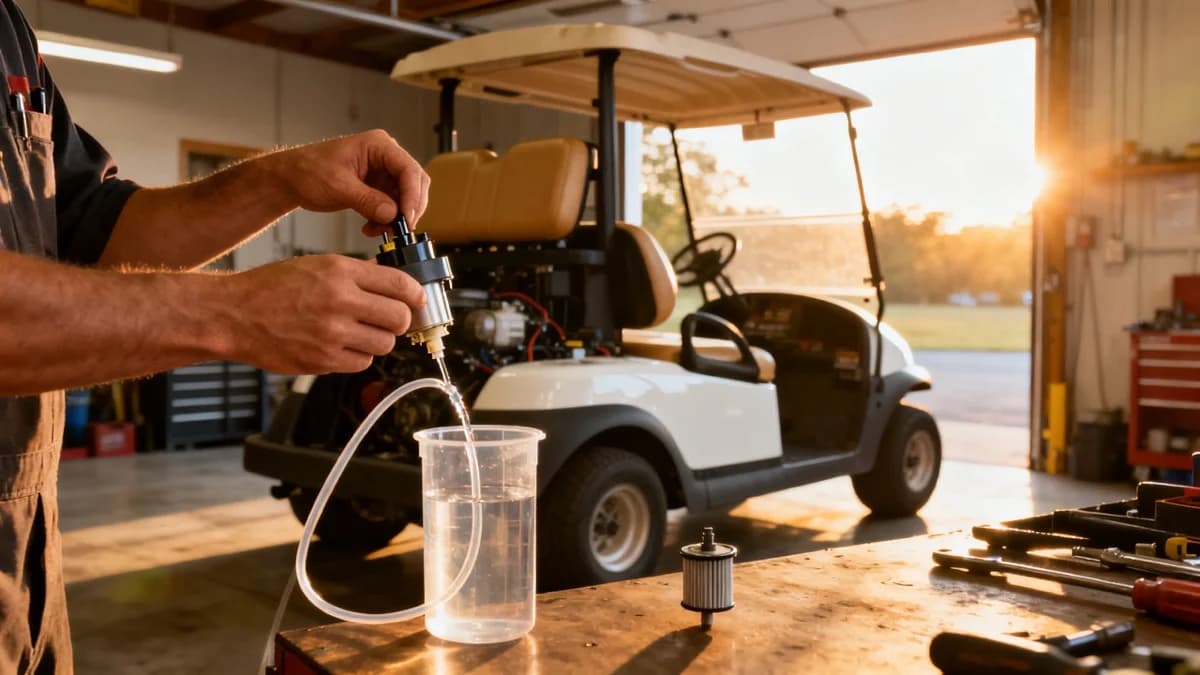
You should see pulses, not necessarily a smooth high-pressure stream. No fuel means the pump is not moving fuel, or fuel is not reaching the pump, or the pump is not receiving a usable engine pulse.
Before replacing the pump, inspect:
- fuel level and tank pickup
- fuel shutoff valve
- fuel filter direction
- suction-side hose cracks
- hose clamps
- impulse hose from engine to pump
- pump vent
- hose routing
Club Car FE290 service guidance specifically calls out tight hose clamps, damaged or clogged impulse and fuel lines, a clogged fuel pump air vent, and clogged filters as checks before disassembling the fuel pump.
Step 4: Check for Fuel in the Impulse Line
A pulse pump should not send gasoline into the impulse line. If that hose is wet with fuel, the pump diaphragm is likely ruptured. Replace or rebuild the pump before running the cart.
Step 5: Test Electric Pump Power and Pressure
For an EFI or electric-pump cart, listen for prime, then test voltage and ground at the pump connector. If the pump receives power and ground but does not run, it is suspect. If it runs but pressure is low, use a fuel pressure gauge and compare to the service manual.
Do not assume an injector is bad just because it sprays some fuel. In a Yamaha EFI owner thread, the useful advice was to test pressure because visible spray may still be too weak for the engine to run correctly. That same logic applies to Club Car and EZGO EFI carts.
If you are not comfortable testing pressure, use a local shop from the golf cart repair directory. EFI parts are expensive enough that guessing gets costly.
Fuel Pump Replacement Cost in 2026
Fuel pump cost depends mostly on pump type.
| Repair Path | Typical Parts Cost | Installed Cost | Notes |
|---|---|---|---|
| Inline fuel filter | $5 to $15 | $20 to $75 | Replace first if old or dirty |
| Basic pulse fuel pump | $15 to $60 | $100 to $250 | Common on older carbureted carts |
| Brand-specific pulse pump | $70 to $120 | $150 to $350 | Better fitment confidence |
| Fuel hoses and clamps | $10 to $50 | $50 to $150 | Often smart during pump replacement |
| EFI pump or full assembly | $150 to $900 | $250 to $1,100+ | Pressure and seal fitment matter |
| Full fuel-system diagnosis | Varies | $100 to $250 before parts | Useful when spark, carb, and pump overlap |
Current parts listings support a wide spread. Pete's Golf Carts lists a Club Car FE290/FE350 pump at about $113 and notes that it draws fuel from the tank through the lines and filter to the carburetor. A DURAFORCE aftermarket 72021-G01 pump for 1994 to 2003 EZGO TXT and Medalist 295cc/350cc carts was listed around $26 during this research. Genuine EZGO part listings for 72021G01 show different replacement status and pricing, so verify fitment by model, engine, and serial number before ordering.
Check Golf Cart Fuel Pump Prices on AmazonReplace the Pump or Keep Testing?
Replace the fuel pump when:
- no outlet flow appears after the filter, pickup, lines, clamps, and impulse hose check out
- gasoline is present in the impulse line
- fuel leaks from the pump body
- an electric pump receives power and ground but will not run
- EFI pressure is below spec and wiring tests good
- the cart repeats the same fuel-starvation symptom after filter and fuel-line fixes
Keep testing when:
- the fuel is old
- the filter is dirty
- the carburetor bowl has fuel but the engine still dies
- there is weak or no spark
- the engine cranks slowly
- the impulse hose is cracked or disconnected
- compression or valve lash is questionable
- the problem only appears under drivetrain load
The most expensive mistake is replacing a pump because the engine starts on spray, then discovering the carburetor idle circuit was clogged the whole time. The second most expensive mistake is installing a cheap EFI pump that does not hold the required pressure.
Brand Notes: EZGO, Club Car, and Yamaha
EZGO Fuel Pump Notes
Older EZGO gas carts vary by year and engine. The common 72021-G01 style pump is associated with 1994 to 2003 TXT and Medalist 4-cycle carts with 295cc and 350cc engines, but later TXT, RXV, EX1, Kawasaki, utility, and fleet variants can differ.
An EZGO RXV EX1 owner manual calls for checking the fuel system for leakage at the tank, cap, lines, filters, pump, and fuel rail at 50 hours or 3 months, then again at 300 hours or 2 years. It also lists fuel-system checks separately from oil, air filter, spark plug, and rear axle maintenance. That is a useful reminder: fuel-system care is scheduled maintenance, not only a breakdown repair.
For broader EZGO ownership issues, use the EZGO golf cart review, EZGO TXT vs RXV guide, and EZGO TXT charger guide if the cart is electric.
Club Car Fuel Pump Notes
Many older Club Car DS and Precedent gas carts use Kawasaki FE-series engines, especially FE290 and FE350 variants. Club Car service material for FE290 gasoline vehicles describes the pump as an impulse fuel pump and points technicians toward hose clamps, impulse lines, fuel lines, pump vent, and filters before pump disassembly.
That is exactly where Club Car diagnosis should start. A cracked impulse hose can mimic pump failure perfectly, and a leaking intake or pulse path can also make the engine act lean.
For used-cart context, compare Club Car DS vs Precedent and the Club Car review before putting serious money into an older gas cart.
Yamaha Fuel Pump Notes
Yamaha has both carbureted and EFI gas carts. Older G-series and Drive models may use pulse-style fuel pumps. Newer QuieTech EFI models add an electric, higher-pressure system where pressure testing matters more than visual fuel checks.
Yamaha fuel-pump complaints show up often in owner discussions because EFI carts can still crank and show some injector activity while pressure is too weak to run correctly. If you have a Drive2 EFI cart, do not buy injectors or a pump only because the engine cranks. Confirm pressure and power first.
For broader Yamaha buying and maintenance tradeoffs, see the Yamaha golf cart review and the electric vs gas golf cart comparison.
Prevention: Make the Next Pump Last
Fuel pumps fail faster when they are forced to pull through old fuel, dirty filters, cracked hoses, or a tank full of debris.
Use fresh fuel. If the cart is used lightly, avoid leaving the same fuel in the tank for months.
Use fuel stabilizer before storage. Add stabilizer, then run the engine long enough to pull treated fuel through the pump and carburetor.
STA-BIL Storage Fuel StabilizerReplace the filter yearly. A $10 filter is cheaper than a pump, carb cleaning, or roadside tow. Buggies Unlimited's fuel filter listings show common gas-cart service filters, which is why model-year checking matters even for simple service parts.
Inspect lines every season. Replace hoses that are hard, cracked, swollen, damp, kinked, or loose at the clamps.
Keep the tank clean. If the cart sat for years, plan on draining fuel, replacing lines and filter, and cleaning the carburetor. Do not expect one new pump to solve a dirty tank.
Run the cart regularly. Gas carts dislike long storage. For seasonal storage, follow the winterization guide and spring maintenance checklist.
Track the whole system. Put fuel filter, fuel lines, spark plug, air filter, oil change, and belt inspection on the same annual list. The complete golf cart maintenance guide covers the full schedule.
When It Is Not the Fuel Pump
Stop chasing the fuel pump if the test results point somewhere else.
Common lookalikes include:
- stale fuel in the carburetor bowl
- clogged pilot jet or main jet
- fouled spark plug
- weak ignition coil
- low 12V battery
- starter-generator slow crank
- tight valves
- low compression
- blocked air filter
- plugged fuel cap vent
- bad carburetor float needle
- slipping drive belt or clutch issue
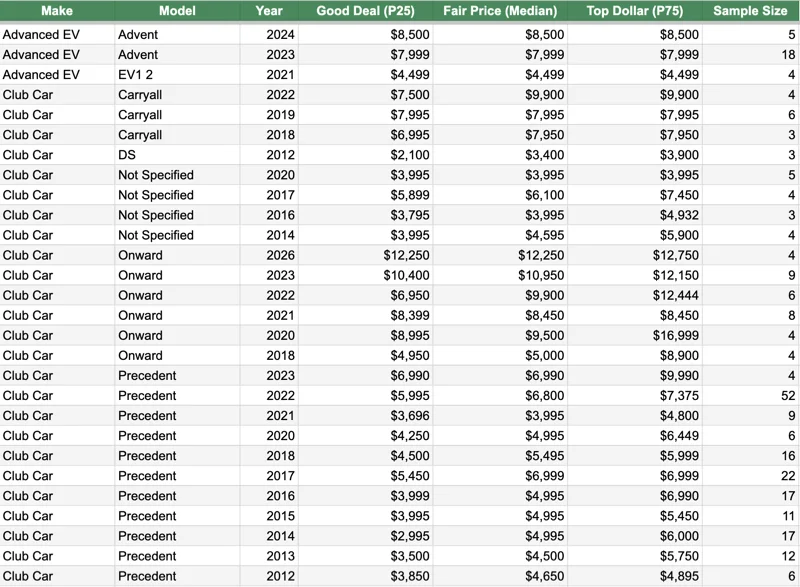
If you are stuck between multiple symptoms, use the interactive golf cart troubleshooter for a repair-cost path. If the cart needs more than one repair, compare total repair cost with used golf cart prices by brand, what your golf cart is worth, and current local inventory in the golf carts for sale directory.
Final Verdict
Do not replace a golf cart fuel pump on symptom alone. Test fuel flow first. On a pulse-pump cart, check the filter, pickup, fuel lines, clamps, impulse hose, and pump vent before ordering parts. On an EFI cart, test power, ground, and pressure before guessing.
For most older gas carts, the smart repair order is simple: fresh fuel, new filter, line inspection, fuel-flow test, spark check, then pump replacement if flow is still missing. Budget $15 to $120 for many pulse-pump parts, $100 to $350 installed for a normal shop repair, and much more if the cart uses an EFI in-tank assembly.
If fuel reaches the carburetor but the engine still starts and dies, the pump has probably done its job. Move to carburetor cleaning, spark, valve lash, compression, or starter-generator diagnosis instead.
FAQ
How can I tell if my golf cart fuel pump is bad?
The strongest clues are a gas engine that cranks normally but will not fire, a cart that starts briefly on starter fluid then dies, no fuel pulse from the pump outlet, a dry filter during cranking, fuel in the impulse line, or a visible fuel leak. Confirm the fuel filter, hoses, spark, and carburetor before ordering parts.
What does golf cart fuel pump replacement cost?
A basic pulse-style fuel pump often costs $15 to $60, while better brand-specific replacements can run $70 to $120. Installed repair commonly lands around $100 to $350. EFI pumps or complete in-tank assemblies can cost several hundred dollars and should be pressure-tested before replacement.
How do you test a vacuum pulse fuel pump?
Disconnect the outlet line, aim it into a safe container, and crank the engine briefly. Fuel should pulse from the line. If it does not, check the fuel filter, tank pickup, suction hose, clamps, impulse hose, and pump vent before replacing the pump.
How do you test an electric fuel pump on a golf cart?
Listen for prime, then check for 12V power and ground at the pump connector. If power and ground are present but the pump does not run, the pump is suspect. If it runs but the cart still dies, test fuel pressure against the service manual.
Why does my golf cart start then die?
It usually gets enough fuel to fire, but not enough to keep running. Common causes include stale gas, clogged idle passages, restricted fuel filter, weak pump, cracked impulse hose, plugged fuel cap vent, weak spark, or low compression.
Why is my fuel filter not filling with gas?
It may not stay completely full in normal operation, but it should not remain dry while cranking. Check fuel level, pickup tube, filter direction, suction-side air leaks, impulse hose, fuel pump diaphragm, and hose routing.
Should I replace the fuel filter with the pump?
Usually yes. The filter is cheap and can restrict flow enough to damage diagnosis. If the pump failed after sitting with old fuel, replace the filter and inspect the hoses at the same time.
Can I use a universal fuel pump on a golf cart?
Sometimes on older carbureted carts, but fitment matters. Match hose size, inlet and outlet direction, impulse port, mounting pattern, and pressure range. Do not use a random low-cost pump on an EFI cart without verifying pressure and connector fitment.
Do electric golf carts have fuel pumps?
No. Standard electric golf carts have no gasoline system. If an electric cart will not move, use battery, cable, solenoid, controller, key switch, charger, and motor diagnostics instead.
Can a bad fuel pump damage the engine?
Indirectly, yes. A weak pump can create lean running under load, which adds heat and can cause drivability or engine damage over time. A leaking pump or hose is an immediate fire risk, so fix fuel leaks before driving.
How often should I replace a golf cart fuel filter?
Once a year is a practical schedule for personal carts, and more often for dusty, commercial, rental, or campground use. Replace it immediately if the filter is discolored, full of debris, or involved in a no-start diagnosis.
What should I check before buying a fuel pump?
Check fuel freshness, tank pickup, fuel shutoff valve, filter, suction hose, impulse line, hose clamps, spark plug, air filter, carburetor bowl, fuel cap vent, and exact cart fitment. On EFI carts, check pressure before buying expensive parts.
Golf Cart Search
Find the Best Golf Carts of 2026
Compare top-rated models, read expert reviews, and find the perfect cart for your needs.