
Best Golf Cart GPS Trackers & Anti-Theft Security Guide (2026)

30,000+ golf carts are stolen every year. Compare the best GPS trackers, locks, and alarms to protect your cart. Prices, reviews, and setup tips.

Michael
Michael
Mar 3rd, 202615 min read
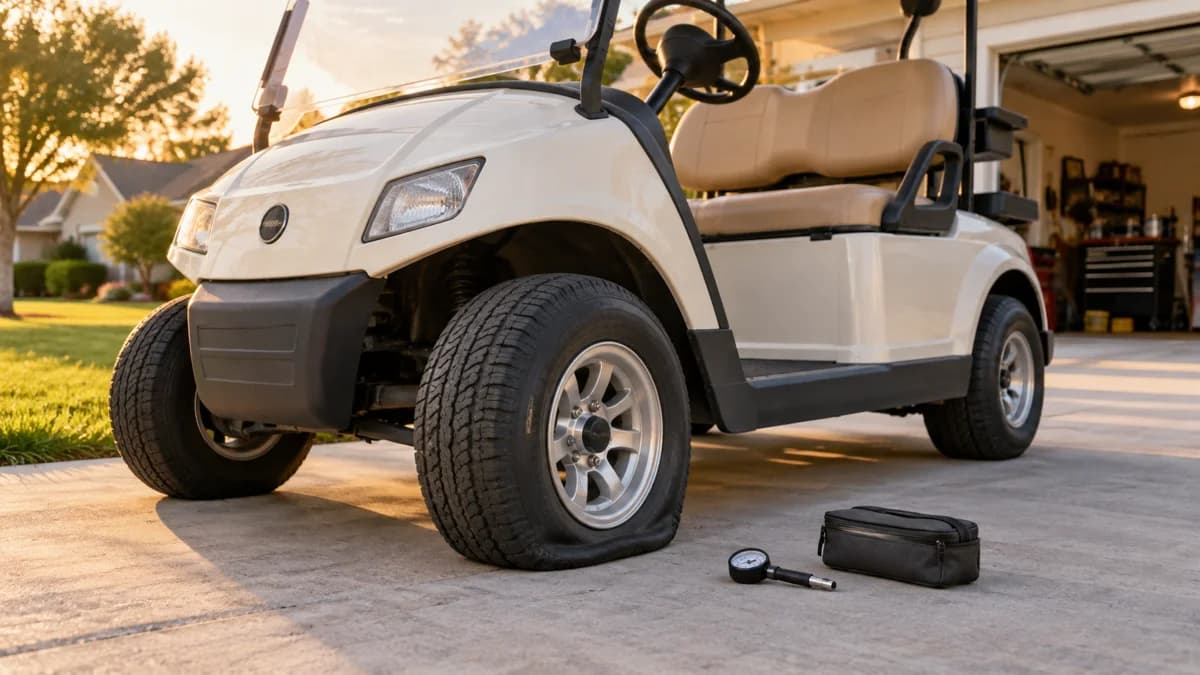
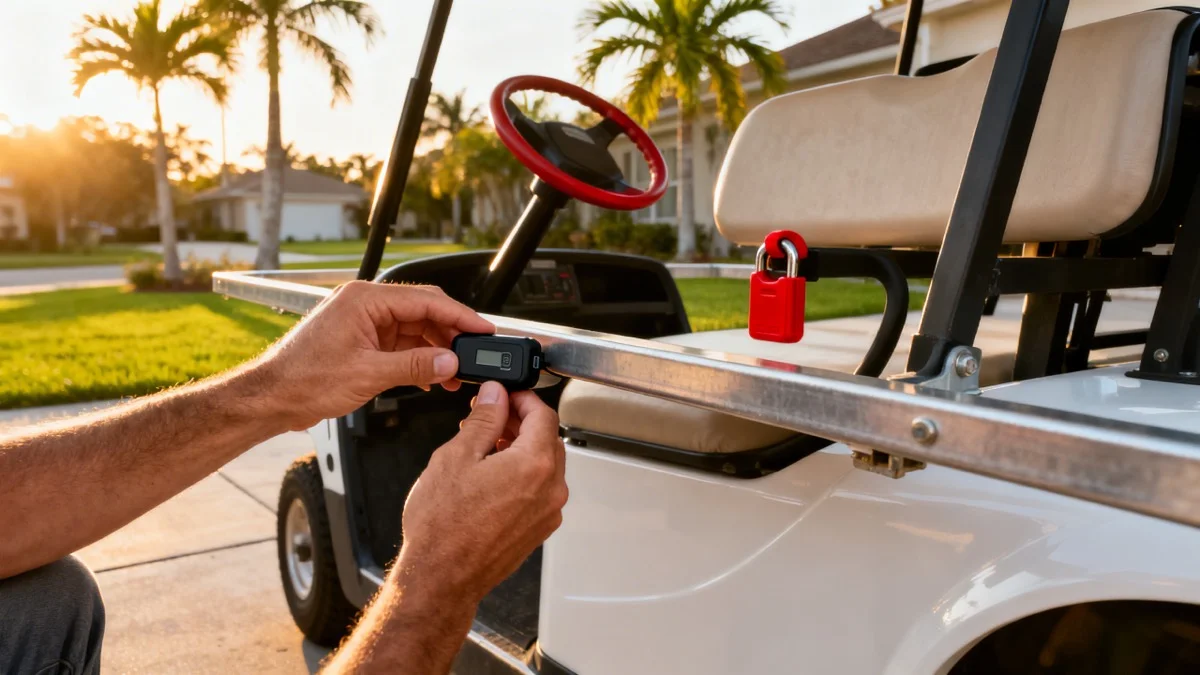
Golf cart with GPS tracker and security system installed in a suburban driveway

As an Amazon Associate, we earn from qualifying purchases. This helps support our site at no extra cost to you.

More than 30,000 golf carts are stolen in the United States every year, and fewer than 30% are ever recovered. The reason is simple: most golf carts have zero built-in security. No alarms, no immobilizers, no tracking systems. Worse, most brands use universal keys that any thief can buy online for $5.

Whether you own a Club Car, EZGO, Yamaha, or any other brand, your cart is vulnerable the moment you park it. The good news? A basic GPS tracker and a physical lock can drop your theft risk dramatically, and the whole setup costs less than one insurance deductible.

This guide covers the best GPS trackers, anti-theft locks, alarms, and security cameras for golf carts in 2026. We tested the claims, compared the subscription costs, and built three complete security setups at different price points so you can pick the right protection for your cart and budget.

30,000+Golf carts stolen annually in the US
Under 30%Recovery rate without GPS tracking
70%Value retention after 5 years
$280Full layered security setup cost

Why Golf Carts Are So Easy to Steal

Before spending money on security, it helps to understand why golf carts are such popular targets. The short answer: they are practically designed to be stolen.

Universal keys are the biggest problem. Most golf cart manufacturers use a handful of key patterns shared across all their models. One Club Car key works on thousands of Club Car carts. Same with EZGO and Yamaha. Thieves buy these keys online for under $10 and walk right up to any cart in a parking lot.

No factory security systems. Unlike cars, golf carts ship with no alarms, no immobilizers, and no GPS tracking. There is no steering column lock, no chip in the key, and no onboard computer to complicate hot-wiring. Some newer models from Icon and Denago are starting to add keyless entry, but the vast majority of carts on the road today have zero electronic security.

Lightweight and easy to move. Most golf carts weigh between 500 and 1,100 pounds, light enough for two people to push onto a trailer. No alarm goes off. No wheel lock engages. In under 60 seconds, your cart is loaded up and gone.

Rarely registered with a VIN. Standard golf carts have manufacturer serial numbers but not DOT-issued Vehicle Identification Numbers. That means they are harder to trace through law enforcement databases. Only street-legal LSVs get assigned VINs during the registration process.

High resale and parts value. Golf carts retain about 70% of their value after five years, and individual components are worth serious money. A golf cart motor can sell for $500 or more. A full set of lithium batteries is worth $2,000 or more. Chop shops strip stolen carts for parts and sell them individually, making the carts nearly impossible to identify.

In February 2026, a chop shop operation was busted in Wildwood, Florida (near The Villages) with four stolen golf carts, a stolen $5,000 Yamaha motor, and over $23,000 in stolen side-by-sides.

Best GPS Trackers for Golf Carts

A GPS tracker is your single most important security investment. If your cart is stolen, a tracker gives law enforcement a real-time location to work with. Without one, your odds of recovery drop below 30%.

Here is how the top GPS trackers compare:

TrackerPriceMonthly FeeBattery LifeWaterproofBest For
Tracki Pro~$60$9.95/moUp to 7 monthsIP67Best overall
Trak-4~$45$6.99/mo12-18 monthsYesLowest subscription cost
LandAirSea 54~$25$9.95/moUp to 2 weeksYesBudget device price
Apple AirTag~$29None1 yearYesNo-subscription backup

Tracki Pro: Best Overall GPS Tracker

The Tracki Pro is the best GPS tracker for most golf cart owners. Its standout feature is the 7-month battery life in power-saving mode, which means you can mount it and forget about it for most of the season.

Key specs:

  • 4G LTE with GPS, GLONASS, and BDS satellite tracking
  • IP67 waterproof rating (survives rain, puddles, and sprinkler systems)
  • Built-in strong magnet for quick, tool-free mounting under the frame
  • Geofence alerts, speed alerts, movement detection, and low-battery warnings
  • Track up to 100 vehicles from one account
  • Works in 180+ countries

Subscription plans: Starting at $9.95 per month on a 2-year prepaid plan. Month-to-month runs $19.95. All plans include real-time tracking with 60-second update intervals. Faster updates (30-second or 15-second) cost $5-$10 more per month.

Why we recommend it: The combination of long battery life, waterproofing, and magnetic mounting makes the Tracki Pro ideal for golf carts. You can attach it under the frame in seconds, and it will run for months before needing a recharge. The app is straightforward, and the geofence feature sends you an instant notification if your cart leaves your property.

Check Price on Amazon

Trak-4: Best Value with Lowest Subscription

If ongoing subscription costs are your main concern, the Trak-4 wins with plans starting at just $6.99 per month on an annual plan. That is the cheapest monitoring fee of any GPS tracker on the market.

Key specs:

  • 4G LTE with 2G fallback
  • GPS plus Wi-Fi location (works indoors too)
  • Multiple mount options: screw mount, adhesive tape, zip ties
  • Geofencing with text and email alerts
  • Available in rechargeable, 12V hardwired, and solar-powered versions

Why it stands out: The hardwired version (about $50) connects directly to your golf cart's battery system, eliminating the need to ever recharge the tracker. The solar version is perfect if your cart sits outdoors in a driveway or uncovered parking spot. At $6.99 per month, the Trak-4 costs $84 per year for monitoring versus $120 or more for most competitors.

Check Price on Amazon

LandAirSea 54: Best Budget Device

The LandAirSea 54 is one of the most affordable GPS tracker devices at around $25. The device itself is compact, waterproof, and made in the USA with location accuracy within 6 feet.

Key specs:

  • Updates as fast as every 3 seconds
  • Historical location playback up to 1 year
  • Live link sharing (send real-time location to police during a theft)
  • Unconditional lifetime warranty on the device
  • Ultra-compact with built-in magnet

Trade-off: The battery life is shorter at around 2 weeks with average use. You will need to recharge it more frequently than the Tracki Pro or Trak-4. The subscription runs $9.95 per month on a 2-year plan or $19.95 monthly.

Best for: Cart owners who want the lowest upfront cost and plan to check the tracker regularly. The live link sharing feature is especially useful because you can text a tracking link directly to police if your cart is stolen.

Check Price on Amazon

Apple AirTag: Best No-Subscription Backup

Apple AirTags are not true GPS trackers, but they deserve a spot in this guide because they cost $29, have zero monthly fees, and work surprisingly well in populated areas.

How AirTags work on golf carts: Instead of using cellular GPS, AirTags rely on Apple's Find My network. When any iPhone, iPad, or Mac passes near your AirTag, it silently relays the AirTag's location to you. In golf cart communities like The Villages or Peachtree City, where iPhones are everywhere, AirTags update frequently.

Limitations: AirTags do not provide real-time tracking, geofence alerts, or speed monitoring. In rural areas with few Apple devices nearby, location updates can be slow or nonexistent. Apple also built in anti-stalking features that alert nearby iPhone users to unknown AirTags traveling with them, which could tip off a tech-savvy thief.

Our recommendation: Use an AirTag as a backup tracker hidden in a separate location from your primary GPS tracker. If a thief finds and removes the GPS unit, the AirTag may still help you recover the cart. Hide it inside the frame, behind a body panel, or inside an aftermarket speaker housing. A concealed AirTag mount costs about $10-$15 on Amazon.

GPS Tracker vs Apple AirTag: Which Should You Choose?

FeatureDedicated GPS TrackerApple AirTag
Real-time locationYes (3-60 second updates)No (depends on nearby Apple devices)
Monthly subscription$7-$20/monthNone
Battery life2 weeks to 7 monthsAbout 1 year
Geofence alertsYesLimited (via Find My)
Speed alertsYesNo
Works in rural areasYes (cellular network)Poorly
Movement detectionYesBasic
Share location with policeYes (live link)Yes (via Find My)
Best use casePrimary trackerHidden backup

Bottom line: A dedicated GPS tracker should be your primary security device. An AirTag is a smart $29 backup hidden in a second location on your cart.

Best Anti-Theft Locks for Golf Carts

Physical locks are your visible deterrent. Most opportunistic thieves will move on when they see a lock, even if they could eventually defeat it. Think of a lock as buying time, not providing absolute security.

RHOX Pedal-to-Wheel Lock: Best Physical Deterrent

The RHOX pedal-to-wheel lock is the only "Club"-style lock designed specifically for golf carts. It connects your brake pedal to the steering column, immobilizing both the steering and drive systems at once.

Key specs:

  • Heavy-duty tempered steel construction
  • Bright red color acts as a visual warning to thieves
  • No batteries, no subscription, no installation needed
  • Fits most Club Car, EZGO, and Yamaha models

Limitations: Some owners report fitment issues with certain EZGO models. Check compatibility with your specific cart before purchasing. Like any physical lock, it can be defeated with enough time and tools, but the goal is deterrence and delay.

Price: Around $35-$45. For a one-time purchase with no ongoing costs, this is one of the best values in golf cart security.

Check Price on Amazon

DIY Kill Switch: The Hidden Security Layer

A kill switch is a simple toggle that interrupts the electrical circuit to your cart's motor or controller. When the switch is off, the cart will not start even with the correct key. Because the switch is hidden, a thief has no idea why the cart will not move.

How to install one:

  1. Disconnect your cart's battery before starting
  2. Choose a hidden location for the switch (under the dash, behind the kick panel, inside a storage compartment)
  3. Wire the switch into the main power line between the battery and controller
  4. Test that the cart starts normally when the switch is on and does not start when it is off

Kill switch kits cost $10-$30 and take about 30 minutes to install. If you are not comfortable with electrical work, any golf cart repair shop can install one for $50-$100 in labor.

Best Golf Cart Alarms

An alarm adds an audible layer to your security setup. The sound draws attention and scares off casual thieves who were counting on a quiet getaway.

Guardian Golf Cart Alarm: Best Purpose-Built Option

The Guardian is built specifically for golf carts, with a vibration sensor that triggers when someone steps on the cart or tries to move it.

Key specs:

  • Wireless installation with magnetic mount (no drilling or wiring)
  • Remote control activation from up to 66 feet
  • Rechargeable battery with easy indoor charging
  • Waterproof and shockproof
  • Loud alarm siren

Why it works for golf carts: The magnetic mount attaches to the undercarriage without any modifications to your cart. Arm it with the remote when you park, and any vibration triggers the alarm. Disarm it from 66 feet away as you walk up.

Price: Around $60. No subscription or monitoring fees.

Check Price on Amazon

Budget Alternative: WSDCAM Vibration Alarm

If $60 feels steep for an alarm, the WSDCAM vibration alarm 2-pack costs around $25 and provides 113dB of deterrent power. Mount one on the cart and one near your parking area. The wireless remote lets you arm and disarm from a distance.

The trade-off is build quality. The WSDCAM is a universal alarm designed for bikes, motorcycles, and trailers. It works, but it is not golf-cart-specific like the Guardian.

Security Cameras for Your Parking Area

A camera pointed at your golf cart parking spot adds both deterrence and evidence collection. Most golf cart thefts happen from driveways, carports, and open parking areas where a camera can cover the entire scene.

The Blink Outdoor 4 is an Amazon-owned wireless security camera that runs on two AA batteries for up to 2 years. No wiring, no electrician, and it pairs with Alexa.

Key specs:

  • 1080p HD video with infrared night vision
  • Motion detection with customizable zones
  • Two-way talk (speak to intruders through the camera)
  • Weather-resistant (IP65)
  • 2-year battery life on AA lithium batteries
  • Optional cloud storage at $3 per month per camera

Golf cart use case: Mount it under your carport eave, on your garage wall, or on a post near your driveway. Set a motion zone that covers your cart's parking spot. You will get a phone notification with a video clip any time someone approaches. The night vision works well for the 2 AM theft attempts that are common in residential areas.

Price: Around $50 for a single camera with sync module. Multi-camera kits bring the per-camera cost down.

Check Price on Amazon

Building a Complete Security System

The most effective approach to golf cart security is layering multiple types of protection. Each layer addresses a different threat: physical locks deter, alarms alert, GPS trackers enable recovery, and cameras collect evidence.

Here are three setups at different price points:

Budget Setup: $70 + $7/month

ComponentProductCost
GPS trackerTrak-4 (rechargeable)~$45
Physical lockSteering wheel lock~$25
Total upfront~$70
Monthly costTrak-4 subscription$6.99/mo

This covers the essentials: location tracking for recovery and a visible deterrent against opportunistic theft. Good for carts stored in a garage or gated community.

Mid-Range Setup: $170 + $10/month

ComponentProductCost
GPS trackerTracki Pro~$60
Backup trackerApple AirTag + hidden mount~$40
Physical lockRHOX pedal-to-wheel lock~$40
Kill switchDIY kit~$30
Total upfront~$170
Monthly costTracki Pro subscription$9.95/mo

This setup covers prevention (lock + kill switch), detection (backup AirTag), and recovery (GPS tracker). The kill switch defeats the universal key problem, the lock is a visual deterrent, and you have two independent tracking devices in case a thief finds one.

Premium Setup: $280 + $13/month

ComponentProductCost
GPS trackerTracki Pro~$60
Backup trackerApple AirTag + hidden mount~$40
Physical lockRHOX pedal-to-wheel lock~$40
Kill switchDIY kit~$30
AlarmGuardian Golf Cart Alarm~$60
Security cameraBlink Outdoor 4~$50
Total upfront~$280
Monthly costTracki Pro + Blink cloud~$13/mo

This is the full layered approach: deterrence (lock + alarm + camera), prevention (kill switch), tracking (GPS + AirTag), and evidence (camera footage). For a cart worth $5,000 to $15,000, spending $280 upfront and $13 per month is a reasonable investment.

Where to Hide a GPS Tracker on Your Golf Cart

Placement matters. If a thief finds your tracker in 30 seconds, it is useless. Here are the best hiding spots by cart type:

Under the frame rails: Most golf carts have steel frame rails that run the length of the cart. A magnetic tracker sticks directly to the underside of these rails, out of sight from anyone standing next to the cart.

Inside the dashboard cavity: Remove the dashboard cover (usually 4-6 screws) and tuck the tracker inside. This location protects the tracker from weather and keeps it invisible.

Behind the rear body panel: The rear body panel on most carts can be removed with a few bolts. Place the tracker inside, against the frame, and reinstall the panel.

Inside the battery compartment area: Not on the batteries themselves, but in the surrounding cavity. Most thieves checking for trackers will look under the seat and in the glove box. Few will dig into the battery compartment.

Under the roof support: If your cart has a roof, the support struts often have hollow cavities where a small tracker can be hidden with zip ties or adhesive tape.

What to Do If Your Golf Cart Is Stolen

If the worst happens, acting quickly improves your chances of recovery. Follow these steps in order:

1. Check your GPS tracker immediately. Open your tracker app and note the current location. If the cart is moving, you can share a live tracking link with police. Do not attempt to confront the thief yourself.

2. Call police and file a report. Provide your cart's serial number, brand, model, year, color, and any unique customizations (aftermarket wheels, lift kit, LED lights, custom seat covers). Share GPS tracking data with the responding officer.

3. Check security camera footage. If you have a camera, save and download the footage. This helps police identify the thief and serves as evidence for your insurance claim.

4. Contact your insurance company. If you have comprehensive coverage on your golf cart, file a theft claim. You will need the police report number, your cart's serial number, and proof of ownership. See our golf cart insurance guide for details on what is typically covered.

5. Spread the word locally. Post on your neighborhood Facebook group, Nextdoor, and any community forums. Include photos and the last known GPS location. Golf cart communities are tight-knit, and neighbors often spot stolen carts quickly.

6. Monitor online marketplaces. Check Craigslist, Facebook Marketplace, and OfferUp in your area for your cart or its parts being resold. Stolen carts sometimes appear for sale within days, especially if they have been repainted or had identifying features removed.

7. Contact local dealers. Notify golf cart dealers in your area and repair shops. Thieves sometimes bring stolen carts to shops for parts or service, not realizing the shop owner might recognize it.

Does Insurance Cover Golf Cart Theft?

Yes, but only if you have the right policy. Here is the quick breakdown:

Comprehensive coverage is what covers theft. It typically costs $400-$1,000 per year with a $250-$500 deductible. If your cart is stolen and not recovered, your insurer pays the depreciated value minus your deductible.

Liability-only coverage (around $75 per year) does not cover theft at all. It only covers damage you cause to other people or property while driving.

Homeowners insurance may cover a golf cart stolen from your property, but limits are often low and it depends on your specific policy. A standalone golf cart insurance policy with comprehensive coverage is the most reliable option.

Anti-theft discounts: Many insurers offer premium discounts for GPS trackers, alarms, and storing your cart in a locked garage. Ask your agent specifically about anti-theft device discounts when shopping for golf cart insurance.

For a full breakdown of coverage options, costs by state, and tips for finding the best rates, read our complete golf cart insurance guide.

Where Golf Cart Theft Is Worst

Golf cart theft is a nationwide problem, but certain areas see significantly more thefts due to high cart concentrations and outdoor parking.

Florida

Florida is the epicenter of golf cart theft in America. Communities like The Villages (with over 100,000 golf carts), Key West, Fort Myers, and Palm Coast report frequent thefts. In February 2026, a chop shop bust in Wildwood, Florida, uncovered four stolen carts and thousands in stolen parts. The operator was charged with running a chop shop, four counts of burglary, and four counts of grand theft.

Florida's warm climate means carts are parked outdoors year-round, and the state's massive golf cart population creates a large target-rich environment. If you live in a Florida golf cart community, security should be a top priority.

Georgia: Peachtree City

Peachtree City has over 100 miles of golf cart paths and uses carts as primary transportation. Golf cart theft there nearly doubled in 2021, jumping from 17 to 32 reported thefts (an 88% increase). Teen-related incidents on multi-use paths, including theft and joyriding, remain an ongoing concern.

South Carolina: Myrtle Beach and the Grand Strand

North Myrtle Beach police have issued public warnings about rising golf cart theft. Rental carts and tourist-area carts are particularly vulnerable. South Carolina golf cart laws require registration in many areas, which helps with recovery, but prevention is still better than relying on law enforcement after the fact.

Other Hotspots

Arizona retirement communities (especially around Sun City), Texas coastal communities, and California resort areas all report above-average golf cart theft rates. If you live in any of these areas and park your cart outdoors, the premium security setup is worth every dollar.

Protecting Your Investment

A golf cart is a real investment. New carts cost $8,000 to $15,000 or more, and even used carts hold significant value. Spending $70 to $280 on security to protect an asset worth thousands is one of the smartest upgrades you can make.

Start with a GPS tracker. Add a physical lock. If you park outdoors or live in a high-theft area, build up to the full layered system. Every layer you add makes your cart a harder target, and thieves, like all criminals, prefer easy ones.

For more ways to protect and improve your cart, check out our guides to the best golf cart accessories, maintenance tips to keep your cart running, and finding trusted dealers near you.

Frequently Asked Questions

Can you put a GPS tracker on a golf cart?

Yes. Most GPS trackers attach magnetically to your golf cart's frame or can be hidden under the seat, inside the dashboard, or behind body panels. No permanent modifications are needed. Devices like the Tracki Pro and Trak-4 cost $40-$70 upfront plus $7-$20 per month for cellular service.

Are golf cart keys really universal?

Yes, and this is the single biggest security vulnerability for golf cart owners. Club Car, EZGO, and Yamaha all use a limited number of key patterns shared across their entire product lines. A thief can buy a replacement key for any brand on Amazon for under $10. Installing a kill switch or aftermarket keyed ignition is the best way to defeat this weakness.

What is the cheapest way to secure a golf cart?

A steering wheel lock ($25) plus a hidden kill switch ($10-$30 DIY) gives you basic theft prevention for under $60 with no monthly fees. Adding a Trak-4 GPS tracker ($45 plus $6.99 per month) gives you recovery capability too. This budget setup of about $100 upfront significantly reduces your risk.

Should I hardwire my GPS tracker to the golf cart battery?

Hardwiring eliminates the need to recharge the tracker and is a good option if your cart has a reliable battery system. The Trak-4 offers a 12V hardwired version specifically for this purpose. The downside is that if the thief disconnects the battery, the tracker dies too. For this reason, many owners hardwire their primary tracker and hide a battery-powered backup (like an AirTag) in a separate location.

How fast can police recover a stolen golf cart with GPS?

Recovery time varies, but GPS tracking dramatically improves the odds. With a real-time tracker sending location updates every 30-60 seconds, police can potentially locate a stolen cart within hours. Without GPS, recovery rates drop below 30% and many carts are never found. The LandAirSea 54's live link sharing feature lets you send a tracking URL directly to the responding officer's phone.

Do I need golf cart security if I live in a gated community?

Gated communities reduce theft risk but do not eliminate it. Many golf cart thefts happen within gated and planned communities, often by residents, visitors, or teens joyriding. The Villages, one of the most popular gated retirement communities in America, regularly reports golf cart thefts. At minimum, use a steering wheel lock and consider a GPS tracker as affordable insurance.

Share this post

Golf Cart Search

Find the Best Golf Carts of 2026

Compare top-rated models, read expert reviews, and find the perfect cart for your needs.
Browse Top-Rated Carts

Related posts

Stay in the loop

Stay Updated with Golf Cart News

Get the latest updates on golf cart services, tips, and exclusive offers delivered to your inbox.