As an Amazon Associate, we earn from qualifying purchases. This helps support our site at no extra cost to you.
Golf cart wheel bearings need model-specific inspection, not an automatic shot of grease or a guessed nut adjustment. If a wheel grinds, wobbles, binds or changes how the cart steers or stops, park it and arrange inspection. A noise can come from a bearing, but it can also come from tires, brakes, loose hardware or another moving joint.
This guide helps you record the symptom, find the applicable service instruction and avoid ordering a bearing before identifying the assembly. It is for owners preparing maintenance or a repair visit. Hub dismantling, bearing adjustment and press work require the matching service procedure and suitable equipment.
Golf cart wheel bearings: what three manuals show
On October 25, 2026, we compared the maintenance charts in three manufacturer manuals downloaded from current manufacturer sources. We recorded the document number, model coverage, named task, interval and whether the chart supplies the actual repair procedure. This is our document comparison, not hands-on bearing testing or a survey of failure rates.
| Exact document | Bearing-related instruction we found |
|---|---|
| E-Z-GO RXV EX1 EFI, 10036460-A, labeled model year 2024-current | Separate front-bearing check/adjust entry at 250-300 hours or yearly. Front-suspension inspection, including hubs and kingpins, appears earlier at 50 hours or three months. |
| E-Z-GO RXV ELiTE, 10193239-B, 2027+ | Front-suspension inspection includes hub/kingpin play at 20 hours or monthly. The chart does not provide the EX1's separate bearing-adjustment entry. |
| Yamaha DR2 AC, J0J-F8199-38-E0, 2027 | Front wheel-bearing play and rear axle-bearing roughness/free play appear as separate tasks in the annual/250-hour chart column. The service reference is a qualified mechanic or dealer. |
Our finding is about task scope: a general hub-play inspection and a separate bearing-service entry are not interchangeable. Copying only the longest interval can omit an earlier inspection. Conversely, an inspection entry does not authorize dismantling, repacking or adjusting an unidentified hub.
This deliberately small sample does not cover every Club Car, TXT, RXV or Yamaha, and it cannot establish which bearing is installed on your modified cart. The two RXV charts concern different configurations; their differences do not prove a design change or a longer bearing lifespan. Check serial coverage and superseded instructions before applying any row.
RXV EX1: keep the earlier hub check on the schedule
The RXV EX1 EFI manual, printed page 31, contains both entries shown above and uses the interval reached first. Its annual bearing entry is not permission to ignore wheel looseness between services. The chart also does not supply a universal bearing-nut torque or clearance figure.
Use the E-Z-GO manual library and your serial identification to obtain the applicable procedure. Our TXT versus RXV guide explains why a platform name matters when requesting parts.
RXV ELiTE: inspection is not a repacking instruction
The 2027+ RXV ELiTE manual, printed page 24, includes hubs in its front-suspension inspection. Nothing in that chart establishes that every bearing is sealed, or that the EX1 adjustment procedure applies. Ask for the installed hub's service information if the owner chart leaves the next action unresolved.
Yamaha DR2 AC: separate front and rear work
The 2027 Yamaha DR2 AC manual, printed page 24, distinguishes the two locations. Its starred service references direct work to a Yamaha dealer or other qualified mechanic; the procedures are in the service manual. The chart also warns that unusually wet, dusty, sandy or muddy use can require more frequent service for some items.
For Yamaha carts, record the model code rather than requesting a generic “Yamaha bearing.” Our Yamaha G29 identification guide covers a different platform context; it should not substitute for this DR2 document.
Golf cart wheel bearings: describe the symptom first
Write down where the noise seems to originate, when you first noticed it and what happened immediately beforehand. Recent tire, brake, hub or lift work is useful information for the repairer. Report what you observed without deciding which replacement part must be responsible.
SKF's bearing troubleshooting guidance lists noise, heat and looseness among conditions with multiple possible causes. These include contamination, lubrication problems, damaged surfaces and mounting problems. A symptom is a reason to investigate, not a part number.
| Observation to report | What still needs distinguishing |
|---|---|
| Hum or rumble around a wheel | Bearing condition versus tire noise or another rotating component. |
| Scraping that appeared after service | Brake contact, installation issues and wheel-end condition. |
| A wheel visibly rocks or wobbles | Wheel mounting, hub/bearing movement and steering/suspension joints. |
| Heat, odor or binding near one corner | Brake drag and wheel-end friction. Avoid touching hot parts. |
| Pulling or uneven tread wear | Tire condition/pressure, brakes, alignment and loose components. |
Do not create a road test by swerving, accelerating harder or carrying passengers while trying to locate the sound. A phone recording from a previously observed event can help, but it is not worth another drive with an unsafe wheel. Tell the shop whether steering or braking changed.
For related symptoms, use our brake maintenance guide, tire-pressure guide and wheel-alignment guide. Those pages cover different checks; alignment cannot take clearance out of a worn joint.
Identify the hub before buying a bearing kit
A useful parts request identifies more than the brand. Start with:
- Vehicle model, serial/build code and drive system.
- Front or rear location, including left or right side.
- Original suspension or the exact lift-kit/spindle manufacturer and model.
- Hub or assembly part number from the applicable catalog, checked against installed hardware.
- The diagnosis and the parts included in the proposed repair.
Our serial-number guide helps locate the vehicle identity. For a Club Car, retain the build details even when a seller advertises broad DS or Precedent compatibility. A replacement spindle can make the original vehicle catalog insufficient on its own.
Ask whether a proposed package includes the required bearing components, seals, spacers and locking hardware, or whether the repair calls for a complete hub. Confirm quantities per wheel. Two products described as a “bearing kit” can leave you with different shopping lists.
Photograph accessible identification from outside the underbody area. A broad “fits most carts” label, wheel diameter or bolt pattern does not establish the internal bearing fit. Our lift-kit guide and wheel-spacer guide provide context when the front end has been modified.
Sealed bearings, dust caps and grease are different things
A removable hub dust cap and seals built into a bearing perform different jobs. Seeing a cap does not tell you whether the bearing beneath it has a serviceable lubrication procedure. Determine that from the assembly's documentation.
SKF's bearing maintenance handbook, printed page 41, cautions that opening small sealed bearings for cleaning and regreasing can damage seals and introduce dirt. Do not treat removing an integral seal as routine owner maintenance.
For a bearing that the matching procedure does allow you to clean, inspect and repack, obtain its lubricant specification, inspection criteria, installation method and adjustment procedure before starting. A damaged race or worn mounting surface needs the specified repair; adding lubricant does not establish that the assembly is fit to return to service.
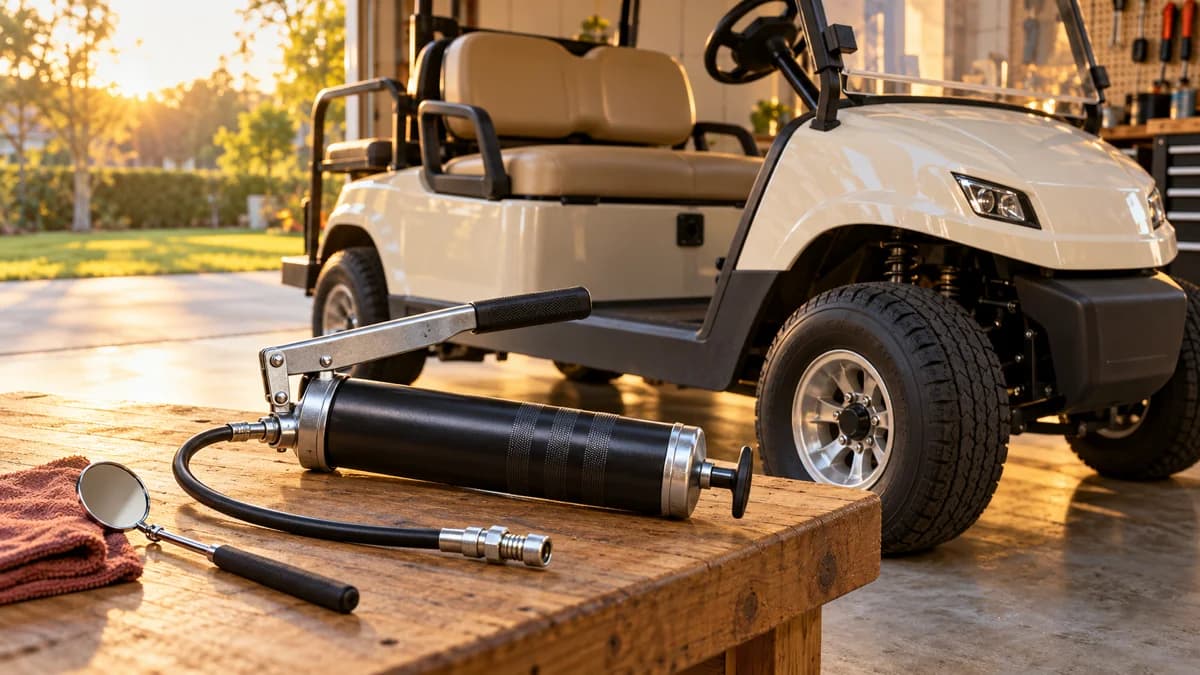
Grease at a suspension fitting serves the joint connected to that fitting. It does not prove grease reaches a wheel bearing. Our grease-point guide distinguishes fittings, spray-lubricant tasks and inspection entries. Use it to avoid connecting a grease gun to the wrong maintenance problem.
Leave nut adjustment and press work to the exact procedure
The wheel's lug nuts hold the wheel to its mounting surface. A central retaining or adjusting nut belongs to a different assembly and can have a different tightening, seating, measurement and locking sequence. Do not use a wheel-lug torque value on a bearing-adjusting nut.
A generic “tighten, then back off a quarter turn” instruction leaves critical details unresolved. The service procedure must identify the hub, required tools, measurement or setting, hardware replacement and final verification. Tightening until visible movement disappears can conceal the original cause while producing an incorrect setting.
SKF's hub-bearing notice reinforces following the original equipment procedure for the applicable assembly. Its automotive hub examples are not golf-cart torque specifications. Similarly, our lug-nut torque guide concerns wheel fasteners and must not become a hub-adjustment chart.
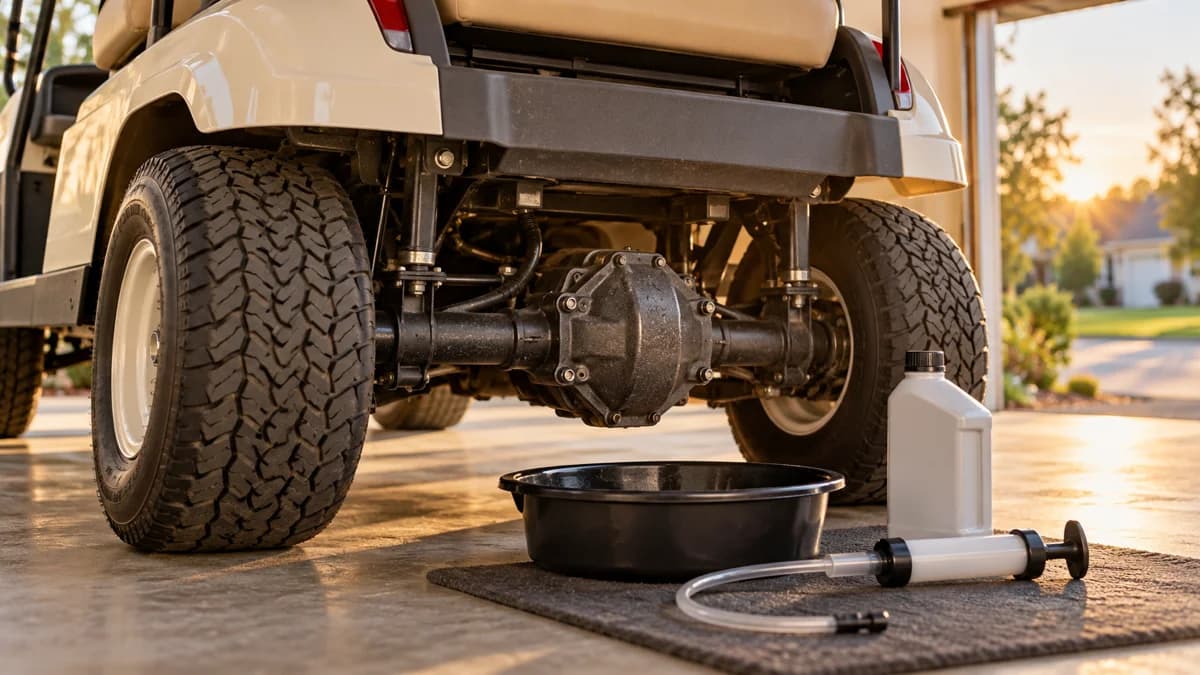
If inspection requires raising the cart, use the exact vehicle and installed suspension's lifting instructions, correct supports and a firm, level work area. A jack alone is not a work support. Read our golf cart jack-point guide before deciding whether you can perform the inspection safely. For electric models, confirm the tow/run and isolation procedure; a switch position alone is not proof all hazardous energy is isolated.
Three useful inspection aids
You may already own these. They help with accessible observations and parking preparation; none measures bearing clearance, confirms internal condition or replaces a service procedure. Check current prices on the product pages rather than relying on a copied offer.
A compact inspection light: the Streamlight 66118 Stylus Pro can illuminate accessible fasteners, cap edges and identification. Use the light to document what is visible, not to pronounce an unseen bearing healthy.
View the Streamlight 66118 on Amazon →A telescoping mirror: the Ullman C-2 can help photograph an otherwise awkward but safely accessible surface. Keep your head and body out of unsupported underbody spaces. A mirror is an identification aid, not a bearing-play test.
View the Ullman C-2 inspection mirror on Amazon →Wheel chocks: MaxxHaul 70472 rubber chocks are one option to evaluate for your tire size, surface and parking/support procedure. Chocks help restrain wheels remaining on the ground. They do not support a raised vehicle or make an unsuitable lifting point safe.
Check MaxxHaul 70472 on AmazonOur essential tool-kit guide covers the broader kit. Buy a puller, press adapter or measuring tool only after the exact repair procedure establishes what you need.
Keep a two-part service record
The manual comparison above exposed a practical scheduling problem: one line labeled “bearings yearly” can hide an earlier hub or suspension inspection. Keep routine observation and scheduled specialist service as separate entries, then link both to the same wheel location.
Use this record when booking an appointment:
| Record field | What to enter |
|---|---|
| Cart and assembly identity | Model/build code, front/rear, side, lift or spindle details. |
| Observation | Noise, visible movement, binding, heat or tire wear; date and circumstances. |
| Applicable source | Manual number/revision, page and exact named task. |
| Service trigger | Calendar, hours and any other applicable limit, tracked separately. |
| Inspection finding | What the technician actually measured or identified; retain unresolved questions. |
| Repair and release | Parts, procedure/reference, completed checks and next due entry. |
For a scheduling example, imagine a matching RXV EX1 with the listed 50-hour/three-month front-suspension task, 10 hours accumulated since that service and three calendar months elapsed. The calendar trigger has arrived even though the hour counter is short. The calculation is simply 50 minus 10 = 40 hours remaining on the hour trigger; those unused hours do not extend the calendar limit. These are teaching inputs, not a record from an inspected cart.
A symptom does not wait for either trigger. Mark the cart out of use and contact a repairer when its condition is unsafe. Ask for findings that distinguish the bearing from the hub, spindle, steering joints or brakes, so a later repeat symptom can be compared with the actual repair.
Keep the record with your maintenance schedule. If the assembly remains unidentified or the job requires equipment you lack, find a local shop through our repair directory and bring the photos, manual reference and symptom notes.
Frequently asked questions
What are the signs of a bad golf cart wheel bearing?
Wheel-area noise, rough rotation, looseness or unusual heat justify inspection. They do not identify a bearing by themselves. Tires, brakes, steering parts and loose wheel hardware also need to be checked.
How often should golf cart wheel bearings be checked?
Use the exact model manual. RXV EX1 manual 10036460-A has a separate front-bearing check at 250-300 hours or yearly, whichever comes first, plus earlier front-suspension checks. Other models use different entries.
Can I drive with a loose or grinding golf cart wheel?
Stop using the cart and arrange inspection when a wheel wobbles, grinds, binds or affects steering or braking. Do not keep driving to see whether grease or continued use makes the problem disappear.
Are all golf cart wheel bearings sealed?
Do not assume one design covers every cart. Identify the installed hub and bearing from the correct parts and service information. A dust cap over a hub does not by itself identify an internally sealed bearing.
Can I repack a sealed wheel bearing?
Do not pry off integral seals unless the exact component procedure authorizes it. SKF warns that removing seals from small bearings to clean and regrease them can damage the seals and introduce contamination.
Is a wheel-bearing nut tightened like a lug nut?
No. Wheel lug nuts and a hub-retaining or bearing-adjusting nut serve different purposes. Follow the exact hub procedure for seating, adjustment, measurement and locking hardware; do not transfer a lug-nut torque value.
Does Yamaha list front and rear bearing checks separately?
The 2027 DR2 AC manual J0J-F8199-38-E0 lists front wheel-bearing play with wheel-nut tightness and separately lists rear axle-bearing roughness or free play. Both entries refer the service work to a dealer or qualified mechanic.
Will wheel alignment fix bearing play?
Alignment cannot repair a worn bearing, damaged hub or loose steering joint. Have the source of movement identified and repaired before setting alignment. A wheel that moves at several joints needs diagnosis, not just toe adjustment.
Golf Cart Search
Find the Best Golf Carts of 2026
Compare top-rated models, read expert reviews, and find the perfect cart for your needs.