
As an Amazon Associate, we earn from qualifying purchases. This helps support our site at no extra cost to you.
Tomberlin Golf Cart Reviews: Price, Range & Problems
The short version of these Tomberlin golf cart reviews is that Tomberlin makes some of the most interesting premium LSVs on the market, but they are not the easiest carts to recommend blindly. Tomberlin golf carts are good if you want a high-feature street-legal electric cart and have a strong dealer nearby. They are less convincing if resale value, simple service, or the deepest dealer network matters most.
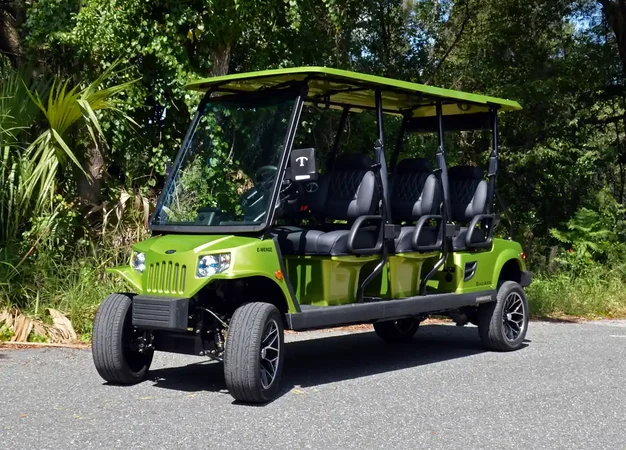
If you test-drive a Tomberlin, the appeal is obvious. The brand leans hard into the things many buyers actually notice on day one: connected features, upscale interiors, power steering, 25 mph road-ready setup, strong claimed range, premium lighting, and a much more automotive feel than the average neighborhood cart. The current Engage LX, GTZ, and Ghosthawk feel closer to “small electric runabout” than “country club fleet car.”
The harder question is what happens after the test drive. Tomberlin costs real money. It also lives in a space where buyers can choose a proven Club Car, Yamaha, or EZGO, or save thousands with newer value brands like ICON and Advanced EV.
This review covers Tomberlin pricing, the models worth caring about, the real ownership risks, and which buyers should choose Tomberlin versus a legacy brand, a value brand, or a clean used cart from our dealer directory.
Market Position Premium LSV specialist
Current Price Signal $14,999 to $19,999
Warranty 5-year limited
Claimed Range Up to 80 miles
Best Fit Tech-focused neighborhood buyers
Biggest Risk Support and resale depth
Quick Answer: Are Tomberlin Golf Carts Good?
Tomberlin Golf Cart Reviews: Quick Verdict
Tomberlin is one of the easiest brands to like if you care about factory luxury and street-ready equipment. The official model pages currently highlight things that many competitors still treat as upsells or do not offer at all: Tomberlin 360 connected-car features, wireless charging, power steering, upscale CoolTouch seating, integrated rear cameras, and claimed 80-mile lithium range on the premium models.
Tomberlin's official Engage LX page lists a 5-year limited warranty, 25 mph street-legal speed, Evolve L210 10 kWh lithium battery, and up to 80 miles of range; the Engage lineup page describes Tomberlin 360, power steering, 450-amp / 17 hp AC powertrain, and the warranty coverage; Tomberlin's Why Tomberlin page reinforces the same premium LSV positioning.
That is the good news.
The bad news is that Tomberlin does not get a free pass just because the brochure is better. The carts are expensive. The dealer network is smaller than the Big 3. The used market is thinner. And unlike Club Car, Tomberlin is still leaning on steel-frame construction, which matters if you live in a humid or coastal climate.
My verdict: Tomberlin is a premium LSV buy for buyers who will actually use the technology and comfort features, not a default recommendation for everyone shopping a neighborhood cart. If you want a distinctive, road-ready electric cart and you have a strong Tomberlin dealer nearby, the brand makes sense. If your main goals are resale, dealer depth, and long-term simplicity, a used Club Car or a mainstream legacy brand is usually safer.
If you are comparing Tomberlin against other caution-list brands, our golf cart brands to avoid guide explains when premium newer brands become risky instead of just expensive.
What Tomberlin Is Really Selling
Tomberlin has been in the street-legal personal transportation conversation for a long time by golf cart standards. The company says it introduced its first street-legal low-speed vehicle in 2006, and that history matters because Tomberlin is not trying to be a pure golf-course cart brand. It is trying to be an LSV-first brand with premium personal transportation positioning.
That difference shapes the whole lineup.
Tomberlin is strongest when the buyer wants:
- a 25 mph neighborhood vehicle instead of a basic 19 mph cart
- more standard safety hardware for public-road driving
- modern comfort features that feel closer to a small car
- strong lithium range for longer neighborhood loops and errands
- a more premium interior than the usual seat-and-dash setup
That also explains why Tomberlin keeps showing up in cross-shops with ICON, Club Car, Yamaha, and Advanced EV. It is not the cheapest option and it is not the most proven option. It is the brand for buyers who want a cart to feel like a real daily-use micro vehicle.
Every Tomberlin Model Worth Knowing
Tomberlin's current lineup is split between the premium Engage family and the older but still relevant E-Merge family. For most personal buyers, these are the six Tomberlin models that matter.
| Model | Seats | Price Signal | Claimed Range | Top Speed | Best For |
|---|---|---|---|---|---|
| E-Merge SE | 2-6 | about $14,999 | 40+ miles lead-acid, up to 80 miles lithium | 19 or 25 mph | Entry Tomberlin buyer |
| E-Merge Shadowhawk | 2-6 | about $16,999 | 40+ miles lead-acid, up to 80 miles lithium | 25 mph | Rugged style without Engage pricing |
| E-Merge LXR | 4-6 | about $17,499 | up to 80 miles | 25 mph | Family comfort and luxury |
| Engage LX | 2-6 | about $18,499 | up to 80 miles | 25 mph | Best overall Tomberlin |
| Engage GTZ | 2-6 | about $18,999 | up to 80 miles | 25 mph | Sportier premium buyer |
| Engage Ghosthawk | 4-6 | about $19,999 | up to 80 miles | 25 mph | Highest-end lifted Tomberlin |
Tomberlin E-Merge SE
The E-Merge SE is the Tomberlin that makes the most sense for buyers who want the badge, the LSV positioning, and much of the safety hardware without paying Engage money. Tomberlin's current official page describes it as the affordable-luxury entry point, with power steering, a 7-inch display, rear camera, premium hex-pattern seating, and 2- to 6-passenger configurations.
For many buyers, the important part is the menu of use cases. You can get the SE as a 19 mph PTV or a 25 mph LSV, and you can keep the cost down with lead-acid or step up to lithium if range matters more.
This is the Tomberlin to look at if you are debating whether the brand's premium story is worth buying into at all.
Tomberlin E-Merge Shadowhawk
The Shadowhawk is one of Tomberlin's better values because it adds a lot of visible personality without jumping all the way into Engage pricing. The current official page highlights a 3-inch lift, 22-inch all-terrain tires, upgraded “Vette” CoolTouch seats, Bluetooth headliner audio, a deluxe bumper, and optional lithium range up to 80 miles.
This is a strong pick for buyers who want a cart that looks special but still need practical LSV bones underneath.
Tomberlin E-Merge LXR
The LXR is the softer, more luxury-focused step above the SE. It gets standard EVOLVE lithium, CoolTouch upholstery, 14-inch alloy wheels, audio headliner, XL rear flip seat, and up to 80 miles of claimed range. If your real use case is neighborhood family hauling and comfort matters more than aggressive styling, this is one of the smarter Tomberlins.
Tomberlin Engage LX
The Engage LX is the Tomberlin I would start with for most shoppers. It is the cleanest expression of what the brand does well: 25 mph legal street speed, power steering, CoolTouch seating, 3-inch lift, 14-inch wheels, infotainment with Apple CarPlay and Android Auto, wireless charging, Tomberlin 360 connected-car features, and a claimed 80-mile lithium range.
The LX is also where the premium pitch becomes easier to defend. It is expensive, but it actually feels different from the average 4-seat or 6-seat neighborhood cart. If you want the best “daily driver” Tomberlin, this is probably it.
Tomberlin Engage GTZ
The GTZ is the sporty version of the same premium formula. It carries the same headline specs as the LX but swaps in 15-inch sport wheels and more aggressive styling. This is the Tomberlin for buyers who care about the visual statement as much as the feature sheet.
If your local market is full of lifted ICON and Evolution carts, the GTZ is Tomberlin's answer.
Tomberlin Engage Ghosthawk
The Ghosthawk is the range-topping lifestyle model. It adds a 6-inch lift, hybrid on/off-road tires, matte-finish paint options, more presence, and the same big-ticket Engage features: Tomberlin 360, wireless charging, upscale interior, power steering, and an EVOLVE L210 lithium pack with a claimed 80-mile range.
This is a niche cart, and that is the point. You do not buy a Ghosthawk because it is the rational value pick. You buy it because you want the most premium, most visibly different Tomberlin in the lineup.
Tomberlin Pricing and Warranty
Tomberlin is not cheap, but the pricing ladder is at least easy to understand.
| Model | Price Signal |
|---|---|
| E-Merge SE | about $14,999 |
| E-Merge Shadowhawk | about $16,999 |
| E-Merge LXR | about $17,499 |
| Engage LX | about $18,499 |
| Engage GTZ | about $18,999 |
| Engage Ghosthawk | about $19,999 |
Those numbers put Tomberlin in an awkward but interesting position.
- It is clearly more expensive than many feature-first value brands.
- It is often cheaper than a heavily optioned premium Club Car or EZGO Liberty.
- It is priced high enough that buyers will absolutely compare it against legacy-brand reputation and resale.
The warranty story is stronger than some older Tomberlin content still floating around online. Current official model pages for the Engage LX, GTZ, Shadowhawk, and SE all list a 5-year limited warranty. That is an important correction because some older comparisons still repeat shorter warranty numbers. If you are shopping Tomberlin in 2026, ask the dealer for the current written warranty and battery terms instead of relying on outdated blog copy.
5 Tomberlin Problems to Understand Before You Buy
Tomberlin's biggest issues are not hidden defects that show up on every cart. The bigger question is whether the premium ownership proposition holds up in your local market.
1. Dealer depth is still much thinner than the Big 3
This is the biggest Tomberlin risk. If you have an excellent local Tomberlin dealer, the brand looks a lot smarter. If your nearest dealer is weak, far away, or new to the brand, the ownership experience gets riskier fast.
That matters because Tomberlin sells a more electronically complex cart than the average basic neighborhood model. More technology is good when it works and more frustrating when service access is poor.
2. Steel frames change the coastal-climate math
Tomberlin talks about heavy-duty steel frame construction, which can absolutely be durable. It is still not the same as Club Car's aluminum frame advantage. In dry inland markets, that difference matters less. In humid, salty, or coastal environments, it matters a lot more.
If you live near the coast, read our rust and corrosion guide before deciding whether a steel-frame premium cart is the best fit.
3. Resale value is less proven than buyers often assume
Tomberlin is established enough to avoid the “mystery import” problem, but it still does not enjoy the used-market trust of Club Car, Yamaha, or EZGO. The used buyer pool is smaller, especially once you move above the lower trims.
If you rotate carts every few years, or if resale is part of your mental justification for spending near $20,000, Tomberlin gets harder to defend. Use our golf cart value guide before assuming a premium Tomberlin will behave like a premium Club Car in the secondary market.
4. You are paying real money for premium features
Tomberlin is not a budget cart pretending to be premium. The prices are real, and so is the comparison set. By the time you are looking at an Engage LX, GTZ, or Ghosthawk, you are close enough to premium legacy-brand pricing that resale, frame material, and long-term parts support start to matter more than just screens and speakers.
This does not make Tomberlin overpriced. It just means the brand has to win on experience, not just on novelty.
5. More electronics means more systems to own
Tomberlin's best features are also part of the long-term risk profile. App-connected telematics, infotainment, cameras, wireless charging, electronic parking systems, and more advanced dashes all raise the complexity level compared with a simpler fleet-style cart.
If you want the fewest possible things to troubleshoot over a long ownership window, a simpler cart is easier to live with.
Where Tomberlin Actually Beats a Lot of Competitors
With all of those caveats in place, Tomberlin still has some very real strengths.
Tomberlin feels genuinely premium inside
A lot of carts claim to be premium because they have bigger wheels and brighter LEDs. Tomberlin goes further than that. The Engage line especially adds real interior differentiation: premium seating, headliners, wireless charging, better dash tech, and a cabin experience that feels more intentional than the typical “lifted golf cart plus accessories” formula.
Tomberlin's LSV focus is not an afterthought
Plenty of golf cart buyers actually want a road-legal neighborhood vehicle, not just a cart with a few lights bolted on. Tomberlin's whole positioning is stronger there than brands that still feel golf-first and street-second. If your use case is community streets, errands, and real daily driving, that matters. Also check our street-legal guide, golf cart laws page, and insurance guide before you buy.
Claimed range is one of Tomberlin's best arguments
Tomberlin's premium models continue to push the “up to 80 miles” claim harder than many competitors, and even the E-Merge line offers a clear lithium step-up path. Not every buyer needs that much range, but some absolutely do. If you live in a large golf cart community or use your cart for daily errands across a big master-planned neighborhood, range matters more than most generic reviews admit.
Tomberlin is easier to recommend than many random premium imports
If a buyer is already looking beyond the Big 3, Tomberlin is one of the more credible names in the premium-tech tier. It has real dealer distribution, an established product identity, model differentiation that makes sense, and stronger LSV positioning than many brands chasing the same buyer.
Tomberlin vs Club Car, Yamaha, ICON, and Advanced EV
The easiest way to understand Tomberlin is to compare it against the brands most buyers actually cross-shop.
Choose Club Car if you care most about aluminum-frame durability, best-in-class resale, and the safest long-term ownership story. Tomberlin wins on factory luxury and connected features. Club Car wins on frame material, reputation, and resale.
Choose Yamaha if you want the longest reliability reputation or a gas option. Tomberlin wins on technology, range claims, and street-legal factory positioning. Yamaha still feels like the more conservative, lower-risk choice.
Choose ICON if you want a feature-packed 4-seater or 6-seater for less money. Tomberlin costs more, but it also feels more premium and more differentiated at the top end. ICON is the better pure value play. Tomberlin is the better luxury-tech play.
Choose Advanced EV if you want to save money while still getting a respectable LSV package. Tomberlin offers more polish, more luxury signaling, and stronger “daily-driver” feel. Advanced EV makes the easier rational case.
For model-level matchups, these comparisons are worth reading:
- Tomberlin LX vs Club Car Onward 4 Passenger
- Tomberlin Ghosthawk vs ICON i40
- Tomberlin Shadowhawk vs Yamaha Drive2 PTV
- Advanced EV Advent 4L vs Tomberlin SE
Best Tomberlin Upgrades and Alternatives
If you buy a Tomberlin, a few accessories make more sense than usual because the brand already leans into screen tech, navigation, and passenger comfort.
The easiest add-on is a stable phone mount for maps and community driving. The A2C Magnetic Alloy Phone Holder costs about $27 and works only if a square iron roof strut passes a magnet test; otherwise choose a clamp or strap mount.
If you like Tomberlin's upscale idea but want a much cheaper online-first alternative, compare:
It is not a direct Tomberlin replacement, and it does not match Tomberlin's premium LSV identity, but it helps frame how much you are paying for Tomberlin's extra polish and feature set.
Should You Buy a New or Used Tomberlin?
New is the safer way to buy this brand.
That might sound obvious, but it matters more with Tomberlin than with a legacy cart. The new-customer case is easy to understand: current warranty, current dealer support, current battery, and no ambiguity around which options and electronics are fitted.
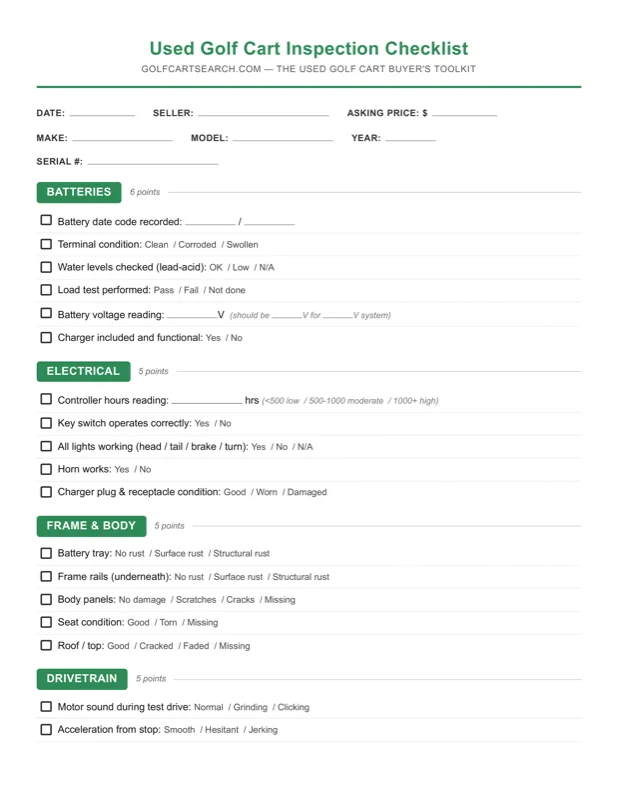
Used Tomberlin carts can absolutely make sense, but only if three things are true:
- The price discount is meaningful versus a new one.
- The battery health and service history are documented.
- A local dealer will still support the specific model.
If any of those three are weak, a used Club Car, Yamaha, or EZGO is often the smarter move.
Final Call: Is a Tomberlin Worth It?
Yes, for the right buyer.
Tomberlin is worth it if you want a premium-feeling street-legal electric cart, you will actually use the range and tech features, and you have a trustworthy local dealer. In that situation, the brand offers something many competitors do not: a true LSV-first ownership experience with factory luxury and real personality.
Tomberlin is not worth it if you mostly care about resale, the biggest possible dealer ecosystem, or the lowest-stress long-term ownership path. In those cases, Club Car, Yamaha, and even some simpler value brands will make more sense.
If you are shopping this segment seriously, start with the Engage LX, compare it against your local Club Car and Yamaha options, and then decide whether Tomberlin's premium LSV identity is something you will actually use or just admire in the showroom.
Tomberlin Golf Cart FAQ
Is Tomberlin a real premium brand or mostly marketing?
Tomberlin is one of the more credible premium LSV brands outside the Big 3 because the carts actually add meaningful factory features, not just cosmetic wheels and lights. The harder question is whether those features justify the price in your market.
Which Tomberlin model is the best value?
The E-Merge SE is the cheapest way in, but the Engage LX is the best overall balance of Tomberlin's premium features, range claims, and everyday usability.
Is the Ghosthawk worth more than the LX?
Usually only if you want the more aggressive lifted look and are willing to pay for it. For most buyers, the LX is the more rational Tomberlin.
Are Tomberlin carts good for beach or coastal areas?
They can work well, but the steel-frame construction makes them less naturally attractive than aluminum-frame competitors in salty climates. Extra corrosion prevention matters.
Does Tomberlin have enough dealer support?
That depends almost entirely on your location. In some markets, yes. In others, no. This is one of the most local-brand-dependent decisions in the category.
Is Tomberlin better than ICON for neighborhoods?
Tomberlin feels more premium and more mature as an LSV product. ICON is usually easier to justify on raw features per dollar.
Is Tomberlin better than Yamaha for daily use?
Tomberlin wins on tech and street-legal orientation. Yamaha wins on brand trust, gas availability, and long-term track record.
How far can a Tomberlin really go?
Official Tomberlin claims run up to 80 miles on the premium lithium models. Real-world range depends heavily on passengers, terrain, speed, tire setup, and whether you are using lead-acid or lithium.
Does Tomberlin make gas golf carts?
No. The brand is focused on electric personal transportation vehicles and LSVs.
Where should you shop for a Tomberlin?
Start with a strong authorized dealer and compare prices against nearby legacy-brand stores. You can also use our dealer directory to compare local golf cart sellers before you commit.
Golf Cart Search
Find the Best Golf Carts of 2026
Compare top-rated models, read expert reviews, and find the perfect cart for your needs.