
Star EV Golf Cart Review: Every Model, Pricing & Honest Verdict (2026)

Complete Star EV golf cart review covering all 14 models from $11,888 to $18,999. Sirius, Capella, and Classic lines compared with honest pros and cons.

Michael
Michael
Mar 6th, 202615 min read
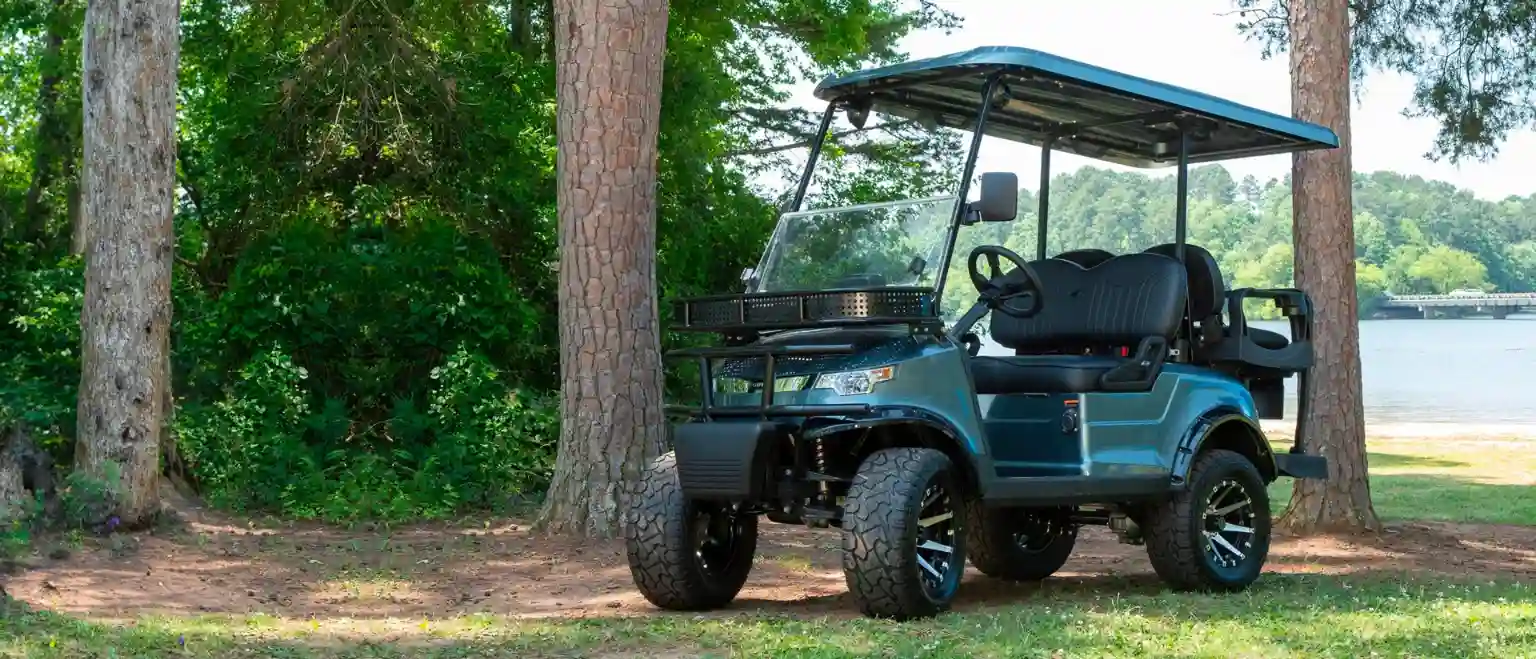
Star EV golf cart lineup featuring the Sirius and Capella models with premium features

As an Amazon Associate, we earn from qualifying purchases. This helps support our site at no extra cost to you.

Star EV has quietly built one of the most complete golf cart lineups in the industry. While ICON dominates headlines with aggressive marketing and touchscreens, Star EV has focused on something simpler: putting Trojan batteries, color displays, and LED lighting into well-built carts at prices that undercut the Big 3 without cutting corners on components.

Based in Greenville, South Carolina, Star EV offers 14 models across three distinct product lines, from a $11,888 two-seater to an $18,999 eight-passenger shuttle. Every model is electric-only, every model uses name-brand Trojan batteries standard, and every model offers up to four Star Smart Lithium upgrade options. No gas engines, no gimmicks, no $25,000 price tags.

This review covers every current Star EV model, real pricing, the five most common problems owners report, and an honest comparison against Club Car, EZGO, Yamaha, and ICON. If you are considering a Star EV, this is everything you need to know.

Headquarters Greenville, SC

Models 14 across 3 lines

Price Range $11,888 - $18,999

Power Electric only

Batteries Trojan standard

Warranty 4-year limited

Star EV's Background and What Sets Them Apart

Star EV (JH Global Services Inc.) was founded in 2003 by Jane Zhang and Jun Hu in Simpsonville, South Carolina (Greenville County). Zhang, named an Ernst and Young Entrepreneur of the Year 2023 national finalist, has led the company from a small operation to a 165,000+ square foot facility employing over 150 people. In 2021, Star EV announced an $8.7 million expansion adding 65,000 square feet of manufacturing and office space, with completion through late 2025. Unlike ICON, which burst onto the scene with heavy social media marketing, Star EV has grown through dealer relationships and word-of-mouth in golf cart communities.

Three things set Star EV apart from the pack:

Trojan batteries standard. While most mid-tier brands use generic or house-brand batteries, Star EV specs Trojan cells on every lead-acid model. Trojan is the most trusted name in golf cart batteries, the same brand Club Car and Yamaha use. This is not a minor detail. Battery quality directly affects range, reliability, and replacement cost. When a mid-tier brand uses Trojan, it signals they are not cutting the most important corner.

Four lithium capacity tiers. Star Smart Lithium comes in 80Ah, 105Ah, 160Ah, and 210Ah options. Most competitors offer one lithium configuration. This flexibility means a light-use neighborhood driver can buy the 80Ah option and save money, while a resort operator running carts 12 hours a day can spec the 210Ah for maximum range. ICON, by comparison, offers a single lithium configuration.

Made in South Carolina. Star EV designs and assembles vehicles domestically. Components are sourced globally (as with every golf cart brand), but final assembly, quality control, and warranty service are managed from their Greenville facility. This domestic presence gives them faster response times for warranty claims compared to brands that import fully assembled carts.

The 4-year limited warranty with 2-year bumper-to-bumper coverage is competitive. Yamaha matches the 4-year parts coverage, while Club Car and EZGO offer 2 years. The bumper-to-bumper component means more items are covered during the first two years without the "is this a wear item?" arguments that other brands sometimes create.

Every 2026 Star EV Model Compared

Star EV's lineup spans three product lines: Sirius (premium), Capella (mid-range), and Classic XP/XPR (traditional). Here is every model with pricing and key specs.

Sirius Line (Premium)

The Sirius is Star EV's flagship. It features automotive-inspired design, an electronic locking front trunk, ambient dash lighting, self-canceling turn signals, and the most refined interior in the lineup.

ModelMSRPSeatsMotorBattery (Standard)Brakes
Sirius 2$11,99924kW AC8x 6V Trojan T-105Rear drum
Sirius 2+2$12,49944kW AC8x 6V Trojan T-105Rear drum
Sirius 4$13,49945kW AC8x 6V Trojan T-105Front disc, rear drum
Sirius 4+2$15,99865kW AC8x 6V Trojan T-105Front disc, rear drum

The Sirius 2 and 2+2 use rear drum brakes, while the larger Sirius 4 and 4+2 step up to hydraulic front disc brakes with rear drums. All four models run a 48V system with 350A controllers and offer Star Smart Lithium upgrades from 80Ah to 210Ah.

Best pick: The Sirius 4 at $13,499 is the sweet spot. You get the premium interior, 5kW motor, front disc brakes, and four forward-facing seats. It competes directly with the ICON i40 at $12,999.

Capella Line (Mid-Range)

The Capella offers sportier styling with a slightly different body design. It is lighter than the Sirius (the Capella 2 weighs 1,089 lbs vs the Sirius 2 at 1,255 lbs), which translates to slightly better range and efficiency on the same battery pack.

ModelMSRPSeatsMotorBattery (Standard)Brakes
Capella 2$11,88824kW AC6x 8V Deep CycleMechanical
Capella 2+2$12,19944kW AC6x 8V Deep CycleMechanical
Capella 4$15,29945kW QDS AC6x 8V Deep Cycle4-wheel hydraulic
Capella 4+2$16,99565kW QDS AC8x 6V Deep Cycle4-wheel hydraulic

The Capella 2 and 2+2 use mechanical brakes, which is a step down from the Sirius. The larger Capella 4 and 4+2 include 4-wheel hydraulic brakes. The Capella 4+2 at $16,995 is the most expensive model in the Capella line, using a 5kW QDS AC motor designed for sustained performance under load.

Best pick: The Capella 2+2 at $12,199 is the budget-conscious choice for buyers who want 4 seats. It undercuts the Sirius 2+2 by $300 and saves 160 lbs.

Classic XP and XPR Line (Traditional)

The Classic line offers traditional golf cart styling for buyers who prefer the familiar look. The XP models are 2 and 4-seat configurations, while XPR models add a longer wheelbase and higher seating capacity up to 8 passengers. This is the only line in Star EV's portfolio offering an 8-passenger model.

ModelMSRPSeatsMotorBattery (Standard)Brakes
Classic XP-2$11,88824kW AC6x 8V Trojan T-875Rear drum
Classic XP-2+2$12,19944kW AC6x 8V Trojan T-875Rear drum
Classic XPR-4$13,99545kW AC8x 6V Trojan T-1054-wheel hydraulic drum
Classic XPR-4+2$15,29965kW AC8x 6V Trojan T-1054-wheel hydraulic drum
Classic XPR-6$17,29965kW AC8x 6V Trojan T-1054-wheel hydraulic drum
Classic XPR-6+2$18,99985kW AC8x 6V Trojan T-1054-wheel hydraulic drum

The Classic line uses the tried-and-true Trojan T-875 and T-105 batteries. The XPR-6+2 at $18,999 is the biggest cart Star EV sells: 8 passengers, 5kW motor, 4-wheel hydraulic drum brakes, and 1,800 lbs curb weight. It is built for resort shuttles, campgrounds, and large property transport.

Best pick: The Classic XPR-4 at $13,995 is great for buyers who want 4 forward-facing seats, 4-wheel hydraulic brakes, and classic styling without the premium price of the Sirius line.

Star Smart Lithium: Understanding Your Battery Options

Star EV's lithium system deserves its own section because the four-tier approach is unique in the industry.

CapacityBest ForEstimated RangeWeight Savings vs Lead-AcidPrice Premium
80AhLight neighborhood use, short commutes20-25 miles~200 lbs~$2,000
105AhMost personal buyers, daily drivers30-35 miles~200 lbs~$2,500
160AhHeavy daily use, commercial applications45-55 miles~180 lbs~$3,500
210AhMaximum range, resort/commercial fleets60-70 miles~170 lbs~$5,000

The standard Trojan lead-acid batteries are excellent, but they require monthly watering, weigh significantly more, and typically last 4 to 6 years with proper maintenance. Star Smart Lithium is maintenance-free, rated for 8+ years, and charges faster.

For most personal buyers, the 105Ah option hits the sweet spot: enough range for a full day of neighborhood driving, meaningful weight reduction for better performance, and a price premium that pays back in battery longevity and zero maintenance costs. The 160Ah and 210Ah options are more relevant for commercial operators running carts continuously.

For a deeper dive into battery technology across all brands, see our golf cart battery guide and lithium conversion guide.

What Star EV Does Well

Build Quality and Components

Star EV does not cut corners on the components that matter most. Trojan batteries, name-brand AC motors with thermal protection, rack-and-pinion steering, and independent front suspension are standard across the lineup. The Sirius line adds ambient dash lighting, electronic locking trunks, and self-canceling turn signals that would be options or absent on competitor models at similar prices.

Seating Configurations

No other brand offers as many seating options. From 2-seat personal carts to 8-passenger shuttles, Star EV covers every use case. The 2+2 configurations with rear-facing flip seats are ideal for buyers who occasionally need 4 seats but mostly drive with 2. The XPR-6+2 fills a niche that ICON and most Big 3 brands do not address at all.

Color Display Dashboard

Every Star EV model includes a detailed full-color display with speedometer, odometer, battery indicator, and trip data. It is not a touchscreen like the ICON i40's 10.1-inch tablet, but it provides the information you actually need while driving without the distraction of apps and Bluetooth pairing screens.

Warranty Coverage

The 4-year limited warranty with 2-year bumper-to-bumper is stronger than Club Car (2-year parts, lifetime frame) or EZGO (2-year parts, 8-year ELiTE battery) for overall coverage. Only Yamaha matches the 4-year parts warranty. The bumper-to-bumper component reduces out-of-pocket costs during the critical first two years.

Customization Through the Dealer

Star EV offers factory customization options through their dealer network, including custom paint colors, upgraded wheels, lifted suspensions, and accessory packages. While the aftermarket ecosystem is smaller than Club Car or EZGO, the factory customization path means you can get a personalized cart without voiding the warranty. For aftermarket upgrade ideas, see our customization guide.

5 Common Star EV Golf Cart Problems

Every brand has weak points. Here are the five issues Star EV owners report most often:

1. Controller Faults and Error Codes

The most common complaint across Star EV forums and dealer feedback. The 48V controller can throw error codes that limit speed or disable the cart entirely. Causes range from loose wiring connections to software glitches to actual controller failure. The fix varies: sometimes a simple reset clears the code, other times the controller needs replacement ($300 to $600). The 2-year bumper-to-bumper warranty covers this, but it is frustrating when it happens.

2. Charger Compatibility Issues

Star EV carts come with an automatic battery charger, but owners who try to replace it with an aftermarket charger sometimes run into compatibility problems. The 48V system and charge algorithm need to match the battery type (lead-acid vs lithium) and capacity. Using the wrong charger can damage batteries or trigger BMS (battery management system) shutdowns on lithium packs. Stick with Star EV recommended chargers or consult your dealer before swapping. For charger options, see our golf cart charger guide.

3. Brake Adjustment Needs

The base Capella 2 and 2+2 use mechanical brakes that require periodic adjustment. Even the hydraulic drum brakes on larger models need more frequent attention than the sealed disc brake systems found on ICON models. Brake cable stretching, pad wear, and drum contamination are all common maintenance items. Budget $100 to $200 annually for brake service if you drive daily.

4. Battery Balance Problems (Lead-Acid)

Owners running the standard Trojan lead-acid batteries sometimes experience one or two batteries failing before the rest of the pack. This is a common issue across all golf cart brands with lead-acid, but it creates a dilemma: do you replace just the weak batteries ($150 to $200 each) or the entire pack ($800 to $1,200)? Replacing individual batteries can cause further imbalance. The lithium upgrade eliminates this problem entirely.

5. Limited Parts Availability

Star EV's dealer network is smaller than the Big 3, which means parts can take longer to source in areas without a nearby dealer. Common wear items (brakes, batteries, tires) are easy to find from universal suppliers, but Star EV-specific components like controllers, wiring harnesses, and body panels may require ordering direct from Greenville. Typical wait times are 1 to 2 weeks for non-stock parts.

Star EV vs Club Car vs EZGO vs ICON

Here is how Star EV compares to its closest competitors on the factors buyers care about most:

FactorStar EV Sirius 4Club Car OnwardEZGO Express 4ICON i40
Starting Price$13,499$9,000+ (lead-acid)$11,369$12,999
Gas OptionNoYesYesNo
Frame MaterialSteel (powder-coated)AluminumSteelSteel
Standard BatteryTrojan T-105Lead-acid or lithiumLead-acid or ELiTEECO Lithium
Lithium Options4 tiers (80-210Ah)Single optionELiTE (Samsung SDI)Single option
Battery Warranty6 years (lithium)6 years8 years (ELiTE)10 years
Parts Warranty4 years2 years2 years3 years
TouchscreenNo (color display)NoOptional10.1" standard
Disc BrakesFront disc (4-seat+)Rear drumRear drum4-wheel standard
Dealer NetworkGrowing (smaller)1,000+1,000+200+
Resale (3-year)50-60%70-80%60-70%60-70%

Choose Star EV if you want Trojan-brand batteries standard, the flexibility to choose from four lithium capacity tiers, and a well-featured cart from an independent American manufacturer. Star EV is the best option for buyers who care about battery quality and want a middle ground between Big 3 premium pricing and the flashiness of brands like ICON. See our Star EV brand page for all models.

Choose Club Car if you want the best resale value, a rust-proof aluminum frame, and the largest dealer network. Club Car costs more upfront but pays back in durability and resale. See our Club Car review or Club Car vs Star EV comparison.

Choose EZGO if you want the widest aftermarket parts ecosystem, both gas and electric options, or the Samsung SDI ELiTE lithium battery with an 8-year warranty. See our EZGO review.

Choose ICON if you want a touchscreen, standard 4-wheel disc brakes, and aggressive features-per-dollar positioning. ICON has a larger dealer network than Star EV and stronger brand recognition among newer golf cart buyers. See our ICON review.

Choose Yamaha if you want a gas option with the quietest engine on the market (QuieTech EFI at 60.5 dB) and the longest parts warranty at 4 years. See our Yamaha review.

For a full ranking across all brands, visit our best golf cart brands page.

Star EV Resale Value

Star EV carts retain roughly 50-60% of their value after 3 years. That is below all Big 3 brands and slightly behind ICON (60-70%).

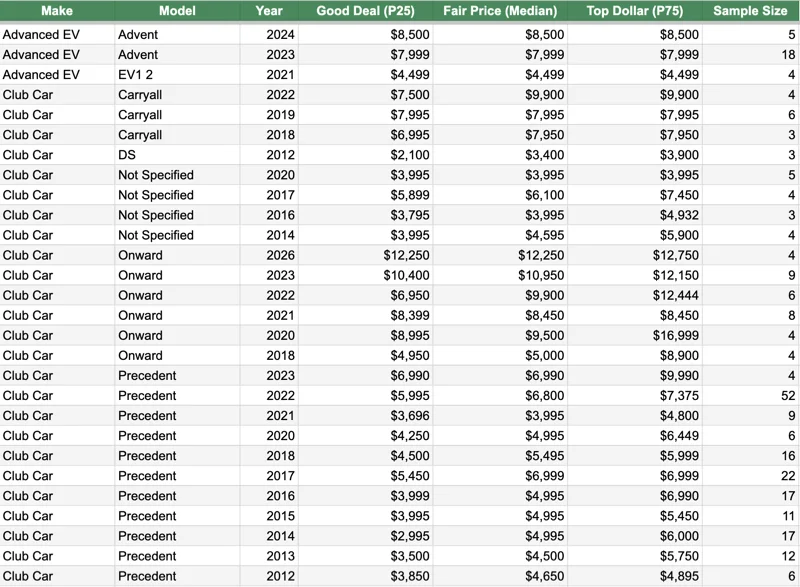
Used Star EV pricing benchmarks:

AgeLead-Acid ModelsLithium Models
1-2 years old$7,000 - $10,000$9,000 - $13,000
3-5 years old$5,000 - $8,000$7,000 - $10,000
6-10 years old$3,000 - $5,500$5,000 - $8,000

Several factors work against Star EV resale:

  • Brand recognition: Star EV is less well-known than the Big 3 or even ICON, which makes used buyers more cautious
  • Smaller dealer network: Buyers worry about parts and service availability after the warranty period
  • Steel frame: In humid or coastal climates, rust concerns reduce demand for used steel-frame carts compared to Club Car's aluminum
  • Limited marketing: Star EV's word-of-mouth growth strategy means fewer people know the brand exists
  • Warranty is non-transferable: Unlike some competitors, Star EV's warranty applies to original owners only, which hurts used market demand
  • Body panel aging: Some owners report that body panels and plastic components show wear faster than expected after 3+ years, which affects perceived condition on the used market

Lithium models hold value 15-20% better than lead-acid versions because the battery is the most expensive component to replace, and lithium packs still have years of life left at the 3-year mark.

If resale is a priority, Club Car is the clear winner. If you plan to drive your cart for 8+ years and are buying for personal use rather than as an investment, Star EV's lower upfront cost and strong components mean you come out ahead financially. See our pricing guide for total cost of ownership analysis.

Who Should Buy a Star EV Golf Cart

Buy a Star EV if:

  • You want name-brand Trojan batteries standard, not generic cells
  • You prefer choosing your own lithium capacity rather than being locked into a single option
  • You want a well-featured cart without the flashy marketing premium of brands like ICON
  • You live near a Star EV dealer and can confirm service availability before buying
  • You need an 8-passenger shuttle (the Classic XPR-6+2 fills a niche most brands ignore)
  • You value the longer 4-year limited warranty and 2-year bumper-to-bumper coverage
  • You plan to keep the cart for 5+ years and care less about resale value

Skip Star EV and consider alternatives if:

  • You need a gas golf cart (Star EV is electric only; see our electric vs gas comparison)
  • You live in a coastal or humid area and frame rust is a concern (go Club Car aluminum)
  • Parts availability and mechanic familiarity are critical (go EZGO or Club Car with 1,000+ dealer networks)
  • You want a touchscreen and the most loaded feature set per dollar (go ICON)
  • Resale value is a top priority (go Club Car, which holds 70-80% after 3 years)
  • There is no Star EV dealer within 50 miles of your home (dealer proximity matters for warranty service and parts)

Star EV Accessories Worth Adding

Star EV carts come well-equipped, but a few additions can make daily driving better.

A phone mount keeps GPS and music accessible without blocking the color display. The Haxmuti universal clamp mount ($20 to $25) fits Star EV's roof frame and holds tight on bumpy cart paths.

Check Price on Amazon

For cold-weather driving, the NOKINS heated and ventilated seat cushion adds three heating levels and cooling ventilation. It plugs into the cart's 12V outlet and makes fall and winter driving much more comfortable in golf cart communities.

Check Price on Amazon

Star EV owners running lead-acid batteries should keep a quality maintenance routine. See our golf cart maintenance guide for battery watering schedules and terminal cleaning tips.

For weather protection, a golf cart enclosure extends your driving season. The Xoxocos enclosure ($100 to $130) fits most 2-passenger configurations.

Check Price on Amazon

If you are upgrading to lithium or replacing an aging charger, the EXEFCH 48V charger ($150 to $200) is compatible with most 48V systems. Verify compatibility with your specific Star EV model before purchasing.

Check Price on Amazon

For more ideas, see our complete accessories guide, enclosures guide, and LED lights guide.

Star EV vs Evolution: The Mid-Tier Showdown

Star EV and Evolution Electric Vehicles are the two most prominent mid-tier golf cart brands competing below the Big 3 but above budget imports. Buyers frequently cross-shop these two, so here is how they compare.

Both brands offer electric-only lineups with similar feature sets and price ranges. Both use steel frames and target the same market: buyers who want more features than a base Club Car or EZGO but are not willing to pay Big 3 premium prices.

Star EV advantages:

  • Trojan batteries standard (Evolution uses their own battery brand)
  • Four lithium capacity options (Evolution offers fewer choices)
  • South Carolina manufacturing base with domestic quality control
  • Wider range of seating configurations (up to 8 passengers)
  • More conservative, build-quality-focused approach

Evolution advantages:

  • More aggressive pricing on comparable models
  • Growing dealer network, particularly in Florida and the Southeast
  • More color and customization options from the factory
  • Stronger social media and marketing presence
  • Generally newer, more modern body styling

The honest answer for most buyers: test drive both at local dealers and buy from whichever brand has the better dealer relationship in your area. Post-sale service and warranty support matter more than small spec differences between comparable mid-tier brands.

Star EV Maintenance Tips

Maintaining a Star EV cart is straightforward. The electric-only lineup means no oil changes, no fuel filters, no spark plugs, and no engine tune-ups.

Lead-acid battery models:

  • Check water levels monthly (use distilled water only, fill to the split ring)
  • Clean battery terminals every 3 months with a baking soda solution
  • Charge after every use, even short trips
  • Equalize charge monthly to balance cells (consult your charger manual)
  • Replace batteries as a full set when performance drops significantly

Lithium models:

  • Virtually zero battery maintenance
  • Charge after use (lithium does not develop memory effect)
  • Keep connections clean and dry
  • Store with 50-80% charge if unused for extended periods

All models:

  • Check tire pressure monthly (low pressure reduces range and wears tires unevenly)
  • Inspect brake pads and cables every 6 months, adjust as needed
  • Lubricate suspension components and steering annually
  • Keep the undercarriage clean, especially in sandy or muddy environments
  • Check all lighting (LED headlights, taillights, turn signals) monthly for safety

For a complete maintenance schedule covering all brands, see our golf cart maintenance guide. Find professional service through our repair directory or browse repair shops by state.

Star EV's Place in the Market

Star EV sits in a sweet spot that many buyers overlook. They are not trying to be the cheapest option (budget imports from unknown brands cost less). They are not trying to be the flashiest (ICON wins that race). They are not trying to compete on heritage (the Big 3 have decades of head start).

Instead, Star EV competes on substance: Trojan batteries, proven AC motors, flexible lithium options, a strong warranty, and a domestic manufacturing base. For buyers who care more about what is under the body panels than what is on the touchscreen, Star EV deserves serious consideration.

The main risk is the smaller dealer network. Before buying, confirm that you have an authorized Star EV dealer within reasonable distance for warranty service and parts. If you do, Star EV represents one of the best values in the mid-tier golf cart market.

Find Star EV carts near you through our dealer directory, compare all models on our Star EV brand page, and check your state's requirements on our golf cart laws page. If you need golf cart insurance, check your state's requirements before hitting the road.

Frequently Asked Questions

How do Star EV carts handle hills?

Star EV models with the 5kW AC motor (Sirius 4, Sirius 4+2, all XPR models, Capella 4 and 4+2) handle moderate hills well. The 4kW models (Sirius 2, Capella 2, Classic XP-2) may feel underpowered on steep grades, especially with passengers and lead-acid batteries. If you live in a hilly area, choose a 5kW model or upgrade to lithium for the lighter weight and consistent power delivery.

Can I upgrade my Star EV lead-acid to lithium later?

Yes. Star EV offers the Star Smart Lithium as a retrofit option through authorized dealers. The conversion involves replacing the lead-acid pack with the lithium system and updating the charger. Expect to pay more for a retrofit than ordering lithium from the factory, but it is a viable upgrade path if you start with lead-acid and decide you want lithium later. See our lithium conversion guide for general guidance.

What is the range of a Star EV golf cart?

Range depends entirely on battery choice. Lead-acid models typically deliver 25 to 35 miles per charge under normal conditions. Star Smart Lithium ranges from roughly 20-25 miles (80Ah) to 60-70 miles (210Ah). Actual range varies with terrain, passenger weight, tire pressure, and driving style. For a broader look at range across brands, see our golf cart range guide.

Are Star EV parts interchangeable with other brands?

Some components are universal (tires, wheels, mirrors, lights, seats), but Star EV-specific parts like controllers, wiring harnesses, body panels, and the Star Smart Lithium BMS are proprietary. Standard golf cart accessories from our accessories guide will generally fit, but always confirm compatibility before purchasing brand-specific items.

Share this post

Golf Cart Search

Find the Best Golf Carts of 2026

Compare top-rated models, read expert reviews, and find the perfect cart for your needs.
Browse Top-Rated Carts

Related posts

Stay in the loop

Stay Updated with Golf Cart News

Get the latest updates on golf cart services, tips, and exclusive offers delivered to your inbox.