As an Amazon Associate, we earn from qualifying purchases. This helps support our site at no extra cost to you.
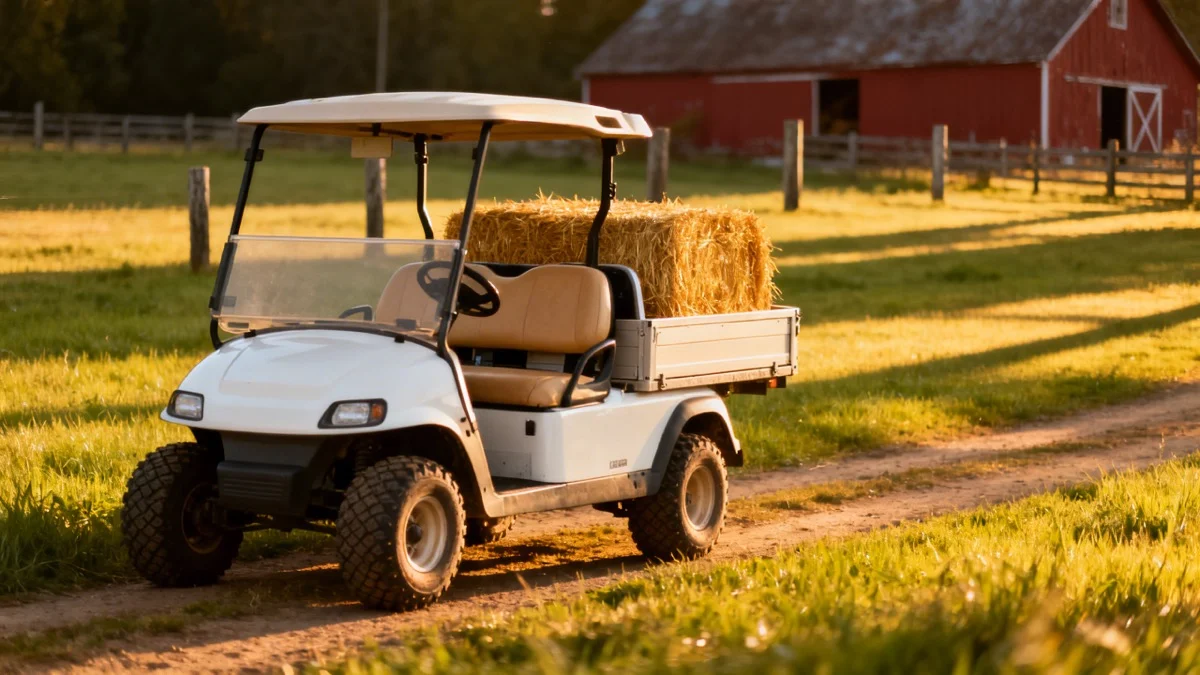
If you're hauling feed, checking fences, or making daily rounds across your property, you've probably considered a golf cart. They're cheaper than a UTV, quieter than an ATV, and a lot easier on your body than walking miles every day.
But not every golf cart can handle farm work. Stock models with slick tires and 4 inches of ground clearance will get stuck in the first wet field. You need either a purpose-built utility cart or the right set of modifications.
This guide covers the best utility golf carts for farm and ranch use, how to choose between electric and gas, must-have accessories that turn any cart into a work vehicle, and whether a golf cart or UTV makes more sense for your acreage.
Price Range $7,249 to $30,000
Towing Capacity 500 to 2,000 lbs
Ground Clearance 4 to 12 inches
Electric Range 15 to 45 miles/charge
Golf Cart vs UTV: Which Do You Actually Need?
This is the first question every farmer asks. The honest answer depends on your property size, terrain, and daily workload.
Golf carts work best when:
- Your property is under 50 acres
- Terrain is mostly flat to rolling hills
- Tasks are light to medium duty (feeding, tool transport, property checks)
- You want low noise around livestock
- Budget is under $15,000
- You have electricity for charging (if buying electric)
A UTV makes more sense when:
- Property exceeds 50 acres with spread-out parcels
- You regularly deal with steep hills, deep mud, or dense brush
- Towing loads exceed 1,500 lbs on a regular basis
- You need highway speeds to travel between properties
- Rough terrain demands true 4WD and high ground clearance
| Factor | Golf Cart | UTV |
|---|---|---|
| Purchase price | $7,000 to $15,000 | $10,000 to $25,000+ |
| Annual maintenance | $200 to $500 | $500 to $1,500 |
| Towing capacity | 500 to 1,500 lbs | 1,500 to 3,000+ lbs |
| Top speed | 15 to 25 mph | 45 to 60+ mph |
| Noise level | Quiet (electric: near silent) | Moderate to loud |
| Ground clearance | 4 to 8 inches (stock) | 10 to 14 inches |
| Energy cost | $0.02 to $0.05/mile (electric) | $0.10 to $0.20/mile (gas) |
| Insurance | $100 to $300/year | $300 to $800/year |
For most hobby farms, homesteads, and ranches under 50 acres, a utility golf cart handles 90% of daily tasks at half the cost of a UTV. Some farmers run both: a quiet electric cart for daily animal rounds and a UTV for the heavy jobs. For a full cost and capability comparison, see our golf cart vs UTV guide.
Want the full breakdown beyond farm use? See our electric vs gas comparison guide. For weight and towing considerations, our golf cart weight guide has brand-by-brand specs.
Electric vs Gas for Farm Work
The electric vs gas decision shifts on a farm compared to neighborhood or golf course use. Range, charging logistics, and terrain all play a bigger role.
Choose electric if:
- Your property is under 20 acres
- You have a barn or outbuilding with a 120V or 240V outlet
- Livestock management is your primary use (zero noise means less animal stress)
- Daily driving stays under 30 miles
- You want minimal ongoing maintenance
Choose gas if:
- Property exceeds 20 to 30 acres
- Charging access is limited or unreliable
- You regularly tow heavy loads up hills (feed, hay bales, equipment)
- You need the cart ready at any time without a charging wait
- Your terrain is hilly with sustained climbs
Electric carts cost roughly $0.02 to $0.05 per mile to run versus $0.10 to $0.20 for gas. Over five years on a 20-acre farm, that difference adds up to $1,000 to $2,000 in fuel savings alone. Maintenance savings push the gap even wider since electric carts have no oil changes, air filters, or belt replacements.
But range matters. If your batteries die in the middle of a 40-acre property with a trailer full of feed, you'll wish you'd bought gas. One practical tip from farmers who've gone electric: invest in lithium batteries. They charge in 2 to 3 hours instead of 8 to 12 for lead-acid, last three times longer, and deliver consistent power on hills without voltage sag. The upfront cost is higher ($2,000 to $4,000 vs $800 to $1,200 for lead-acid), but for daily farm use the reliability pays for itself. Our battery guide covers every option by brand and voltage. For sustained grades, loaded starts, and downhill braking, also see our best golf carts for hills guide.
Best Golf Carts for Farm and Ranch Use
These are the top utility models for 2026, from purpose-built work carts to budget-friendly options you can order online. Prices reflect current dealer and retail pricing.
Best Overall Utility: Club Car Carryall 500
The Carryall 500 is the benchmark for utility golf carts. Club Car's aluminum frame resists rust even sitting outside year-round, and the 1,200 lb towing capacity handles small trailers loaded with feed, fencing, or tools without straining.
- Towing: 1,200 lbs
- Bed capacity: 800 lbs
- Frame: Rustproof aluminum
- Power: Gas (14 hp Subaru EFI) or electric (48V AC)
- Price: $8,400 to $12,000 (gas), $10,000 to $14,000 (electric)
The gas Carryall 500 is the stronger farm option for most buyers. The fuel-injected engine starts reliably in cold weather, handles sustained hill climbing with a loaded bed, and you never think about range. If livestock noise is a concern, the electric version works well for properties with dedicated charging access.
One note from forum users: the aluminum frame is great for corrosion resistance, but some farmers report cracking under extreme rough-terrain use. For heavy off-road work on rocky or rutted ground, inspect the frame regularly at mounting points.
Read our full Club Car review for the complete Carryall lineup, or browse all models on the Club Car brand page. Find local Club Car dealers on our dealer directory.
Best Factory Off-Road Ready: Yamaha UMAX Two
Yamaha designed the UMAX line specifically for property and utility work. The UMAX Two stands out because it ships with 20-inch all-terrain tires and 7.1 inches of ground clearance from the factory. No lift kit or aftermarket tires needed on day one.
- Towing: 1,200 lbs
- Bed capacity: 400 lbs (13.4 cu ft)
- Ground clearance: 7.1 inches
- Tires: 20-inch all-terrain (stock)
- Power: Gas (402cc EFI) or electric (48V AC)
- Price: $10,000 to $13,000
The 13.4 cubic foot cargo bed fits feed bags, fence posts, and power tools comfortably. The 402cc EFI gas engine is the same proven platform Yamaha uses across their entire golf cart line, which means finding parts and service is straightforward no matter where you live.
See our Yamaha review for the complete model lineup, or explore specs on the Yamaha brand page.
Best Heavy-Duty Workhorse: Cushman Hauler Series
Cushman builds purpose-built work vehicles, not modified passenger carts. The Hauler 800 covers medium-duty farm tasks, while the Hauler 4x4 is the most capable utility cart money can buy.
Hauler 800:
- Bed capacity: 800 lbs (5.9 cu ft)
- Power: 13.5 hp EFI gas
- Price: $9,000 to $12,000
- Best for daily farm errands, tool transport, and moderate loads
Hauler 4x4:
- Towing: 2,000 lbs
- Payload: 1,500 lbs
- Power: 50 hp gas or 25 hp diesel
- Drive: True four-wheel drive
- Price: $20,000 to $30,000
- Competes directly with UTVs on capability
The Hauler 4x4 blurs the line between golf cart and UTV. At 50 hp with 4WD and 2,000 lb towing, it handles virtually anything a working ranch throws at it. The diesel option makes sense if you already run diesel equipment and want to consolidate fuel types.
Read our Cushman review for the full Hauler lineup and pricing breakdown.
Best Budget Option: AODES Trailcross
If you want a farm-capable electric cart without the dealer markup, the AODES Trailcross ships directly to your door from Amazon for $7,249. That's the lowest price for a new, off-road-styled golf cart in 2026.
- Power: Electric, 48V
- Style: Rugged off-road design
- Price: $7,249 (ships direct)
AODES is a newer brand, so long-term reliability data is limited compared to Club Car or Yamaha. But for farmers who need an affordable workhorse and don't require 1,000+ lb towing capacity, it's a legitimate entry point.
Explore more models on our AODES brand page, or see every cart under $10K in our budget golf cart guide.
Best Range for the Price: Kandi GOAT 2P
The Kandi GOAT packs a 5,000W motor and 40-mile range into a $7,999 package. That's enough range to cover a 20 to 30 acre property multiple times on a single charge before plugging in.
- Power: 5,000W electric motor
- Range: 40 miles per charge
- Features: Off-road capable, ships direct to your door
- Price: $7,999
Kandi also makes a dedicated Ranch Cart model ($13,500) with a factory dump bed and 1,100 lb load capacity, which is worth a look if you need built-in hauling without aftermarket modifications.
See all available models on our Kandi brand page.
Comparison Table: Farm Golf Carts Side by Side
| Model | Power | Towing | Bed Capacity | Ground Clearance | Price |
|---|---|---|---|---|---|
| Club Car Carryall 500 | Gas or electric | 1,200 lbs | 800 lbs | 5 in. (stock) | $8,400 to $14,000 |
| Yamaha UMAX Two | Gas or electric | 1,200 lbs | 400 lbs (13.4 cu ft) | 7.1 in. | $10,000 to $13,000 |
| Cushman Hauler 800 | Gas | N/A listed | 800 lbs (5.9 cu ft) | 5 in. | $9,000 to $12,000 |
| Cushman Hauler 4x4 | Gas or diesel | 2,000 lbs | 1,500 lbs | 8+ in. | $20,000 to $30,000 |
| AODES Trailcross | Electric | Standard | Standard | Standard | $7,249 |
| Kandi GOAT 2P | Electric | Standard | No bed (add aftermarket) | Standard | $7,999 |
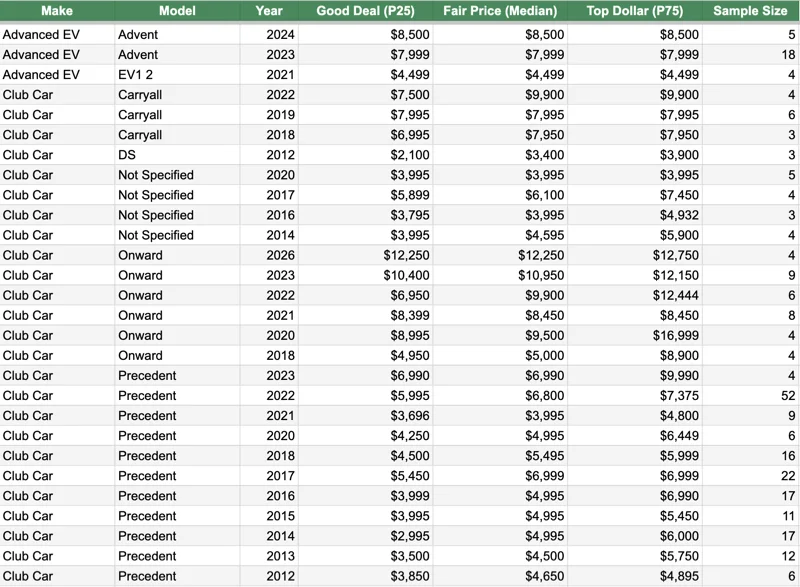
For full pricing data across all brands and model years, check our golf cart pricing guide.
Must-Have Accessories for Farm Golf Carts
Stock golf carts aren't built for farm work. These six upgrades make the biggest difference, ranked by impact.
All-Terrain Tires and Lift Kit
The single most important upgrade. Stock golf cart tires are built for paved cart paths and groomed fairways. On a farm, they'll slip in wet grass and get stuck in soft ground.
Swap to 23x10.5-12 all-terrain tires with aggressive tread, and add at least a 3-inch lift kit to prevent rubbing and increase ground clearance. Budget $400 to $800 for the tire and lift combo. Our tire and wheel guide covers sizing, brands, and fitment for every major cart.
Trailer Hitch
A 2-inch receiver hitch lets you tow garden trailers, equipment dollies, and small utility trailers. Most utility carts don't include one from the factory, but universal aftermarket hitches install in about 15 minutes with basic hand tools. The OMEIPMEO heavy-duty trailer hitch fits Club Car, EZGO, and Yamaha with a universal 2-inch receiver. For a full comparison of hitches by brand and towing capacity tables, see our trailer hitch and towing guide.
Check Price on AmazonLED Work Lights
Morning and evening chores happen in the dark. A pair of 18W LED flood pods mounted to the roof or brush guard puts bright, focused light on your work area for about $13.
Nilight 18W LED Pods (2-Pack, $13) →For full-field illumination when you need to work after sundown, a 20-inch light bar puts out over 8,000 lumens for around $42.
Nilight 20" LED Light Bar ($42) →Our LED light guide has wiring diagrams and installation tips for every voltage system.
Brush Guard
Branches, fence posts, and the occasional animal that doesn't move fast enough. A steel brush guard bolts to the front frame and protects your headlights, grille, and body panels from field hazards. Most install without any cutting or welding. Our brush guards and bumpers guide compares options by brand and material.
Check Price on AmazonCargo Box or Dump Bed
If your cart doesn't come with a utility bed, aftermarket steel cargo boxes bolt onto the rear and add 400 to 800 lbs of hauling capacity. Dump beds with fold-down tailgates start around $250 to $350 and can be the single upgrade that turns a passenger cart into a real work vehicle. Our cargo boxes and storage guide covers every option from budget baskets to heavy-duty dump box conversions.
Windshield for Dust and Weather
A fold-down windshield keeps dust, bugs, and rain out of your face while allowing airflow on hot days. Especially useful if you're driving through dusty gravel or freshly tilled fields. Acrylic options start around $70 and polycarbonate runs about $120. Our windshield guide compares materials and brand-specific fitment.
For a complete list of every upgrade worth considering, see our accessories guide and customization guide.
How to Convert a Standard Golf Cart for Farm Use
Already own a golf cart? You don't need a dedicated utility model to get work done. Converting a standard passenger cart for farm duty costs $500 to $2,000, depending on how far you take it.
Priority upgrades in order of impact:
-
Tires and lift kit ($400 to $800): The biggest single improvement. All-terrain tires plus a 3-inch lift prevents getting stuck and protects the undercarriage from ruts and rocks.
-
Cargo bed conversion ($250 to $500): If you have a rear flip seat, the flat platform already serves as a basic cargo area. If not, aftermarket cargo bed kits replace the rear section with a proper box or dump bed.
-
Trailer hitch ($30 to $50): A 2-inch receiver for towing garden carts, trailers, and equipment.
-
LED lighting ($15 to $80): Start with a pair of flood pods for daily visibility. Add a light bar later if you need to work in dark fields.
-
Brush guard ($50 to $100): Front-end protection for field and trail use.
-
Skid plates ($50 to $150): Aftermarket underbody protection for rough terrain. Keeps rocks and stumps from damaging the frame, motor, and battery compartment.
If you're also interested in performance modifications like speed upgrades and motor swaps, our speed upgrade guide covers those options. For a broader look at what's possible, the customization guide ranks 30+ mods by cost and difficulty.
Farm Golf Cart Maintenance Tips
Farm carts work harder than course or neighborhood carts. Dirt, dust, mud, and uneven terrain accelerate wear on tires, suspension, and drivetrain components. Staying on top of maintenance prevents breakdowns when you need the cart most.
Weekly checks:
- Tire pressure (farm terrain causes more frequent air loss than pavement)
- Mud buildup around brakes and suspension components
- Battery terminals for corrosion (lead-acid systems)
- Fluid levels (gas carts: oil, coolant)
Monthly tasks:
- Grease suspension and steering joints
- Inspect brake pads and cables
- Check frame for cracks at lift kit and accessory mounting points
- Test all lights and signals
Seasonal maintenance:
- Replace air filter more frequently than recommended (gas carts generate more intake debris on dusty properties)
- Inspect all-terrain tire tread depth and sidewalls for damage
- Check belt tension and spark plugs (gas carts)
- Clean and condition vinyl seats to prevent cracking from sun and weather exposure
For the complete year-round schedule with costs, see our maintenance guide. When the season ends, follow our winterization checklist to protect your investment. And if something goes wrong, our troubleshooting guide covers the most common issues by symptom.
Section 179: Writing Off Your Farm Golf Cart
If you use a golf cart for legitimate farm or ranch business, you may be able to deduct it under IRS Section 179. This provision lets you write off the full purchase price in the year you buy it, rather than depreciating it over several years.
Basic requirements:
- The cart must be used more than 50% for business purposes
- Your farm must qualify as a business, not a hobby
- You need documentation: purchase receipt, a usage log, and records of farm activities
A $10,000 utility golf cart used 80% for farm work could yield an $8,000 deduction. At a 22% marginal tax rate, that saves you $1,760.
We cover the full details of Section 179, bonus depreciation, and MACRS schedules in our golf cart tax write-off guide. Talk to your accountant or tax professional for advice specific to your situation.
Finding the Right Cart
If you're buying from a dealer, our dealer directory lists golf cart shops by state, with reviews and contact info. For online purchases, the AODES and Kandi models linked above ship direct to your door. Either way, make sure you understand your state's rules for operating a golf cart on public roads by checking our golf cart laws page, and consider insurance if the cart will leave your property.
For farmers who also use their carts for hunting or neighborhood driving, those guides cover model recommendations specific to each use case.
Frequently Asked Questions
Can you use a regular golf cart on a farm?
Yes, with modifications. Stock carts need all-terrain tires, a lift kit for ground clearance, and ideally a cargo bed or trailer hitch for hauling. Budget $500 to $1,500 for a basic farm conversion on an existing cart.
How many acres can a golf cart realistically cover?
Electric carts with 15 to 25 miles of range handle properties up to 20 to 30 acres comfortably. Lithium battery upgrades push that to 25 to 45 miles. Gas carts with 100+ mile range work on much larger properties. For anything over 50 acres with rough terrain, a UTV is usually the better tool.
Are electric golf carts good around livestock?
Electric carts are one of the best vehicles for livestock management. Near-silent operation means less stress on horses, cattle, poultry, and other animals. Many farmers specifically choose electric over gas for this reason, even when gas would otherwise make more sense for their acreage.
What's the best brand for a farm golf cart?
Club Car (Carryall line), Yamaha (UMAX line), and Cushman (Hauler line) are the three strongest options with proven dealer networks and parts availability. For budget buyers, Kandi and AODES offer direct-to-consumer models starting under $8,000. Compare all brands on our best golf cart brands page.
Do you need a license to drive a golf cart on your farm?
No license is required to operate a golf cart on private property. If you drive on public roads, even briefly between parcels, most states require a valid driver's license and may require the cart to be street legal. Check your state's specific rules on our golf cart laws page.
How long do golf cart batteries last with daily farm use?
Lead-acid batteries last 4 to 6 years with proper maintenance (watering, equalization charges, clean terminals). Lithium batteries last 8 to 12 years and require virtually no maintenance. Daily farm use with frequent discharging shortens lead-acid life more than lithium. Our battery guide has brand-specific recommendations and cost comparisons.
Can you tow a small trailer with a golf cart?
Yes. Most utility golf carts handle 500 to 1,200 lbs of towing capacity with a 2-inch receiver hitch. That's enough for a loaded garden trailer, a small equipment dolly, or a utility trailer with feed and supplies. Add an aftermarket hitch for about $30 to $50 if your cart doesn't include one.
Is a used golf cart worth it for farm use?
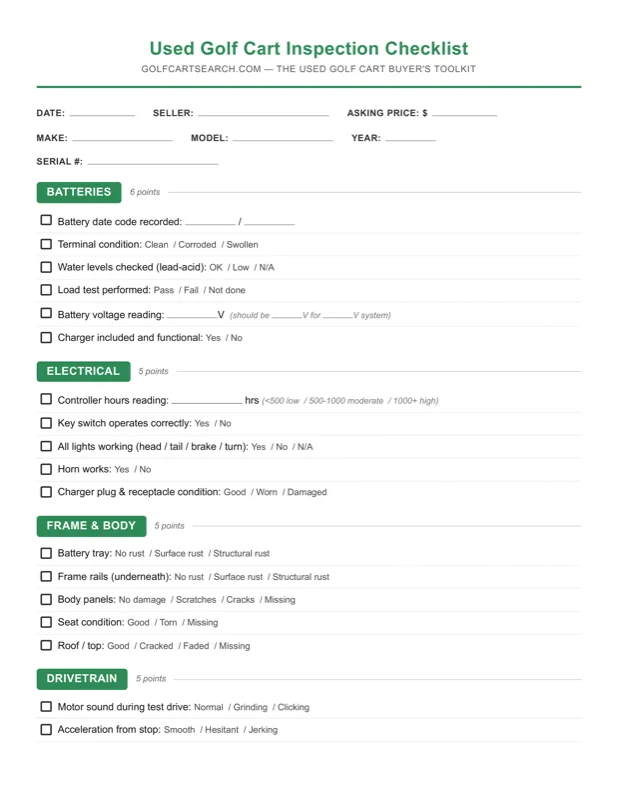
A used cart in good condition is a solid farm vehicle for $2,000 to $5,000. Focus your inspection on frame condition (check for rust or cracks), battery health (load test every battery), tire tread depth, and brake function. Our used golf cart buying guide has a complete inspection checklist.
Golf Cart Search
Find the Best Golf Carts of 2026
Compare top-rated models, read expert reviews, and find the perfect cart for your needs.