
As an Amazon Associate, we earn from qualifying purchases. This helps support our site at no extra cost to you.
If you are searching for golf cart brands to avoid, here is the practical 2026 answer: avoid no-name re-badged imports, direct-buy carts with no local service plan, and premium newer brands priced like Club Car, EZGO, or Yamaha without matching support.
That does not mean every newer brand is bad. It means names like Kandi, Atlas, and Tomberlin need a stronger service, warranty, and resale check than a safer legacy-brand purchase.
That matters because the golf cart market has changed fast. Buyers can now choose between trusted legacy brands like Club Car, EZGO, and Yamaha, feature-heavy newer brands, and direct-buy carts that ship to your driveway from Amazon or big-box channels. On paper, many of those newer carts look great. In real life, ownership comes down to support, warranty handling, battery quality, and resale.
This guide is built for buyers who want the practical answer before spending real money. I will show you which brand types deserve caution, which specific brands I would approach carefully in 2026, and what to buy instead if you want the lowest-risk path.
I checked the volatile support claims again on May 4, 2026, including Kandi's current warranty page, Atlas's current FAQ, and Tomberlin's current Engage page. The conclusion did not become "all new brands are bad." It became more specific: the safest buy is the cart with a real repair path, written warranty terms, and resale demand in your local market.
Golf Cart Brands to Avoid: Quick Verdict
If you want the shortest possible answer, avoid any golf cart brand that fails one of these tests:
- no clear local dealer or repair path
- vague or short warranty language on the vehicle, battery, or controller
- weak parts diagrams, manuals, or technical support
- resale that depends on finding a very specific buyer
- pricing that is too close to a used or new Big 3 alternative
That framework matters more than country of origin alone. A Chinese-built or import-heavy cart can be fine with a real dealer behind it. A domestic-looking badge can still be a bad buy if the seller cannot service it.
In practice, the brands and brand types I would be most careful with in 2026 are:
- no-name re-badged imports sold through auctions, liquidation sellers, or small local resellers
- direct-buy value brands without a real service plan, especially when the buyer is treating the cart like a forever neighborhood vehicle
- premium newer brands with smaller networks and weaker resale, particularly when their price is approaching Club Car, Yamaha, or EZGO territory
The best safe default is still boring, and that is a compliment: a clean used Big 3 cart, or a new cart from a dealer-backed brand you can actually service locally.
Denago is one example where the local support test matters more than the feature list. Our Denago golf cart review separates current manufacturer claims, dealer price signals, and the still-limited long-term ownership evidence.
Which Golf Cart Brands Should You Avoid in 2026?
Use this as the buyer-first caution list, not a permanent blacklist.
| Brand or type | Avoid if... | Still consider if... | Safer comparison |
|---|---|---|---|
| Unknown re-badged imports | the seller cannot prove who built it, who services it, or where parts come from | a real local dealer stocks parts and puts support promises in writing | used Club Car, EZGO, or Yamaha |
| Kandi and similar direct-buy carts | you need daily neighborhood reliability, any-shop repairs, and strong resale | you want a budget RV, campground, second-home, or niche mini-cart and accept the shorter support story | used Big 3 cart or dealer-backed value brand |
| Atlas | there is no nearby authorized dealer or the quote does not include the exact 2026 warranty terms | your dealer is strong and the written paperwork matches the 2026 lifetime/10-year/3-year warranty pitch | Club Car Onward, Yamaha Drive2, or another dealer-backed premium cart |
| Tomberlin | resale, simplicity, or coastal corrosion resistance matter more than luxury LSV features | you want a factory premium LSV and have a responsive dealer nearby | Club Car Onward LSV, GEM, or a simpler Big 3 neighborhood build |
5 Red Flags That Make a Golf Cart Brand Risky
Most “brands to avoid” articles do not separate style complaints from real ownership risk. These five red flags are the ones that actually cost buyers money.
Check Dealer Depth Before You Trust the Touchscreen
A pretty dash is not support.
Before you buy, ask who will handle:
- battery problems
- controller diagnostics
- charger failures
- warranty labor
- body or trim replacement
If the seller cannot point to a real dealer or repair shop that works on that exact brand, you are taking on more risk than most buyers realize.
This is why a used Club Car, EZGO, or Yamaha often wins even when the newer cart looks more exciting. Parts and service are easier almost everywhere.
Warranty Language Needs to Be Boring and Clear
Golf cart warranty marketing often sounds stronger than the actual ownership experience.
Check:
- exact term for the vehicle
- exact term for the battery
- whether labor is included
- whether registration is required
- whether coverage transfers to a second owner
- whether warranty work must stay inside an authorized dealer network
As one example, Kandi's current warranty page lists 12 months on golf carts and UTVs and 36 months on lithium batteries. That is usable, but it is still much shorter than what buyers may expect if they are cross-shopping ICON, Atlas, or premium legacy brands.
Parts Access Beats Paper Specs
A golf cart can be “good enough” mechanically and still become a bad purchase if the wrong part fails.
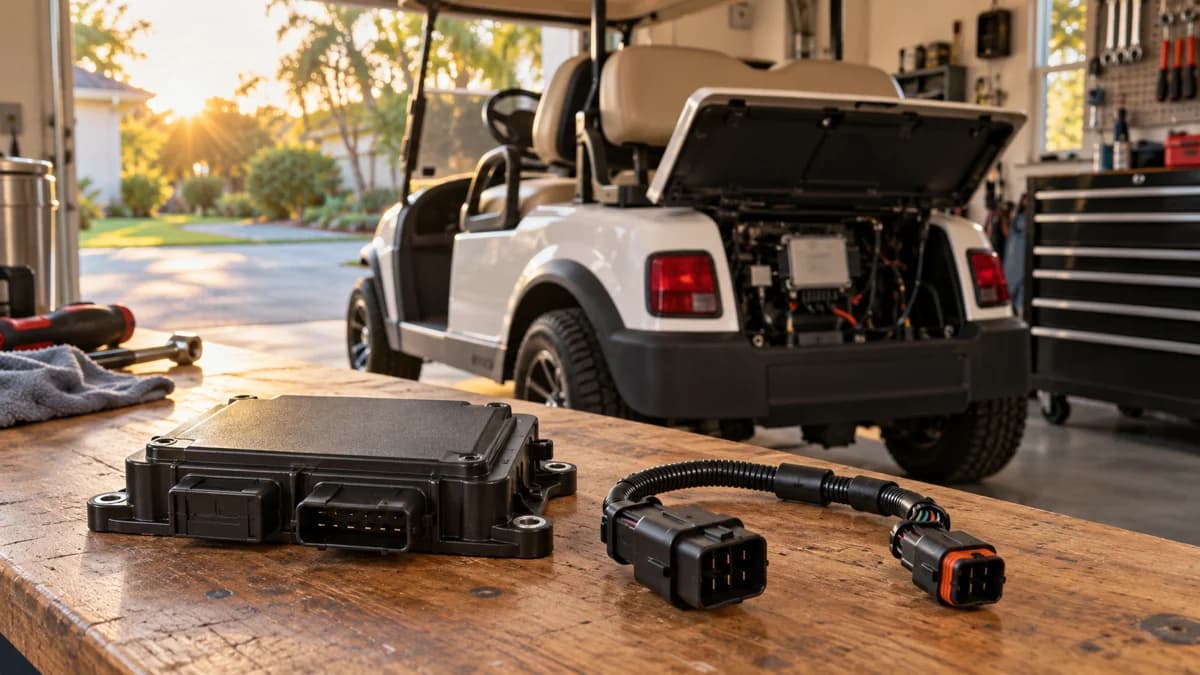
Basic wear items are rarely the issue. Tires, brakes, seat covers, and chargers are easy enough. The harder failures are:
- displays
- controller modules
- proprietary chargers
- harnesses
- body panels
- battery management systems
That is where newer or lightly supported brands can turn a budget buy into a headache.
Resale Is Real, Even If You Think You Will Keep It Forever
Buyers love saying they will keep the cart forever. Then life changes, the neighborhood changes, the family grows, or a better cart shows up.
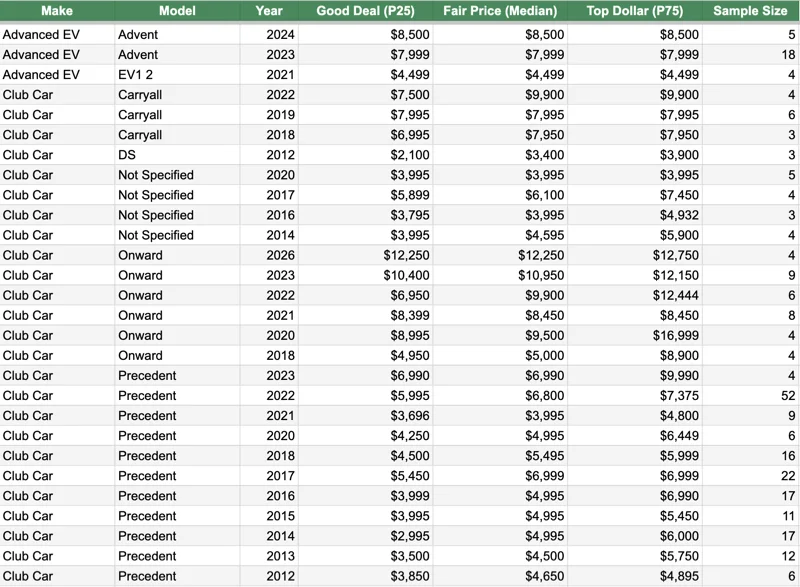
That is why I tell people to read the golf cart value guide, depreciation chart by brand, and used buying guide before assuming a new cart is automatically the smart move. A safe badge with a bigger used-buyer pool is worth something.
Premium Pricing Changes the Standard
The higher the price gets, the harder it is to forgive support risk.
A sub-$5,000 portable cart can make sense if it solves a specific problem. A $16,000 to $20,000 cart with uncertain resale, steel-frame corrosion risk, or thin dealer depth is a tougher sell. That is where brand caution becomes far more important.
Risky Golf Cart Brand Categories to Watch
Avoid No-Name Re-Badged Import Carts
This is the first category I would tell most buyers to avoid.
I am not talking about every import-heavy brand. I am talking about the carts sold under random house labels, one-off dealership branding, or low-information marketplace listings where the long-term support story is weak or impossible to verify.
These carts usually look attractive because they promise:
- lots of standard features
- low upfront pricing
- “street legal” language
- lithium batteries
- big screens and audio systems
The problem is what happens after month 13.
If the seller changes suppliers, closes, or stops carrying that line, you may be left chasing exact-match components with no reliable parts catalog. That risk is why this category is still the easiest “avoid” call in the market.
If you want a cheaper cart, a clean used Big 3 cart is usually safer. If you want a modern budget cart, step up to a brand with a visible support structure rather than buying a ghost brand.
Be Careful With Direct-Buy Value Brands Without Service
This category is more nuanced.
I would not say every direct-buy brand is bad. I would say they become bad purchases fast when the buyer ignores the support question.
The clearest example is Kandi. Kandi is not automatically a brand to avoid. It is a brand to buy only with clear eyes. The positives are real:
- easy online purchase
- aggressive pricing
- lithium options
- niche products like the Collapsible Mini
- direct-to-door convenience
The trade-offs are real too:
- shorter vehicle warranty than many buyers expect
- less predictable service depth than the Big 3
- resale that is still less trusted
- some models are better niche tools than true daily neighborhood vehicles
Kandi's support story is clearer than a mystery import because it publishes warranty terms, warranty registration, claim forms, dealer lookup, and service-center paths. The caution is that those terms still put more responsibility on the buyer than a strong local golf cart dealer relationship would.
That is why Kandi belongs on a caution list but not on a universal blacklist.
If you still want to benchmark a real direct-buy value cart, the AODES Trailcross remains one of the clearest comparisons. At the low-$7,000s it was last listed at, it helps frame what "cheap enough to justify the risk" really looks like, but its Amazon listing has since been withdrawn.
See our full AODES Trailcross breakdown
If portability is the whole reason you are shopping, the Kandi Collapsible Mini remains one of the few legitimate mini-cart options instead of just another dressed-up neighborhood cart. It makes sense for RV parks and campgrounds, not as a replacement for a full-size daily cart. It is currently unavailable on Amazon.
See our full Kandi Collapsible Mini breakdown
If you want a sporty 2-seat online cart, the Kandi GOAT 2P is worth comparing only after you decide whether its speed, support, and use case actually fit your life. It is currently unavailable on Amazon.
See our full Kandi GOAT 2P breakdown
For more on this whole segment, read our Chinese golf cart guide, Amazon golf cart guide, and best golf carts under $10,000.
Question Premium Newer Brands Near Legacy Pricing
This is the category many buyers underestimate.
A premium newer brand can be a perfectly good cart. The problem is that once pricing climbs into the mid-teens or higher, the buyer starts comparing it to brands with deeper reputation, stronger resale, and easier long-term service.
Two brands that fit this caution bucket in 2026 are Atlas and Tomberlin. That does not mean they are bad carts. It means the wrong buyer can overpay for the wrong reasons.
Why Atlas Deserves a Careful Look Before You Buy
Atlas has a lot going for it. The current brand pitch includes:
- aluminum chassis
- strong standard safety equipment
- large touchscreen
- 2026 claims around lifetime powertrain coverage, 10-year battery coverage, and 3-year bumper-to-bumper coverage
That is a compelling package. Atlas's current FAQ says all 2026 vehicles include lifetime powertrain coverage, a 10-year battery warranty, and a 3-year bumper-to-bumper warranty. The same FAQ says your Atlas is serviced by the authorized dealer that completes the sale.
That dealer dependence is the caution. High-level warranty copy is not the same as buyer paperwork, so confirm transferability, exclusions, warranty labor, serial-number eligibility, battery coverage, and the exact model year in your contract. If you have a strong local Atlas dealer, Atlas can make sense. If you are relying on the badge alone, I would be cautious.
Why Tomberlin Is Not the Safe Default Many Buyers Assume
Tomberlin has a real premium LSV identity, and some buyers will love it. The Engage LX and related models make a serious case on range, tech, and road-ready features. Tomberlin's current Engage page says its 5-year limited warranty covers parts and labor, with the EVOLVE battery pack covered for 5 years or 36,000 miles, whichever comes first.
The reasons for caution are different from Atlas:
- higher pricing
- thinner dealer depth than the Big 3
- a smaller used buyer pool
- high-strength steel-frame ownership risk in coastal climates
- more systems and electronics to own long term
If your priorities are factory luxury, connected features, and 25 mph capability, Tomberlin can be a good fit. If your priorities are resale, simplicity, or beach-town durability, I would think hard before spending that money.
3 Golf Cart Brand Decisions I Would Approach Carefully
If you want the plain-English version, these are the three caution calls I would make most often in 2026:
1. Skip Unknown Re-Badged Import Brands
These are the easiest avoid.
If you cannot clearly answer who built it, who services it, and where the parts come from, move on. There are too many safer options in the market now.
2. Be Careful With Kandi if You Expect a Forever Cart
Kandi is fine for the right owner. It is a mistake for the wrong one.
I would be cautious if the buyer expects:
- daily neighborhood reliability
- long-term resale strength
- easy repairs at any golf cart shop
- a warranty experience that feels like a legacy dealer brand
I would be less cautious if the buyer wants:
- a campground or RV tool
- a second-home cart
- a budget-first online buy
- a niche product like the collapsible mini
3. Be Careful With Tomberlin or Atlas if You Are Shopping Features Only
Both brands can make sense. Both can also become overbought.
If a buyer is stretching to justify a premium newer cart because it has a nicer screen, more speakers, or more “wow” in the showroom, I would push them to compare against:
- a used premium Club Car
- a well-supported Yamaha
- a mainstream EZGO
- a lower-priced dealer-backed value brand from our best golf cart brands page
That comparison often changes the answer quickly.
When Not to Avoid Newer Golf Cart Brands
A caution list only helps if it also explains when the brand still makes sense.
Do not avoid a newer or import-heavy brand automatically if:
- the price discount is meaningful
- a real local dealer stocks parts and does warranty work
- the cart fills a narrow use case better than a legacy cart
- you plan to keep it long enough that resale matters less
- you have verified paperwork, range, battery type, and support before paying
That is exactly why a post like this needs nuance. A portable cart for camping, a niche farm cart, or a direct-buy beach-house cart can still be smart if the buyer understands the trade-offs.
What to Buy Instead of Risky Golf Cart Brands
If you want the lowest-risk route, start here:
Best Safer Buy Under $8,000
A used Club Car, EZGO, or Yamaha with known battery age and clean paperwork.
This is still the default recommendation for most practical buyers.
Best Safer Buy for Neighborhood Families
A dealer-backed 4-seater from a brand with parts and service you can verify, even if the screen is smaller and the spec sheet looks less exciting than the hot new brand.
Our best neighborhood golf carts guide, 2 vs 4 vs 6-seater guide, and pricing guide are the right place to compare those trade-offs.
Best Safer Buy for Long-Term Ownership
Club Car remains the easiest answer for buyers who care about long-term ownership, corrosion resistance, and resale. Yamaha is still a strong conservative pick. EZGO stays in the conversation because the parts ecosystem is so deep.
Best Safer Buy for High Feature Value
If you still want a feature-heavy newer cart, pick the one with the strongest verified dealer and support path in your area, not the one with the flashiest brochure. That is the entire lesson of this article.
10-Question Golf Cart Brand Risk Checklist
Before you buy any brand on the edge of your comfort zone, answer these questions in order:
- Who will repair it within 50 miles?
- What is the exact vehicle warranty term?
- What is the exact battery warranty term?
- Is labor covered?
- Is registration required to keep full warranty protection?
- Can I get the parts diagram and owner manual before purchase?
- What is the battery brand and capacity?
- Is the paperwork clean for street-legal use, titles, and insurance?
- What does a comparable used Big 3 cart cost?
- What do I think this cart will be worth in two years?
If the seller gets vague or defensive on those questions, that is usually your answer.
Golf Cart Brands to Avoid FAQ
Are any golf cart brands automatic no-go buys?
Yes. Unknown re-badged imports with no clear parts or service path are the easiest hard pass in the market.
Is Kandi one of the worst golf cart brands?
Not for every buyer. Kandi is a narrower-use-case brand, not a universal recommendation. It works better for budget, RV, and second-property buyers than for owners expecting legacy-brand support.
Are Atlas carts too risky to buy?
Not automatically. Atlas is a reasonable buy if the dealer is strong and the paperwork is clear. It is riskier if you are relying on brochure claims without confirming the exact warranty and support path.
Is Tomberlin overpriced?
Tomberlin can feel overpriced if you care most about resale, simplicity, or long-term corrosion resistance. It can still be worth it if you want premium LSV features and will actually use them.
Why do people keep recommending Club Car, EZGO, and Yamaha?
Because they are easier to own. The parts are easier to source, more shops can repair them, and buyers trust the badges on the used market.
Should I buy a new budget import or a used Big 3 cart?
For most buyers, the used Big 3 cart is still safer. The new import only wins when the feature set, dealer support, and discount are clear enough to justify the risk.
Do premium newer brands hold value like Club Car?
Usually no. Even good newer brands still face a smaller used-buyer pool and more caution around service and parts.
Are dealer fees part of the brand-risk conversation?
Absolutely. A cart that looks cheap online can get much less attractive once freight, setup, tax, registration, and dealer-installed accessories are added. Always compare the real out-the-door number. Our dealer fees and out-the-door cost guide shows how to read those quotes correctly.
What is the smartest first step if I am still unsure?
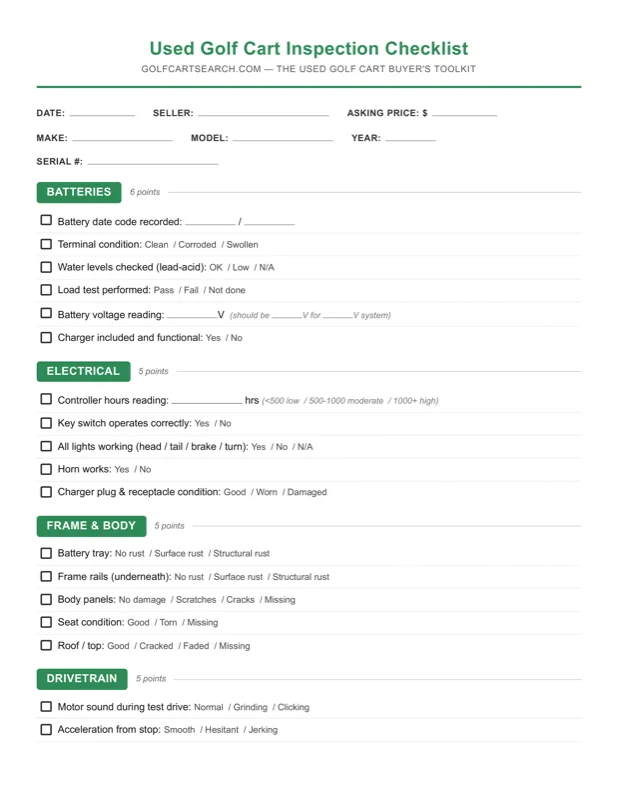
Start with a used-cart inspection standard, not a brand list. Our used buying guide, value guide, and dealer directory will help you make a safer comparison.
Golf Cart Search
Find the Best Golf Carts of 2026
Compare top-rated models, read expert reviews, and find the perfect cart for your needs.