
As an Amazon Associate, we earn from qualifying purchases. This helps support our site at no extra cost to you.
If you are asking whether Chinese golf carts are worth it, you are usually not asking about China alone. You are asking whether a feature-loaded $7,000 to $10,000 value cart is smarter than paying $11,000 to $15,000 for a new legacy-brand cart, or $5,000 to $8,000 for a used Club Car, EZGO, or Yamaha.
That is a fair question, because the value story is real. Brands like Kandi, AODES, and other import-heavy newcomers have made it normal to see lithium batteries, touchscreens, cameras, LED lighting, and 25 mph performance at prices that would have sounded unrealistic a few years ago. But the risk story is real too. Warranty fine print, local service, VIN paperwork, battery support, and resale matter far more than the glossy photos.
This guide gives you the practical answer. I will break down which kinds of Chinese golf carts make sense, which ones are traps, and when you are better off buying a used golf cart, a dealer-backed value brand, or one of the best golf carts in 2026.
Quick Verdict
Chinese golf carts are worth it for a narrower group of buyers than the marketing suggests.
They make sense when:
- you are saving real money, usually at least $3,000 versus the dealer-backed alternative
- you have confirmed a local shop or dealer will service the cart
- the cart is for a campground, beach house, farm, second home, or light neighborhood use
- you care more about lithium batteries and standard features than long-term resale
They are a bad bet when:
- the cart will be your main everyday neighborhood vehicle
- you assume any golf cart shop can diagnose it
- you are buying from an auction, big-box listing, or online seller with weak after-sale support
- the price is close to a cleaner used Club Car, EZGO, or Yamaha
The short version is this: a good dealer-backed import can be a smart buy, but a random no-name import with unclear parts support can become expensive fast.
If your question is broader than Chinese carts alone, read our full guide to golf cart brands to avoid in 2026 for the red flags that also show up in premium newer brands and weakly supported dealer lines.
What People Actually Mean by "Chinese Golf Cart"
This is where most articles get sloppy. Buyers use "Chinese golf cart" as a catch-all label, but there are really three different buckets.
Bucket 1: No-name or lightly branded imports
These are the riskiest carts in the market. They often show up through auctions, liquidation channels, seasonal big-box listings, or small resellers using house branding. The biggest problem is not that they are automatically junk. The biggest problem is that your exact controller, display, charger, steering components, body panels, or battery pack may be hard to trace later.
That parts problem shows up constantly in owner forums. In one recent Reddit troubleshooting thread, multiple shop owners said they will do basic work like tires, brakes, and batteries on these carts but avoid deeper diagnostics because sourcing parts and getting technical help is so inconsistent. Another owner thread had the opposite experience, where a locally supported import ran well for over a year, but the owner still admitted the risk if the dealer changed suppliers or closed.
That is the right way to think about this category. The risk is not "made in China." The risk is "who stands behind this exact cart after month 13?"
Bucket 2: Direct-buy value brands
This is where golf carts on Amazon, Costco-style bundles, Lowe's listings, and direct-online models live. Kandi is the clearest example because it has the broadest online footprint. AODES and SDLANCH also fit the conversation for buyers who want a new lithium cart without visiting a traditional golf cart dealer.
These carts are often attractive for one reason: the numbers look great.
- lithium battery instead of lead-acid
- 20 to 25 mph instead of 12 to 19 mph
- cameras, screens, Bluetooth audio, and lighting included
- prices that can undercut dealer inventory when a real featured offer is live
That is why this segment keeps winning clicks from people reading our best carts under $10,000 guide. The catch is that direct-buy convenience often shifts setup, paperwork, and support work onto you.
Bucket 3: Dealer-backed newer value brands
This is the most important nuance. Buyers often lump brands like ICON, Evolution, Denago, Advanced EV, and Bintelli into the same "Chinese cart" conversation because of offshore manufacturing, imported components, or both.
The ownership reality is different from Bucket 1 and usually different from Bucket 2.
- ICON currently advertises a 3-year cart warranty and 8 to 10 years on Eco Battery lithium packs, but both the cart and battery require registration and warranty work must stay inside the authorized network.
- Evolution currently says warranty activation must happen within two weeks of purchase and its current owner-support material points buyers back to dealers and support tickets.
- Kandi's current warranty language is shorter at 12 months on the vehicle and 36 months on lithium batteries, though Kandi does have a U.S. support structure and service-center push.
- Bintelli's current Beyond marketing advertises a 4-year limited warranty, which is a materially stronger signal than many direct-buy carts.
That does not make every dealer-backed value brand a slam dunk. It does mean you should not analyze them the same way you analyze a mystery cart from an auction site.
When a Chinese Golf Cart Is a Smart Buy
There are real scenarios where the math works.
You want the most features per dollar
If your budget is around $8,000 to $10,000 and you want lithium, cameras, a modern dash, LED lights, and 25 mph capability, newer import-heavy brands are where the market has moved fastest.
That is why so many first-time buyers cross-shop Denago, Evolution, Kandi, and direct-buy models against much older used carts. The feature gap is obvious the second you look at them side by side.
The cart is not your only or primary vehicle
A Chinese golf cart is easier to justify when it is a second vehicle, not your daily lifeline.
This category makes sense for:
- campground and RV park use
- beach-house or vacation-property transportation
- farm, acreage, or warehouse errands
- occasional neighborhood cruising on short routes
If that sounds like you, also read our guides to portable golf carts for camping, beach golf carts, and farm and ranch carts.
You have real local support
This is the make-or-break variable.
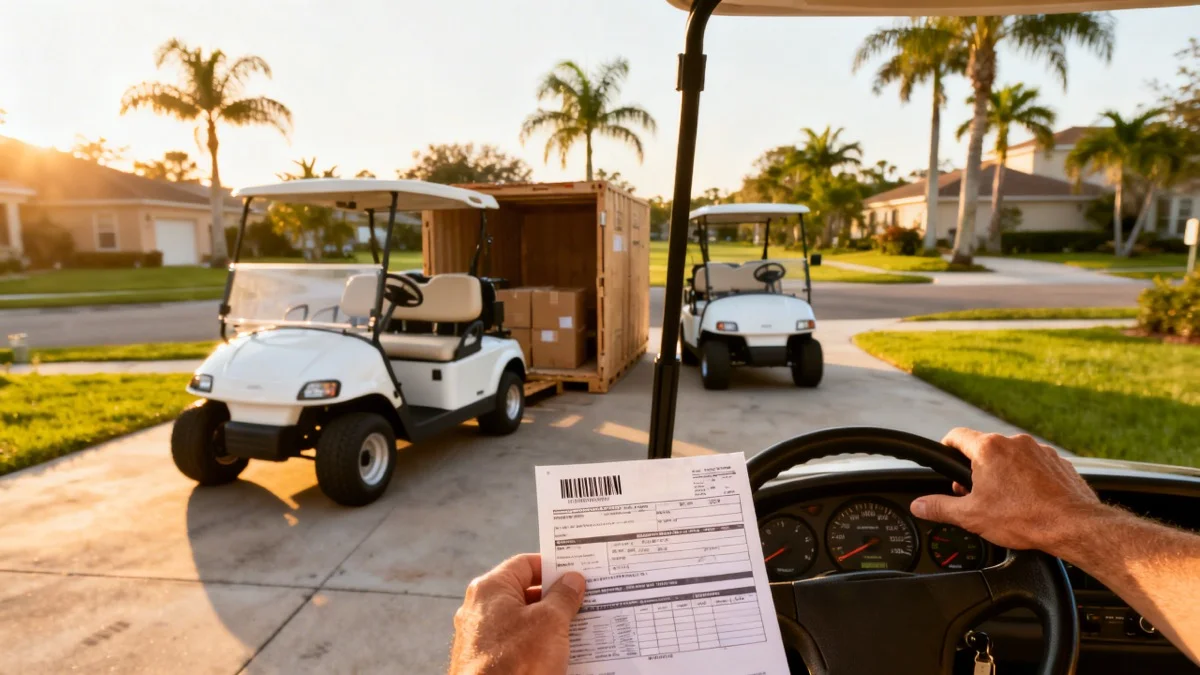
An import cart with a solid local dealer is a very different ownership experience from an import cart dropped in your driveway by freight with nobody local willing to touch it. In owner threads, the happiest import-cart buyers are almost always the ones who bought from an established local dealer that stocked parts, prepped the cart correctly, and knew the exact model line.
If you already know which dealer or repair shop will handle the cart, your odds improve a lot.
When Buying One Is a Mistake
This is where buyers talk themselves into a "deal" that never really was one.
You are buying blind on price alone
A golf cart is not a television. A low price does not help much if your controller fails, the display stops working, or the steering parts take six weeks to source.
That is the biggest reason I tell buyers to compare a Chinese cart against a realistic alternative, not just against a new premium cart. If a direct-buy import is $8,500 and a clean used legacy-brand cart is $6,500, the import is not automatically the value winner.
You expect Big 3 resale value
Club Car, EZGO, and Yamaha still win the resale argument. Buyers know the badges, parts are everywhere, and shops understand the platforms.
That is harder for newer imports. Even a solid cart can take a resale hit simply because the next buyer is nervous about parts, service, and warranty transfer.
You want every shop to be able to repair it
That is not how this segment works. Plenty of independent shops will do basic wear items. Fewer want to spend hours decoding an unfamiliar controller, chasing a factory harness, or arguing with an importer over warranty reimbursement.
If universal repairability matters most, a used Big 3 cart is still the safer ownership play.
You need clean street-legal paperwork
Some imports are sold as 25 mph carts with a VIN and origin paperwork. Some are sold with vague "street legal package" language that does not answer the real DMV questions.
Before buying any neighborhood-focused cart, confirm:
- VIN included
- Manufacturer Certificate or Statement of Origin included
- title path in your state
- insurance requirements
- local golf cart law restrictions
If you are not sure where to start, read our street-legal guide and title and registration guide.
The Ownership Math Most Buyers Miss
The smartest comparison is not "Chinese cart versus new Club Car." It is usually this:
| Option | Typical Price | Best For | Biggest Win | Biggest Risk |
|---|---|---|---|---|
| No-name direct import | $4,000-$9,000 | Price-first buyer with high risk tolerance | Lowest upfront price | Parts and technical support |
| Branded online cart | $4,000-$10,000 | Campground, vacation, second-home use | Lithium and features for the money | Warranty, availability, and service friction |
| Dealer-backed value brand | $8,000-$12,000 | Feature-focused neighborhood buyer | Better support with lower price than premium brands | Resale and dealer dependence |
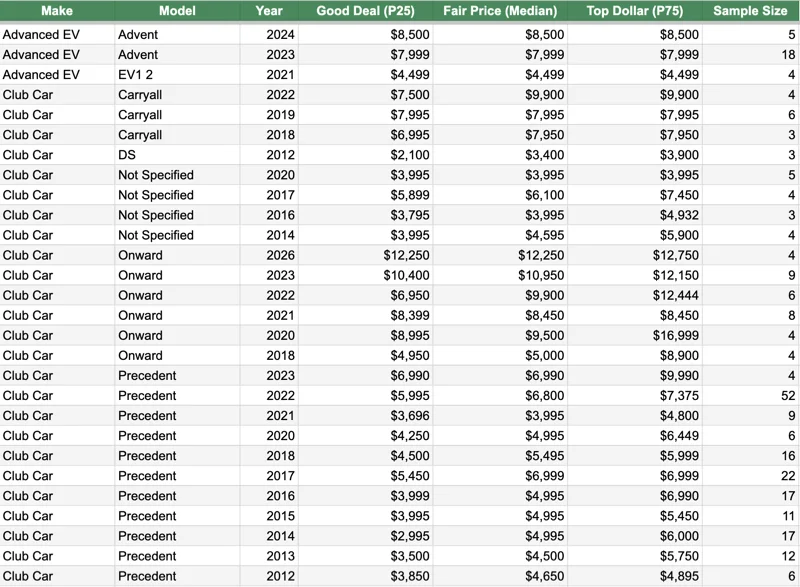
| Used Big 3 cart | $4,000-$8,000 | Long-term practical buyer | Parts, repairability, buyer trust | Age, batteries, and cosmetic wear |
That last column is why so many used carts still make sense. A used Big 3 cart may look older and feel less exciting, but the ownership downside is easier to price.
If you are deciding between a used legacy cart and a new import, you should also read our golf cart pricing guide, value guide, and rent vs buy analysis.
The 7 Questions to Ask Before You Buy One
If you still want a Chinese golf cart, this is the checklist that matters most.
1. Who will repair this exact cart within 50 miles?
Do not accept "any golf cart shop can work on it." Call local shops yourself. Ask specifically whether they work on that brand, that controller family, and that battery setup. Use our repair shop listings and dealer directory if you need to start somewhere.
2. What is the real warranty term on the cart and battery?
Do not stop at the headline. Look for:
- vehicle coverage length
- battery coverage length
- whether labor is covered
- whether warranty registration is required
- whether the warranty transfers to a second owner
For example, current official Kandi warranty language is much shorter than many buyers expect, while current ICON warranty language is longer but stricter about network service and registration.
3. Can I get the owner's manual, wiring diagram, and parts diagram now?
Get them before the sale if possible. In import-cart communities, this is one of the simplest practical advantages you can give yourself.
4. Who built the battery and what happens if it fails?
Battery warranty language can look strong on paper, but the important question is who actually handles the claim. That matters especially if the battery system is tied to proprietary software, registration rules, or approved-only replacement options.
5. Is the cart really discounted enough versus a used legacy cart?
If the answer is no, stop. A $7,999 import cart is not automatically a better value than a $6,200 used EZGO with known history and easy parts support.
6. Do I have the paperwork for road use?
If neighborhood driving matters, confirm the VIN and origin paperwork before you place the order. Then verify the road rules in your state. Start with golf cart laws by state, insurance by state, and our license guide.
7. What is my exit strategy if I sell in two years?
If you trade often, resale matters more. If you plan to keep the cart for six to ten years and buy low enough, resale matters less.
Chinese Cart vs Used Club Car, EZGO, or Yamaha
This is the real buying fork for most people.
Buy the Chinese cart if:
- you want a lithium battery now, not later
- a screen, camera, Bluetooth, and lighting matter to you
- you have verified service support locally
- the cart is priced far enough below a dealer-backed alternative to justify risk
Buy the used Big 3 cart if:
- you want parts support for the next decade
- you want easier resale
- you want more shops willing to work on the cart
- you care more about platform durability than flashy features
For many practical buyers, the answer is still a used Club Car, EZGO, or Yamaha plus a few targeted upgrades. If you want to modernize one later, our customization guide, dashboard tech guide, and battery guide show where the money actually goes.
If You Still Want One, These Are the Most Defensible Current Examples
I would not recommend a random no-name import. I would narrow the field to a few carts with at least some visible support structure and a clear use case.
Best Niche Buy: Kandi Collapsible Mini
The Kandi Collapsible Mini is not a general-purpose neighborhood cart, but it is easy to defend for campgrounds, RV travel, and marinas. At about $3,999, it is cheap enough that the limitations make sense.
Use it for:
- RV parks
- campgrounds
- short private-property trips
- storage-constrained buyers
Skip it if you want a daily neighborhood cart. It is currently unavailable on Amazon.
See our full Kandi Collapsible Mini breakdown
Best Full-Size Direct-Buy Value: AODES Trailcross
The AODES Trailcross is the direct-buy cart I can justify most easily for price-sensitive buyers because the feature list is strong enough to offset some support risk. Current inventory signals put it around $7,249, which is aggressive for a 4-seat lithium cart.
What it gets right:
- 4-passenger usability
- large lithium pack
- rugged styling
- better suspension story than many cheap imports
What still worries me:
- shorter vehicle warranty signal than stronger dealer-backed brands
- much more dealer- and service-dependent than a used legacy cart
If AODES is the one you are seriously considering, our dedicated AODES golf cart review breaks down the specs, warranty fine print, and where the Trailcross still makes sense. Note that its Amazon listing is no longer active.
Best Sporty 2-Seat Option: Kandi GOAT 2P
The Kandi GOAT 2P works if you want a fun two-seater and understand the trade-off. It is not the sensible family cart. It is the cart for a buyer who wants lithium, styling, and weekend use at about $7,999.
Read our full Kandi review if it is on your shortlist, because the buying decision turns more on support than on the yoke steering or the screen. The GOAT 2P is currently unavailable on Amazon.
Range-Focused Availability Watch: SDLANCH SDLGC80
The SDLANCH SDLGC80 is marketed as a 60V four-seater with up to 45 miles of range. Its Amazon listing showed an in-stock offer around $9,800 on August 18, 2026, but the seller claims, freight terms, warranty process, and service access still need verification.
If it returns, confirm the price, seller, battery capacity and chemistry, motor output, top speed, paperwork, parts access, and a local service option. That is the pattern to remember: a strong feature list cannot make up for an unverifiable offer or thin support.
Check Current Availability on AmazonBottom Line
Chinese golf carts are worth it when you buy the right kind of Chinese golf cart.
That means:
- real price advantage
- real local support
- realistic expectations about resale
- clear paperwork and warranty terms
If you have all four, a dealer-backed import or a carefully chosen direct-buy cart can be a smart move. If you are missing two of them, you are probably buying a future problem.
For most buyers, the safest ranking still looks like this:
- Used Big 3 cart if you want the lowest ownership risk
- Dealer-backed value brand if you want features and still have local support
- Direct-buy import only if the discount is real and the use case is narrow
If you want to comparison shop locally before deciding, use our dealer directory, repair listings, best brand roundup, and top model roundup.
Frequently Asked Questions
Are Chinese golf carts worth buying in 2026?
Yes, sometimes. They are worth buying when the cart is discounted enough to justify the support risk, the warranty is clear, and a real local service option exists. They are usually not worth buying when support is vague or the price is too close to a used legacy-brand cart.
Which golf cart brands do buyers usually mean by Chinese golf carts?
Most buyers mean direct-buy or lower-cost import brands like Kandi, AODES, SDLANCH, and similar carts sold online or through nontraditional channels. They also often include newer dealer-backed brands like ICON, Evolution, Denago, Advanced EV, and Bintelli in the same conversation because buyers perceive them as feature-heavy import alternatives to the Big 3.
Are Chinese golf carts reliable?
Some are reliable enough for years of normal use. The bigger issue is support when something fails. Basic wear items are usually manageable. Brand-specific electronics, displays, harnesses, and battery systems are what separate a good ownership experience from a bad one.
Is it better to buy a Chinese golf cart or a used Club Car, EZGO, or Yamaha?
If your budget is $5,000 to $8,000 and you value repairability, resale, and long-term support, the used legacy-brand cart is usually better. If your budget is closer to $8,000 to $10,000 and you care more about lithium batteries and modern features, a newer import can make sense.
Do Chinese golf carts have parts problems?
They can. Tires, brakes, solenoids, and generic accessories are usually not the problem. Model-specific electronics and trim parts are the bigger risk. That is why getting the exact parts diagram and service path before purchase matters. The Advanced EV Advent and Horizon accessories guide shows how quickly fitment can split even within one newer value brand.
Are Chinese golf carts street legal?
Some are sold with 25 mph capability, a VIN, and road-use equipment, but that does not make them automatically legal everywhere. Confirm your state law, insurance requirement, and title path before you buy.
Which newer value brands have the strongest warranty signals?
Current official signals are stronger from dealer-backed brands than from pure direct-buy carts. ICON currently advertises a 3-year vehicle warranty and 8 to 10 years on approved Eco Battery lithium packs with registration. Bintelli advertises a 4-year limited warranty on current Beyond models. Kandi currently lists 12 months on the vehicle and 36 months on lithium batteries.
Are Kandi golf carts worth it?
They can be. Kandi makes the most sense for buyers who want a low-priced new cart for lighter-duty use, especially RV parks, campgrounds, vacation properties, and casual neighborhood trips. Kandi makes less sense if you want top-tier resale, deeper warranty confidence, or broad service coverage.
Do Chinese golf carts hold value?
Usually not as well as Club Car, EZGO, or Yamaha. The used buyer pool is smaller, and buyer confidence varies more by brand and local market. Expect more depreciation unless you bought low enough that the discount already covered the risk.
What should you verify before buying one?
Verify local service, parts availability, manuals, warranty terms, battery brand, paperwork, and your realistic alternative. If the import cart is not clearly better for your use case than a used legacy-brand cart, it probably is not the right buy.
Golf Cart Search
Find the Best Golf Carts of 2026
Compare top-rated models, read expert reviews, and find the perfect cart for your needs.