
Golf Cart Depreciation by Brand (2026 Data)

Golf cart depreciation by brand in 2026. Compare 3-year and 5-year value retention for Club Car, EZGO, Yamaha, ICON, Star EV, and more.

Michael
Michael
Apr 21st, 202611 min read
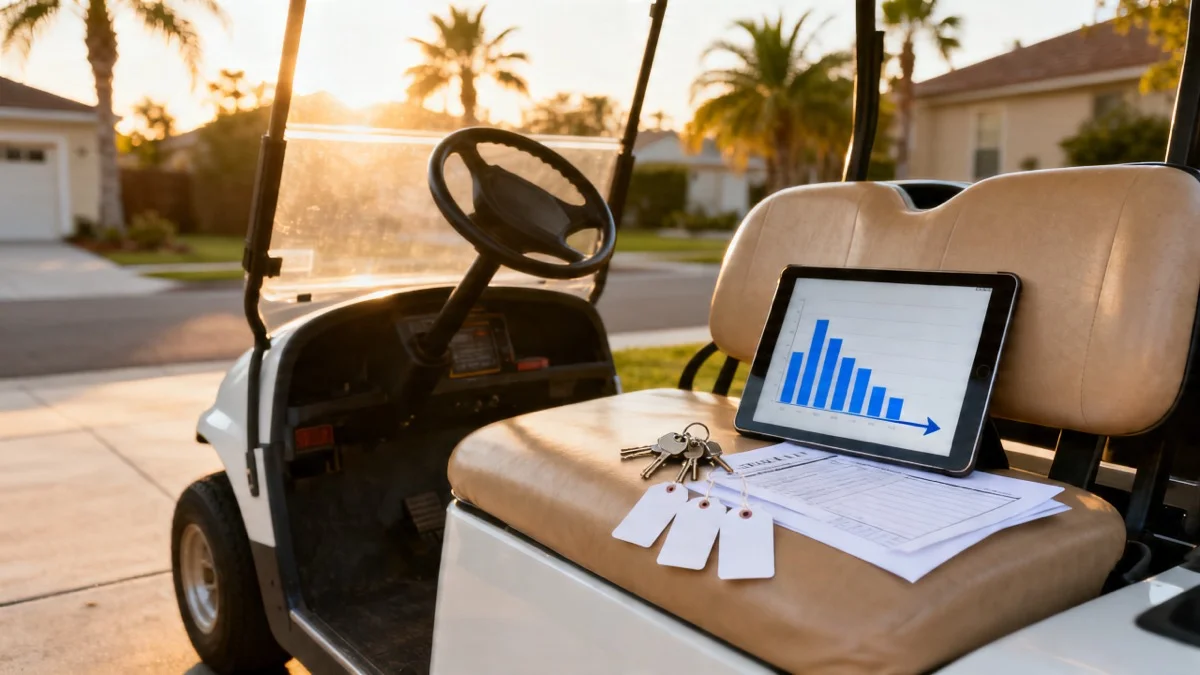
Golf cart depreciation chart beside keys and sale paperwork on a clean white golf cart seat

As an Amazon Associate, we earn from qualifying purchases. This helps support our site at no extra cost to you.

Golf cart depreciation is not the same across brands. A 3-year-old Club Car can still bring premium money, while a newer value-brand cart with similar seats, lights, and touchscreen features may need a deep discount to move.

The short version: Club Car depreciates slowest, EZGO and Yamaha sit close behind, and newer value brands need a larger purchase discount to offset weaker resale. Battery type, local dealer support, and frame rust can move the number almost as much as the logo on the front.

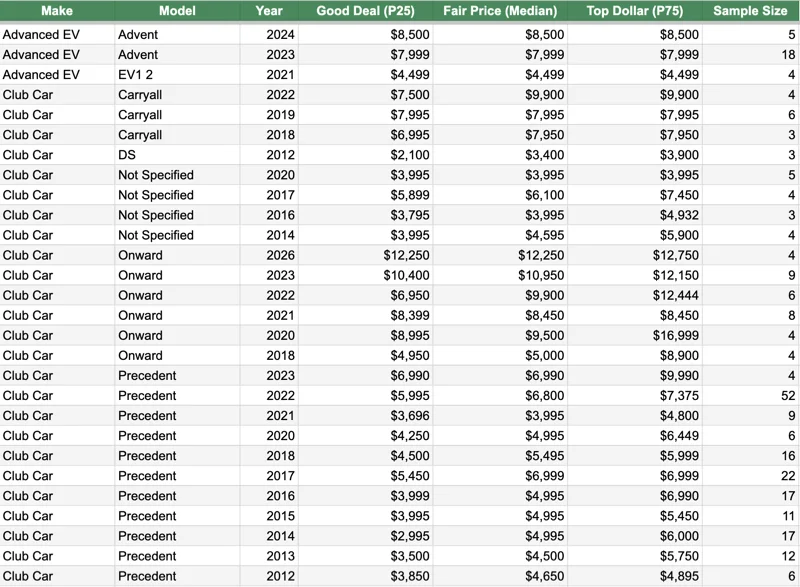
This guide is the brand-retention version of our broader golf cart value guide. If you want current asking-price ranges, use our used golf cart prices by brand guide. If you want to estimate one specific cart, use the golf cart value calculator after reading the tables below.

70-80% Club Car value retained after 3 years

60-70% Common 3-year retention for EZGO and Yamaha

15-20% Typical first-year depreciation for strong brands

+$1,000-$2,000 Common resale lift from a clean lithium conversion

Quick Answer: Golf Cart Depreciation by Brand

These ranges are based on our 2026 dealer-listing analysis, brand review data, and current used-market pricing patterns. They assume a clean, running cart with normal residential use, no major accident damage, and a believable maintenance history.

Brand3-Year Value Retention5-Year Value RetentionDepreciation Risk
Club Car70-80%55-65%Lowest
EZGO60-70%50-60%Low
Yamaha60-70%50-60%Low
ICON60-70%45-55%Medium
Star EV50-60%40-50%Medium
Advanced EV50-65%40-50%Medium
Evolution55-70%40-50%Medium-high
Kandi40-55%30-45%High
No-name or weak-support imports30-50%20-40%Highest

The ranges overlap because resale is local. A clean ICON i40 with transferable battery coverage and a strong local dealer can hold value better than a neglected Yamaha Drive2 with weak batteries. A rusty steel-frame cart near salt water can lose value faster than the brand average. A dealer-backed lithium cart in The Villages may sell faster than the same cart in a northern rural market.

Why Club Car Depreciates Slowest

Club Car is the resale leader because the frame story is simple. Club Car's current Onward page describes an aluminum chassis with a rust-proof design, and that one detail matters more than almost any cosmetic feature on an older cart.

Steel frames can be perfectly fine in dry climates, but used buyers still worry about corrosion. In Florida, South Carolina, coastal Georgia, beach towns, and humid retirement communities, frame rust is one of the fastest ways to turn a good listing into a hard sell. That is why a 10-year-old Club Car with clean batteries and a tidy body can still bring serious money.

Club Car also benefits from:

  • huge brand recognition
  • broad dealer support
  • strong parts availability
  • long ownership history in golf courses and communities
  • predictable demand for Precedent, Tempo, and Onward models

If you pay $11,000 for a new Club Car and sell it after 3 years, a realistic resale range might be $7,700-$8,800 if condition is strong. At 5 years, $6,000-$7,100 is still realistic in a strong market. That is why Club Car can be expensive to buy but relatively cheap to own over a full cycle.

EZGO Depreciation: Practical and Predictable

EZGO usually sits one tier below Club Car for resale but remains one of the safest used-market brands. The parts ecosystem is deep, independent golf cart shops know the platforms, and buyers recognize TXT, RXV, Valor, Express, and Liberty names.

EZGO's biggest depreciation split is battery type.

EZGO TypeResale Pattern
Older TXT lead-acidAffordable, easy to repair, battery condition drives price
RXV lead-acidStronger ride and braking reputation, still battery-sensitive
ELiTE lithiumBetter resale because battery risk is lower
Liberty LSVStrong demand where 25 mph LSV carts are legal and useful

EZGO's official ELiTE page says the lithium battery coverage runs 8 years, which helps used buyers feel better about a newer lithium cart. That does not mean every used ELiTE is automatically a great deal. Buyers still need to confirm warranty transfer details, battery health, charger condition, and whether the cart was used lightly or as a daily community vehicle.

Typical 3-year retention for clean EZGO carts is 60-70%. Five-year retention is often 50-60%, with ELiTE lithium models landing higher than older lead-acid versions.

Yamaha Depreciation: Gas Models Hold Surprisingly Well

Yamaha is different because the brand's gas carts have a loyal buyer base. Yamaha Drive2 gas models, especially QuieTech EFI versions, often hold value better than buyers expect because they are quiet, reliable, and familiar to golf course and neighborhood owners.

Yamaha's 4-year limited warranty has also helped the brand's reputation, although used buyers should verify whether any remaining coverage transfers through an authorized dealer.

The depreciation pattern looks like this:

  • Gas Yamaha Drive2: strongest Yamaha resale, especially in areas where buyers prefer gas
  • Lead-acid electric Yamaha: decent, but battery age can hurt fast
  • Lithium Yamaha: stronger than lead-acid, but less dominant than EZGO ELiTE in lithium-specific buyer demand
  • Older G-series carts: value depends heavily on condition and parts expectations

Yamaha usually retains 60-70% after 3 years and 50-60% after 5 years when maintained well. It is not always the highest resale brand, but it is one of the easiest brands to defend if you are buying used and want a conservative choice.

ICON, Star EV, and Advanced EV: Good Carts, More Resale Risk

Value brands have improved quickly. ICON, Star EV, and Advanced EV can make a lot of sense if the local dealer is strong and the purchase price leaves room for depreciation.

The risk is not always build quality. The risk is buyer confidence.

Used buyers ask:

  • Can I get parts locally?
  • Will a local shop work on it?
  • Is the battery warranty transferable?
  • Is the frame showing rust?
  • Will this brand still be supported in 5 years?

ICON has one of the stronger resale stories among newer value brands because many carts include lithium batteries, modern features, and a visible dealer network. ICON's warranty page says newer ICON EV and EPIC carts come with a 3-year manufacturer limited warranty and Eco Battery lithium coverage of 8-10 years, but it also states the vehicle warranty is limited to the original purchaser. That transfer detail matters at resale.

Star EV publishes a 4-year limited warranty plus 2-year bumper-to-bumper coverage on the Sirius, with separate lithium battery coverage. That helps, but Star EV still tends to trail Club Car, EZGO, and Yamaha in buyer pool size.

Advanced EV offers strong feature value and aggressive pricing. Its depreciation is not terrible when bought right, but paying near Big 3 money for a newer steel-frame value brand is where buyers get into trouble.

Evolution, Kandi, and Direct-Buy Carts Need a Bigger Discount

Evolution is one of the hardest brands to simplify. The new-cart feature value can be excellent, especially on models with lithium batteries, touchscreens, lighting, and modern styling. The resale challenge is the brand's shorter track record, rapid model changes, and warranty-transfer limits. If you buy one low enough and keep it for years, the math can still work.

Kandi, AODES, SDLANCH, and other online-first carts are different. They can be smart buys for RV parks, campgrounds, vacation homes, farms, and light neighborhood use. They are harder to defend if you expect strong resale or easy trade-in value.

For example, a direct-buy cart around $7,000-$9,800 can be a good tool if you plan to use it for 8 years and do not care about resale. But if you might sell in 2 or 3 years, compare it against a used Club Car Onward, EZGO RXV, or Yamaha Drive2 first.

The rule is simple: newer and less-proven brands need to be cheap enough that the upfront discount pays for the resale risk.

Year-by-Year Golf Cart Depreciation Curve

Most golf carts take the biggest hit early, then depreciation slows once they become clean used carts with known condition.

AgeStrong Brand RetentionValue Brand RetentionWhat Drives the Number
New100%100%MSRP, dealer fees, accessories
1 year80-88%70-80%First-owner premium disappears
2 years72-82%62-72%Warranty and battery confidence matter
3 years60-80%50-70%Brand reputation separates winners
5 years50-65%40-55%Battery age and condition dominate
7 years40-55%30-45%Parts support becomes more important
10 years30-45%20-35%Running condition, rust, and batteries set the floor
15 years20-35%10-25%Mostly utility value unless restored

The curve is not linear. A cart can lose 20% in year one, then only 5-8% per year for a while if demand is strong. The floor price also matters. A running Big 3 cart with usable batteries rarely goes to zero because someone can use it on a farm, campground, course property, or neighborhood loop.

Battery Type Changes the Depreciation Math

Battery health is the fastest way for a used golf cart to move from fair deal to overpriced.

Lead-acid batteries usually last 4-6 years with proper care. When a seller has a 5-year-old electric cart with original lead-acid batteries, buyers should assume the pack may need replacement soon. That can knock $800-$1,500 off the value immediately.

Lithium changes the conversation. A factory lithium cart or well-installed conversion usually adds 15-20% versus a comparable lead-acid cart because the buyer is avoiding near-term battery replacement. If you are deciding whether a lithium conversion is worth it before selling, do not assume you will recover every dollar. A $2,000-$3,000 conversion might add $1,000-$2,000 in resale value, but it can also make the cart easier to sell.

Check EXEFCH 51.2V Lithium Battery Price

If you are buying a used lead-acid cart, bring a basic digital multimeter and, for flooded batteries, a battery hydrometer. A shiny cart with weak batteries is one of the easiest ways to overpay.

For the deeper maintenance and replacement math, read our golf cart battery guide, battery voltage chart, and lithium conversion guide.

Depreciation by Use Case

The same brand can depreciate differently depending on how the cart is used.

Use CaseDepreciation PatternWhy
Golf course fleet cartFaster early dropHigh hours, basic equipment, fleet wear
Private neighborhood cartSlower if cleanLower hours and family-friendly accessories
Street-legal LSVStrong where legalMore equipment, but laws and registration matter
Beach or coastal cartBrand-dependentRust resistance and corrosion care drive value
Farm or hunting cartCondition-dependentUtility buyers accept wear but punish broken parts
Vacation rental cartFasterHigh use, cosmetic wear, battery stress

This is why you should not rely on brand alone. A clean private-owner EZGO can be a better buy than a tired Club Car fleet cart. A value-brand cart with strong local dealer support can be less risky than the same brand shipped directly to a buyer with no repair path.

If your cart will be driven on public roads, depreciation also depends on legal classification. Standard golf cart rules vary by state, while true LSVs involve registration, insurance, and equipment requirements. Check the golf cart laws map, LSV vs golf cart guide, and registration cost guide before paying extra for road-use claims.

Upgrades That Slow Depreciation

Some upgrades preserve value because they solve real buyer problems.

UpgradeTypical Resale EffectWhy It Helps
Lithium battery conversion+$1,000-$2,000Reduces battery-replacement fear
Rear flip seat+$300-$700Expands family and neighborhood use
Street-legal lights and mirrors+$300-$800Useful in golf cart communities
New tires and wheels+$200-$500Improves photos and test-drive confidence
Quality enclosure or coverSmall to moderateHelps in seasonal and wet markets
Maintenance recordsHard to quantifyReduces buyer uncertainty

Other upgrades depreciate poorly. Custom paint, wild wraps, oversized audio, novelty seats, and extreme lifts can narrow the buyer pool. They may make your cart more fun, but they often do not make it more valuable.

If you are upgrading because you will enjoy the cart, fine. If you are upgrading because you expect a resale payday, start with the practical items in our best golf cart accessories guide, rear seat kit guide, tires and wheels guide, and street-legal equipment guide.

Trade-In Value vs Private-Sale Value

Depreciation feels worse when you compare private-sale prices to dealer trade-in offers.

A dealer trade-in offer is usually 20-30% lower than private-sale value because the dealer needs margin for transport, reconditioning, warranty exposure, floorplan cost, and resale profit. That spread is normal. It is not always a bad deal if you value convenience, but it is the wrong number to use when estimating what your cart is worth in the open market.

Here is a simple example:

Private-Sale ValueLikely Trade-In RangeDifference
$5,000$3,500-$4,000$1,000-$1,500
$7,000$4,900-$5,600$1,400-$2,100
$10,000$7,000-$8,000$2,000-$3,000

If you are selling, use our how to sell your golf cart guide to prep the cart and write the listing. If you are trading in, price your next cart's full out-the-door number with our dealer fees guide so the trade number does not distract from the real deal.

How to Use These Depreciation Numbers

Use the tables as a starting point, then adjust for the exact cart.

  1. Start with the original purchase price or current new-cart replacement cost.
  2. Apply the brand retention range for the cart's age.
  3. Add value for lithium, rear seats, legal equipment, clean tires, and documented service.
  4. Subtract value for weak batteries, rust, torn seats, faded plastics, brake issues, or missing paperwork.
  5. Compare against similar local listings before making an offer.

Example: a clean 2022 Club Car that sold new for $12,000 might still be worth around $8,400-$9,600 if condition is excellent. A similar-age value-brand cart that sold for $9,000 might be worth $4,500-$6,000 if dealer support is weaker or the buyer pool is smaller.

That does not automatically make the value-brand cart a bad buy. If you paid $9,000 instead of $12,000 and kept it for many years, the lower entry price may still win. But if you plan to sell every 2 or 3 years, depreciation favors the brands with the deepest used demand.

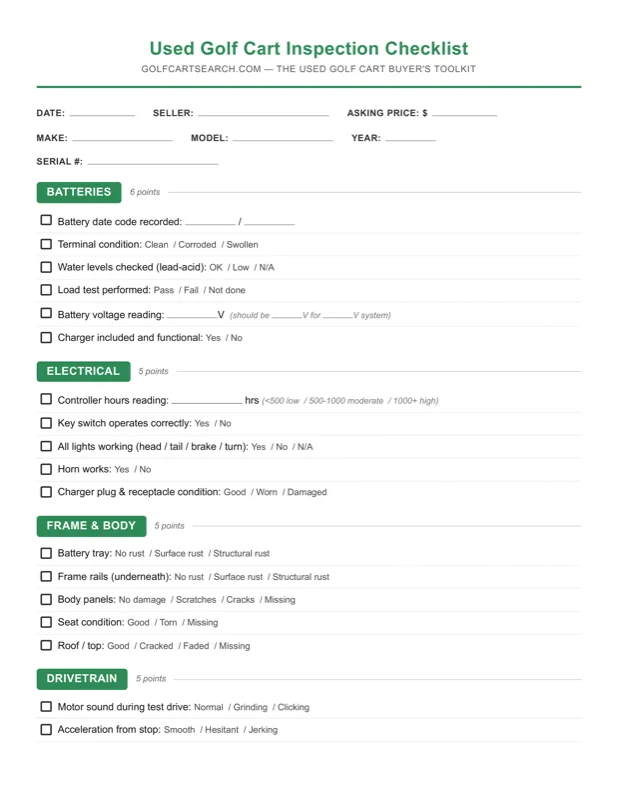
For a safer buying process, pair this guide with our used buying checklist, ownership transfer guide, warranty guide, and best time to buy guide.

FAQ

What golf cart brand depreciates the least?

Club Car depreciates the least in most markets. The aluminum frame, strong dealer network, and broad buyer recognition keep resale values higher than EZGO, Yamaha, and newer value brands.

Is EZGO or Yamaha better for resale?

They are close. EZGO often has stronger lithium demand because of ELiTE models, while Yamaha gas models hold value well because buyers trust the QuieTech engine. Condition and local dealer support usually decide the winner.

Do ICON golf carts depreciate fast?

ICON depreciates faster than Club Car but not necessarily faster than every mainstream competitor. Clean lithium ICON carts often retain about 60-70% after 3 years, especially where local dealers are active.

Why do cheap new golf carts lose value faster?

Cheap new carts lose value faster because used buyers worry about parts, warranty transfer, dealer support, and brand longevity. The cart may be useful, but the resale buyer pool is smaller.

Yes, if the cart is in a community where road use is common and legal. Lights, mirrors, horn, seat belts, and turn signals can add $300-$800. Paperwork and legal classification still matter.

Should I convert to lithium before selling?

Only if the existing lead-acid batteries are weak or the conversion helps the cart stand out. Lithium can add $1,000-$2,000 in resale value, but it may not repay the full conversion cost.

How much value do bad batteries remove?

Weak lead-acid batteries can remove $800-$1,500 from a cart's value because buyers price in replacement cost. Dead batteries can make even a clean cart hard to sell unless the asking price is low.

Are golf carts a good investment?

Golf carts are useful assets, not financial investments. The best brands hold value well, but every cart still depreciates. Buy the cart that fits your use case, support network, and resale timeline.

What is the best age to buy a used golf cart?

For most buyers, 3-6 years old is the sweet spot. The steepest depreciation has already happened, but the cart is still modern enough to have useful features, better battery options, and available parts.

How do I reduce golf cart depreciation?

Store it covered, maintain the batteries, keep service records, fix small problems early, avoid extreme cosmetic mods, and keep the cart clean. Battery health and rust prevention matter more than most accessories.

Share this post

Golf Cart Search

Find the Best Golf Carts of 2026

Compare top-rated models, read expert reviews, and find the perfect cart for your needs.
Related posts

Don't Overpay for a Used Golf Cart

Get pricing data, a printable inspection checklist, and negotiation scripts to help you buy with confidence.

Get the Buyer's Toolkit
Pricing dataInspection checklistNegotiation scripts

Instant download. 30-day guarantee.